
A fintech strategist with over 50 product launches in the payments and crypto space. Expert in scaling financial products, navigating international regulations, and leading high-performance teams. Successfully guided multiple ventures through major acquisitions and market expansions.
Specialized in:
- Product development and scaling in regulated markets
- Strategic growth and partnership execution
- Cross-functional team leadership in tech and fintech
- Blockchain, crypto payments, and enterprise financial solutions
- Focused on building systems that solve real-world business challenges.
More atricles by author

Best Mass Payout Platforms in 2026: Crypto, Fiat, Hybrid
Fiat AP software, crypto-native payout providers and hybrid stablecoin rails solve different payout problems. This comparison covers published 2026 fees, batch limits, settlement timing, the cost lines nobody quotes, what breaks in production, and an eleven-step evaluation sequence.

A payout batch does not fail loudly. It fails as fourteen rejected rows out of 3,000, a Friday afternoon, and a finance lead reconciling by hand on Saturday. Choosing a mass payout platform is a choice about which failure mode you are willing to own. This article compares the three architectures on the market — fiat mass-payout software, crypto-native payout providers, and hybrid stablecoin rails — on published pricing, corridor reach, settlement timing and what each one costs you when it goes wrong.
Competitor pricing and product capability in this article were read from each vendor's own published pricing, product and support documentation on 15 and 17 September 2026. Every platform named was checked for a published bulk-payout product, not just a payment gateway. Payment pricing changes constantly — re-check every figure before you quote it in a business case.
What a mass payout platform actually is — three architectures, not one market
The phrase "best mass payout platform" returns three different product categories that solve overlapping problems in incompatible ways. Confusing them is the most common reason a procurement process ends with the wrong tool.
Fiat mass-payout software (Tipalti, Trolley, Payoneer, Wise Business, PayPal Payouts) sits on top of correspondent banking and card networks. It automates payee onboarding, tax-form collection, approval workflow and AP reconciliation, then hands the actual value transfer to banks. Its strength is the workflow and the accounting integration. Its constraint is the rail underneath: where the bank cannot go, the software cannot go either.
Crypto-native payout providers (CoinGate, NOWPayments, Cryptomus and similar) move value on-chain. The rail is fast and geographically indifferent. The surrounding product, however, is usually built first for merchants accepting payments, with payouts added alongside — sometimes as a well-documented module, sometimes as a page you have to go looking for. Payee experience frequently assumes the recipient already holds a wallet, or is willing to open an account somewhere to receive one.
Hybrid stablecoin rails (INXY Payments, BVNK and others in this category) settle on-chain but present a fiat-denominated product: you fund in EUR or USD, the recipient receives value, and your chart of accounts never leaves fiat. INXY's own framing is wallet-free, gas-free, blockchain-free — the buyer is not being sold exposure to a cryptoasset, they are being sold a settlement rail.
The architectural question is simple and it comes before the vendor question: is your payout problem a workflow problem, a corridor problem, or both? Workflow problems — approvals, tax forms, ERP sync, multi-entity AP — are solved well by fiat software. Corridor problems — payees in markets your bank declines, five-day settlement, payouts that arrive net of three intermediary deductions — are not solved by better software on the same rail.
The eight criteria that actually decide it
Most comparison articles rank on headline fee. Headline fee is rarely the variable that decides whether a payout stack works.
| Criterion | Why it decides the outcome | What to ask the vendor |
|---|---|---|
| Corridor coverage | A rail that cannot reach 6% of your payees creates a permanent manual process for that 6% | Give me your decline list by country and payout method, not your marketing map |
| Batch capacity | A published per-batch cap turns one payout run into many, each with its own approval and reconciliation artefact | How many rows in a single batch, and what happens at the limit — reject, split, or queue? |
| Settlement timing | T+0 vs T+3 is a working-capital cost, not a convenience feature | What is the time from batch approval to payee availability, per method, at the 95th percentile? |
| True cost per payout | Headline fee, FX spread, network fee, intermediary deductions and pre-funding float are five separate line items | Quote me the all-in cost of a 1,200-payout batch averaging 340 EUR, landing in six countries |
| Failure semantics | What happens to rows 400–420 when row 399 fails | Is a batch atomic or per-row? What is the retry model? Are payout requests idempotent? |
| Reconciliation output | If the export does not map to your chart of accounts, you have bought a data-entry job | Show me the settlement report, at row level, with FX rate and fee broken out per payout |
| Compliance posture | KYB depth, KYT screening, sanctions and PEP screening, Travel Rule handling | Which screening runs pre-send, and what happens to a payout that hits a true positive? |
| Payee experience | Payee-side friction is the single largest driver of support cost in payouts | What does the payee do on first receipt, and what percentage complete it without support? |
The two questions in that table that vendors answer worst are reconciliation output and failure semantics. Ask them first.
Fiat mass-payout platforms: strong workflow, inherited rail
Tipalti
Tipalti is AP automation with a mass-payments module attached, and it is genuinely good at the part most crypto providers ignore entirely: supplier onboarding, tax-form collection, approval hierarchies and ERP synchronisation. Published pricing starts at $99/month for Accounts Payable and $249/month for Mass Payments (tipalti.com/pricing, read 15 September 2026). Per-invoice and per-payment transaction fees exist but are not itemised publicly; FX is described as built into the payment workflow rather than quoted as a separate spread.
Where Tipalti loses: a company paying 2,000 small-value affiliates monthly in markets its bank underwrites poorly. The subscription plus per-transaction economics are built for a supplier ledger of hundreds, not a payee ledger of thousands, and the underlying rail still has to reach the payee.
Payoneer
Payoneer's advantage is the network: where both sides hold accounts, value moves inside the network rather than across correspondent banking. Published fees include fixed bank withdrawal fees of 1.50 USD, 1.50 EUR or 1.50 GBP for local-currency withdrawals, 0.5% of the withdrawal amount above a $50,000 monthly threshold, up to 3% for non-local currency transactions, and a 29.95 USD annual fee on dormant accounts (payoneer.com/about/pricing, read 15 September 2026).
Where Payoneer loses: the "up to 3%" non-local-currency line is where the money goes, and it is borne by the payee. If your payees are price-sensitive contractors converting to local currency, the deduction they see is the number that generates support tickets — not your platform fee.
Wise Business
Wise publishes the most transparent FX pricing in the category: conversion from 0.24%, with a mid-market reference rate, free domestic payments in nine listed currencies, and named receive fees for SWIFT inbound (6.11 USD, 2.16 GBP, 2.39 EUR) plus a 50 GBP one-off charge for receiving-account details (wise.com/gb/pricing/business, read 15 September 2026).
Where Wise loses: high-risk verticals. Wise underwrites its customer book conservatively, and ad networks, iGaming affiliates and some marketplace models find the account itself is the constraint — not the pricing. A cheap rail you get offboarded from in month seven is more expensive than a slightly dearer rail you keep.
PayPal Payouts
PayPal Payouts applies a variable fee of 2%, with caps that vary by sending country and by domestic versus international payout type; currency conversion is charged additionally (developer.paypal.com/payouts/fees, read 15 September 2026). Per-payout transaction limits are published by currency — for example $60,000 for registered USD recipients and $20,000 for unregistered ones.
Where PayPal loses: anything with a real corridor problem. The capped 2% is competitive for small payouts into well-served markets and uncompetitive for large ones; recipient-side availability and account holds are the operational risk, and they are not visible in the fee table.
Crypto-native payout providers: right rail, merchant-shaped product
CoinGate
CoinGate publishes the clearest crypto payout pricing in the comparison set: 1% per transaction on the Standard plan, crypto payouts at 0.50 EUR + 0.5%, or 0.50 EUR + 1.5% where conversion is involved, free SEPA and crypto withdrawals above a 50 EUR minimum, 0.50% on SWIFT withdrawals, and a 1% exchange fee on manual conversions (coingate.com/pricing, read 15 September 2026).
Its bulk capability is Batch Payouts: a CSV upload capped at up to 300 payouts per file, available to verified business accounts only, charged as a fixed 0.50 EUR plus a percentage that depends on whether a conversion was applied, with no minimum per individual payout and an optional four-eye approval step before a batch executes (CoinGate support documentation, read 17 September 2026).
Where CoinGate loses: the 300-row cap. A 3,000-payee affiliate run becomes ten CSV files, ten approvals and ten reconciliation artefacts — which is not a pricing problem, it is an operational one, and it is invisible on the pricing page. CoinGate also ships the strongest control in the crypto-native set, the four-eye approval, so the honest reading is that it is built for controlled, moderate-volume batches rather than for scale.
NOWPayments
On acquiring, NOWPayments publishes 1% for payments without exchange and 1.5% for multi-currency, fixed-rate or "fee paid by user" payments, with network fees passed through as variable blockchain cost (nowpayments.io help centre, read 15 September 2026).
Its mass payout product is headlined "Zero-fee crypto mass payouts", scaling from 1 to 100,000 recipients by CSV upload or API, and is powered by ChangeNOW. The mechanism behind the zero is the part that matters: each recipient is given a ChangeNOW account, into which the payout lands (nowpayments.io/mass-payments, read 17 September 2026).
Where NOWPayments loses: that recipient account is a real constraint, not a detail. You are asking every payee to onboard to a third-party exchange to receive their money, which moves your payee-support burden onto someone else's KYC queue and someone else's supported-country list. For an affiliate base that already uses it, that is free scale. For a contractor base that does not, it is the highest-friction option in this comparison.
Cryptomus
Cryptomus does not surface mass payouts among the headline products on its homepage — the navigation leads with the payment gateway, cards and trading — but it publishes a dedicated Mass Payouts product page and a payout API. The page advertises batches by file upload or API, states no restriction on the number of addresses, claims "100,000+ transactions in 3 clicks", and publishes "Commissions — 0%" (cryptomus.com/mass-payout, read 17 September 2026).
Where Cryptomus loses: the same place its headline wins. A published 0% commission on a payout product means the cost lives somewhere else — network fee treatment, conversion spread, or the balance you have to hold on-platform to fund the batch. None of those are quantified on the page. A rate you cannot model is not cheaper than a rate you can; it is just unpriced until the first invoice.
Two zeros, one lesson. Both Cryptomus and NOWPayments headline their payout products at zero fee, and neither publishes what replaces it. That is not an accusation — it is the reason the "line items nobody quotes" section below exists, and the reason your evaluation should price a real batch rather than compare headline rates.
Hybrid stablecoin rails: fiat in, fiat out, on-chain in the middle
This is the category INXY Payments operates in, so read the following knowing where it comes from.
The hybrid model exists because the two categories above each solve half the problem. Fiat software gives you workflow and accounting on a rail with corridor limits. Crypto-native gives you the rail without the finance-team product. Hybrid rails fund in fiat, settle on-chain, and deliver in a form the payee can use, with the accounting staying denominated in EUR or USD.
INXY's published position is a transaction fee from 0.1% with no setup, monthly or hidden fees, and reduced rates available for large volumes, same-day global settlement with next-day fiat to bank, and no chargebacks — a structural property of the rail rather than a policy, because there is no card scheme representment process to lose. Compliance screening runs through partners including Elliptic and Sumsub, with Travel Rule and AML handling built into the flow rather than bolted on. INXY supports 20 cryptocurrencies across ERC-20, TRC-20, BEP-20, Polygon, Tron, TON, Bitcoin, Litecoin and DOGE.
Where INXY loses — and this matters more than anything above it. If your payout problem is a domestic one — 400 suppliers in a single SEPA country, paid monthly, with invoice matching and approval chains as the real work — a stablecoin rail solves a problem you do not have. SEPA Instant already settles in seconds at near-zero cost, and what you actually need is AP automation. Buy Tipalti. Similarly, if your payees are consumer-grade recipients with no appetite for anything unfamiliar and your corridors are all well-served, the migration cost outweighs the settlement gain. INXY is the right answer when the corridor is the constraint, the volume is real, and the settlement delay is costing you working capital — not when the workflow is the constraint.
The geographic constraint is not a footnote. INXY serves Europe, Asia and LatAm and does not serve the UK, the US, or sanctioned jurisdictions. If a material share of your payee base sits in those markets, this rail does not solve your problem regardless of how well it prices, and no vendor including us should sell you around that.
The comparison table
Figures as published by each vendor on 15 September 2026, with the crypto-native payout rows re-checked and expanded on 17 September 2026. "Not published" means the vendor does not disclose the figure — not that the cost or the limit is zero.
| Platform | Architecture | Published headline fee | Published batch capacity | Settlement | Published FX handling | Public pricing? |
|---|---|---|---|---|---|---|
| Tipalti | Fiat / AP automation | From $99/mo (AP), from $249/mo (Mass Payments) + per-transaction fees not itemised | Not published | Bank rails | Built into workflow, not itemised | Partial |
| Payoneer | Fiat / network | 1.50 USD/EUR/GBP local withdrawal; 0.5% above $50k/mo; up to 3% non-local | Not published | Network-internal instant; bank withdrawal varies | Up to 3% | Yes |
| Wise Business | Fiat / multi-currency | Conversion from 0.24%; 50 GBP account details; SWIFT receive 6.11 USD / 2.39 EUR | Batch payments supported; cap not published | Varies by corridor | From 0.24%, mid-market reference | Yes |
| PayPal Payouts | Fiat / wallet | Variable 2%, capped by country and payout type | Per-payout currency limits published; batch cap not | Wallet-instant, withdrawal varies | Charged additionally | Partial |
| CoinGate | Crypto-native | Batch Payouts: 0.50 EUR fixed + % depending on conversion; acquiring 1% | Up to 300 per CSV batch | On-chain; weekly settlement on Standard | 1% on manual conversion | Yes |
| NOWPayments | Crypto-native | Mass payouts headlined at zero fee; acquiring 1% / 1.5% | 1 to 100,000 recipients | On-chain, via ChangeNOW recipient accounts | Not itemised for payouts | Partial |
| Cryptomus | Crypto-native | Mass payouts published as "Commissions — 0%"; cost basis not stated | No published limit on addresses | On-chain | Not published | Partial |
| BVNK | Hybrid stablecoin | No public pricing page; quote-based | Not published | On-chain + fiat rails | Not published | No |
| INXY Payments | Hybrid stablecoin | From 0.1% transaction fee; no setup, monthly or hidden fees; reduced rates at large volume | File or API batch; no published row cap | Same-day global settlement; next-day fiat to bank | Auto-conversion to fiat | Partial |
The line items nobody quotes
Five costs sit outside every pricing page in the table above, and together they usually exceed the headline fee.
Pre-funding float. If the rail requires you to pre-fund a balance before a batch executes, you are lending the provider working capital. On a monthly payout run of 1.2M EUR with a three-day funding lead, that is three days of capital cost every month, permanently. Ask what the funding-to-execution window is and treat it as a financing line, not an operational detail.
FX spread versus mid-market. A "0.5% fee" applied to a rate already marked 0.8% off mid-market is a 1.3% cost. Wise publishes against the mid-market rate explicitly; most of the others do not. Always benchmark the rate you are quoted against the mid-market rate at the same timestamp, not against the previous vendor's rate.
Network fee pass-through. On-chain payouts carry a network fee that varies with congestion. Whether the provider absorbs it, passes it through at cost, or marks it up is a real commercial term and it is rarely on the pricing page. On a 3,000-row batch, a few cents of markup per row is not a rounding error. This is usually where a "0% commission" payout product recovers its margin — both Cryptomus and NOWPayments headline their payout products at zero fee, and neither publishes the network-fee or spread treatment that sits behind it.
Failed-payout rework. The genuine cost of a failed row is not the fee — it is the finance analyst who investigates it, contacts the payee, corrects the record and re-submits. At a 2% failure rate on a 3,000-payout batch, that is 60 manual investigations per run. Ask every vendor for their observed first-attempt success rate on your corridor mix, in writing.
Payee-side deduction. The number that determines whether your affiliates complain is what lands in their account, not what leaves yours. Intermediary bank deductions on SWIFT and non-local-currency conversion charges are invisible in your reporting and highly visible in theirs.
What breaks in production
Partial batch failure with unclear semantics. The batch reports "completed," 2,946 of 3,000 rows settled, and the report does not distinguish rows that failed validation from rows that were submitted and rejected downstream. Rerunning the file double-pays the 2,946. This is why idempotency keys on payout requests are a procurement requirement, not a developer preference.
Wrong-network sends. A payee supplies an address and selects the wrong network. On stablecoin rails this is the single most common payee-side error. The mitigation is product-level — network selection derived from the payee's own confirmed profile rather than free-text entry — and it is worth more than a 0.1% fee difference.
Screening true positives mid-batch. A payout hits a sanctions or KYT match. The correct behaviour is that the payout stops, is escalated for review, and the rest of the batch proceeds. Some platforms halt the entire batch. Ask which, before you find out on a payout Friday. And to be unambiguous: the right answer is that the payout stops and is reviewed. Any provider positioning reduced screening as a feature is selling you a future enforcement problem, not a payment rail.
Month-end reconciliation drift. Settlement timestamps in the provider's timezone, FX applied at execution rather than at approval, and fees netted rather than itemised — three small mismatches that produce an unexplained variance line every single month. Demand the row-level export during evaluation and hand it to whoever closes your books before you sign.
Payee onboarding decay. Payee details go stale. Bank accounts close, addresses rotate. A platform with no re-verification prompt accumulates a growing tail of failing rows that nobody owns.
An eleven-step evaluation sequence
- Export your last three payout runs and build the real distribution: payee count, value distribution, country mix, currency mix, and observed failure rate. Most teams discover their average payout is far smaller and their corridor list far longer than they assumed.
- Classify the problem: workflow-constrained, corridor-constrained, or both. This eliminates two of the three architectures immediately.
- Request a corridor decline list from each shortlisted vendor, by country and method. Not a coverage map — a decline list.
- Price the real batch, not a sample: all-in cost including FX spread benchmarked to mid-market at the same timestamp, network fees, and any pre-funding requirement expressed as days of float.
- Ask for the per-batch row limit and what happens at it. A cap of 300 against a 3,000-row run means ten files, ten approvals and ten reconciliation artefacts every cycle. Get the number in writing; it is rarely on the pricing page.
- Ask for failure semantics in writing: atomic or per-row, idempotency support, retry model, and what happens to a batch when one row hits a screening match.
- Run a sandbox batch of at least 50 rows covering your three hardest corridors, including deliberately malformed rows.
- Hand the settlement export to your controller before the commercial conversation goes further. If it does not map to the chart of accounts, the integration cost is a hidden line item.
- Test the payee path yourself, end to end, as a payee in your largest corridor. Time it. Count the steps. Include any account the payee is required to open — if receiving your payout means onboarding to a third-party exchange, that is part of your payout product whether you chose it or not.
- Verify the compliance posture: KYB depth, which screening runs pre-send, Travel Rule handling, and how a true positive is escalated. Our guide to Travel Rule and crypto payouts covers what actually runs.
- Run one real batch in parallel with your incumbent for a full cycle before migrating. Parallel running costs one month of double fees and saves one quarter of remediation.
Which one, when
| Your situation | The answer | Why |
|---|---|---|
| Hundreds of suppliers, one or two well-served currencies, approvals and tax forms are the real work | Tipalti or similar AP automation | Your problem is workflow, not rail. A stablecoin rail adds nothing. |
| Payees already inside one network, moderate volume, price-sensitive recipients | Payoneer | Network-internal transfer avoids correspondent banking entirely |
| Transparent FX is the priority, corridors are mainstream, underwriting is straightforward | Wise Business | Best published FX transparency in the set |
| Small-value payouts into well-served markets, payees already hold wallets | PayPal Payouts | The 2% cap works in your favour at low ticket sizes |
| Controlled batches under 300 rows, crypto-first business, approval discipline matters | CoinGate Batch Payouts | Clearest published pricing in the set and four-eye approval — but the 300-row cap is hard |
| Large affiliate base that already lives on exchange accounts | NOWPayments mass payouts | Scales to 100,000 recipients at a headline zero fee, if your payees accept a ChangeNOW account |
| Thousands of payees across Europe, Asia and LatAm; settlement delay is a working-capital cost; accounting must stay in EUR/USD | A hybrid stablecoin rail such as INXY mass crypto payouts | Corridor reach without handing your finance team a crypto ledger |
| Material payee base in the UK or US | None of the stablecoin options here | INXY does not serve those markets; solve it on a rail that does |
If your batch is mostly USDT and the corridor is the constraint, the mechanics are set out in mass payout in USDT, and the same flow for dollar-denominated payees who require a MiCA-authorised token is in mass payout in USDC. For contractor and payroll-shaped batches specifically, crypto payroll and contractor payouts is the relevant page, and how to automate mass crypto payouts covers the automation layer.
The decision, stated plainly
Do not start from the vendor list. Start from your own last three payout runs, because the distribution in that export determines the architecture, and the architecture eliminates most of the market before you speak to anyone. If the constraint is workflow, buy AP automation and stop reading comparison articles about stablecoins. If the constraint is the corridor — payees your bank will not reach, settlement measured in days, deductions you cannot see — then the rail has to change, and the only question left is whether you want the on-chain complexity on your side of the wall or the provider's.
If it is the second, the shortest useful next step is a scoped batch against your real corridor mix rather than a demo against theirs. Book a demo with your last payout export in hand, and ask for the row-level settlement report before anything else.
This article describes regulatory and market conditions for general information. It is not legal, tax, or financial advice — INXY Payments is a payment infrastructure provider, not a law or accountancy firm, and decisions with regulatory consequence should be reviewed by qualified counsel in the relevant jurisdiction.
FAQ
What is a mass payout platform?
A mass payout platform executes many outbound payments from a single instruction — a file upload or an API call — instead of one payment at a time. The category covers three architectures: fiat AP automation software, crypto-native payout providers, and hybrid stablecoin rails that fund in fiat and settle on-chain. They solve different problems and are not interchangeable.
How much does a mass payout cost?
Published headline fees across the platforms compared here range from zero-fee headlines on some crypto payout products to a capped 2% per payout, as published by each vendor in September 2026. The headline fee is rarely the largest cost. FX spread against mid-market, network fee pass-through, pre-funding float and failed-payout rework typically add more than the quoted rate.
Are crypto mass payouts faster than bank transfers?
On-chain settlement completes in minutes rather than the multi-day window typical of correspondent banking, and it does not observe banking hours or cut-off times. The constraint moves from the rail to compliance screening and payee-side availability, which is why pre-send screening design matters more than raw block time.
What happens if one payment in a batch fails?
It depends entirely on the platform's failure semantics, and this is the question most buyers skip. Some platforms process per-row and continue; others halt the batch. Ask for the behaviour in writing, confirm that payout requests support idempotency keys, and test it with deliberately malformed rows in a sandbox before go-live.
Which stablecoin should we use for payouts?
It depends on where your payees are and what their counterparties accept. USDT has the deepest liquidity and the widest informal acceptance in Asia and LatAm; USDC is authorised as an e-money token under MiCA and is the practical choice for EEA-facing counterparties. Many payout programmes run both rather than choosing.
Can we keep our accounting in EUR if we pay out in stablecoins?
Yes, on a hybrid rail. You fund in fiat, the provider handles conversion and on-chain settlement, and the settlement report returns in your base currency. Insist on a row-level export with FX rate and fee broken out per payout — if the export does not map to your chart of accounts, you have bought a data-entry job.

The Post-MiCA Reality: Why European Businesses Now Buy Regulated Stablecoin Infrastructure Instead of Building It
Coincub's Europe Crypto Report 2026 shows a market reshaped by MiCA: 183 licensed CASPs, USDT delisted across regulated venues, and a hard July 2026 compliance cliff. For businesses that simply need to accept payments and pay people globally, the takeaway is to move money through compliant, licensed payment rails rather than carry crypto's regulatory overhead themselves.
Coincub's Europe Crypto Report 2026 frames the last fourteen months as the arrival of a post-MiCA world. The numbers are striking: the EU went from 12 licensed CASPs to 183, a 15x increase, while roughly 3,167 national VASP registrations collapsed to a fraction of that count. MiCA did what it was designed to do — it delivered legal certainty, consumer protection, a public registry of accountable entities, and a single passporting architecture across 30 EU/EEA markets.
But underneath the regulatory success sits a more practical question for the businesses that actually use crypto rails — merchants, marketplaces, ad networks, hosting providers, gaming platforms, payroll operators. The report's data points to an uncomfortable conclusion: the cost of being a regulated entity in Europe has moved out of reach for most companies that simply need to accept and send money. That gap is exactly where regulated payment infrastructure becomes the rational choice.
This piece reads the Coincub findings through that operational lens: not "who won the license race," but "what does a company that just needs to move value across borders do now?"
The compliance floor priced out everyone but the giants
The single most important structural fact in the report is the split MiCA created. Of 183 licensed CASPs, 78 (42%) cover just 1–5 countries — almost exclusively German banks bolting crypto onto existing compliance infrastructure — while 84 (45%) hold near-full EU passports covering 26–30 countries, disproportionately offshore-originated firms that hired EU counsel and passported across the single market. The middle ground is nearly empty.
Why? Because the entry ticket is steep. The report puts the compliance cost floor at €50,000–€150,000 in minimum capital, plus mandatory physical substance, dedicated compliance staff, banking relationships, and 9–18 months of preparation for authorization. As Coincub bluntly notes, that is survivable for a Cayman entity backed by $500M in VC but certainly not survivable for a European pre-seed startup.
Lithuania is the cautionary tale: 345 registered firms fell to 4 MiCA CASP licenses — a 99% wipeout. The cheap-registration model that once let small firms onboard fast didn't survive contact with substance requirements.
The operational read: the businesses that most need crypto and stablecoin payments — merchants, marketplaces, ad networks, payroll operators — were never trying to become crypto companies in the first place. Their job is to accept money and pay people, not to run regulated infrastructure. In a market where the compliance floor is this high, the practical answer is the same one they already use for cards and cloud: consume the capability through a provider that carries the licensing for them. This is the core case for a regulated payment gateway like INXY Payments, which lets a business accept, send, and convert digital money without building or operating crypto infrastructure itself.
Only 14 firms can run an exchange — but most businesses never needed one
One of the report's most under-discussed numbers: of 183 licensed CASPs, only 14 are authorized to operate a centralized exchange with an order book and matching engine. That's 7% of the total.
It's a useful reminder that "crypto business" is not one thing. The overwhelming majority of companies touching digital assets don't want to run a trading venue. They want to accept payment from a customer, settle in euros or dollars the next day, and pay out affiliates, contractors, or suppliers across borders — without holding volatile assets or managing wallets and gas.
That distinction matters because it reframes the licensing panic. The scarce, hard-to-get authorization is the exchange license. The thing most businesses actually need is payment and settlement infrastructure — and they can consume it as a service. INXY's positioning sits precisely here: wallet-free, gas-free, blockchain-free acceptance and payouts, with automatic conversion to stablecoins or fiat to minimize volatility, and same-day bank settlement with audit-ready reporting.
USDT left regulated venues. Businesses still need a stable unit of account.
Few 2025 developments were as visible as the stablecoin reshuffle. Coinbase Europe delisted USDT in December 2024; Binance followed on 31 March 2025; Kraken, OKX, and Revolut did the same. The world's largest stablecoin was removed from every regulated EU exchange.
Globally, Tether barely flinched — its market cap held around $138B as Asian markets absorbed the volume. But inside the EU, the report notes, USDC became the dollar stablecoin of choice, and EURC spiked in April 2025, driven partly by MiCA compliance and partly by shifting US tariff politics. Meanwhile France's finance minister has openly backed more euro-pegged stablecoins, welcoming plans by ING, UniCredit, and BNP Paribas to launch a joint euro stablecoin in H2 2026.
The operational read: for a European business, the question is no longer "which stablecoin is biggest globally" but "which regulated stablecoin rails keep me compliant and keep my accounting clean in EUR or USD." A payment provider that natively handles USDC, EURC, and automatic crypto-to-fiat conversion insulates a merchant from exactly this kind of regulatory reshuffle — the business keeps operating in a stable unit of account while the underlying compliant instrument shifts around it. This is a structural argument for consuming stablecoin settlement as managed infrastructure rather than picking a token and hoping it stays listed.
MiCA is rarely just one license — and the compliance stack keeps growing
For businesses dealing in e-money tokens (EMTs), the report highlights a trap that catches even well-funded firms: one license is often not enough. The EBA intervened twice on the overlap between MiCA and PSD2, because CASPs transacting e-money tokens can also fall within payment-services territory. The practical message for many firms, as Coincub puts it, is "get MiCA, then clear PSD2 too."
This is why the same names keep winning — only groups with the structure to absorb double compliance survive it. For a business whose core job is selling a product or paying a global team, layering two regulatory regimes on top of that was never a realistic path, and shouldn't have to be their problem to solve.
The operational read: the more the EU layers overlapping regimes (MiCA, PSD2, Travel Rule, AML/KYT), the stronger the case for accepting and sending money through a provider that has already absorbed those obligations. INXY builds Travel Rule, AML, and KYT monitoring into the platform and operates under licensing across multiple jurisdictions, so a business gets compliant payment and payout rails without standing up that machinery in-house.
The July 1, 2026 cliff makes reliability a procurement decision
The report is unambiguous about the near-term risk: the grandfathering period ends July 1, 2026. Every entity that hasn't secured MiCA authorization by then must cease operations. Poland — with 1,800+ VASPs and still no MiCA implementation in national law — has no path at all. Estonia's queue is moving but unfinished. Romania's competent-authority designation is still "to be announced." And preparation-to-submission takes 9–18 months, so for anyone still on transitional status without an application already in progress, the window is practically closed.
For a business relying on a crypto payment partner, this is not abstract. A provider operating on borrowed transitional time is a continuity risk. After July 1, some counterparties will simply stop being able to process. The report also flags a tightening trend: the European Commission's Market Integration Package would move direct supervision of all CASPs to ESMA in Paris, and license-lending and white-labeling models built on permissive hubs are directly threatened.
The operational read: vendor due diligence in 2026 has to include a hard look at licensing durability. The question "will my payment provider still be legally operating in Q3?" belongs on every procurement checklist. Choosing a properly licensed, substance-backed provider — rather than a thin white-label wrapper — is now a risk-management decision, not a nice-to-have.
Cross-border fragmentation is the everyday problem passporting doesn't solve
Passporting fixed market access on paper — 183 CASPs now carry access to 30 markets, preserving about 86% of pre-MiCA coverage with a fraction of the entities. But for an operating business, day-to-day friction isn't about legal access; it's about actually moving money to a lot of people, quickly, across borders, at a predictable cost.
That's the gap ordinary payment operations live in: paying affiliates, freelancers, contractors, suppliers, and partners worldwide; reconciling it all; keeping fees down. Traditional rails are slow and expensive here, and the report's broader theme — a market where value increasingly routes through a handful of large, often non-European intermediaries — only sharpens the case for automated, API-driven payout infrastructure that settles in minutes rather than days. Mass payouts by file or API, on-the-fly conversion from a fiat balance, and consolidated reporting are the practical answer to a fragmented single market.
Conclusion: the market told businesses to stop building regulatory overhead
Read strategically, the Europe Crypto Report 2026 is a story about concentration. MiCA raised the floor so high that being a licensed crypto entity is now the domain of large groups and well-capitalized offshore giants. USDT's exit, the MiCA-plus-PSD2 stack, the July 2026 cliff, and the drift toward ESMA supervision all point the same way: the regulatory burden of operating crypto rails in Europe is rising, not falling.
For the businesses that simply need to accept payments, settle in fiat, and pay people globally, the answer isn't to take on crypto's regulatory machinery themselves. It is to treat regulated crypto and stablecoin capability the way they already treat cloud, KYC, or card processing — as infrastructure they plug into. That is the position a provider like INXY Payments occupies: a licensed, compliance-first platform that lets a Web2 business accept and send money on modern stablecoin rails without operating regulated crypto infrastructure itself.
In a post-MiCA Europe, most companies don't need to become a crypto company to use crypto. They need working, compliant rails to move money across borders — and that is something they can simply plug in.
Sources: Coincub, "Europe Crypto Report 2026 — An Outlook of a Post-MiCA World"; INXY Payments (inxy.io).

Stablecoins Just Took Over Institutional OTC
Stablecoins hit 81% of institutional OTC in H1 2026. INXY unpacks Finery Markets' Stablecoin 2035 report — key data and what it means for payments.
An INXY expert read on Finery Markets' "Stablecoin 2035: Back to the Future" report (H1 2026)
Finery Markets just published its "Stablecoin 2035" report, and the headline number is hard to ignore: stablecoins reached 81% of all institutional OTC trades in H1 2026, up from 26% in 2023. The debate about whether stablecoins have product-market fit is over. The interesting questions now are operational — and they land squarely on the businesses that move money for a living.
Here is how our team reads the data, and what it changes for anyone building on stablecoin rails.
The numbers that matter
- OTC is the only growing segment. In H1 2026, OTC trading volumes grew +76% YoY, while the top-20 DEXs fell -38% and the top-20 CEXs -13%. Institutional flow is consolidating into OTC, and it is settling in stablecoins — stablecoin OTC volume nearly doubled (+94% YoY).
- The dollar owns the rail. USD-pegged tokens accounted for 99.87% of OTC stablecoin volume. EUR stablecoins grew 32x year over year, but off a base so small it changes nothing structurally — yet.
- The market is deep and diversifying. Total supply is now north of $300B (~$319B). Tether sits around $190B and USDC around $76B, but their combined share slipped from ~89% to ~83% as issuers multiplied from 30 in 2020 to 215+ in 2025.
- Real assets are following. Tokenized U.S. Treasuries crossed $15B (+150% YoY); tokenized equities are near $1.5B (+400%). Roughly two-thirds of stablecoin supply is held in emerging markets — savings demand, not speculation.
Three signals for payment businesses
1. Payments and treasury — not trading — are the real entry point. The report's contributors converge on one idea: stablecoins become "ordinary" inside a company through the treasury and payments desk, not the trading floor. Cross-border corridors that took 2–5 business days now settle in minutes, with all-in costs compressing from 3–5% (correspondent banking) toward ~1%. For a payments provider, that is the pitch: released working capital and removed friction on flows that recur every single day.
2. The winning infrastructure is invisible. Multiple authors describe the same 2035 endpoint — the word "stablecoin" disappears from the enterprise vocabulary because the rails sit beneath familiar fintech interfaces. Users initiate value in stablecoins; merchants and counterparties receive local fiat without ever touching a wallet, chain, or bridge. The value isn't the token. It's the compliance-first connective layer that hides complexity while preserving speed and 24/7 availability.
3. "Regulated" is the moat. Across every contribution, the common thread is regulation. By 2035, regulated coins — dollar and local alike — are expected to hold the dominant share of supply and activity. Licensing, compliance translation across jurisdictions (MiCA, VARA, Singapore's PSA), and a single clean interface across a fragmented patchwork of currency regimes become the real competitive edge — not raw settlement speed.
The INXY takeaway
The report describes a world where money movement runs on stablecoin rails without the end user ever needing to know it. That is exactly the layer payment infrastructure providers should be building toward: regulated on/off-ramps, stablecoin-to-fiat settlement in the currencies clients actually need, and an interface that treats "any currency, any chain" as a non-issue.
The strategic mistake would be to read this as a race to launch yet another stablecoin. The report is explicit that by 2035, "the truly savvy stablecoin strategy may be not launching one at all." The durable advantage is not issuance — issuance is easy. It is liquidity, compliance, and distribution wired into the systems businesses already use.
For merchants, PSPs, and treasuries evaluating stablecoin payments today, the question the report leaves us with is the right one to steal: not how do we add stablecoins to our stack — but what does our business look like when settlement is instant, always-on, and fiat never needs to leave the chain in the first place?
This commentary is informational and not investment advice.

Is USDT Safe for Business Payments? Tether's Reserves, Risks & Regulation in 2026
If your business is about to move real money through USDT, "is USDT safe?" is the right question to ask first. Tether is the largest stablecoin in the world — roughly $188 billion in circulation and ~59% of the entire stablecoin market as of mid-2026 — but scale and safety aren't the same thing.
If your business is about to move real money through USDT, "is USDT safe?" is the right question to ask first. Tether is the largest stablecoin in the world — roughly $188 billion in circulation and ~59% of the entire stablecoin market as of mid-2026 — but scale and safety aren't the same thing.
This is a balanced look at what actually backs USDT, where the real risks sit, and how those risks apply specifically to a company using Tether for payouts rather than trading.
What USDT is — and what "safe" means here
USDT (Tether) is a stablecoin designed to hold a 1:1 peg to the US dollar. Each token is meant to be redeemable for one dollar, backed by reserves Tether holds. For a business, "safe" breaks into three practical questions:
- Peg risk — will 1 USDT still be worth ~$1 when my recipient cashes out?
- Counterparty risk — is the issuer solvent and are the reserves real?
- Operational and regulatory risk — can I legally and reliably use it where I operate?
Let's take them in order.
Peg stability: strong, with rare wobbles
In normal conditions, USDT trades within a fraction of a cent of $1. Its depth of liquidity is unmatched — it's the most traded crypto asset on earth, which makes the peg resilient.
It is not immune, though. During acute market stress (the 2022 Terra/UST collapse, the 2023 US regional-bank episode) USDT briefly de-pegged by a few percent before recovering. For a payout business, the takeaway is not "avoid USDT" but "don't sit on large idle balances." If you convert at payout time rather than warehousing Tether, short-lived wobbles rarely reach the recipient.
Reserves: what backs USDT in 2026
This is where scrutiny has historically been sharpest, and where transparency has improved.
Per Tether's Q1 2026 attestation (BDO Italia), the company reported roughly $191.8 billion in total assets against its liabilities, with a reserve mix heavily weighted toward liquid, low-risk holdings:
- ~$135 billion in US Treasuries — the bulk of reserves in the most liquid safe asset there is.
- ~$13 billion in gold, plus Bitcoin and other holdings.
- Reported net equity of around $8 billion, a buffer above the tokens in circulation.
Two honest caveats remain:
- Tether publishes attestations, not a full audit by a Big Four firm. An attestation confirms balances at a point in time; it's less rigorous than a continuous audit. Critics have pushed Tether on this for years.
- A minority of reserves has historically included assets beyond cash and Treasuries. The direction of travel is toward higher-quality, more liquid reserves, but it's worth knowing what you hold.
For most businesses, a reserve base dominated by US Treasuries is reassuring. The transparency gap versus a fully audited competitor is real but narrowing.
Regulatory risk: the biggest practical issue for EU businesses
Here's the risk that most directly affects where and how you can use USDT: Tether did not seek authorization under the EU's MiCA regulation.
The consequences are concrete. Through late 2024 and 2025, MiCA-regulated exchanges removed USDT for customers in the European Economic Area — Coinbase, Crypto.com, Binance (EEA) and others delisted or restricted it — because offering a non-authorized stablecoin put their own licenses at risk. USDT trading volumes on EU venues fell sharply, while MiCA-compliant alternatives like USDC and EURC gained share.
USDT is not banned to hold, but its regulated on/off-ramp availability in the EU has narrowed. Tether has instead pursued a US federal path (under the GENIUS Act) via a US-domiciled entity. If your recipients or your business are EU-based, this matters: a MiCA-compliant stablecoin may be the more durable choice for European corridors. (See "Is USDC regulated?" and our USDT vs USDC comparison.)
Operational risk: irreversibility and wrong-network errors
Independent of Tether the company, USDT carries the operational risks of any on-chain asset:
- Irreversibility. A payout sent to a wrong or wrong-network address is typically gone.
- Network fragmentation. USDT on Tron, Ethereum, Solana and others isn't interchangeable at the address level.
- Compliance exposure. Paying a sanctioned or high-risk wallet is a legal problem, not just a technical one.
These are managed with address validation, test transfers, and — at volume — KYT and sanctions screening built into your payout flow.
So, is USDT safe for business payouts?
A fair summary:
- Peg: Strong in normal conditions; convert at payout time to avoid stress-window exposure.
- Reserves: Large and Treasury-heavy, but attested rather than fully audited.
- Regulation: The real watch-item — limited MiCA standing constrains EU usage.
- Operations: Safe when you use validation, screening, and disciplined records.
For high-volume global payouts, USDT remains the most liquid and widely accepted stablecoin. The smart posture is to use it deliberately: don't warehouse it, screen your recipients, keep clean fiat records, and choose a MiCA-compliant asset where European regulation demands it.
Frequently asked questions
Is USDT backed by real dollars? USDT is backed by reserves that, per Tether's 2026 attestations, are dominated by US Treasuries plus cash equivalents, gold, and other assets. These are confirmed by attestation rather than a full independent audit.
Can USDT lose its peg? It can briefly deviate during extreme market stress, as it has a few times historically, but it has recovered each time. Deep liquidity supports the peg in normal conditions.
Is USDT legal in the EU? Holding USDT is not illegal, but Tether is not MiCA-authorized, and many EU-regulated exchanges have delisted it for EEA users. For EU corridors, a MiCA-compliant stablecoin is often more practical.
Is USDT safe enough for payroll and affiliate payouts? For most businesses, yes — provided you convert near payout time, screen recipients, and keep proper records. The controls matter as much as the asset.
Use USDT with the controls built in
The safest way to use USDT for business isn't to trust a single wallet — it's to run payouts through infrastructure that screens recipients, validates networks, and reports in fiat. That's how INXY's mass USDT payouts are designed: fund in EUR or USD, pay out globally, and keep audit-ready records — without warehousing crypto risk.
This article is general information, not financial or legal advice. Evaluate stablecoin exposure against your own jurisdiction and risk policy.

Annual vs. Monthly SaaS Billing: Why Upfront Crypto Payments Win on Cash Flow
For most SaaS companies, monthly billing is the unexamined default. It lowers the barrier to entry, so it feels like the safe choice. But for B2B and high-ticket software, that default quietly works against you: it spreads revenue thin, exposes every renewal to a payment failure, and hands a chunk of your SaaS billing and payments flow to card networks that were never built for recurring, cross-border charges.
For most SaaS companies, monthly billing is the unexamined default. It lowers the barrier to entry, so it feels like the safe choice. But for B2B and high-ticket software, that default quietly works against you: it spreads revenue thin, exposes every renewal to a payment failure, and hands a chunk of your SaaS billing and payments flow to card networks that were never built for recurring, cross-border charges.
There is a structurally better model for B2B: annual upfront billing settled in crypto. Paid in stablecoins, an annual plan lands the full year of revenue immediately, removes eleven future points of failure, and eliminates chargebacks entirely. This article makes the cash-flow and retention case for upfront annual billing, and shows how stablecoin payments make it easy to offer.
The Hidden Cost of Monthly Card Subscriptions
A monthly subscription is not one payment — it is twelve chances per customer, per year, for something to go wrong. Card-based SaaS payment processing carries failure rates that compound across a subscriber base:
- Involuntary churn — customers lost to failed payments rather than active cancellation — accounts for 20–40% of total churn, and up to 48% in higher-risk sectors.
- Left unmanaged, failed payments can quietly consume up to 9% of total revenue.
- Expired cards alone cause roughly 42% of failed subscription payments; the customer never chose to leave, the card simply lapsed.
- Cross-border recurring charges are frequently flagged or declined by issuing banks, and chargebacks on digital goods drain revenue plus dispute fees.
Each monthly cycle re-exposes you to all of this. Annual billing collapses twelve renewal events into one — shrinking the failure surface by an order of magnitude — and, just as importantly, pulls a full year of cash forward instead of metering it out month by month.
Why Annual Upfront Billing Changes the Math
Upfront annual plans are not just an accounting convenience; they change the unit economics of the business. The advantage is sharpest when the customer actually prefers to pay this way — and crypto buyers do.
- Cash flow now, not later. Collecting twelve months upfront strengthens working capital and reduces dependence on outside funding to finance growth.
- A smaller churn surface. One payment per year means one renewal decision per year — and far fewer involuntary drop-offs from card failures.
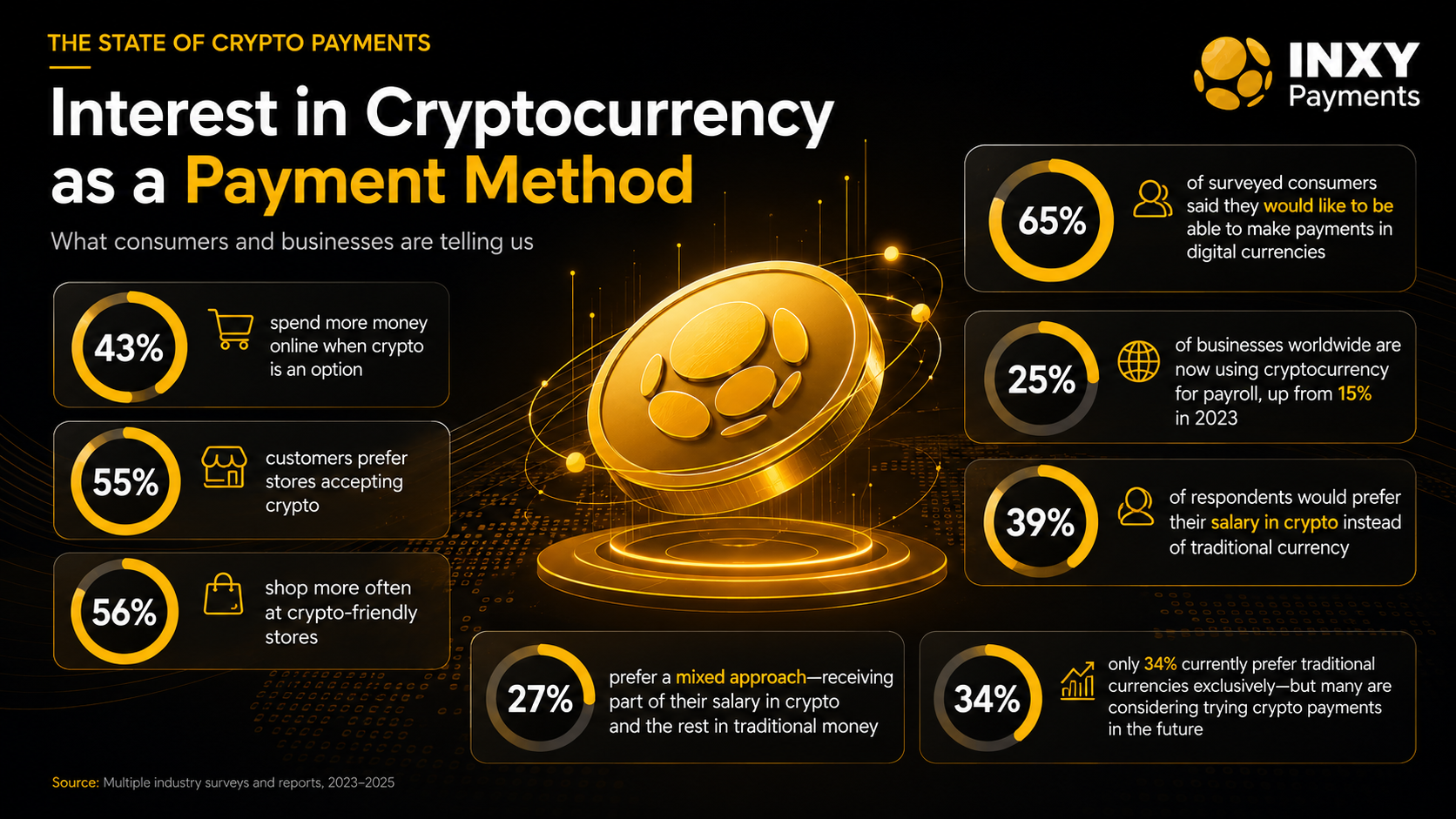
- Higher lifetime value. Industry data shows crypto buyers spend roughly 2x more than traditional users, and around 43% spend more simply because crypto is offered as an option.
- A buyer base that wants annual. About 60% of crypto users prefer to pay upfront for 12–36 month plans, versus only 20% of credit-card users — so offering crypto and annual pricing together is a natural fit.
With more than 824 million people globally owning crypto — over 10% of the world's population — the segment that prefers upfront, borderless payment is large and high-value, not niche.
Why Crypto Makes Annual Billing Easy to Sell
Blockchain payments are push-based and final — one confirmed transfer, no scheduled pulls. That property, which makes crypto awkward for monthly auto-billing, is exactly what you want for an annual upfront plan: a single, irreversible settlement that closes the deal.
Predictable Revenue Through Auto-Conversion
The usual objection — volatility — is solved at the gateway. When a client pays an annual license in a volatile asset, an auto-convert engine instantly settles it into stablecoins (USDT/USDC) or fiat (EUR/USD), so you book exact, predictable revenue. Stablecoins themselves are pegged 1:1 to the dollar, keeping SaaS payment management clean and auditable.
No Chargebacks, Global Reach, Instant Settlement
- Zero chargebacks. On-chain payments are irreversible, eliminating friendly fraud and dispute fees on digital goods.
- Borderless billing. A single settlement layer reaches customers who lack the international cards your checkout depends on, with no per-currency FX overhead.
- Minutes, not days. Stablecoin payments settle in minutes instead of the 3–5 business days an international wire takes to clear.
- Lower processing cost. Versus the typical 2.9% + $0.30 card fee plus cross-border markups, stablecoin transfers on networks like TRON (TRC-20) and Polygon cost a fraction of a percent.
How to Structure Annual Crypto Billing for Your SaaS
Adopting upfront annual crypto billing is a pricing-and-integration exercise, not a blockchain project:
- Lead with discounted annual pricing. Make the annual plan the headline option and price the upfront discount so the cash-flow gain outweighs it.
- Add crypto as a checkout option, not a replacement. Offer “Pay with Crypto” alongside fiat so you capture the high-LTV segment without disrupting existing customers.
- Default to stablecoins on low-fee networks. Present USDT and USDC on TRC-20 and Polygon to keep customer-side network fees negligible and value stable.
- Integrate via API or plugins, not smart contracts. Use a gateway's REST API or ready-made modules — including a native WHMCS module for hosting, cloud, and agency billing — to issue invoices and confirm payment automatically.
- Auto-convert and reconcile. Convert incoming payments to stablecoins or fiat at the point of sale, and use transaction hashes plus CSV exports so finance can match every annual payment to an account.
Compliance and Accounting
Choosing a regulated gateway keeps annual crypto billing inside the regulatory perimeter rather than outside it. The essentials are KYC/AML on counterparties, transaction monitoring, and jurisdiction-aware handling — for example the EU's MiCA framework, which favors transparent, fully-backed stablecoins like USDC. Because stablecoins are dollar-pegged and settlements can auto-convert to fiat, your revenue stays denominated in a unit your accountants already use, with detailed reporting and exports for clean books.
How INXY Supports Annual Crypto Billing for SaaS
INXY is a regulated, enterprise-grade crypto payment gateway engineered for B2B and SaaS billing. Rather than forcing crypto into a monthly auto-billing mold, it leans into what the rail does best — high-value, upfront settlement:
- Built for upfront cash flow. INXY deliberately bypasses standard auto-billing, making annual tariff plans the most profitable option for high-ticket B2B software — you receive the full yearly value immediately.
- Auto-Convert Engine. Incoming payments in volatile assets convert instantly to stablecoins or fiat, so a $1,000 or $10,000 annual license books as predictable revenue.
- Native SaaS integrations. Robust APIs and ready-made plugins, including a native WHMCS module tailored for hosting, cloud services, and digital agencies.
- Zero chargebacks and built-in mass payouts. Irreversible settlement protects revenue, while CSV- or API-driven payouts handle affiliate and contractor disbursements.
- A compliance-first stack. EU VASP (Poland), Canadian MSB, MiCA readiness, AML/KYT/KYC, and audit-friendly fiat reporting.
For a side-by-side look at how this compares with fiat processors, see Best Payment Gateways for SaaS in 2026. For platform-billing setups, INXY also documents accepting crypto payments on WHMCS.
FAQ
Does crypto support automatic monthly subscriptions?
Crypto payments are push-based, so they are not built for monthly card-style auto-charges. That is why the model that works best for B2B SaaS is annual upfront billing — a single, final payment that also improves cash flow.
How do we avoid volatility on a large annual payment?
A gateway with an auto-convert engine settles incoming crypto into stablecoins or fiat at the point of sale, so a five-figure annual license is booked at an exact, predictable value.
Will offering crypto cannibalize our fiat plans?
No — it is an additional checkout option. It tends to attract new, higher-LTV customers rather than shift existing ones, since a large share of crypto buyers are new to the merchant.
How hard is integration?
You connect a REST API or use ready-made plugins such as a native WHMCS module, rather than writing smart contracts. Most teams launch faster than opening a traditional merchant account.
Conclusion
Monthly card billing spreads SaaS revenue thin and re-exposes it to failed payments and chargebacks twelve times a year. Annual upfront billing — settled in crypto — flips that: a full year of cash collected now, one renewal decision instead of twelve, no chargebacks, and a high-LTV buyer base that prefers to pay this way. The rail's push-based finality is a feature here, not a limitation.
Ready to add upfront annual crypto billing to your checkout? See how INXY can power it at inxy.io.

Crypto Mass Payouts for Affiliate Networks: Automate BTC, USDT & ETH Partner Payments
Running an affiliate network means managing dozens — or hundreds — of payment relationships simultaneously. When those partners operate across different countries and expect crypto compensation, the bottleneck isn't traffic or conversions: it's payout infrastructure. Manual crypto transfers don't scale. Exchange withdrawal APIs are built for single recipients. And treasury teams shouldn't be copying wallet addresses one by one every payout cycle.
Running an affiliate network means managing dozens — or hundreds — of payment relationships simultaneously. When those partners operate across different countries and expect crypto compensation, the bottleneck isn't traffic or conversions: it's payout infrastructure. Manual crypto transfers don't scale. Exchange withdrawal APIs are built for single recipients. And treasury teams shouldn't be copying wallet addresses one by one every payout cycle.
INXY's Mass Payouts API solves this at the infrastructure level — letting affiliate programs send BTC, USDT, ETH, and other crypto assets to hundreds of recipients in a single payout cycle — with AML/KYT compliance handled automatically on every transaction.
Why Affiliate Networks Are Moving to Crypto Payouts
Cross-Border Friction with Traditional Rails
Bank wires and PayPal are the default — but they're slow, regionally inconsistent, and expensive for international affiliate programs. SWIFT transfers take 2–5 business days and carry correspondent bank fees. PayPal blocks accounts in dozens of jurisdictions. For an affiliate network paying partners in Southeast Asia, Eastern Europe, or Latin America, these aren't edge cases — they're the norm.
Crypto payouts bypass this entirely. On-chain settlement means funds arrive in minutes regardless of recipient geography, with no correspondent banking dependencies.
Affiliates Demanding Crypto Compensation
Across iGaming, Forex, and SaaS verticals, crypto-denominated affiliate commissions have shifted from a niche perk to a standard expectation. High-volume affiliates — those generating meaningful revenue for programs — increasingly prefer USDT or BTC over fiat because it sidesteps local banking restrictions, enables faster compounding, and reduces currency risk on earnings held in volatile local currencies.
Speed and Cost Advantages of On-Chain Settlement
For affiliate programs running weekly or bi-weekly payout cycles, speed matters. Crypto settlements are typically confirmed within minutes to hours — compared to the 2–5 day window of international bank transfers. On-chain fees, while variable, are often lower than the cumulative cost of wire fees multiplied across a partner base of 100+ recipients.
How INXY's Mass Payout API Works for Affiliate Programs
The INXY affiliate payout workflow is designed to run without manual intervention once integrated:
1. Register your company and pass KYB verification — powered by Sumsub, typically completed within 1–2 business days.
2. Fund your INXY account — deposit BTC, USDT, ETH, or hold EUR/USD and use the buy_crypto flag to auto-convert at payout time.
3. Build your payout batch — compile affiliate wallet addresses, amounts, and optional memo fields. There is no hard cap on the total number of recipients per payout cycle.
4. Submit via the INXY Mass Payouts API — a single REST call with a JSON payload covering your entire affiliate payment run.
5. INXY runs AML/KYT screening automatically on every outgoing transaction — no manual review required from your team.
6. Funds are broadcast on-chain and confirmed — affiliates receive their payouts directly to their wallets.
Webhook callbacks notify your system of each transaction status in real time. No per-transaction dashboards. No manual approvals. No treasury team bottleneck.
Supported Cryptocurrencies for Affiliate Payouts
Bitcoin (BTC)
Bitcoin remains the preferred settlement currency for affiliates in iGaming and high-risk verticals. INXY sends BTC payouts on the Bitcoin mainnet — no Lightning Network at this stage. Settlement time depends on network congestion and the fee tier selected at submission. Affiliates receive BTC directly to any standard Bitcoin wallet address.
USDT (TRC-20 / ERC-20)
USDT is the dominant stablecoin for affiliate compensation — it eliminates volatility risk while preserving the speed and borderless nature of crypto settlement. INXY supports USDT on both TRC-20 (Tron network, low fees) and ERC-20 (Ethereum network). For programs where affiliates prefer stable value, USDT payouts via INXY are the most practical option.
ETH and Other Supported Assets
Ethereum (ETH) and additional crypto assets are supported through INXY's payment infrastructure. Programs can diversify payout currencies based on affiliate preference or treasury composition. INXY's buy_crypto flag means programs can hold EUR or USD in their INXY balance and auto-convert to whichever asset the affiliate batch requires at payout time.
INXY vs Manual Crypto Payouts vs Exchange APIs
Not all crypto payout methods are equivalent. Here's how INXY's Mass Payouts infrastructure compares to alternatives affiliate programs typically try first:
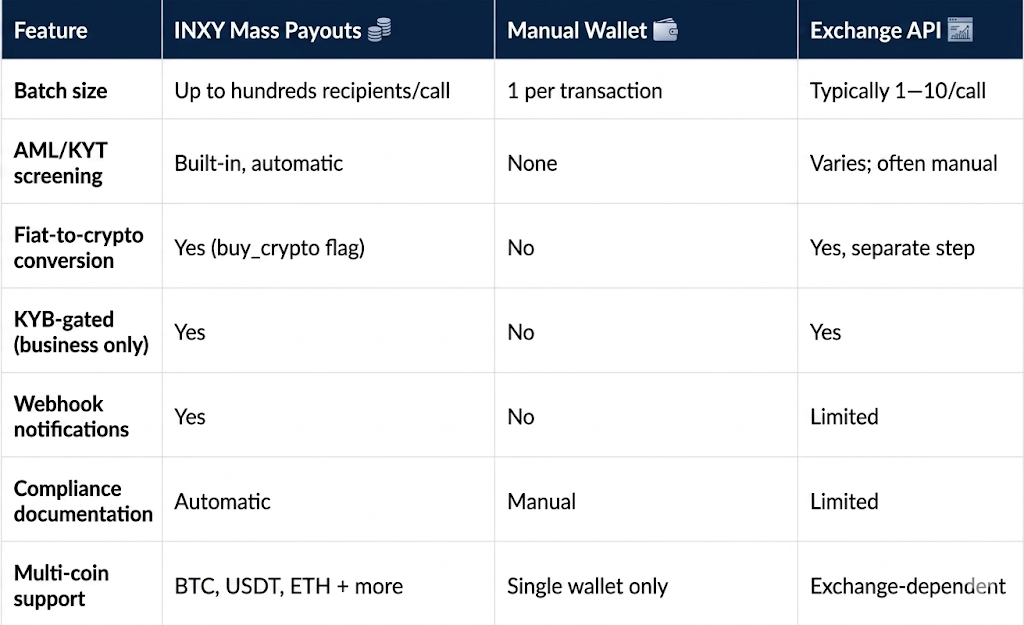
For affiliate programs paying more than 10 partners per cycle, the operational gap between INXY and manual methods compounds rapidly. A single API call replacing 200 individual wallet transactions isn't a marginal improvement — it's a different category of infrastructure.
For affiliate programs paying more than 10 partners per cycle, the operational gap between INXY and manual methods compounds rapidly. A single API call replacing 200 individual wallet transactions isn't a marginal improvement — it's a different category of infrastructure.
Compliance and AML Screening — Built for Regulated Affiliate Programs
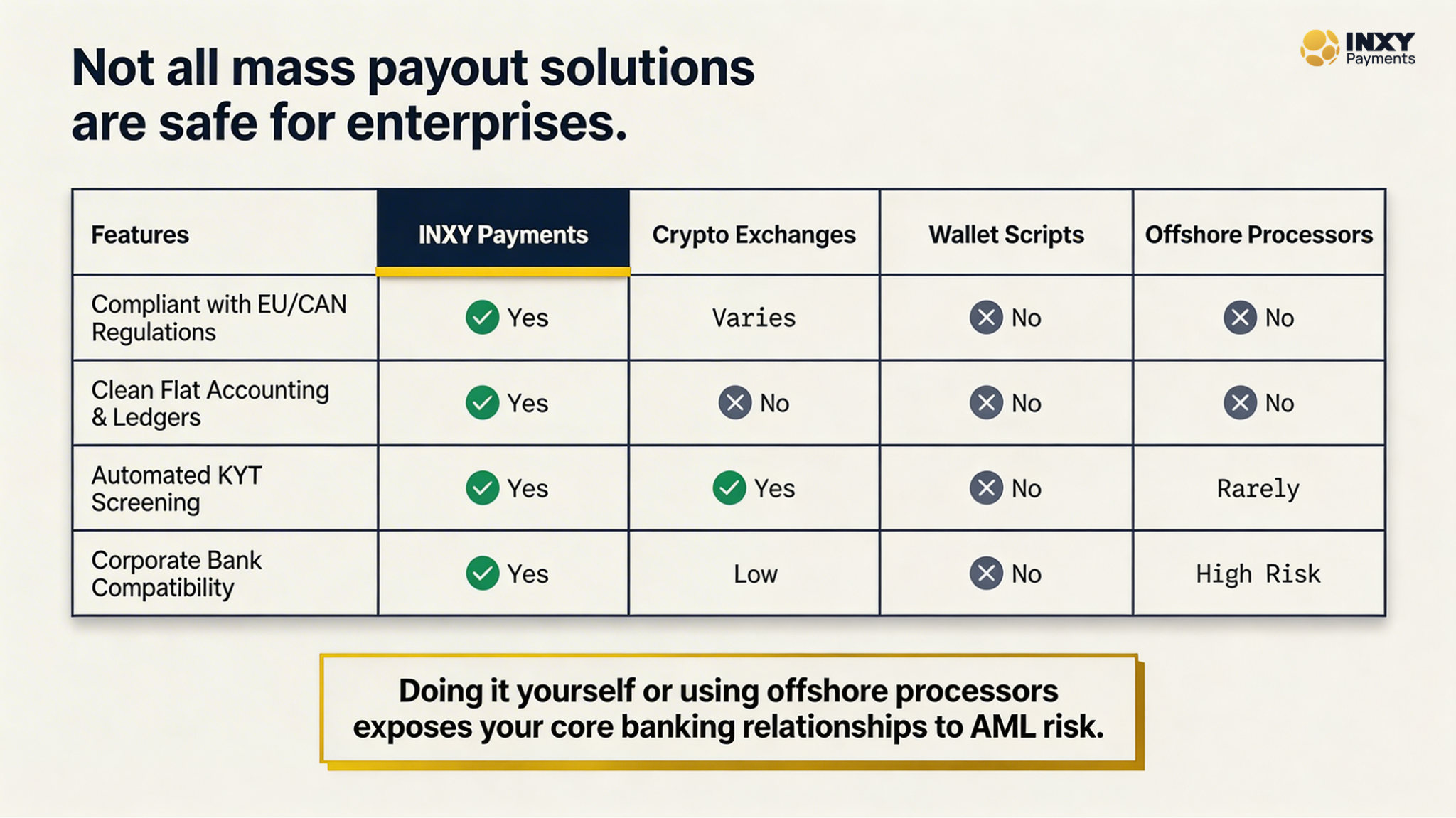
Affiliate networks operating in regulated verticals — iGaming, Forex, fintech — face increasing scrutiny on outgoing payment flows. INXY's compliance stack handles this automatically, without requiring programs to build their own AML logic.
KYT Screening on Every Outgoing Transaction
Every crypto payout processed through INXY is screened using KYT (Know Your Transaction) analysis. KYT evaluates the risk profile of recipient wallet addresses — flagging addresses associated with sanctions lists, mixers, or high-risk counterparties — before funds are broadcast on-chain.
Transaction Statuses: Cleared / Pending Review / On Hold
Each transaction is assigned a compliance status automatically: Cleared (processed immediately), Pending Review (flagged for manual review before settlement), On Hold (suspended pending investigation), or in rare cases Seized. Programs receive status updates via webhook, allowing downstream systems to handle edge cases programmatically.
Compliance Documentation for Your Records
INXY generates compliance documentation for all processed transactions. For affiliate programs that need to demonstrate AML controls to regulators, payment processors, or banking partners, this documentation provides an audit trail without requiring programs to build their own reporting infrastructure.
Who Uses INXY for Affiliate Crypto Payouts?
iGaming and Betting Affiliate Networks
iGaming is the highest-volume use case for crypto affiliate payouts. Programs managing hundreds of partners across multiple jurisdictions use INXY to run weekly BTC and USDT payment cycles. We handle payout cycles of any size — from dozens to hundreds of partners — without manual intervention; larger programs run sequential batches. KYT compliance is particularly valuable here, given the regulatory environment iGaming programs operate in.
Forex and Fintech Referral Programs
Forex brokers and fintech companies running IBs (Introducing Brokers) or referral programs use INXY to settle USDT and ETH commissions with partners globally. These programs often have partners in jurisdictions where receiving USD via wire is slow or restricted — crypto settlement sidesteps that friction entirely.
SaaS Partner and Reseller Programs
SaaS companies with global reseller networks use INXY to pay partner commissions in crypto as an alternative to Stripe payouts or wire transfers. The buy_crypto flag is particularly practical here: finance teams hold EUR or USD in the INXY balance, and INXY handles conversion and disbursement at the scheduled payout date — no active crypto treasury management required.
Frequently Asked Questions
How many affiliates can I pay in one batch?
INXY's Mass Payouts API is designed to handle payout cycles of any scale. There is no hard limit on the total number of recipients per cycle — whether you're paying dozens or hundreds of partners, the infrastructure scales to match your program's volume.
Do I need to hold crypto to pay affiliates?
No. If your INXY account holds EUR or USD, you can use the buy_crypto flag on any payout request. INXY will automatically purchase the required crypto at current market rates and disburse it to the recipient batch — without requiring you to manage a live crypto treasury.
Is KYB required to use INXY?
Yes. INXY is a B2B platform and requires KYB (Know Your Business) verification for all accounts. The KYB process is powered by Sumsub and typically completes within 1–2 business days. Individual accounts are not supported.
What cryptocurrencies can I pay affiliates in?
INXY supports BTC (Bitcoin mainnet), USDT (TRC-20 and ERC-20), ETH, and additional crypto assets. Different currencies can be used across different batches depending on affiliate preference and treasury composition.
How does AML compliance work for affiliate payouts?
Every outgoing transaction is screened using KYT (Know Your Transaction) analysis before broadcast. Transactions are assigned a status — Cleared, Pending Review, or On Hold — and INXY provides compliance documentation for all processed payments. Your team receives webhook notifications for any transactions that require attention.
Can I integrate INXY with my affiliate platform or ERP?
Yes. INXY provides a RESTful API with JSON payloads, webhook callbacks, and detailed transaction logs. Integration with affiliate tracking platforms, payroll systems, or ERP/treasury tools is straightforward for any engineering team familiar with REST APIs.
Ready to Automate Your Affiliate Crypto Payouts?
INXY is purpose-built for B2B programs that need reliable, compliant crypto disbursements at scale. Whether you're running a weekly iGaming payout cycle, a monthly Forex IB settlement, or a SaaS partner commission run — INXY's mass payout infrastructure handles the complexity so your team doesn't have to.
Get started at inxy.io — KYB takes 1–2 business days and your first affiliate payout batch can go out the same week.

The end of fiat friction: Why strategic merchants are switching to stablecoin payments
To accept crypto once meant exposure to price volatility. That is no longer the case. Stablecoins — pegged to the US Dollar or Euro — deliver the settlement efficiency of blockchain without the speculation. For C-level executives, the question is no longer whether to integrate digital assets, but how quickly legacy bottlenecks can be replaced with purpose-built infrastructure.
The legacy financial system imposes a structural tax on growth. For decades, merchants have absorbed correspondent banking fees, 3% interchange costs, and chargeback losses that erode margin on every transaction. In a global economy, waiting T+3 or T+5 for settlement is not an inconvenience — it is a liquidity problem.
To accept crypto once meant exposure to price volatility. That is no longer the case. Stablecoins — pegged to the US Dollar or Euro — deliver the settlement efficiency of blockchain without the speculation. For C-level executives, the question is no longer whether to integrate digital assets, but how quickly legacy bottlenecks can be replaced with purpose-built infrastructure.

1. Settlement velocity: From days to seconds
Traditional cross-border settlements move through a chain of intermediate banks, accumulating fees and losing transparency at every hop. SWIFT provides no real-time visibility into where funds are or when they will arrive.
Stablecoins operate on a 24/7/365 ledger with near-instant finality. Settling on Ethereum, Polygon, or TRON, merchants are no longer bound by banking hours or cut-off windows. Capital lands, clears, and is available for redeployment immediately — not in a pending queue.
inxy.io integrates directly into this settlement layer, giving merchants the operational continuity that traditional finance structurally cannot offer.
2. Eliminating the chargeback tax
Chargeback fraud costs merchants billions annually. Credit card networks are centralised by design, which means any transaction can be reversed — often at the merchant's expense, with little recourse.
Blockchain transactions are push-based and immutable. When a business chooses to accept crypto in the form of stablecoins, payment finality is guaranteed by the protocol, not by a bank's dispute resolution team.
- No chargebacks: Once confirmed on-chain, a transaction cannot be reversed by a third party.
- Reduced fraud overhead: No need for aggressive fraud filters that block legitimate customers.
- Revenue sovereignty: You control your income stream without intermediary intervention.
3. Technical infrastructure: Beyond the hype
A payment gateway needs to be a piece of production-grade fintech infrastructure, not just a wallet interface. High-volume merchants require an API that abstracts blockchain complexity without sacrificing control.
What inxy.io provides:
- No crypto management overhead: Merchants do not handle tokens or gas fees. That layer is abstracted entirely.
- Volatility protection: Pay-ins convert to stablecoins or fiat instantly, locking in value at the moment of transaction.
- Multi-chain support: USDT, USDC, DAI, EURC, TON, BTC, ETH, LTC, TRX, BNB, DOGE across ERC-20, TRC-20, Polygon, and BSC — customers transact on the network that works best for them.
- Real-time webhooks: Instant payment status notifications to your backend, enabling automated fulfilment or shipping triggers without polling.
- Compliance stack: EU VASP (Poland), Canadian MSB, MiCA-ready, AML/KYT/KYC, sanctions screening via Elliptic and Sumsub, Big-4-friendly fiat reporting.

4. Drastic reduction in operational costs
Managing global payments typically means maintaining multiple local currency accounts and navigating FX spreads on every cross-border transfer. Stablecoins provide a single settlement layer that works across jurisdictions without currency conversion overhead.
Consolidating payment rails through inxy.io can reduce payment processing Opex by up to 80%. Instead of paying a chain of intermediaries for the movement of value, you pay for efficient infrastructure. That margin stays in the business.
FAQ: Navigating the stablecoin shift
Is it difficult to integrate a stablecoin gateway into an existing platform?
No. inxy.io integrates via a REST API or pre-built plugins for major e-commerce engines. Documentation and technical support are included, and most teams go live faster than a standard merchant bank account setup.
How do we handle gas fee volatility?
inxy.io routes transactions through high-throughput networks to keep fees minimal. Customers can select the most cost-effective network for their transaction — the infrastructure handles the routing logic.
How does accepting stablecoins affect our accounting?
USDT and USDC are pegged 1:1 to the dollar, which makes them materially simpler to account for than traditional cryptocurrencies. inxy.io provides detailed reporting and CSV exports compatible with standard accounting software and ERP systems.

What about regulatory compliance?
inxy.io is built with compliance as a core component, not an afterthought — EU VASP registration, MiCA readiness, AML/KYT screening, and Big-4-auditable reporting. Your business stays within the regulatory framework while operating at full velocity.
Scalability Without Compromise
The merchant of 2026 cannot run on 1970s banking rails. The competitive advantage belongs to businesses that eliminate payment friction and capture the full value of their transactions across borders.
inxy.io is the infrastructure layer for that transition — robust APIs, multi-chain settlement, and a compliance stack built for global scale.
Partner with INXY — secure your payment infrastructure and lead the market.
.png)
How to profitably accept crypto for low-cost VPS and micro-cloud services
For budget VPS and micro-cloud providers, a $0.30 flat processing fee can wipe out nearly 10% of a $5 invoice before the server even boots. This guide breaks down how to accept crypto payments profitably — using stablecoins on low-fee networks like TRC-20 and Polygon, combined with a pre-paid balance model that eliminates micro-transaction overhead. Learn the operational blueprint for crypto-native billing that protects your margins and scales with your infrastructure.
How to profitably accept crypto for low-cost VPS and micro-cloud services
You provision a virtual machine, allocate the IP address, and send the customer an automated invoice for $4.99. Then, the traditional payment processor takes its cut: a standard $0.30 flat rate plus 2.9% of the total transaction. Just like that, nearly 10% of your gross revenue vanishes before the server even boots up. If you are operating in the micro-cloud and budget VPS market, your biggest competitor is not another hosting company; it is the legacy banking system actively eating your razor-thin profit margins.
Premium dedicated servers priced at $200 a month can easily absorb standard credit card fees. Low-cost infrastructure simply cannot. The survival and scalability of a budget IaaS (Infrastructure as a Service) provider depend entirely on extreme transaction efficiency. By strategically deploying cryptocurrency payments on low-fee blockchain networks, you can bypass fiat gateways, preserve your margins, and attract a global audience of developers who prefer decentralized payments.
Fiat gateways vs. Digital assets
To understand why traditional billing is fundamentally broken for micro-cloud services, we must examine the harsh mathematics of a $5 monthly transaction.
Scenario A: The Fiat Processing Trap When a client pays a $5 invoice via Stripe or PayPal, the fixed $0.30 fee disproportionately damages the transaction. The total fee amounts to roughly $0.45. If your baseline infrastructure cost (electricity, bandwidth, hardware depreciation) for that specific virtual machine is $3.50, your actual profit is immediately slashed. Furthermore, if that user initiates a chargeback, you lose the server resources, the original $5, and are penalized with a $15 dispute fee. You have effectively paid money to host a server for a stranger.
Scenario B: High-Speed Blockchain Routing Now, consider processing that same $5 transaction using a stablecoin like USDT routed through a Layer-2 blockchain network (such as Polygon) or a high-throughput chain (like Tron/TRC-20). The transaction fee drops from $0.45 to a fraction of a penny. There are zero chargeback risks, no rolling reserves held by acquiring banks, and the funds settle into your company’s digital wallet in a matter of seconds. You keep 100% of the revenue you earned.
The operational blueprint for micro-transactions
You cannot simply paste a Bitcoin wallet address on your checkout page and expect profitability. Bitcoin network fees can sometimes exceed the cost of the VPS itself. To succeed in the micro-cloud space, providers must adopt a specialized operational architecture:
- Implement the Account "Top-Up" Model: Instead of forcing users to process a $4 crypto transaction every single month, shift your billing panel to a credit system. Require a minimum deposit of $20 in cryptocurrency, which is added to their account balance. Your system then automatically deducts the $4 daily or monthly from that pre-paid internal ledger.
- Enforce Stablecoin Dominance: Volatile assets are dangerous for low-margin services. Restrict micro-payments strictly to stablecoins like USDT and USDC. This guarantees that a $5 payment today remains worth exactly $5 when you need to pay your own upstream datacenter bills next week.
- Mandate Low-Cost Networks: Disable legacy networks like Ethereum (ERC-20) for small checkouts, as the gas fees will frustrate your users. Only present checkout options for TRC-20, BEP-20, or Polygon networks, ensuring the customer pays almost nothing to send you the funds.
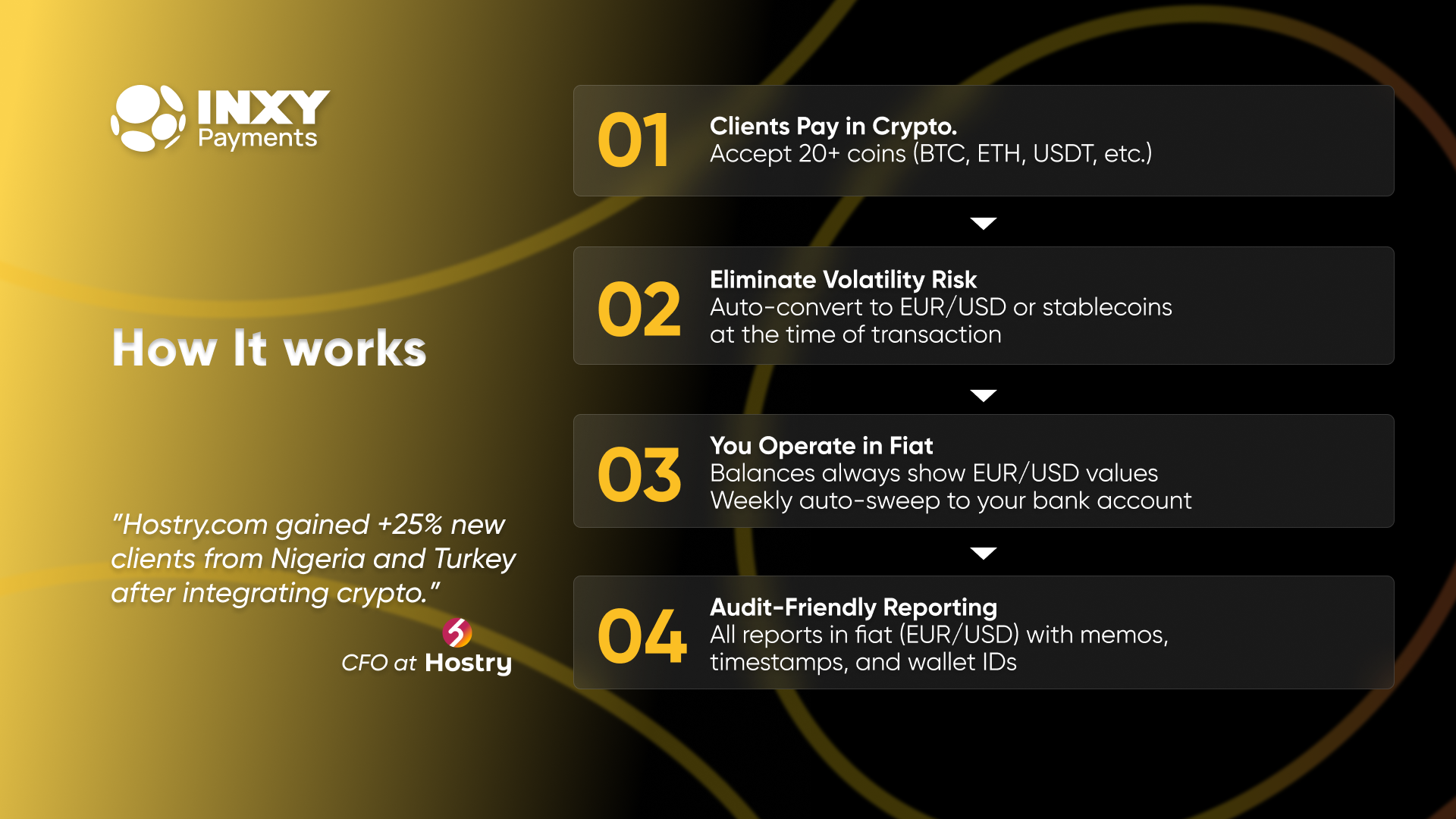
Overcoming the implementation hurdle with INXY
Many hosting providers hesitate to adopt digital payments because tracking microscopic network fees, managing multiple blockchain nodes, and building custom billing integrations sounds like an administrative nightmare. This is exactly where INXY transforms your entire billing architecture.
Unlike generic merchant processors, INXY is an enterprise-grade cryptocurrency payment gateway specifically designed to handle the high-frequency, low-cost routing required by modern cloud providers. We seamlessly integrate directly into your existing billing panels – whether you use WHMCS, HostBill, or a custom internal dashboard.
When you partner with INXY, you do not need to worry about manually verifying network confirmations or updating user balances. Our API automatically generates unique payment addresses, monitors the lowest-fee networks like Tron and Polygon, confirms the exact stablecoin deposit, and instantly updates the client's pre-paid balance on your server. INXY acts as your automated, invisible cashier, securing your revenue without the bloat of traditional banking.
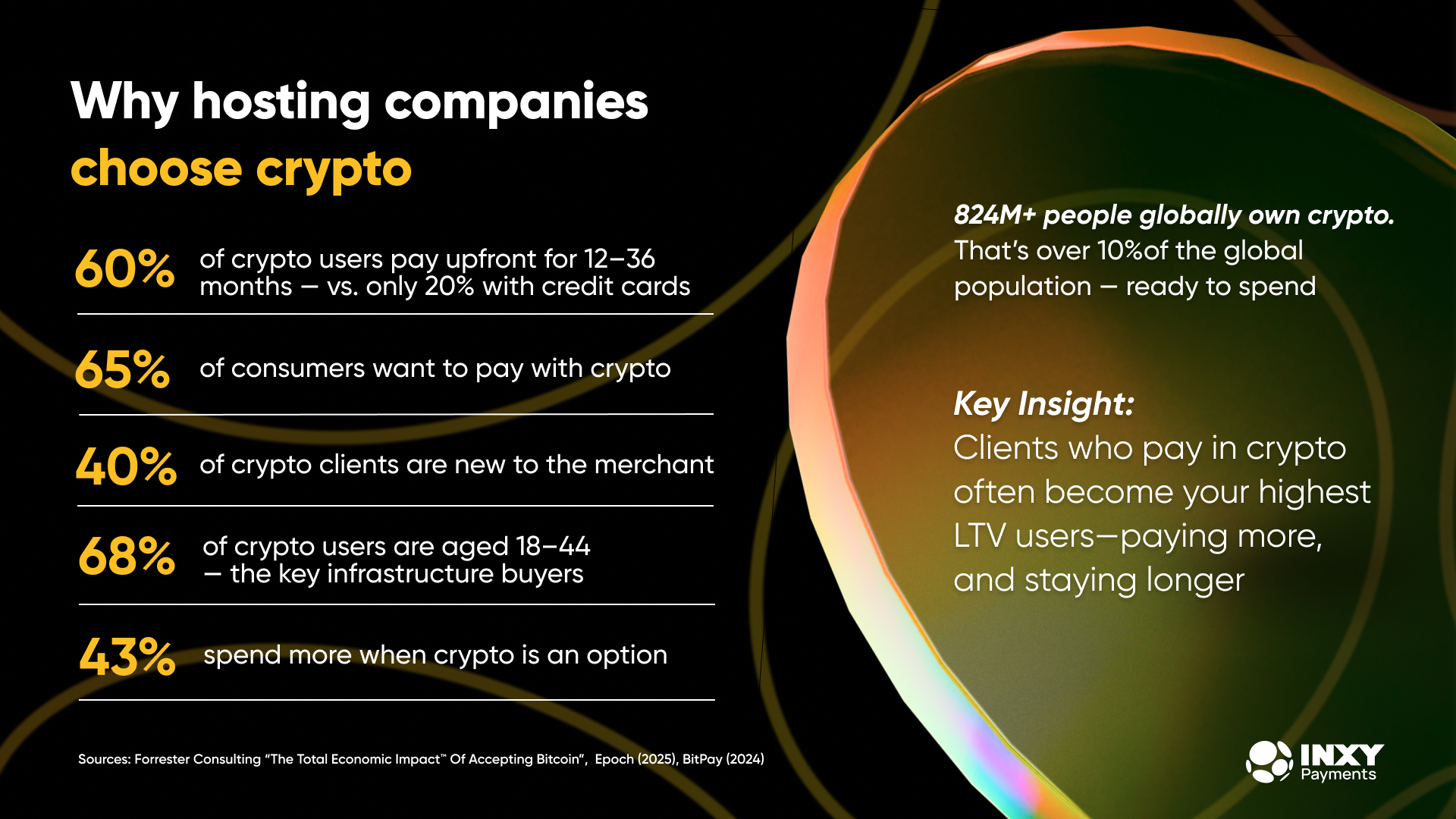
Conclusion
The micro-cloud sector thrives on volume and automation. Continuing to rely on payment processors that penalize small transactions is an unsustainable business model. By shifting to a crypto-native, pre-paid balance structure, you eliminate crippling flat fees, protect yourself from chargeback fraud, and capture a rapidly growing demographic of privacy-conscious developers.
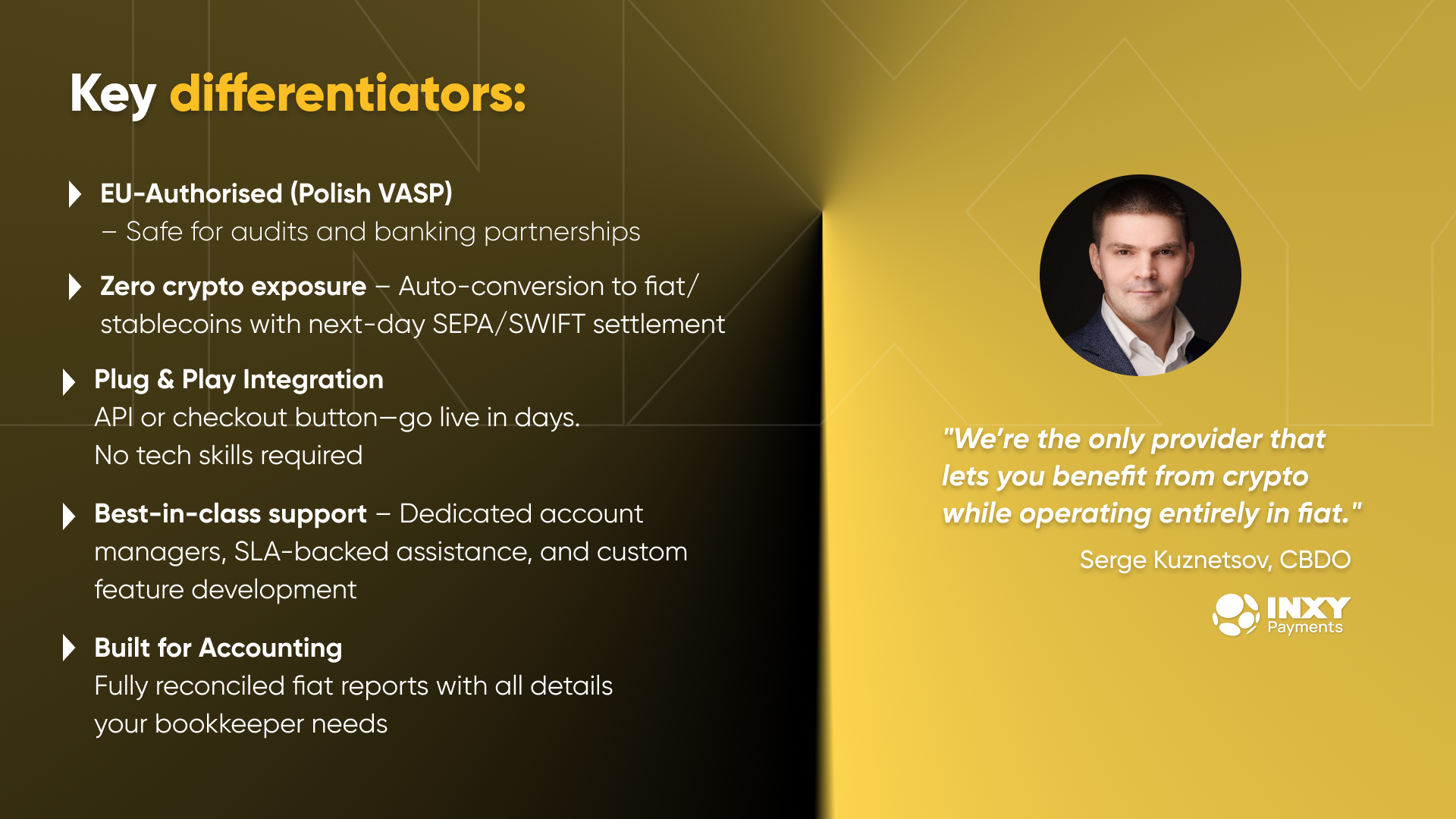
Ready to stop giving away your profit margins to payment processors? Discover how our automated payment gateway can drastically improve your server profitability by visiting https://www.inxy.io/ today.
Navigating Crypto Compliance for Fintechs: How to Offer Stablecoins Safely
As global regulators tighten their grip on digital assets, offering stablecoins safely has become a critical challenge for fintechs. This guide explores how to navigate recent EU restrictions on USDT, why fully collateralized USDC is the gold standard for institutional compliance, and how integrating a multi-asset gateway like INXY protects your platform while providing seamless global transfers.
Imagine launching a killer feature that multiplies your transaction volume overnight, only to have regulators freeze your operations a week later. Welcome to the high-stakes reality of integrating stablecoins into your platform. Right now, digital dollars are powering the global economy, moving billions across borders daily. Your users are demanding it, and the business case for instant settlements is undeniable.
But there is a catch. Financial watchdogs globally are circling. Offering stablecoins is a massive growth lever for ambitious fintechs, but stepping into the crypto arena without an airtight compliance strategy is like walking a tightrope without a net. The ultimate challenge is navigating this regulatory minefield without sacrificing the seamless user experience your customers expect.
The Top Three: USDT, USDC, and DAI
Before diving into regulatory complexities, it is crucial to understand the stablecoin hierarchy and why diversifying your asset offerings is mandatory for compliance.
- Tether (USDT): While it currently holds the number one spot for global trading volume, USDT faces severe regulatory headwinds. Notably, the European Union has implemented strict restrictions and effective bans on USDT exchanges under new frameworks, forcing fintechs to rethink relying on a single asset.
- USD Coin (USDC): Sitting comfortably as the second most popular stablecoin, USDC is the gold standard for institutional compliance. It is a fully collateralized asset, genuinely backed 1:1 by actual US dollars and short-term assets, providing unparalleled transparency for strict regulators.
- DAI: Holding the third position globally, DAI offers a robust, decentralized alternative that maintains its peg through smart contracts and over-collateralization, rounding out the essential stablecoins for any modern financial platform.
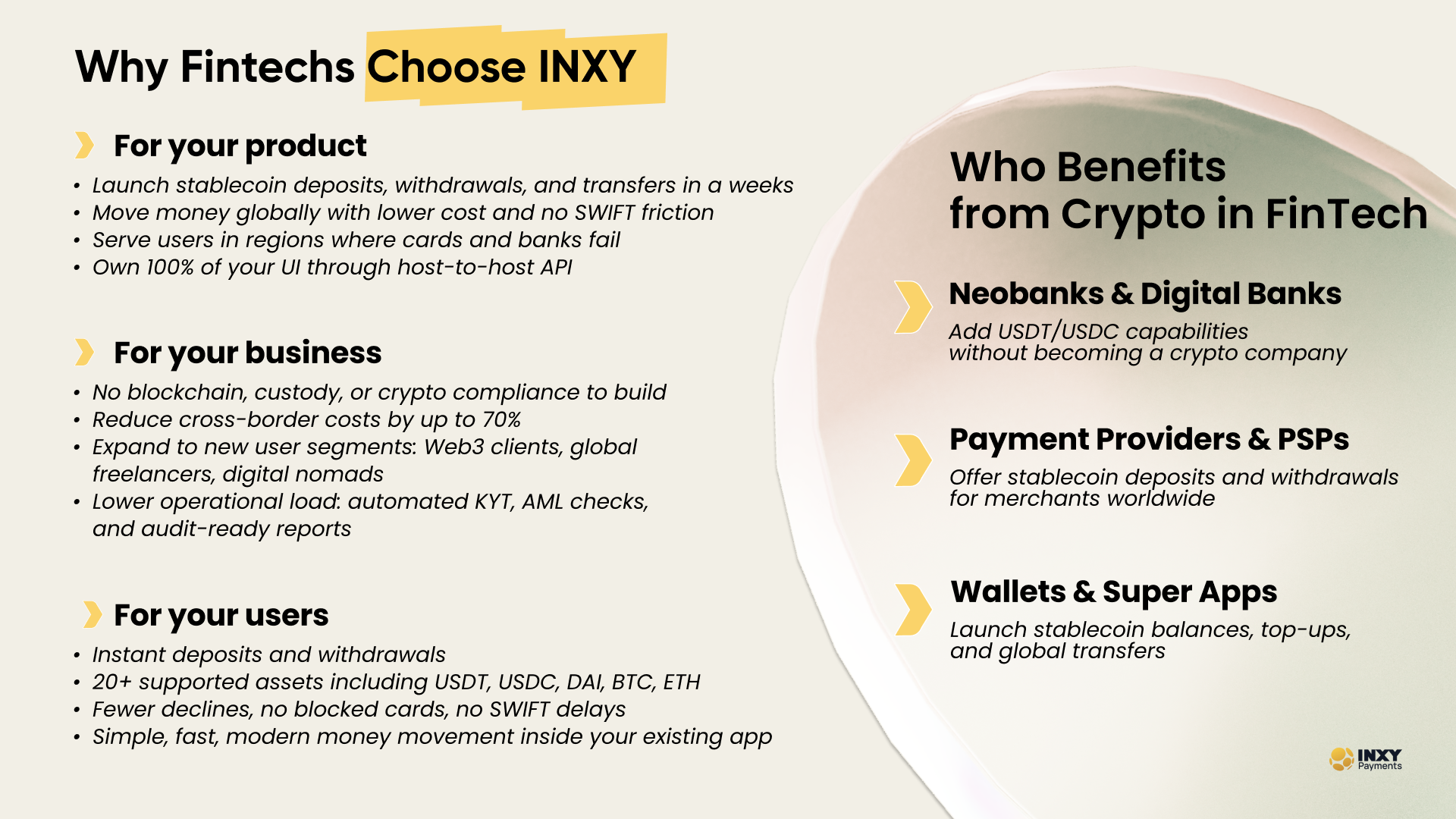
Key Regulatory Challenges in the Crypto Landscape
Offering stablecoins is not as simple as plugging into an API. Financial authorities are rapidly tightening their grip to prevent money laundering and systemic economic risks. First, stringent Know Your Customer (KYC) and Anti-Money Laundering (AML) directives require dynamic, ongoing monitoring. Second, the FATF Travel Rule mandates that institutions must securely share originator and beneficiary data for crypto transfers exceeding specific thresholds.
Finally, jurisdictional fragmentation creates a massive headache. The EU’s Markets in Crypto-Assets (MiCA) regulation perfectly exemplifies this, creating strict new rulebooks that directly restrict non-compliant stablecoins like USDT. This makes offering fully backed, transparent assets like USDC an absolute necessity for European operations.
Proven Strategies to Offer Stablecoins Compliantly
To protect your business from crippling fines while maximizing the incredible benefits of digital assets, you must follow these proven operational strategies:
- Diversify Your Assets: Do not rely solely on USDT. Offer USDC to satisfy strict regulatory requirements in the EU, and provide DAI for users seeking decentralized options.
- Implement Bank-Grade KYC/AML: Utilize automated identity verification systems that check users against global sanctions watchlists in real-time.
- Integrate Transaction Monitoring: Deploy sophisticated blockchain analytics tools to trace wallets, ensuring incoming funds are not linked to illicit activities.
- Geofence Restricted Jurisdictions: Utilize precise IP tracking to block specific stablecoin features in regions where they are explicitly banned or heavily restricted.
INXY as the Premier Crypto Payment Gateway Partner
Navigating this tangled web of regulations demands the right underlying technological infrastructure. This is where INXY steps in as the premier partner for fintech companies looking to integrate digital assets securely.
As a dedicated cryptocurrency payment gateway, INXY understands the exact pain points fintechs face. Most importantly, INXY natively supports all three of the top stablecoins: USDT, USDC, and DAI. Whether you need a reliable gateway to process fully backed USDC deposits in the heavily regulated EU market or high-speed APIs for global USDT and DAI transfers, INXY provides the robust backbone your application needs to scale while maintaining strict operational compliance.
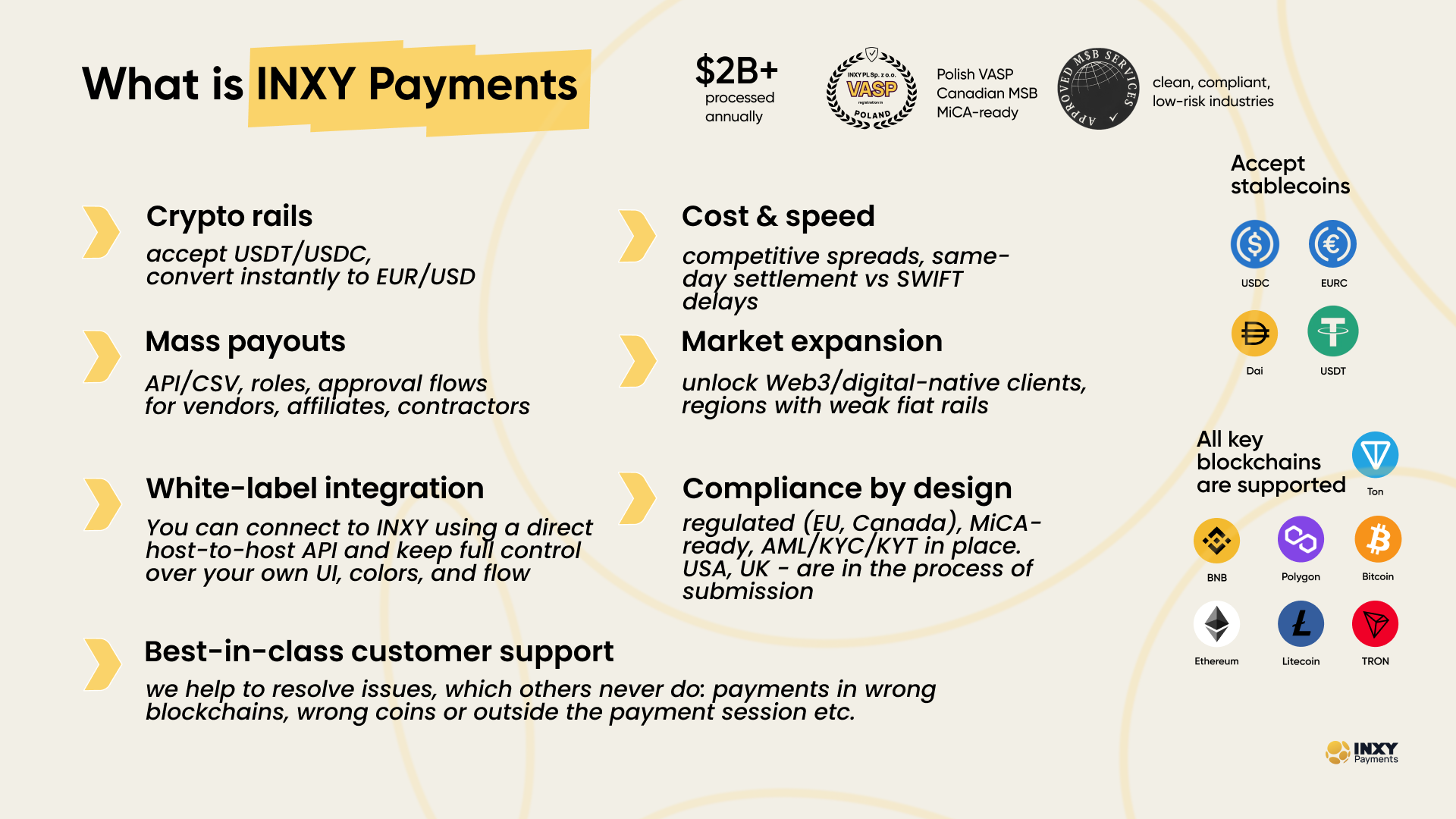
Conclusion
The future of global payments is strictly digital, and stablecoins are leading the charge. While the fragmented regulatory environment is complex, it should not deter your business from innovating. By prioritizing proactive compliance, diversifying your asset offerings, and choosing the right technological allies, you can confidently offer secure stablecoin services to your users.
Ready to future-proof your financial platform? Discover how we can help you scale your operations compliantly by visiting https://www.inxy.io/fintech today.
Why gaming platforms are switching to crypto paygates
Traditional payment processors expose gaming studios to crippling chargeback fraud and high fees on micro-transactions. This guide explores why top developers are rapidly switching to cryptocurrency payment gateways to secure irreversible transactions, completely eliminate "friendly fraud," and unlock a massive global market of unbanked players.
What if you are pouring years of development into a highly anticipated multiplayer game. Launch day arrives, your cosmetic shop is generating thousands of micro-transactions, and your dashboard shows record-breaking revenue. But thirty days later, the reality check hits: a massive wave of credit card chargebacks. Players who bought digital skins are falsely claiming the transactions were unauthorized. Suddenly, your payment processor hits you with steep penalty fees, turning your profitable launch into a financial sinkhole. Welcome to the dark side of traditional gaming monetization.
For modern studios, relying exclusively on legacy fiat networks means accepting an uncontrollable financial risk. To protect revenue, eliminate fraud, and unlock a truly global player base, the gaming industry is rapidly pivoting. Integrating a cryptocurrency payment gateway is no longer just a Web3 novelty; it is the ultimate cheat code for secure, unstoppable game monetization.
The Nightmare of friendly fraud in gaming
Unlike physical e-commerce, digital goods exist in a complex regulatory gray area. When a gamer issues a chargeback through their bank, the studio faces an incredibly steep uphill battle. Proving a specific user legitimately consumed virtual currency or activated a battle pass is difficult, and traditional banks almost universally side with the consumer.
This phenomenon, known as "friendly fraud," forces developers to suffer a double loss: the digital asset is gone, the original revenue is reversed, and the payment processor slaps the studio with a heavy penalty fee. If your chargeback ratio exceeds a strict threshold, processors will classify your game as high-risk, leading to frozen funds or suspended accounts.

Unlocking the global unbanked market
Beyond fraud protection, traditional banking rails actively restrict your total addressable market. Some of the most explosive growth in the gaming sector is happening in emerging regions like Southeast Asia and Latin America. However, millions of passionate gamers in these areas lack access to standard international credit cards or are burdened by exorbitant foreign exchange fees.
By restricting in-game purchases to fiat currencies, studios are leaving massive amounts of money on the table. Cryptocurrency transcends physical borders. It allows anyone with an internet connection to participate in your game's digital economy, transforming previously unbanked players into high-value, paying customers.
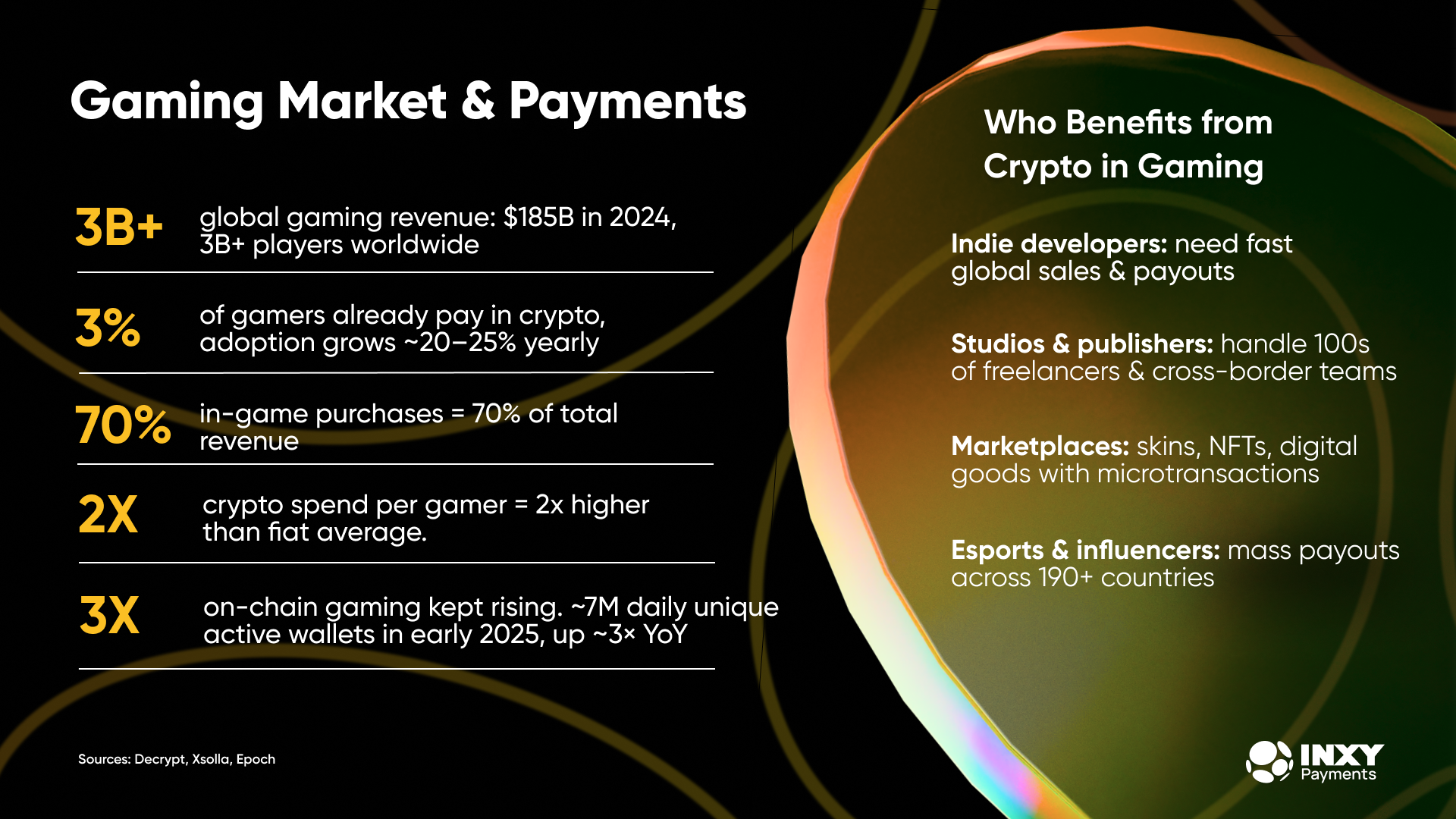
The core advantages of a crypto checkout
Transitioning your game's monetization model to include digital assets provides immediate, measurable benefits for your bottom line. Top studios are making the switch to crypto gateways for several critical reasons:
- Zero Chargeback Risk: Blockchain transactions are mathematically irreversible. Once a player pays with crypto, the funds are permanently secured, completely neutralizing the threat of friendly fraud.
- Profitable Micro-Transactions: Selling a $2 skin via credit card results in the processor taking a massive percentage. High-speed networks like Tron reduce transaction fees to mere pennies, preserving your margins.
- Instant Financial Settlement: Instead of waiting weeks for international bank payouts to clear, crypto gateways settle funds instantly, providing studios with immediate liquidity for ongoing development.
- Enhanced Player Privacy: Cryptocurrency allows gamers to purchase items without surrendering sensitive credit card details, reducing the risk of data breaches.

Game developer's gateway partner
Building robust Web3 infrastructure is complex, and your engineering team should be focused on crafting incredible gameplay, not managing blockchain nodes. This is where INXY steps in as the premier payment integration partner for the gaming industry.
INXY provides a developer-friendly, enterprise-grade gateway designed specifically to handle the high volume and instant execution required by online games. By integrating the INXY API into your game client, you instantly enable secure, irreversible crypto checkouts. INXY handles the complex routing, real-time price conversions, and instant network confirmations, ensuring your studio receives its revenue safely and automatically.
Conclusion
The gaming industry evolves rapidly, and clinging to expensive, easily manipulated credit card networks is a massive liability. By adopting cryptocurrency payments, you fortify your revenue streams, permanently eliminate chargeback fraud, and provide a frictionless payment option globally.
Ready to level up your monetization strategy? Discover how our robust API solutions can protect your studio by visiting https://www.inxy.io/gaming today.

Best Payment Gateways for SaaS in 2026: From Traditional Fiat to Web3
Stop letting legacy payment bottlenecks kill your SaaS growth. 🚀 In 2026, relying solely on traditional credit card processing is a risk to your cash flow. High fees and chargebacks are outdated. Our latest guide breaks down the best payment gateways for B2B SaaS—from the reliability of Stripe to the borderless power of INXY Paygate. Inside this guide: Why crypto users have a 2x higher LTV and prefer annual plans. How the Auto-Convert Engine eliminates volatility risks for CFOs. The secret to Zero Chargebacks and instant global settlements. Future-proof your billing stack and tap into a global market of 800M+ digital asset users. Read more at INXY.io.
When closing high-ticket B2B SaaS deals or enterprise annual plans, traditional credit card processing often becomes a bottleneck rather than a solution. High cross-border fees and unexpected fund holds can paralyze your cash flow. In 2026, relying solely on legacy fiat processors is a risk. Your billing infrastructure needs to be as borderless and scalable as your software.
As we move deeper into 2026, SaaS billing has fundamentally evolved. While traditional fiat processors remain standard, the explosive demand for borderless, low-fee digital transactions makes cryptocurrency and stablecoin gateways a mandatory addition to any modern B2B tech stack. This guide breaks down the best payment gateways for SaaS businesses, comparing legacy providers with next-generation Web3 infrastructure to help you optimize your upfront revenue.
Key Features to Look for in a SaaS Payment Gateway
Before diving into the top providers, it is essential to define what makes a payment gateway effective for a SaaS and annual licensing model:
- Global Reach & Multi-Currency: Support for international clients without exorbitant cross-border foreign exchange (FX) fees.
- API & Native Integrations: Developer-friendly REST APIs and plugins for standard platforms (like WooCommerce, Shopify, or WHMCS).
- Chargeback Protection: Mechanisms to protect your business from fraudulent chargebacks that persistently plague the digital goods industry.
- Mass Payout Capabilities: Built-in tools to easily distribute affiliate commissions or international contractor payouts.
The Top Payment Gateways for SaaS in 2026
1. Stripe: The Traditional Fiat Giant
Stripe remains a dominant force in the SaaS ecosystem. Its robust API, advanced invoicing tools, and seamless checkout flows make it a default choice for many domestic startups.
- Pros: Incredible developer tools, widespread consumer trust, and deep analytics.
- Cons: High cross-border transaction fees and persistent vulnerability to chargeback fraud.
2. PayPal / Braintree: The Consumer Favorite
Braintree (owned by PayPal) offers extensive global brand recognition. It is an excellent choice for B2C software products looking for high conversion rates at checkout from everyday consumers.
- Pros: High consumer trust, easy integration, supports Venmo and Apple Pay.
- Cons: Strict compliance algorithms that can freeze funds without warning, high processing fees for international clients.

3. INXY Paygate: The Premier Web2 to Web3 Bridge
For modern SaaS companies, relying solely on traditional banking is a massive bottleneck. Enter INXY, a regulated, VC-backed cryptocurrency payment gateway that recently secured $3M from Flashpoint VC. INXY is specifically engineered for B2B enterprises and SaaS platforms looking to accept global payments without the friction of legacy banks. INXY acts as a seamless bridge, allowing you to offer a "Pay with Crypto" option while completely eliminating the technical risks normally associated with digital assets.
Boost Your Annual Payments: INXY Paygate strategically bypasses standard auto-billing. This is a massive advantage designed to boost your upfront cash flow. When dealing with high-ticket B2B software and large sums, utilizing stablecoins makes annual tariff plans the absolute most profitable option for both your business and your clients. You get the full yearly value immediately without the risk of monthly drop-offs.
- The Auto-Convert Engine: The biggest fear for SaaS CFOs is crypto volatility. With INXY, if a client pays a $1,000 or $10,000 annual software license in Ethereum, the gateway's Auto-Convert feature instantly converts the incoming volatile asset into stablecoins (USDT/USDC) or fiat (EUR/USD). You get exact, predictable revenue.
- Native SaaS Integrations: Instead of writing complex smart contracts, SaaS companies can use INXY’s robust APIs or ready-made plugins, including a native WHMCS module perfectly tailored for hosting, cloud services, and digital agencies.
- Zero Chargebacks: Blockchain transactions are irreversible, meaning your business is completely protected from friendly fraud.
- Built-in Mass Payouts: If you rely on an affiliate network, INXY allows you to automate global mass payouts via CSV uploads or API.
Feature Comparison Matrix
Choosing the right platform depends entirely on your target audience. Here is a high-level comparison of how these gateways stack up:
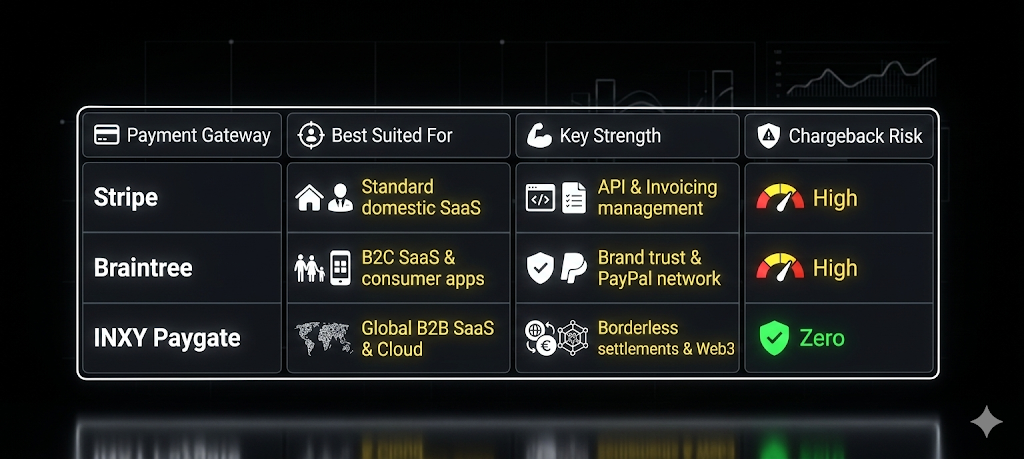
Why SaaS Businesses Are Adopting Crypto Invoicing
The shift toward stablecoin billing is not a temporary trend; it is a fundamental upgrade to global financial infrastructure. With over 824 million people globally owning crypto—representing more than 10% of the world's population—this is a massive, highly lucrative demographic ready to spend.
By integrating a Web3 gateway alongside your traditional fiat processors, you unlock several strategic advantages:
- Massive Upfront Cash Flow: 60% of crypto users prefer to pay upfront for 12–36 month plans, compared to only 20% of credit card users.
- Higher Spend & Unmatched LTV: Crypto buyers spend 2x more than traditional users. In fact, 43% of users spend more simply because crypto is offered as an option. Clients who pay in crypto consistently become the highest Lifetime Value (LTV) users—paying more and staying longer.
- New Customer Acquisition: 40% of crypto clients are entirely new to the merchant, and 56% of users actively choose to shop more frequently at crypto-friendly businesses.
- Lower Transaction Costs: Traditional gateways charge 2.9% + $0.30 per transaction, plus heavy cross-border fees. Crypto payments settle for fractions of a percent, saving high-volume companies thousands of dollars on annual contracts.
- Instant Global Settlement: Instead of waiting 3 to 5 business days for an international wire transfer to clear, stablecoin payments settle in minutes.

Conclusion: Future-Proof Your SaaS Billing
In an increasingly borderless digital economy, restricting your customers to legacy credit card processing is a critical mistake. While platforms like Stripe and Braintree excel in their respective domestic markets, the future of global SaaS billing relies on secure, instant, and borderless transactions.
By implementing a specialized gateway, you can bypass the traditional hurdles of international finance. You gain the ability to tap into a high-spending demographic, automate your affiliate mass payouts, and completely eliminate chargeback fraud—all while receiving predictable, auto-converted fiat or stablecoin settlements. It is time to expand your checkout options and embrace the next generation of digital payments.

How to Integrate a Crypto Payment API: A Developer’s Guide for 2026
Integrating crypto payments is no longer just about generating a wallet address—it’s about building a robust, scalable financial pipeline. In this 2026 Developer’s Guide, we strip away the complexity of blockchain interactions and provide a clear roadmap for API integration.
How to Integrate a Crypto Payment API: A Developer’s Guide for 2026
In the fast-moving world of fintech, the question is no longer if a business should accept cryptocurrency, but how seamlessly it can be integrated. As we move through 2026, the European market has reached a point of high maturity. With the full enforcement of MiCA (Markets in Crypto-Assets) regulations, crypto payments have transitioned from a niche experiment to a standardized financial tool for EU-based enterprises.
For developers and product managers, integrating a crypto payment API is now as streamlined as traditional fiat gateways, provided you follow the right architectural patterns.
1. Understanding the 2026 Integration Workflow
Modern crypto integration follows a predictable RESTful pattern. Unlike the early days of manual wallet monitoring, today’s gateways handle the blockchain's complexity, allowing your backend to interact with simple JSON payloads.
The standard lifecycle of a crypto payment includes:
- Initialization: Your server requests a unique payment address for a specific order.
- Monitoring: The gateway monitors the blockchain (Bitcoin, Ethereum, Tron, etc.) for incoming transactions.
- Confirmation: The gateway verifies the transaction depth (number of block confirmations).
- Webhook Notification: Your system receives an asynchronous callback to update the order status.

2. Step-by-Step API Integration
Phase A: Environment Setup
Before hitting production, high-quality gateways provide a Sandbox environment. This allows you to simulate successful payments, timeouts, and underpayments without risking real capital. You’ll typically need two headers for every request:
- X-API-KEY: Your unique identifier.
- X-PAY-SIGNATURE: A HMAC-SHA512 hash to ensure data integrity.
Phase B: Creating the Payment
To start a checkout, your backend sends a POST request to the /invoices or /payments endpoint.
JSON
{
"amount": 150.00,
"currency": "EUR",
"order_id": "ORDER-9921",
"callback_url": "https://yourstore.com/api/webhooks/crypto"
}
The gateway responds with a destination address and a QR code URL. In 2026, the best UX practice is to offer "Invisible Crypto"—where the user sees a familiar interface, and the gateway handles the real-time conversion behind the scenes.
Phase C: Handling the Webhook
This is the most critical part of the integration. Since blockchain transactions are asynchronous, your server must be ready to receive a POST callback.
Pro Tip: Always verify the webhook signature. Never update an order status based solely on the incoming payload without checking that the request actually originated from your provider.
3. Security and Compliance in the EU
In the 2026 fintech landscape, security isn't just about encryption; it's about regulatory alignment. Within the EU, businesses must ensure their payment partner adheres to Transfer of Funds Regulation (TFR) and AML (Anti-Money Laundering) standards.
When choosing a provider, look for features like:
- Auto-Conversion: Instantly swapping volatile assets into stablecoins or EUR to protect your margins.
- Audit-Ready Reporting: Financial statements that your accounting team can actually use for VAT and tax filings.
This is where specialized gateways like INXY (inxy.io) excel. Built specifically for the EU market, INXY acts as a regulated bridge. It doesn't just provide an API; it provides a compliant infrastructure that allows Web2 companies to scale into Web3 without the headache of managing private keys or worrying about crypto volatility. By integrating a solution like INXY, businesses can reduce processing fees by up to 70% compared to traditional card networks, while benefiting from instant SEPA settlements.

4. Testing and Optimization
Before going live, run "Chaos Tests" on your integration. What happens if a user sends too little? What if they pay after the 20-minute price-lock window? A robust API should provide clear error codes for these scenarios, allowing your frontend to guide the user toward a resolution—such as a partial refund or a top-up payment.
Conclusion
Integrating a crypto payment API in 2026 is a strategic move that opens your business to a global, tech-savvy audience. By utilizing professional gateways that handle the heavy lifting of compliance and conversion, your team can focus on what matters: the product.
Ready to modernize your payment stack? Would you like me to draft a technical checklist for your dev team to use during the INXY sandbox testing phase?
Best Crypto Exchanges 2026
Choosing the best crypto exchange in 2026 depends on fees, transaction speed, security, and overall user experience. This guide compares leading crypto exchanges, highlights platforms with low fees and fast performance, and explains what to look for to trade safely and efficiently in a rapidly evolving market.
Introduction to Crypto Exchanges
Crypto exchanges are platforms where you can buy, sell, or trade cryptocurrencies. Imagine them like a stock market but for digital coins. They let you swap your Bitcoin for Ethereum or convert your dollars into a stablecoin.
These exchanges come in two main types: centralized and decentralized. Centralized ones, like Binance, have a company behind them that manages everything. They often offer better security and customer service. Decentralized exchanges, or DEXs, let you trade directly with others, giving you more control over your assets.
When choosing an exchange, look for low commission fees and fast transaction speed. Some platforms set withdrawal limits, so check those if you plan on moving large amounts. Mass payouts are a feature to seek if you need to distribute funds to many users. Each exchange has its pros and cons, so consider what's important to you before diving in.
Criteria for Selection
Choosing the best crypto exchange in 2026 isn't a walk in the park. It's all about weighing different aspects. First, let's talk about fees. Lower fees mean you keep more of your money. Some exchanges offer low commission rates, making them attractive to traders who buy and sell often.
Next up is transaction speed. Fast transaction times allow you to buy or sell quickly, which is crucial in the fast-moving world of crypto. Nobody wants to wait around while prices are changing.
Security is a big deal too. With the rise in cyber threats, knowing your money is safe is essential. Exchanges that invest in top-notch security measures, like two-factor authentication and cold storage, stand out.
Consider withdrawal limits as well. High limits mean you can access your funds whenever you want. It's important for those who deal with large amounts of cryptocurrency.
Mass payouts are another factor. If you're involved in crypto mining or other activities that require frequent payouts, you'll want an exchange that handles mass payouts efficiently.
Stablecoin availability is something to think about. Exchanges that support various stablecoins can provide more options for trading or holding value.
Each of these criteria plays a role in finding the best exchange. Balancing them based on your needs will help you make the right choice.
Top Crypto Exchanges for Low Fees
When it comes to buying and selling crypto, fees can really add up. That's why it's key to choose a cryptocurrency exchange that offers low fees. Some exchanges charge a flat fee for every trade, while others use a percentage of the trade amount. For instance, if you trade a large amount, a percentage fee might cost you more.
Binance and Kraken are often praised for their low fees. Binance, for example, charges a very small percentage for each trade. This can save you a lot over time, especially if you're trading frequently. Kraken also offers competitive fees, making it a favorite for many traders.
Another option to consider is using a stablecoin. Some exchanges offer discounts or lower fees when you trade with stablecoins. This can be a smart way to keep costs down. It's important to check each exchange's fee schedule before you start trading. This way, you won't get any nasty surprises down the road. Choosing the right exchange can help you maximize your investment without losing too much to fees.

Fastest Crypto Exchanges
When you're dealing with cryptocurrency, every second counts. Transaction speed is a big deal in the crypto world. It's all about how fast you can buy, sell, or transfer your digital coins. Some exchanges stand out because they let you do this super quickly. Let's dive into what makes these exchanges tick.
First off, why does speed matter? Imagine you're at a store, and you want to buy something. You hand over your money, but the cashier takes forever to process it. Frustrating, right? The same goes for crypto exchanges. A fast exchange means you can make trades when the market is right for you. It's like being the first in line for a new gadget release.
So, what makes an exchange fast? It's a mix of technology and strategy. These exchanges use cutting-edge servers and networks. They're always upgrading to handle more transactions at once. Think of it like a highway. More lanes and fewer traffic lights mean you get to your destination faster.
One example of a speedy exchange is Binance. Known for its lightning-fast transactions, Binance uses technology that can process over a million orders per second. This means you rarely have to wait to complete a trade. KuCoin is another name that pops up when we talk speed. They have a reputation for quick order processing, ensuring users can jump on market opportunities without delay.
But speed isn't just about the tech. It's also about the user experience. Fast exchanges have simple and intuitive interfaces. This means you spend less time figuring out how to make a trade and more time actually trading. It's like shopping online with a website that's easy to navigate.
However, don't forget about security. A fast exchange is great, but it must also be safe. The best exchanges balance speed with security measures to protect your money and information. After all, no one wants a fast transaction if it puts their assets at risk.
In 2026, the fastest exchanges will likely combine advanced technology with user-friendly designs. They'll cater to both beginners and experts, ensuring everyone can trade quickly and securely. As the crypto world evolves, speed will remain a key factor in choosing the right exchange for you.

Security Features of Leading Exchanges
When we talk about crypto exchanges, security is a big deal. In 2026, exchanges are stepping up their game to keep your digital assets safe. They use several strong security features, and here’s a look at some of them.
One of the main features is two-factor authentication (2FA). This adds an extra layer of protection by requiring not just a password but also a code sent to your phone. So, even if someone gets your password, they can't access your account without your phone.
Another key feature is cold storage. This means keeping most of the cryptocurrency offline, away from potential hackers. Cold storage is like a vault for your digital coins, making it much harder for online thieves to get to them.
Exchanges also use encryption to protect data. This scrambles information so that it can only be read by someone with the right key. It keeps your personal and financial details secure from prying eyes.
Some exchanges go even further by offering insurance to cover potential losses. This means if there’s a security breach, you might get compensated. It’s like having a safety net for your investments.
Regular audits are also part of the security measures. These audits check the exchange's systems for vulnerabilities. It's a way to catch and fix problems before they can be exploited by hackers.
Look out for exchanges that have a strong track record of keeping user funds secure. They often have security teams working around the clock to monitor for suspicious activity. These teams are crucial in preventing attacks and responding quickly if something goes wrong.
In 2026, exchanges are more prepared than ever to protect your assets. By using advanced security features, they aim to provide a safe environment for trading and investing in cryptocurrencies.
User Experience and Support
When choosing a crypto exchange, user experience is key. A well-designed platform helps users find what they need quickly. Imagine trying to trade in a cluttered market; it's confusing and stressful. Similarly, a clean and intuitive interface makes trading smoother. Many top exchanges offer easy navigation with clear labels. Even beginners can understand where to click and what to do next.
Support is another crucial factor. In the crypto world, issues can arise anytime, and quick help is often needed. Good exchanges offer 24/7 customer support, ready to assist whether it's a technical glitch or a simple question. Some exchanges even provide live chat, where you can get instant answers instead of waiting for an email reply.
Let's talk about mobile apps. Many users trade on the go, using phones or tablets. A good mobile app mirrors the desktop experience. It should be fast, not freeze, and support all functions, like buying, selling, or checking balances. Imagine being able to trade while waiting for a bus or during a lunch break.
Feedback from other users is valuable. Reviews and ratings give insights into what an exchange does well and where it might lack. If many users mention slow response times from support, it might be a red flag. On the other hand, praise for quick help boosts confidence in the platform.
Language support is also important. Crypto is global, and exchanges should support multiple languages. This makes it easier for non-English speakers to navigate and understand the platform. A user-friendly exchange speaks the user's language, not just literally but also figuratively, by making every step clear and simple.
Conclusion: Choosing the Right Exchange
Picking the right crypto exchange can feel like choosing the right tool for a job. Different exchanges offer different features, so it's crucial to know what you need. Let's break down the key factors to help you make an informed choice.
First, think about fees. Some exchanges charge high fees for transactions, which can eat into your profits. Look for exchanges with low commission rates. This is especially important if you plan to trade frequently. Compare the fee structures of various exchanges to find the most cost-effective option.
Next, consider transaction speed. If you're looking to make quick trades, an exchange with fast transaction processing is essential. Slow transaction speeds can lead to missed opportunities, especially in the fast-paced crypto market. Check user reviews or test the platform yourself to see how quickly it processes transactions.
Security is another critical factor. An exchange must have robust security measures to protect your funds. Look for exchanges that offer two-factor authentication and cold storage options. These features help safeguard your assets against hacks and breaches.
Withdrawal limits are also important. Some exchanges have strict limits on how much you can withdraw at one time. If you plan to move large amounts of crypto, ensure the exchange allows for mass payouts. Check the withdrawal policies of each exchange to avoid unexpected restrictions later.
Stablecoins can offer stability in a volatile market. If you want to minimize risk, consider an exchange that supports a wide range of stablecoins. Stablecoins retain their value better than other cryptocurrencies, making them a safer choice during market fluctuations.
Finally, think about user experience. A user-friendly interface can make trading smoother and less stressful. Look for exchanges with intuitive designs and helpful customer support. This can make a big difference, especially if you're new to cryptocurrency trading.
By focusing on these factors—fees, speed, security, withdrawal limits, stablecoins, and user experience—you can find a crypto exchange that meets your needs. Make sure to research thoroughly before making your choice. Each factor plays a part in ensuring a positive trading experience.
FAQ
What are crypto exchanges, and why are they important?
Crypto exchanges are platforms that facilitate the buying, selling, and trading of cryptocurrencies. They are crucial for the cryptocurrency ecosystem as they provide the necessary infrastructure for market liquidity and price discovery.
What factors should I consider when choosing a crypto exchange in 2026?
Key factors to consider include the exchange's fee structure, transaction speed, security measures, user experience, and customer support. These elements determine the overall efficiency and safety of your trading experience.
Which crypto exchanges are known for having the lowest fees?
Exchanges that offer low commission rates and competitive pricing are highlighted in the 'Top Crypto Exchanges for Low Fees' section. These platforms provide cost-effective trading solutions and are ideal for frequent traders.
What makes an exchange fast, and why is speed important?
An exchange's speed is determined by the efficiency of its transaction processing system. Fast exchanges enable quick buying and selling of cryptocurrencies, which is essential for taking advantage of market opportunities and minimizing slippage.
How do top exchanges ensure the security of user funds and data?
Leading exchanges implement advanced security measures such as two-factor authentication, encryption protocols, cold storage for assets, and regular security audits to safeguard user funds and sensitive information.
How can I evaluate the user experience and support of a crypto exchange?
Assess the platform's user interface for ease of navigation and accessibility. In addition, consider the quality and availability of customer support services, including responsiveness and the range of support channels offered.
What are some tips for choosing the right crypto exchange for my needs?
Consider your trading priorities, such as cost, speed, and security. Evaluate the exchange's reputation and reviews, and ensure it supports the cryptocurrencies you wish to trade. Tailor your choice based on your individual needs and trading strategy.

Crypto Withdrawals 2026: Fastest Exchanges
Crypto withdrawals in 2026 are faster, safer, and more user-friendly than ever, driven by instant fiat off-ramps, low commission fees, and reliable customer support. This article explores how modern exchanges, stablecoins, and regulatory standards are shaping seamless withdrawal experiences for users worldwide.
The Evolution of Crypto Withdrawals
Crypto withdrawals have come a long way in a few years. In the early days, you might have waited hours or even days to move your crypto from an exchange to your wallet. The process often felt like watching paint dry, with delays due to network congestion and slow processing times.
Fast forward to today, and things have changed drastically. Exchanges have improved their systems, often offering near-instant withdrawals. This speed boost is thanks to advancements in blockchain technology and increased competition among exchanges. Everyone wants to offer the fastest service.
Let’s not forget the role of stablecoins like USDT and USDC. These digital currencies provide a stable value, making it easier to convert crypto to fiat. Users can quickly exchange cryptocurrency for stablecoins and then withdraw them to traditional bank accounts.
Regulatory licenses play a part, too. A licensed crypto exchange has better systems in place to ensure smooth transactions, giving users peace of mind. Plus, with customer support available 24/7, any hiccup can be resolved quickly, ensuring a seamless withdrawal process.
Finally, low commission fees have made it more attractive to withdraw funds frequently, encouraging more users to engage with the system. Crypto withdrawals today are faster, cheaper, and more reliable than ever before.
What to Look for in an Exchange
When choosing a crypto exchange, there are several key factors to consider. These can make your experience smoother and safer. Let's dive into what's important.
First, look for a regulatory license. This ensures the exchange follows rules and protects your funds. Exchanges with a license are generally more trustworthy and are less likely to face legal issues.
Next, consider customer support. Reliable exchanges offer 24/7 support. This is crucial if you need help at an odd hour or face an urgent issue. Quick assistance can save you time and stress.
Another factor is the variety of cryptocurrencies available. A good exchange offers many options, including popular stablecoins like USDT and USDC. This ensures you can trade or withdraw the currencies you need.
Low commission fees are also important. High fees can eat into your profits, so look for exchanges that offer competitive rates. This is especially vital if you trade frequently or make large withdrawals.
Withdrawal limits can vary widely between exchanges. Ensure the exchange you choose allows for the withdrawal amounts you require. Some exchanges might have low limits, which can be frustrating.
Finally, consider the user interface. A clear and easy-to-navigate platform can make trading and withdrawing much simpler. An intuitive design helps you avoid mistakes and saves you time.
Choosing the right exchange can make your crypto journey more enjoyable. By keeping these factors in mind, you can find an exchange that meets your needs and offers a smooth experience.

Top Exchanges for Fast Withdrawals in 2026
Finding the best exchanges for quick crypto withdrawals can save time and provide peace of mind. In 2026, a few standout platforms offer impressive speed and efficiency. Let's take a look at some of the top contenders.
One such exchange is Binance. Known for its robust features, it offers fast transaction speeds, making it a favorite among traders. With its low commission rates, users can withdraw crypto without breaking the bank. The exchange supports stablecoins like USDT and USDC, which are popular choices for those seeking stability.
Coinbase is another popular platform. It has a strong reputation for security and ease of use. The exchange provides a seamless withdrawal process, which is vital for those needing quick access to their funds. It's especially attractive to users who value customer support available 24/7.
Kraken also makes the list. It's well-regarded for its regulatory licenses and high trust level. The platform's withdrawal limits are flexible, catering to both casual users and high-volume traders. Kraken's user-friendly interface ensures that even beginners can manage their withdrawals with ease.
Each of these exchanges offers unique benefits, but all share a common goal: making crypto withdrawal as fast and straightforward as possible. By choosing the right platform, users can enjoy a smooth experience while managing their crypto assets.
Instant Fiat Off-Ramp Options
Navigating the crypto world can be tricky, especially when it comes to converting your digital coins into cash. This is where instant fiat off-ramp options come into play. These are services that let you switch your cryptocurrency to regular money like dollars or euros quickly and easily. Let’s break it down.
Imagine you've traded on a crypto exchange and now want your earnings in your bank account. Instant fiat off-ramps make this possible in a snap. They work by linking your crypto wallet to your bank account or card. Once connected, you can transfer funds swiftly and with minimal fuss.
Many exchanges offer this service, providing convenience for users. Some popular ones might include platforms that support stablecoins like USDT or USDC, known for their steady value. By using these stablecoins, you often enjoy lower fees and faster processing.
These off-ramps also come with various features. Some offer 24/7 customer support to help with any issues. Others have low commission rates, ensuring you keep more of your money. Keep an eye out for platforms with regulatory licenses for added security. This means they are approved by financial authorities and are safer to use.
In a nutshell, instant fiat off-ramps are a great option for those looking to access their money quickly. They simplify the process, making crypto withdrawals easier and faster than ever before.
Low Commission Fees Explained
Low commission fees are a key factor when choosing a crypto exchange for withdrawals. These fees are what the exchange charges you for using their service. They can vary widely between different platforms. Some exchanges might offer very low fees, while others could be more expensive.
When you withdraw your cryptocurrency, the commission fee is usually taken as a small percentage of the total amount you're moving. If you're new to this, think of it like a small toll you pay to use a road. The lower the toll, the cheaper your trip.
Let's take an example. Imagine you have 100 USDT and you want to withdraw it. If the exchange charges a 1% commission fee, you'd pay 1 USDT as the fee. This means you'd end up with 99 USDT after the withdrawal. In some cases, exchanges might have a fixed fee instead of a percentage.
It's important to check the fee structure before making a withdrawal. Some exchanges might look like they have low fees, but they could have hidden costs. Always read the fine print to avoid surprises. This way, you get to keep more of your money when withdrawing from your crypto exchange.
Stablecoins: A Safe Bet for Withdrawals
Stablecoins have become popular in recent years, especially for those looking to make crypto withdrawals. They provide stability in a market known for its wild swings. Unlike other cryptocurrencies, stablecoins are tied to a stable asset, like the US dollar. This link helps keep their value steady, making them a reliable option for users who want to avoid volatility.
There are many types of stablecoins, with USDT and USDC being among the most well-known. USDT, or Tether, is one of the first stablecoins and is widely used in exchanges. It's popular for its large market cap and liquidity. On the other hand, USDC is backed by actual US dollars held in reserve. This backing gives users confidence in its value, as it is regularly audited for transparency.
Using stablecoins for withdrawals can be a smart choice. Since they hold a stable value, you can withdraw your funds without worrying about losing money due to sudden price drops. Exchanges often support stablecoins, allowing easy conversion to fiat currency. This process is usually fast and can help users access their funds quickly.
Let me illustrate this with a simple example. If you have one Bitcoin and its value drops by $1,000 overnight, you lose $1,000 if you hold it. However, if you convert that Bitcoin to USDC before the drop, your value stays the same, protecting your investment. This security is why many users prefer stablecoins for withdrawals.
Stablecoins also often come with low transaction fees compared to other cryptocurrencies. This feature makes them appealing not just for withdrawals but for everyday transactions as well. They offer a cost-effective way to move money across borders, making them suitable for international users.
In the growing world of crypto exchanges, stablecoins provide an attractive solution for those looking to withdraw funds. Their stability, reliability, and low fees make them a go-to choice for many. As the crypto market evolves, stablecoins are likely to remain a key player in ensuring secure and efficient withdrawals.
Customer Support 24/7: Why It Matters
When you think about crypto exchanges, you might focus on fees or the variety of coins available. But there's another important aspect: customer support. Imagine trading in the middle of the night and facing a sudden problem. You don't want to wait for hours or even days to get help. That's where 24/7 customer support comes in.
Having access to assistance around the clock can make a big difference. Let's say you're trying to process a crypto withdrawal, but something goes wrong. Maybe the transaction is stuck, or you can't find your funds. With 24/7 support, you can get help immediately, no matter what time it is. This quick response can ease your stress and resolve issues faster.
Crypto trading doesn't follow a nine-to-five schedule. Markets are open 24 hours a day, seven days a week. So, it's only fair that support services match this availability. Whether you're in New York or Tokyo, or anywhere in between, having someone to turn to is crucial.
Now, you might wonder what makes good customer support. It's not just about being available. It's about having knowledgeable staff who understand crypto exchanges inside out. They should be able to guide you through complex processes, like how to exchange cryptocurrency or deal with withdrawal limits.
Good support teams also know how to help with regulatory license questions. This is important because crypto laws can vary widely between countries. You want someone who can explain these rules and help ensure you're compliant.
Then there's the matter of stablecoins like USDT and USDC. Sometimes, you might want to convert your crypto into these to avoid market volatility. If you're unsure how to do this, a good support team can walk you through it.
Lastly, let's talk about communication. A good support team will offer multiple contact methods. Whether you prefer email, chat, or phone, you should have options. This flexibility can make it easier to get the help you need.
In summary, 24/7 customer support is more than a convenience. It's a key part of a good crypto exchange experience. With it, you're not alone, no matter when you trade or where you are in the world. So, when choosing an exchange, consider how well they support their users. It might save you time and trouble later on.
FAQ
What are the key trends in crypto withdrawals in 2026?
In 2026, crypto withdrawals have evolved significantly with a focus on speed and convenience. Instant fiat off-ramps and low commission fees are prominent trends, driven by technological advancements and growing user demand for efficient transactions.
What factors should I consider when choosing a crypto exchange for withdrawals?
When selecting a crypto exchange, consider factors like withdrawal speed, limits, commission fees, security measures, and customer support availability. These elements can greatly impact your overall experience and costs.
Which exchanges are known for the fastest crypto withdrawals in 2026?
The top exchanges for fast withdrawals in 2026 include platforms that offer instant fiat off-ramps, low fees, and robust customer support. Specific names may vary, but look for exchanges with a reputation for speed and reliability.
Why are instant fiat off-ramps important for crypto withdrawals?
Instant fiat off-ramps allow users to quickly convert their crypto into fiat currency, enhancing the user experience by providing immediate access to funds. This feature is crucial for those who need fast liquidity.
How do low commission fees impact my crypto withdrawals?
Low commission fees reduce the overall cost of withdrawing crypto, making transactions more affordable. This is especially important for frequent traders or those dealing in large volumes, as it can lead to significant savings.
What role do stablecoins play in crypto withdrawals?
Stablecoins like USDT and USDC offer a stable value, making them a reliable option for quick and secure crypto withdrawals. They help mitigate volatility risks and facilitate smoother transactions.
Why is 24/7 customer support crucial for crypto exchanges?
24/7 customer support is vital as it ensures that users can resolve issues or get assistance at any time, enhancing trust and satisfaction. This can be particularly important during urgent transactions or when facing technical difficulties.

Get Paid in Crypto: 2026 Guide
Explore the best methods and tools to get paid in crypto in 2026. Compare platforms, wallets, and payment solutions.
The Rise of Crypto Payments
In recent years, cryptocurrency has taken center stage in the world of finance. Back in the day, only tech enthusiasts and a few daring investors dabbled in it. Fast forward to 2026, and getting paid in crypto has become a norm for many. With the rise of Bitcoin (BTC), Tether (USDT), and USD Coin (USDC), businesses and freelancers have more options than ever.
Why this shift? Traditional banks can be slow and expensive for international transactions. Crypto payments solve this by being faster and often cheaper. Imagine a freelancer in India working for a company in the US. With crypto, they can receive their payment in minutes rather than days.
Platforms that support crypto payments have also grown. These platforms help businesses pay employees in digital currencies, making the process smooth. More companies see the potential in crypto payroll, offering it as a payment option. As this trend continues, getting paid in crypto could become as common as using a credit card.
Understanding USDT, USDC, and BTC
Let's dive into the world of crypto, especially USDT, USDC, and BTC. These three are top players in the cryptocurrency arena. USDT and USDC are what's known as stablecoins. This means their value is tied to the dollar. So, if you're dealing with USDT or USDC, you're looking at a stable value, usually one dollar. This makes them great for transactions, as you avoid big price swings.
BTC, or Bitcoin, is a bit different. It’s the first and most famous cryptocurrency. Unlike stablecoins, Bitcoin's value can change a lot. It’s often seen as digital gold. Why? Because people use it to store value over time.
Imagine you’re sending money to a friend abroad. Using USDT or USDC might be your choice for a stable transaction. But if you're investing for the future, Bitcoin could be more appealing. Each has its own use, and knowing these differences helps you choose the right one.

Choosing the Right Crypto Payment Platform
Picking a crypto payment platform is a bit like choosing a new phone. You want something reliable, easy to use, and packed with features. Let's look at some key things to consider.
First, security is crucial. Look for platforms with strong protection like two-factor authentication. This keeps your funds safe from hackers. Platforms like Coinbase and Binance have solid security measures, making them popular choices.
Next, think about the currencies you need. Some platforms support only a few, while others have a broader range. If you want to get paid in USDT, USDC, or BTC, ensure the platform you choose supports these.
Transaction fees are another point to consider. Some platforms charge more than others. Compare fees to avoid surprises later. Lower fees can mean more money in your pocket.
User experience is important too. A simple and clean interface makes transactions easier. Platforms with good customer support can also be a lifesaver if you encounter problems.
Lastly, check for any extra features. Some platforms offer benefits like staking or lending options. These can give you more ways to earn from your crypto.
Choosing the right platform takes a bit of research, but it's worth it for a smooth experience.
Setting Up Your Crypto Wallet
Getting paid in crypto means you'll need a wallet to store your digital coins. Think of a crypto wallet as your virtual bank account. It's where you keep your crypto earnings safe and sound. Let's break down the process of setting up your own crypto wallet.
First, you'll need to choose the type of wallet that suits your needs. There are two main types: hot wallets and cold wallets. Hot wallets are connected to the internet. They're like the apps on your phone or computer. They're easy to use and perfect for quick transactions. Examples include Trust Wallet or MetaMask. Cold wallets, on the other hand, are offline. They're secure and ideal for storing large amounts of crypto. Picture them as USB sticks that hold your digital currency. Popular cold wallets include Ledger Nano and Trezor.
When choosing a cold wallet, it's exciting to see the latest tech. For example, the new Trezor Safe 7 features a state-of-the-art 7th generation secure chip and even includes protection against future quantum computer threats. Other brands are rethinking the design entirely. Take Tangem—it uses a set of sleek cards with a high-security 6th generation chip. A major plus is that it removes the stressful "seed phrase" you have to write down and keep safe. Instead, you can restore access using your backup cards. (Note: it works with your phone via NFC to make transactions).
Once you've decided on the type, it's time to set it up. If you go with a hot wallet, download the app or software from a trusted source. Be careful of fake sites or apps. They can trick you into giving away your crypto. After downloading, follow the setup instructions. You'll likely be asked to create a username and password. Keep this information safe and private.
In the case of a cold wallet, you'll purchase the device from a reputable store. When it arrives, connect it to your computer and follow the instructions. You'll be guided to set up a PIN and, for most models, a recovery phrase. This recovery phrase is crucial. It's a set of random words that help you recover your wallet if it's lost or stolen. Write them down on paper and store them in a secure place. (Remember, wallets like Tangem offer a different, card-based recovery method).
Next, you need to fund your wallet. To get paid in crypto, share your wallet address with your employer or client. This address is like your bank account number. It's a long string of letters and numbers. Ensure you share the correct address for the specific crypto you're using, like USDT, USDC, or BTC.
Finally, always keep your wallet updated. Developers often release updates to improve security and add features. Regularly backing up your wallet (whether it's your seed phrase or backup cards) is a good habit too. It protects your funds against potential losses.
Setting up a crypto wallet might seem tricky. But with careful steps and modern options that boost both security and convenience, you can have a secure place for your crypto payments.
Integrating Crypto Payroll for Businesses
In 2026, more businesses are looking at crypto payroll as a smart move. Paying employees with digital currencies like BTC, USDT, and USDC is no longer a novelty. It's becoming common. But how does one actually integrate crypto payroll into a business? Let's break it down.
First, you need a solid crypto payment platform. These platforms act as the backbone for crypto payroll. They manage transactions and convert fiat to crypto or vice versa. Popular platforms offer easy setup and user-friendly interfaces. They let you automate payments, ensuring timely salaries in digital currency. Crucially, the right platform handles the complex "blockchain plumbing" for you:
- Gas Management: Gas fees vary by network and can cause payments to fail. Your platform should automatically calculate optimal fees and adjust during network congestion so transactions go through without manual intervention.
- Error Handling: Don't rely on systems that fail silently. Choose a provider that actively monitors transactions and automatically retries failed payments, offering features like gas refunds for failures to reduce payout issues.
- Auto-Conversion: Accepting crypto is only half the solution. Look for infrastructure that supports automatic conversion of received crypto into your preferred settlement currency (like fiat or a stablecoin) at the point of receipt. This ensures operational efficiency and minimizes FX risk for your business.
Legal compliance is crucial. It's important to check local laws regarding crypto payroll. Some regions have specific regulations. For instance, tax implications might differ from traditional payroll systems. Consulting a financial advisor who understands crypto can be a wise step.
Choosing the right digital wallet is vital. A secure wallet ensures your funds are safe. There are software wallets for ease of access and hardware wallets for added security. Businesses often use multiple wallets for different purposes, like one for daily transactions and another for savings.
Employee education is the next step. Not all employees may be familiar with crypto. Offering training sessions can help them understand how to use digital wallets and the benefits of receiving crypto payments. This can increase their confidence and acceptance of this new payment method.
Lastly, consider transaction fees. Crypto transactions can incur fees, which vary between currencies and platforms. It's smart to compare rates and choose the most cost-effective option for your business. This helps in maintaining a budget-friendly payroll system while embracing the future of finance. A robust platform simplifies this by providing clear fee structures and handling the variable costs of gas and conversions automatically.

Tax Implications of Getting Paid in Crypto
Getting paid in crypto might sound exciting, but it's important to think about taxes. Just like regular money, crypto is subject to tax rules. These rules can change based on where you live, so it's good to check with local tax authorities.
When you receive crypto as payment, it's often seen as income. This means you'll pay tax on the value of the crypto at the time you get it. If your employer pays you in crypto, they might report this to tax authorities just like they would with regular salaries.
If you sell your crypto later, you might have to pay more taxes. This is called capital gains tax. The gain is the difference between what you sold it for and what it was worth when you got it. For example, if you receive Bitcoin worth $500 today and sell it later for $700, you might pay tax on the $200 gain.
Countries have different rules for crypto taxes. In the U.S., for example, the IRS treats crypto as property. This means you might need to keep records of transactions to report during tax season. Some countries might have more relaxed rules, while others could be stricter.
Modern payment platforms help solve these complexities by offering the ability to legally accept, send, and exchange cryptocurrencies just like regular money, while minimizing your tax and accounting burden. For example, you can use a system where you receive fiat directly—with no need to personally hold crypto assets. This approach significantly reduces volatility risk, compliance complexity, and operational friction.
There are tools to help you manage crypto taxes. Some platforms track transactions and provide reports. This can make it easier to understand what you owe. It's also useful to consult with a tax professional who knows about crypto to avoid mistakes.
Crypto taxes can seem tricky, but understanding the basics can help you stay on track. Keep records of your transactions and check local laws to ensure you're complying with tax requirements.
The Future of Crypto Payments
The world of crypto payments is evolving rapidly. By 2026, we can expect to see more businesses and individuals using cryptocurrencies like USDT, USDC, and BTC for everyday transactions. One reason for this growth is the increasing trust in blockchain technology. As more people understand how it works, they feel more comfortable using it. This trust is a big factor in making crypto payments more popular.
Many companies are already exploring how to make crypto payments easier. Some are developing platforms that allow users to pay with crypto just as easily as with cash or credit cards. These platforms are designed to be user-friendly, so even those new to crypto can use them without any trouble. For instance, some platforms are focusing on seamless integration with existing payment systems. This means you can use your favorite crypto wallet to make payments at stores that accept crypto.
Another trend we're seeing is the rise of stablecoins like USDT and USDC. These coins are tied to traditional currencies, so their value remains stable. This stability makes them attractive for everyday use, as people don't have to worry about sudden price changes. As a result, more businesses and consumers are choosing stablecoins for transactions.
Regulations are also playing a crucial role in shaping the future of crypto payments. Governments around the world are working to create laws that protect users and encourage innovation. These regulations help create a safe environment for people to use crypto without fear of scams or fraud.
Finally, the future of crypto payments will likely involve new technologies. Innovations like smart contracts and decentralized finance are already changing the way payments are processed. These technologies make transactions faster, cheaper, and more secure. As they become more widespread, they will make crypto payments even more appealing.
The future of crypto payments looks bright. With trust in blockchain growing, user-friendly platforms emerging, stablecoins gaining popularity, supportive regulations, and new technologies on the horizon, it's clear that cryptocurrencies will play an important role in the global economy.
FAQ
What are the benefits of getting paid in cryptocurrencies like USDT, USDC, and BTC?
Cryptocurrencies like USDT, USDC, and BTC offer benefits such as faster transaction times, lower fees, and increased global access. They also provide a hedge against local currency inflation and can be easily converted into other assets.
How do USDT, USDC, and BTC differ in terms of payment?
USDT and USDC are stablecoins, meaning they are pegged to the US dollar, making them less volatile and ideal for stable transactions. BTC is more volatile, which can be a benefit for potential gains but also carries more risk.
What should I consider when choosing a crypto payment platform?
When choosing a crypto payment platform, consider factors like security features, transaction fees, supported cryptocurrencies, user interface, and customer support. Research and compare reviews to find a platform that aligns with your needs.
How do I set up a crypto wallet to receive payments?
To set up a crypto wallet, choose a wallet type (hardware, software, or web-based), download the app or software, create an account, and securely store your private keys and recovery phrase. Follow the wallet’s specific setup instructions to ensure security.
Can businesses easily integrate crypto payroll systems?
Yes, businesses can integrate crypto payroll systems by partnering with specialized service providers that offer seamless integration with existing payroll systems. These services handle the conversion and distribution of fiat to cryptocurrency.
Are there tax implications for receiving income in crypto?
Yes, receiving income in crypto is subject to tax regulations in most jurisdictions. You must report crypto earnings as income, and it may be treated as capital gains when converted to fiat currency. Consult a tax professional for specific guidance.
What does the future hold for crypto payments by 2026?
By 2026, crypto payments are expected to become more mainstream, with increased adoption by businesses and individuals. Advances in blockchain technology and regulatory clarity may lead to more secure and efficient payment systems, further integrating cryptocurrencies into the global economy.
.png)
Buy USDT, USDC DAI: 5 Easy Methods
This guide explains how to buy USDT, USDC, and DAI using the five most popular methods, including exchanges, bank transfers, cards, P2P platforms, crypto ATMs, and mobile apps. It breaks down the benefits of each option, helping readers choose the fastest and most cost-effective way to purchase stablecoins. The article also highlights key fees to consider and common mistakes to avoid. Strong emphasis is placed on security best practices to protect funds and personal data. By the end, readers know exactly how to buy stablecoins safely and confidently in 2026.
Introduction to Stablecoins
Stablecoins are a type of digital currency designed to keep their value stable. Unlike other cryptocurrencies, which can fluctuate wildly, stablecoins aim to maintain a fixed value. This stability makes them a popular choice for people who want to use digital money without worrying about price changes.
Many stablecoins are linked to traditional money like the US dollar. This link, often called pegging, helps keep their price steady. For example, if you buy one USDT, USDC, or DAI, it is usually worth about one US dollar. This makes it easy for people to understand and trust their value.
Stablecoins are used for various purposes. People can use them to send money across borders quickly and cheaply. They are also popular in trading, allowing users to move money between different cryptocurrencies without converting it back to traditional money. This flexibility makes stablecoins a key part of the digital currency world.
Why Buy USDT, USDC & DAI?
People often ask why they should invest in stablecoins like USDT, USDC, and DAI. These digital coins are tied to real-world currencies, like the US dollar. This makes them less risky than other cryptocurrencies that can jump up and down in value. Let's say you want to save money for a big purchase next year. Storing your money in stablecoins could help keep it safe from market swings.
Using stablecoins can also make transactions faster and cheaper. Imagine sending money to a friend in another country. Traditional banks can take days and charge high fees. But with USDT or USDC, the transfer is usually done in minutes, with lower costs. This speed can be a game-changer for both personal and business transactions.
DAI offers an interesting twist. It's a stablecoin managed by smart contracts on the blockchain, not by a central bank. This decentralization offers more control and transparency. If you value privacy and autonomy, DAI could be your go-to choice.

Choosing the Right Exchange
Picking the right exchange to buy USDT, USDC, and DAI can feel a bit like choosing a new car. You want reliability, trustworthiness, and something that fits your needs. Start by looking at the reputation of the exchange. Is it well-known and respected in the crypto community? Check user reviews and any news about security breaches.
Fees are another important factor. Some exchanges charge a percentage of your transaction, while others have flat fees. You want to find a balance between cost and convenience. Ease of use matters too. If the platform is too complex, it could lead to mistakes. Look for a user-friendly interface.
Consider the payment methods available. Can you use your credit card, bank transfer, or PayPal? More options mean more flexibility. Lastly, check if the exchange supports the stablecoins you want to buy. Not all exchanges offer USDT, USDC, and DAI. By taking these steps, you can choose an exchange that works best for you.
Using a Bank Transfer
Buying stablecoins like USDT, USDC, or DAI through a bank transfer can be a straightforward method. First, select a cryptocurrency exchange that allows bank transfers. Popular exchanges often have this option. Start by linking your bank account to the exchange. You might need to verify your identity, so have your ID ready. Once your account is linked, you'll transfer funds from your bank to the exchange. It may take a few days for the transfer to complete, depending on your bank's processing speed.
When your funds arrive in the exchange account, choose the stablecoin you want to buy. Then, enter the amount you wish to purchase and confirm the transaction. Bank transfers usually have lower fees compared to credit cards. This makes them a cost-effective choice. However, if you're in a rush, the slower processing time might not be ideal. Always check if there are any fees involved with your bank. Each bank's policies can vary, and it's good to know what to expect.

Credit and Debit Card Purchases
Buying stablecoins like USDT, USDC, and DAI with credit or debit cards is a popular choice. Why? It's quick and straightforward, just like buying your favorite online products. Many crypto exchanges allow you to link your card directly to their platform. Once linked, you can purchase stablecoins in just a few clicks.
It's important to know that some exchanges may charge a fee for card transactions. Fees can vary, so it's smart to compare before making a purchase. Also, keep an eye on your bank's foreign transaction fees, as these can add to your costs.
When using this method, security is key. Ensure your chosen exchange uses strong security measures. This helps protect your card and personal information. Always use trusted and verified platforms to avoid scams. Buying stablecoins with a card is easy, but it's wise to stay informed about costs and safety.
Peer-to-Peer (P2P) Platforms
Buying stablecoins like USDT, USDC, and DAI through P2P platforms can be a straightforward process. These platforms let you trade directly with another person, bypassing any middlemen. You can often find better deals because you're negotiating directly with sellers.
To get started, you'll need to register on a P2P platform. Most platforms require identity verification, but this is usually quick. Once registered, browse through the listings to find someone selling the stablecoin you want. Check their reputation score to ensure they're trustworthy.
After choosing a seller, you can initiate a trade. The platform will hold the stablecoin in escrow until the payment is complete. Payment methods vary, including bank transfers and digital wallets. Once the seller confirms the receipt of payment, the platform releases the stablecoin to you. This process makes P2P platforms a flexible option for buying stablecoins.
Using Crypto ATMs
Crypto ATMs have become a popular choice for people looking to buy stablecoins like USDT, USDC, and DAI. These machines offer a straightforward way to purchase digital currencies using cash or a credit card. You can find them in various locations, such as malls, convenience stores, and even airports.
To use a crypto ATM, you first need to find one near you. Websites and apps can help locate these machines. Once you reach the ATM, you choose the type of stablecoin you want to buy. The screen will guide you through the process, ensuring it's easy to follow.
Most crypto ATMs require you to scan a QR code from your digital wallet. This step links the purchased stablecoins directly to your wallet. If you don't have a digital wallet, some ATMs offer to create one for you on the spot. This feature is handy for beginners who might not have set up a wallet yet.
After choosing the stablecoin and scanning your wallet's QR code, you insert cash or use your credit card to make the purchase. The machine will show you the current rate and any fees involved. It's vital to check these rates and fees to ensure you're getting a good deal.
Crypto ATMs typically charge higher fees compared to online exchanges. This is due to the convenience they offer. But for those who prefer a quick, in-person transaction, the extra cost might be worth it. Plus, the process is often faster than waiting for bank transfers when buying online.
Overall, crypto ATMs provide a user-friendly option for buying stablecoins. With clear instructions and immediate transactions, they cater to both beginners and experienced users. As more ATMs pop up globally, they continue to make crypto transactions accessible to everyone.

Mobile Apps for Quick Purchases
Buying stablecoins like USDT, USDC, and DAI using mobile apps is a breeze in 2026. With just a tap, you can access digital currencies right from your smartphone. Let's explore how mobile apps have revolutionized the way we purchase stablecoins.
First off, mobile apps offer convenience. You can buy stablecoins anytime, anywhere. Whether you're at home, on the go, or even on vacation, your smartphone becomes a powerful tool for managing your digital assets. This flexibility is a game-changer for many people.
Now, let's talk about security. Mobile apps have stepped up their game with robust security features. Many apps use two-factor authentication, biometric logins, and encryption to protect your transactions. This ensures that your data and funds are safe from unauthorized access.
When it comes to speed, mobile apps are hard to beat. Transactions are often completed in seconds. This is especially useful when you need to buy stablecoins quickly due to market changes. No more waiting around for lengthy confirmations.
Mobile apps also offer user-friendly interfaces. They are designed to be intuitive, so even beginners can navigate through the app without hassle. Most apps provide step-by-step guides or tutorials to help you through the buying process.
Payment options are another highlight. Mobile apps typically support various payment methods like credit cards, bank transfers, and sometimes even PayPal. This variety makes it easier to choose a method that suits you best.
Customer support is also at your fingertips. Many mobile apps provide in-app chat support or detailed FAQs to assist users. If you face any issues, help is just a click away.
Let's not forget about notifications. Mobile apps can send you instant alerts about price changes or transaction statuses. This keeps you updated on your investments and helps you make timely decisions.
In 2026, buying stablecoins like USDT, USDC, and DAI through mobile apps is not just a trend, it's a preferred choice for many. The convenience, security, and speed make it a favored method for both new and seasoned users. So, if you haven't tried it yet, exploring mobile apps for stablecoin purchases might be a smart move.
Fees to Consider
When buying stablecoins like USDT, USDC, and DAI, fees can significantly impact your purchasing decision. Understanding these fees can help you find the best deals and avoid unnecessary costs. Let's break down the most common fees you may encounter.
Firstly, there's the transaction fee. This fee is charged by the platform where you buy your stablecoins. It can be a flat fee or a percentage of your purchase amount. For example, if a platform charges a 1% transaction fee and you're buying $100 worth of USDT, you'll pay an additional $1.
Another type of fee is the withdrawal fee. Once you've bought stablecoins, you might want to transfer them to a digital wallet. Some platforms charge a fee for this transfer. It's essential to check if the fee is fixed or varies depending on the amount you withdraw. A fixed fee can be more cost-effective if you're transferring a large amount.
Exchange rate fees can also play a role. When you use a credit card or bank transfer in a different currency, you might face a currency conversion fee. This fee is often hidden in the exchange rate offered by the platform. Comparing the exchange rate with the market rate can help you spot any discrepancies.
Some platforms offer discounts or even waive fees for using their native tokens or certain payment methods. For instance, if a platform has its token and you use it to pay for fees, you might get a discount. It's worth checking if such options are available to reduce your costs.
Lastly, be aware of inactivity fees. If you have an account on a platform but don't use it for a while, some platforms charge an inactivity fee. This is less common but can catch you off guard if you plan to hold your stablecoins for a long time without frequent activity.
To sum up, different platforms have different fee structures. It's crucial to read the fee schedules of various exchanges and platforms before deciding where to buy your USDT, USDC, or DAI. This knowledge will help you make informed decisions and keep more of your money in your pocket.
Security Tips When Buying Stablecoins
When you're diving into the world of stablecoins like USDT, USDC, and DAI, security should be at the top of your list. Let's break down some simple yet effective tips to keep your investments safe.
First things first, always use a secure and reputable exchange for your transactions. Popular exchanges often have stronger security measures in place, reducing the risk of hacks. Do a little research to find out which platforms have the best track record for security.
Another important step is to enable two-factor authentication (2FA) on your accounts. This adds an extra layer of protection by requiring not just a password, but a second piece of information that only you have access to. It's like having a double lock on your door.
Keep your private keys safe and never share them with anyone. Think of private keys as the password to your wallet. If someone else gets hold of them, they can access your funds. Consider using a hardware wallet to store your cryptocurrencies offline, away from online threats.
Phishing scams are another thing to watch out for. These are fake websites or emails that try to steal your information by pretending to be legitimate. Always double-check the URLs of the sites you visit and be cautious of links in emails.
Regularly update your software and wallets to the latest versions. Updates often contain security enhancements that protect against new threats. It's like keeping your antivirus software up-to-date to fend off viruses.
Lastly, be mindful of the information you share online, especially on social media. Publicly revealing details about your cryptocurrency holdings can make you a target for cybercriminals.
By following these tips, you can help secure your transactions and enjoy a safer experience in the world of stablecoins.
Conclusion: Your Path to Stablecoins
Navigating the world of stablecoins like USDT, USDC, and DAI can seem daunting at first. These digital currencies offer a stable alternative to more volatile cryptocurrencies. They are pegged to the value of traditional currencies, making them less subject to wild price swings. Let's explore how you can confidently step into the stablecoin space.
Imagine you're standing at the crossroads of traditional finance and the digital world. Stablecoins are like a bridge between these two realms. They combine the stability of fiat currencies with the advantages of blockchain technology. This makes them an attractive option for both seasoned investors and newcomers alike.
When you're considering buying stablecoins, think about why you want them. Are you looking to invest, send money overseas, or simply diversify your holdings? Knowing your purpose can help you choose the right stablecoin. For instance, USDT is widely used and easily accessible on many exchanges. USDC, on the other hand, is known for its transparency and regulatory compliance. DAI offers a decentralized option, which can appeal to those wary of centralized control.
Once you've decided on the stablecoin, it's time to find the best way to buy it. Consider factors like transaction fees, speed, and ease of use. You might choose a centralized exchange for its convenience or a decentralized one for its privacy. Each has its pros and cons, so weigh them carefully.
Before making a purchase, ensure your digital wallet is ready. This wallet will store your stablecoins securely. There are different types of wallets, such as hardware, software, and mobile wallets. Choose one that suits your needs and provides robust security.
Security is crucial when dealing with digital assets. Always use strong passwords and enable two-factor authentication. Be wary of phishing scams and other online threats. Keeping your assets safe is just as important as buying them.
As you venture into stablecoins, stay informed about market trends and regulatory changes. The world of cryptocurrency is ever-evolving, and being updated will help you make better decisions. Engage with online communities, read news articles, and follow industry experts to deepen your understanding.
Your journey into stablecoins can be rewarding. With careful planning and informed choices, you can make stablecoins work for you. Whether it's for investment, transactions, or hedging against volatility, stablecoins offer a world of opportunities. Embrace this digital frontier with confidence, and you'll find a stable path forward.
FAQ
What are stablecoins and why are USDT, USDC, and DAI popular?
Stablecoins are cryptocurrencies designed to minimize price volatility by being pegged to a reserve of assets, like fiat currency. USDT, USDC, and DAI are popular because they offer stability, making them ideal for trading, hedging, and transfers within the crypto ecosystem.
Why should I consider buying USDT, USDC, or DAI?
These stablecoins are beneficial for preserving value, facilitating seamless crypto transactions, and providing a reliable medium for trading and investment strategies without the volatility of other cryptocurrencies.
How do I choose the right exchange for buying stablecoins?
Look for exchanges with competitive rates, low fees, strong security measures, good user reviews, and those that offer the trading pairs you need. Consider factors like liquidity, user interface, and customer support as well.
Is it cost-effective to buy stablecoins using a bank transfer?
Yes, bank transfers often have lower fees compared to credit/debit card purchases. However, it's important to check the exchange's fee schedule and processing times to minimize costs and delays.
What should I know about buying stablecoins with a credit or debit card?
Purchasing with a credit or debit card is convenient but usually comes with higher fees and lower purchase limits. Ensure you're aware of the costs and verify the legitimacy and security of the platform you're using.
How can I use Peer-to-Peer (P2P) platforms to buy stablecoins?
P2P platforms allow you to buy stablecoins directly from other users, often at competitive rates. Ensure you use reputable platforms, check user ratings, and follow security measures to protect your transactions.
Are there any security tips I should follow when buying stablecoins?
Always enable two-factor authentication, use secure wallets, verify the legitimacy of exchanges or sellers, and avoid sharing personal information. Regularly monitor your accounts and transactions for any suspicious activity.
USDT vs USDC in 2026: What Matters for Business Payments
USDT vs USDC compared for finance teams deciding what to pay with, not what to hold. The article covers reserve backing, redemption routes, the 2022 and 2023 depeg events, MiCA status in the EU, and where each token is actually accepted, then sets out a six-step check and a decision framework for payout programmes.
Two tokens hold roughly 84% of the stablecoin market between them, and most comparisons of USDT vs USDC are written for someone deciding what to hold. This one is written for someone deciding what to pay with. The questions that matter for a finance team are different: what backs the token, how you get out of it at scale, what happened the last time each one broke its peg, and whether the counterparty on the other side of your invoice will actually accept it.
Where the two tokens stand, in numbers
As of 15 September 2026, USDT circulates at approximately $183.4 billion and USDC at approximately $74.3 billion, against a total stablecoin market of roughly $305.1 billion (DeFiLlama, 15 September 2026). Read that as market structure rather than a scoreboard: USDT is the liquidity layer of the non-Western crypto economy, and USDC is the regulated instrument of the Western one. For a payments business, that split is the entire story.
Both are dollar-denominated, both are redeemable at par from their issuers under stated conditions, and both move on the same networks. The differences that affect a payout programme are in the reserve, the redemption door, the regulatory status and the acceptance, in that order.
Understanding USDT
Tether's USDT is the oldest and by far the largest dollar stablecoin. It is issued by Tether and is available across most major networks, including Ethereum (ERC-20), Tron (TRC-20) and BNB Smart Chain (BEP-20), which is why network selection is a live operational decision rather than a detail. TRC-20, ERC-20 and BEP-20 network costs compared covers what each network actually costs to send.
Tether states that its tokens are backed 100% by its reserves and publishes attestation reports along with daily circulation figures on its transparency page. It publishes attestations rather than a full financial-statement audit of the reserve, and the distinction matters to a CFO: an attestation is a point-in-time examination against stated criteria, not a continuous audit opinion.
What a business should take from this: USDT's strength is liquidity and acceptance depth, particularly across Asia and LatAm, where it functions as a de facto settlement currency between counterparties whose banks do not talk to each other. Its weakness for an EU-facing business is regulatory status, covered below.
Understanding USDC
Circle's USDC is the regulated alternative. Its reserves are held primarily in the Circle Reserve Fund, an SEC-registered 2a-7 government money market fund managed by BlackRock holding cash, short-dated US Treasuries and overnight US Treasury repurchase agreements, with the remainder as bank deposits held mostly at the largest banks. Circle publishes monthly third-party assurance reports from a Big Four accounting firm, prepared under AICPA attestation standards, and states that Deloitte & Touche LLP has been its independent auditor since fiscal 2022 (circle.com/transparency, read 15 September 2026, showing composition as of 10 September 2026).
That structure is the practical difference. A 2a-7 money market fund has a published holdings schedule, a defined maturity profile and a regulator; a reserve disclosed only through a periodic attestation does not give a treasurer the same visibility into duration and counterparty concentration.
Reserve composition: what a treasurer actually asks
The question is not "is it backed." The question is backed by what, at what maturity, held with whom, and how quickly does it convert to cash under stress.
| Question | USDC | USDT |
|---|---|---|
| Primary reserve vehicle | Circle Reserve Fund: SEC-registered 2a-7 government money market fund managed by BlackRock | Reserves disclosed via Tether's own attestation reports |
| Disclosure cadence | Monthly third-party assurance, AICPA attestation standards | Periodic attestations; circulation published daily |
| Independent auditor of the issuer | Deloitte & Touche LLP (since fiscal 2022) | Attestation provider named in each report |
| Visibility into holdings | Fund-level holdings schedule and maturity profile | Category-level breakdown in the attestation |
| Bank-deposit concentration | Disclosed as deposits at large institutions | Disclosed in the attestation |
Honest limitation: we have not restated Tether's reserve percentages here because we could not read them from Tether's own primary disclosure at the time of writing. Do not take a reserve breakdown for either token from a blog, including this one. Read the latest attestation on the issuer's transparency page before you make a treasury decision, because the composition changes every quarter.
Redemption mechanics: the door you leave through
Holding a stablecoin is easy. Converting several million dollars of it back to bank money on a specific date is where the difference shows up, and almost no comparison article covers it.
Tether's terms state that redemption is at one unit of the pegged fiat currency per token, less fees where applicable, paid to a bank account in your own name; that you must be a verified customer of Tether to redeem directly; that redemptions are subject to minimum redemption amounts and other requirements; that fees are set out in a separate Fee Schedule updated from time to time; and that Tether may delay or suspend access to purchases and redemptions in defined circumstances (Tether terms of service, read 15 September 2026).
Circle operates direct minting and redemption for business customers through Circle Mint, alongside the monthly attestation regime described above. Circle publishes its redemption structure in its own help documentation; the settlement tiers and any associated fees should be read there directly rather than taken second-hand. We could not retrieve the current figures at the time of writing and will not guess them.
The operational point is the same for both: direct redemption with the issuer requires an onboarded relationship, and most businesses never build one. They redeem through an exchange, an OTC desk or a payment provider, which means the price they actually get is the provider's spread, not the issuer's par. When you model your off-ramp cost, model the route you will really use.
Depeg history: what actually happened, and what it cost
Both tokens have traded away from a dollar. Neither event was a failure of backing, and both are instructive about where the risk actually sits.
USDT, 12 May 2022. During the Terra collapse USDT traded down to approximately $0.945 on exchanges as the market tested whether the reserve could absorb a redemption wave. It recovered the same day; the deviation lasted under 24 hours, and Tether processed billions in redemptions across that week.
USDC, 10–13 March 2023. Circle disclosed that $3.3 billion of USDC reserves, roughly 8% of backing, were held at Silicon Valley Bank when the bank failed. USDC traded to approximately $0.87 and remained off par for around three days across a weekend, recovering after the US deposit guarantee was announced (CoinDesk and CNN Business, 11 March 2023; S&P Global, Stablecoins: A Deep Dive into Valuation and Depegging, 2023).
The insight that matters operationally: the larger and longer depeg happened to the more transparent, more regulated token, and it was caused by ordinary banking counterparty risk, not by anything crypto-specific. Transparency told the market exactly how bad it was, quickly, which is precisely why it repriced so sharply. Regulatory status is not a peg guarantee. Anyone selling it as one is selling something else.
What this means for a payout programme: your exposure window is the time value spends in the token, not the token itself. A payout batch that funds in EUR, converts, settles on-chain and delivers within the same day carries minutes of exposure. A treasury that parks a float in stablecoins for three weeks carries three weeks of it. The rail is not the risk; the holding period is.
Which one to hold for a payout float
This is the question finance teams actually have, and it has a structural answer rather than a preference.
Hold the token your obligations are denominated in, for the shortest period that operationally works. If you pay 3,000 affiliates in USDT because that is what they accept, holding USDC as your float means you carry a conversion leg and its spread on every batch. If your counterparties are EEA-facing businesses invoicing in euro, the conversion you are optimising is a different one entirely; see EURC explained for business payments.
Three practical rules:
- Minimise the holding period before you optimise the token. Float duration dominates token choice in every risk model we have run in practice.
- Do not hold a float in a token your off-ramp route prices badly. The spread you pay to exit is a real, recurring cost; the peg risk is an occasional one.
- Split rather than choose, if your payee base is split. Running both USDT and USDC is normal for payout programmes covering both Asia/LatAm and the EEA. The cost of running two is lower than the cost of forcing every payee onto one.
And the honest limit: if your payout float is large enough that the choice of stablecoin materially changes your risk position, the correct answer is probably to hold less float, not to pick a better token. Pre-funding requirements are a working-capital cost that most providers never quote.
The regulatory divergence in the EU
Under Regulation (EU) 2023/1114 (MiCA), the provisions governing asset-referenced tokens and e-money tokens became applicable on 30 June 2024. Issuers of e-money tokens offered in the EU must be authorised, and authorised issuers appear in ESMA's public register.
Circle's USDC and EURC are among the authorised e-money tokens in that register. Tether's USDT is not: Tether has not been authorised as an e-money token issuer in the EU (ESMA register of e-money token issuers and white papers, checked 11 September 2026). The consequence is that regulated EEA trading venues and service providers have removed or restricted USDT for EEA users, and a compliant EU-facing business generally cannot treat USDT as a routine settlement instrument with regulated EU counterparties.
This is a distributional fact, not a judgement about either token's backing. It reshapes acceptance rather than safety.
This article describes regulatory and market conditions for general information. It is not legal, tax, or financial advice. INXY Payments is a payment infrastructure provider, not a law or accountancy firm, and decisions with regulatory consequence should be reviewed by qualified counsel in the relevant jurisdiction.
Where each one is actually accepted
Acceptance, not backing, is what determines whether a payment completes. Both tokens are among INXY's supported cryptocurrencies, and the right default depends on who is on the other side of the payment.
| Counterparty type | Practical default | Why |
|---|---|---|
| Affiliates, media buyers and contractors in Asia and LatAm | USDT, usually TRC-20 | Deepest local liquidity and the widest informal acceptance; local off-ramps quote it best |
| EEA-regulated businesses and PSPs | USDC | Authorised as an e-money token under MiCA; USDT is restricted on regulated EEA venues |
| Euro-denominated EEA invoicing | EURC | Removes the EUR/USD conversion leg entirely |
| Gaming, iGaming and ad-network payees | Mixed; USDT dominant, USDC growing | Follow the payee base, not the treasury preference |
| Exchange and OTC settlement | USDT by depth, USDC by regulatory fit | The venue's own restrictions usually decide |
The pattern is consistent: USDT wins on reach, USDC wins on regulatory fit, and most payout programmes of any size end up running both. If your payees are split across both worlds, the mass payout mechanics are set out in mass payout in USDT and mass payout in USDC.
A six-step check before you settle in either token
Most teams pick a stablecoin and discover the constraints afterwards. Run this sequence first; it takes an afternoon.
- Pull your payee list and segment it by jurisdiction and counterparty type. Split EEA-regulated counterparties from everyone else. That single line usually decides more than any reserve analysis, because it determines which token your counterparties are permitted to accept.
- Confirm token and network per payee, in writing, before the first batch. Not "USDT" but "USDT on TRC-20, at this address." Free-text address entry with an implied network is the most common unrecoverable error in stablecoin payouts, and it is a data-collection problem, not a technology problem.
- Price your exit before you price your entry. For each token, get a real quote on the route you will actually use to convert back to bank money (your provider, your OTC desk, your exchange) at the size you will actually convert. The issuer's par redemption is irrelevant if you are never going to use it.
- Read the current attestation yourself. Both issuers publish to their own transparency pages, and the composition changes every reporting period. Check the reserve vehicle, the maturity profile and the bank-deposit concentration: the same three things you would check on any counterparty holding your cash.
- Define the maximum float and the maximum holding period as policy, not as practice. Write down how much value may sit in stablecoin and for how long, and have the payout system enforce it. Exposure that nobody owns is exposure that grows quietly until a treasury review finds it.
- Run a small live batch per token and per network, including a deliberate failure, and hand the settlement export to whoever closes your books. If the export does not carry the FX rate and fee per row, the reconciliation cost will exceed whatever you saved on the token decision.
Step three is the one teams skip, and it is the one that costs money every month rather than once.
What breaks in practice
Assuming the payee's preference matches yours. The most common cause of a failed stablecoin payout is not the token; it is sending a token or a network the payee's own off-ramp does not support. Collect and confirm both, per payee, before the first batch.
Treating "regulated" as "won't depeg." March 2023 settled that. Regulatory status changes where you can use a token and who will accept it; it does not remove counterparty risk from the reserve's bank.
Holding float in the wrong token for your off-ramp. The spread on the leg you did not plan for is a recurring cost that never appears in the provider's pricing page.
Forgetting that the network is a separate decision. USDT on ERC-20 and USDT on TRC-20 are the same token with materially different cost and settlement characteristics, and a payee address on the wrong network is an unrecoverable error.
The decision, plainly stated
Do not choose between USDT and USDC as if it were a portfolio decision. It is a distribution decision. Start from your payee list and your counterparties' constraints, pick the token each of them can actually receive and exit, and then minimise how long you hold either one. If your payees are in Asia and LatAm, that is USDT and you should optimise the network. If your counterparties are EEA-regulated, that is USDC and the MiCA register is why. If they are both, run both and treat the conversion leg as a line item you manage rather than a problem you solve once.
INXY Payments settles in 20 supported cryptocurrencies across ERC-20, TRC-20, BEP-20, Polygon, Tron, TON, Bitcoin, Litecoin and DAI, converts to fiat automatically so your accounting never leaves EUR or USD, and runs Travel Rule and AML screening as part of the flow. If you want to see which token and network your own payee list actually resolves to, book a demo with the list in hand. That conversation takes twenty minutes and usually changes somebody's assumption.
FAQ
Is USDT or USDC safer for business payments?
They carry different risks. USDC offers more visibility, with monthly third-party assurance and a 2a-7 money market fund reserve, while USDT offers deeper liquidity and wider acceptance. The larger historical depeg happened to USDC, caused by bank counterparty risk. For payments, exposure is driven mainly by how long you hold either token, not by which one you choose.
Why is USDT restricted in the EU?
Under Regulation (EU) 2023/1114 (MiCA), issuers of e-money tokens offered in the EU must be authorised and appear in ESMA's public register. Tether has not been authorised as an e-money token issuer, so USDT does not appear in that register, and regulated EEA venues have restricted or removed it for EEA users.
Which stablecoin should we use to pay contractors?
Use the one your contractors can actually receive and convert locally. In most of Asia and LatAm that is USDT, commonly on TRC-20. For EEA-facing counterparties it is USDC, and for euro-denominated invoicing, EURC removes the conversion leg. Confirm token and network per payee before the first batch.
Has USDC ever lost its peg?
Yes. Between 10 and 13 March 2023, USDC traded to approximately $0.87 after Circle disclosed that $3.3 billion of reserves, around 8% of backing, sat at Silicon Valley Bank. It returned to par after the US deposit guarantee was announced. The cause was ordinary banking counterparty risk, not a flaw in the token's design.
Can we redeem USDT or USDC directly with the issuer?
Both issuers support direct redemption for onboarded, verified customers, subject to their own minimums, fees and terms. Most businesses never build that relationship and instead exit through an exchange, OTC desk or payment provider, which means the effective rate is that provider's spread. Model the route you will actually use.
Should we hold a stablecoin float for payouts?
Only as much as your payout cycle genuinely requires. Float duration is the dominant variable in stablecoin exposure, ahead of token choice. A same-day fund-convert-settle cycle carries minutes of exposure; a multi-week treasury float carries weeks. Pre-funding requirements are also a working-capital cost that providers rarely quote.
.avif)
What is a Stablecoin? Complete Beginner’s Guide 2025
A beginner-friendly guide to stablecoins in 2025. Learn what stablecoins are, how they work, their main types, benefits, risks, and how to buy, store, and use them safely — plus a look at their future in digital finance
Stablecoins are one of the fastest-growing parts of the crypto market. In the last year alone, stablecoins processed tens of trillions of dollars in payments and moved value across borders faster than traditional bank rails. This guide explains what stablecoins are, how they work, and why more people and businesses are using them in 2025.
Understanding Stablecoins
Stablecoins are a type of cryptocurrency designed to maintain a stable value. Unlike other cryptocurrencies, whose prices can be unpredictable, stablecoins aim to stay consistent. They are often tied to real-world assets like the US dollar, gold, or even other cryptocurrencies.
Common examples are Tether (USDT), USD Coin (USDC), and DAI. All of them aim to keep a value close to 1 US dollar.This means 1 USDT should always equal 1 USD. People use stablecoins to avoid the wild swings of the crypto market while still enjoying the benefits of digital currency.
Stablecoins can be classified into three main types: fiat-collateralized, crypto-collateralized, and algorithmic. Fiat-collateralized stablecoins hold reserves in traditional currency. Crypto-collateralized ones use other cryptocurrencies as backing. Algorithmic stablecoins rely on smart contracts to manage supply and demand.
Stablecoins offer a bridge between the traditional financial world and the new age of digital currency, providing stability and trust. They're used for trading, payments, and as a store of value, making them popular among both crypto enthusiasts and businesses. People use stablecoins to send money abroad, pay freelancers, move funds between exchanges, or simply sit in “digital dollars” during volatile markets.
Types of Stablecoins
Stablecoins come in various forms, each with its own way of maintaining value. One type is fiat-collateralized stablecoins. These are backed by traditional currencies like the US dollar. For example, Tether (USDT) is a well-known fiat-backed stablecoin. You deposit one dollar into a bank, and you get one digital token.
Then, there are crypto-collateralized stablecoins. Instead of using traditional money, they use other cryptocurrencies as reserves. A popular example here is DAI, which is backed by Ethereum. It's a bit more complex, but it offers greater transparency through smart contracts.
Finally, we have algorithmic stablecoins. These don't use collateral. Instead, they rely on algorithms to control the supply of the coin, similar to how central banks manage currencies. If the price goes up, the system releases more coins to lower the price. If it drops, coins are taken out of circulation to raise it. This method is innovative but can be risky.
How Stablecoins Work
Stablecoins are a type of cryptocurrency designed to keep their value stable. Unlike other cryptocurrencies, which can have wild price swings, stablecoins aim to stay around a fixed value. This stability often comes from linking the stablecoin to a real-world asset like the US dollar.
One common method is to hold reserves. For example, if a stablecoin is tied to the dollar, the issuer might keep one dollar in reserve for every stablecoin issued. This ensures that users can exchange stablecoins for real dollars at any time.
Another method involves using algorithms to manage supply. If demand for the stablecoin rises, the system may release more coins to keep the price steady. If demand falls, it might buy back coins to maintain balance.
These strategies help stablecoins stay steady, making them useful for trading, accepting payments, or cashing out without worrying about losing value.
Benefits of Using Stablecoins
Stablecoins have gained popularity for several reasons. One major advantage is their price stability. Traditional cryptocurrencies like Bitcoin and Ethereum can have wild price swings, making them less reliable for day-to-day transactions. In contrast, stablecoins are usually tied to stable assets like the US dollar, ensuring their value remains relatively constant.
Another benefit is the ease of international transactions. If you need to send money across borders, stablecoins can be a faster and cheaper alternative to traditional bank transfers. They don't require high fees and middlemen, making the process more efficient.
Stablecoins also provide a way to enter the crypto market without the risk of losing value quickly. For those new to crypto, they offer a stepping stone, allowing you to participate in the digital economy without the stress of market fluctuations. Plus, businesses can accept stablecoins as payment, knowing their value won't drop overnight.
Stablecoins are also helpful in places where banks do not work well or many people do not have bank accounts. A phone and a simple wallet app are often enough to receive stablecoins, which makes them useful in many emerging markets.
Lastly, stablecoins can be easily exchanged for other cryptocurrencies or even cashed out to traditional money. This flexibility makes them a practical choice for both consumers and businesses looking to explore digital currencies with minimal risk.

How to Buy Stablecoins
Buying stablecoins can seem tricky at first, but it’s pretty simple once you break it down. First, you need a crypto wallet. This is a digital tool to store, send, and receive stablecoins. You can find many wallets online, so pick one that suits your needs.
Next, choose a crypto exchange. This is a platform where you can buy and sell stablecoins. Popular exchanges are user-friendly, making it easy to trade. Once you pick an exchange, create an account and verify your identity.
Now, you’re ready to buy. Deposit money into your exchange account. Then, search for the stablecoin you want and make a purchase. You can buy with cash, or exchange other cryptocurrencies. After buying, transfer the stablecoins to your wallet for safekeeping. This ensures your coins are secure and easy to access when you need them.
You do not always need to buy stablecoins directly. Some people earn them by doing freelance work, selling online services, or getting paid by friends and family abroad.
Exchanging Stablecoins for Cash
When you want to turn your stablecoins into cash, it's not as tricky as it may sound. First, you'll need to find a crypto exchange that accepts stablecoins. Many big exchanges do, like Binance or Coinbase. Once you're signed up, you can transfer your stablecoins to the exchange. It’s a bit like moving money from one bank to another.
After your stablecoins are on the exchange, you can find the option to cash out. This usually involves choosing a fiat currency like USD or EUR, and then selling your stablecoins for that currency. The exchange does the math and shows you how much money you'll receive.
Next, you need to decide how to receive your cash. Most exchanges offer a few ways: you can transfer it straight to your bank account, use a debit card linked to the exchange, or sometimes even get a physical check. Each method may have different fees, so it's wise to check those before you decide.
Lastly, be aware of the time it takes for the money to reach you. Some methods are quick, while others might take a few days. The speed often depends on your bank or the exchange. So, it's good to plan ahead, especially if you need the cash soon.
In some countries, people also use peer-to-peer (P2P) platforms or local fintech apps to swap stablecoins for local money.
Storing Stablecoins Safely
When it comes to keeping your stablecoins, safety is key. Let's break it down into simple steps. First, think about where you want to store them. A crypto wallet is your go-to option. There are two main types: hot wallets and cold wallets.
Hot wallets are online. They are easy to access, making them perfect for frequent transactions. If you often exchange or accept crypto, this might be your choice. But, online wallets can be more vulnerable to hacks.
Cold wallets, on the other hand, are offline. They're like a digital vault, keeping your coins away from the internet. This makes them safer from online threats. If you're planning to hold onto your stablecoins for a while, this is a solid option.
Now, let's talk about setting up a wallet. It's not as hard as it sounds! Most wallets come with user-friendly apps. You download the app, create an account, and you're set. You'll receive a private key, a kind of password, which is crucial. Keep it safe and never share it.
Another way to secure your coins is by using two-factor authentication. This adds an extra layer of security. Even if someone gets your password, they can't access your wallet without the second factor.
Choosing a reliable wallet provider is important, too. Look for reviews and ensure the provider has a good track record. Some popular options include Ledger, Trezor, and Coinbase.
You should also back up your wallet. Most wallets allow you to do this through a recovery phrase. Write it down and store it in a safe place. If you lose access to your wallet, this phrase can help you get back in.
Lastly, stay informed. The crypto world changes fast. New security features and threats can emerge. Keep an eye on updates from your wallet provider and the stablecoin community.
By following these steps, you can store your stablecoins safely and with confidence.
Stablecoins vs. Traditional Cryptocurrencies
When we talk about stablecoins and traditional cryptocurrencies, it's like comparing apples and oranges. Both are fruits, but they taste different. Stablecoins are designed to keep their value steady, usually tied to a stable asset like the US dollar. This makes them less wild in terms of price swings. On the flip side, traditional cryptocurrencies, like Bitcoin, are known for their roller-coaster prices, which can go up or down sharply in a short time.
Stablecoins are great when you want to avoid the crazy ups and downs of traditional crypto. Think of them as a safe harbor in a stormy sea. They give you a way to hold digital assets without worrying about losing value overnight. This stability is why some people prefer them for daily transactions or saving.
Traditional cryptocurrencies can be exciting for those who enjoy high-risk, high-reward scenarios. If you buy a cryptocurrency like Bitcoin at the right time, you could make a lot of money. But, you could also lose a lot if the value drops. This unpredictability makes them less appealing for regular transactions but more attractive for investment.
Both types of digital assets have their uses. Stablecoins are often used for things like remittances or when users want to cash out of a volatile market without going back to regular money. Traditional cryptocurrencies are used for things like long-term investments or when someone wants to participate in a decentralized financial system.
It's important to choose the right one based on your needs. If you want stability and predictability, stablecoins are a good choice. If you are looking for potential big gains and can handle the risk, traditional cryptocurrencies might be more your style.
The Future of Stablecoins
The future of stablecoins looks promising yet complex. As we step into 2025, stablecoins are playing a bigger role in the financial world. More businesses are starting to accept them as payment. This trend is likely to continue, making stablecoins a significant part of global trade. Stablecoins are unique because they combine the benefits of cryptocurrency with the stability of traditional money. They are not as volatile as other cryptocurrencies, which makes them attractive for everyday transactions.
Governments around the world are also paying attention to stablecoins. Some are considering creating their own versions, often called Central Bank Digital Currencies (CBDCs). These digital currencies could change how we use money. For instance, they might make international payments faster and cheaper. While this is an exciting development, it also brings challenges. Governments must ensure these digital currencies are secure and private.
Technology is another important factor shaping the future of stablecoins. Innovations in blockchain technology can make stablecoins more efficient and secure. For example, improvements in smart contracts might automate many financial processes. This could reduce the need for intermediaries, like banks, in certain transactions. However, these technological advancements also require careful management. Developers must ensure these systems are safe from hacking and other threats.
There are also social aspects to consider. As more people use stablecoins, they might change how we think about money. Younger generations, who are more comfortable with digital technology, may adopt stablecoins more quickly. This could lead to a shift away from traditional cash. Yet, not everyone has access to the internet or digital devices. This digital divide could create inequality if stablecoins become too widespread.
Lastly, the regulatory landscape for stablecoins is still evolving. Different countries have different rules, which can create confusion. Clear and consistent regulations are essential for stablecoins to thrive. These rules can help protect users and ensure the financial system remains stable.
New rules like the European Union’s MiCA framework, and similar proposals in other regions, aim to make sure stablecoins are properly backed, audited, and safe for everyday use.
As we navigate these changes, it's clear that stablecoins will continue to develop. How we adapt to these changes will determine the role stablecoins play in our everyday lives.
Risks Associated with Stablecoins
Stablecoins may seem like the safer side of crypto, but they come with their own risks. One major concern is regulatory risk. Governments around the world are still figuring out how to regulate these digital currencies. This means rules can change quickly, affecting the value and legality of stablecoins.
Another risk is the trust in the issuer. Stablecoins are usually backed by assets like dollars or gold. But if the issuer doesn't actually hold enough assets, the stablecoin might not be as stable as it seems. It's important to check if an issuer undergoes regular audits to verify their reserves.
Technology risk is also significant. Stablecoins rely on blockchain technology, which can have vulnerabilities. Hackers could exploit these to steal funds. While security measures improve over time, no system is completely safe.
There is also platform risk. If you keep stablecoins on an exchange or lending platform and that company fails or gets hacked, you can lose access to your funds even if the stablecoin itself still works.
Market risk is another factor to consider. Even if a stablecoin is backed by a strong asset, the market value of that asset can fluctuate. For example, if a stablecoin is pegged to the dollar, and the dollar's value drops, the stablecoin could lose value as well.
Finally, there's the risk of liquidity. In times of financial stress, there might not be enough buyers for the stablecoin. This can make it hard to exchange or cash out quickly. Always evaluate if a stablecoin has ample liquidity before investing.
Understanding these risks can help you make better decisions about using or investing in stablecoins. Being aware of potential pitfalls helps in navigating the world of crypto with more confidence.
Conclusion: Embracing Stablecoins
Stablecoins are becoming more important in the world of digital money. They offer a mix of the best things about traditional currency and cryptocurrencies. These coins are designed to keep a stable value. This makes them less risky than other cryptocurrencies like Bitcoin, which can change in value a lot.
Stablecoins are tied to something stable, often the US dollar or a similar asset. This link helps them keep their value steady. Stablecoins can be used for many things. You can use them to buy things, send money to friends, or even save money. They make it easy to trade goods and services without worrying about the value going up or down too much.
If you want to start using stablecoins, first you need a digital wallet. Many online platforms let you create one quickly. Once you have a wallet, you can buy stablecoins with your regular money. You can also exchange them with other cryptocurrencies. When you want to use your stablecoins, you can send them to someone else or cash them out to your bank account.
Stablecoins can be accepted by many online stores and businesses. Some people use them to pay for everyday things, like groceries or bills. Others might use them for bigger purchases, like electronics or travel. The flexibility of stablecoins makes them appealing to many people, especially those who regularly use digital money.
Stablecoins also have a role in the world of finance. They are often used in lending and borrowing. Some people use them to earn interest, similar to a savings account. Others might take loans in stablecoins, knowing the value won't change too much. This stability is one of the main reasons stablecoins are trusted by many.
As the popularity of stablecoins grows, more people and businesses will likely start accepting them. This trend could lead to a future where stablecoins become a common part of everyday life. They offer a bridge between traditional money and the digital world, making financial transactions easier and more secure.
They are also useful in places where banking is weak. A simple mobile phone is enough to receive stablecoins, so people in emerging markets can get paid or send money online even without a bank account.
FAQ
What exactly is a stablecoin?
A stablecoin is a type of cryptocurrency designed to have a stable value, often pegged to a fiat currency like the US dollar, a commodity like gold, or a basket of assets. This stability makes them unique compared to more volatile cryptocurrencies like Bitcoin.
How are stablecoins different from traditional cryptocurrencies?
Stablecoins are designed to maintain a consistent value, reducing volatility, while traditional cryptocurrencies like Bitcoin and Ethereum can experience significant price fluctuations. This makes stablecoins more suitable for transactions and savings.
What are the main types of stablecoins?
The main types of stablecoins include fiat-collateralized, which are backed by a reserve of fiat currency; crypto-collateralized, which use other cryptocurrencies as collateral; and algorithmic stablecoins, which rely on algorithms to manage supply and demand and maintain their peg.
Why should I use stablecoins?
Stablecoins offer the stability of fiat currencies with the advantages of cryptocurrencies, such as fast and low-cost transactions. They are useful for trading, remittances, and as a hedge against cryptocurrency volatility.
How can I buy stablecoins?
You can purchase stablecoins on cryptocurrency exchanges using other cryptocurrencies or fiat currency. Once bought, they can be stored in a digital wallet that supports stablecoins.
Can I exchange stablecoins for cash?
Yes, you can convert stablecoins back into fiat currency through various platforms, including cryptocurrency exchanges and some financial services. The process usually involves selling your stablecoins for fiat currency, which can then be withdrawn to a bank account.
What are the risks associated with using stablecoins?
While stablecoins offer stability, they also come with risks such as regulatory scrutiny, potential de-pegging from their intended value, and the reliability of the backing assets. It's important to research and choose reputable stablecoins to mitigate these risks.
Who uses stablecoins today?
Stablecoins are used by traders, online shops, freelancers, remittance senders, and people in emerging markets who want a simple way to hold “digital dollars”. Many crypto platforms and fintech apps also use them as a base currency for payments.
.png)
Stablecoin Payments: Why Businesses Switch in 2025
Discover why businesses worldwide are switching to stablecoin payments in 2025. Learn how stablecoins work, their benefits over traditional payments, real case studies, global regulations, and what the future of digital payments looks like
What Are Stablecoin Payments?
Stablecoin payments are a way to use digital currencies that are pegged to stable assets, like the US dollar. This means their value doesn't swing wildly like other cryptocurrencies. Imagine you're doing business online, and you want to avoid the ups and downs of Bitcoin's value. Stablecoins, like USDC, DAI and USDT, come in handy here. They offer the benefits of crypto without the same level of risk.
These payments work through a crypto payment gateway, which acts like a bridge. It lets businesses accept stablecoins and convert them into local currency if needed. This is helpful for companies that want to tap into the crypto market without holding onto volatile assets.
Think of stablecoin payments as a digital version of cash that you can use globally, without worrying about big price changes. They're fast, often cheaper than traditional methods, and open up new markets for businesses. This makes them a popular choice for companies looking to innovate in 2025. Stablecoins also help people in emerging markets who have no access to traditional banking. Many do not have a bank account, but almost everyone has a mobile phone. Stablecoins give these users a safe and simple way to pay online.
The Rise of Digital Transactions
Digital transactions have become increasingly popular as we move further into the 21st century. People use digital payments to buy things online, pay bills, and even send money to friends. This shift has been driven by the need for faster, more convenient ways to pay.
One example is mobile wallets, which let you store your credit or debit card information on your phone. This makes it easy to pay with just a tap. Businesses are also seeing the benefits. They can reach more customers who prefer digital payments, and they can process transactions more quickly.
Cryptocurrencies like Bitcoin and stablecoins like USDC and USDT offer new ways to pay digitally. These currencies are secure, and they don't rely on traditional banks. This can lower costs and increase access to financial services.
The growth of digital transactions is also supported by better technology. Faster internet speeds and improved security measures make it easier and safer for everyone to use digital payments. As more people and businesses adopt these methods, digital transactions are set to become the norm.
Today, more than 824 million people worldwide own cryptocurrency.
Stablecoins alone processed over $46 trillion last year — more than Visa and PayPal combined.
This shows that digital payments are not a niche trend. They are becoming the main way money moves online.
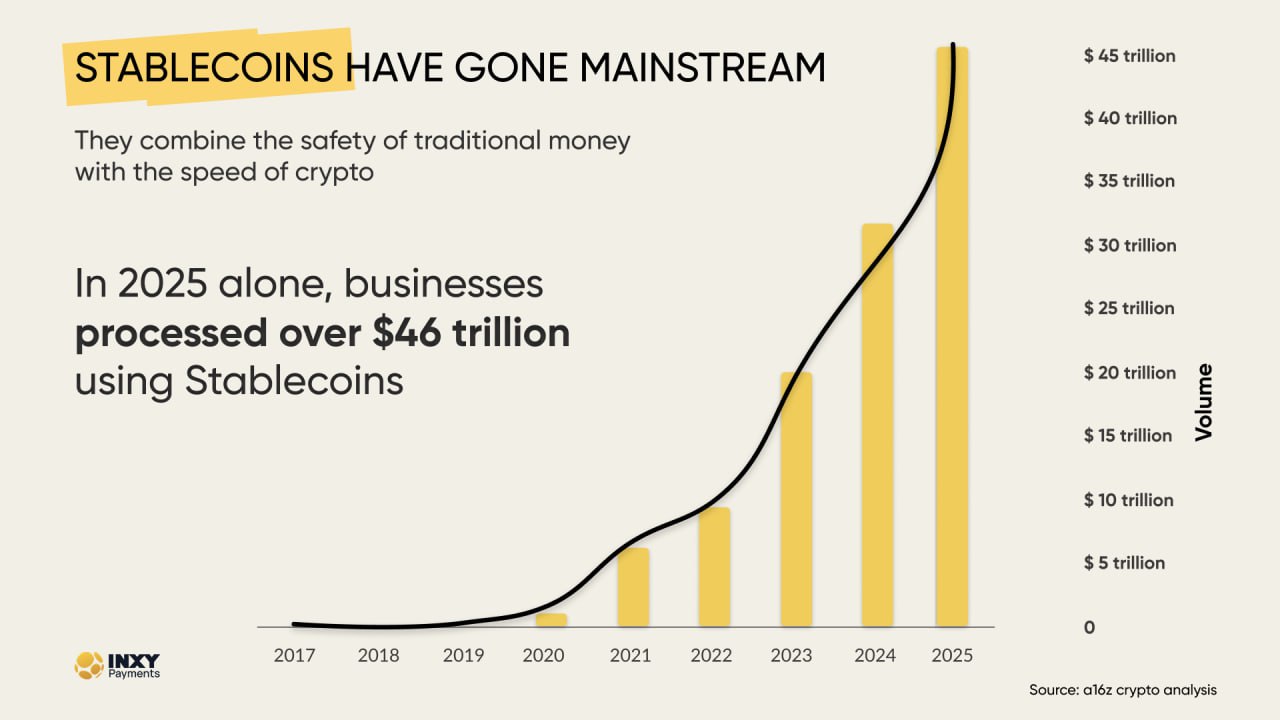
Benefits for Businesses
Stablecoin payments offer several advantages for businesses. They're less volatile than other cryptocurrencies like Bitcoin. Imagine you're a business owner. You want to know the value of your money won't change drastically overnight. Stablecoins, backed by assets like the US dollar, provide that peace of mind.
Transaction fees with stablecoins can be lower than traditional banking systems. This means businesses save money, especially on international transactions. For example, sending money across borders usually involves hefty fees. With stablecoins, these costs can be minimized.
Another perk is the speed. Traditional bank transfers can take days. Stablecoin transactions, on the other hand, can be processed in minutes. This speed is crucial for businesses that need quick access to funds. Plus, the use of stablecoins can open doors to new markets, reaching customers who prefer using digital currencies.
also let businesses reach new markets. Many people in emerging regions cannot use cards or access banks, but they can use digital wallets and stablecoins on their phones. This opens the door to millions of new customers who were previously locked out of traditional online payments.
Challenges of Traditional Payment Methods
When we talk about traditional payment methods, we're often referring to cash, credit cards, and bank transfers. While these methods have been the backbone of commerce for years, they come with their own set of challenges. Let's explore these issues to understand why businesses are looking at alternatives like stablecoin payments.
Traditional payments are slow and costly. Bank transfers and card payments can take days to settle, especially across borders. Fees are also high — from card fees to bank transfer fees to currency conversion charges — cutting into margins and slowing business growth.
Security is another concern. Credit card fraud and data breaches are not uncommon. When customers hand over their card details, there's always a risk of that information being misused. This situation not only affects the customers but can also damage the business's reputation. A single security breach might lead to a loss of customer trust, which takes a long time to rebuild.
Limited access is an issue too. Not everyone has access to credit cards or bank accounts. Some customers might prefer alternative payment methods like digital wallets or cryptocurrencies. Businesses that only accept traditional payments could miss out on potential sales from these customers. It's like having a store but keeping the door locked for some shoppers.
Traditional payments also lack transparency. It's often hard for both businesses and customers to track where the money is at any given moment. For example, if a payment is delayed, it can be challenging to pinpoint the reason or the stage at which it's stuck. This lack of visibility can cause frustration and distrust among customers.
Lastly, there's the issue of adaptability. As technology evolves, businesses need payment systems that can keep up with the changes. Traditional payment methods are often slow to adapt to new needs and innovations. For instance, they might struggle to integrate with new e-commerce platforms or to support emerging payment trends.
These challenges make it clear why businesses are exploring other options. Stablecoin payments offer solutions to some of these issues, providing a faster, more secure, and cost-effective alternative. As businesses continue to grow and change, finding flexible payment solutions becomes even more critical.
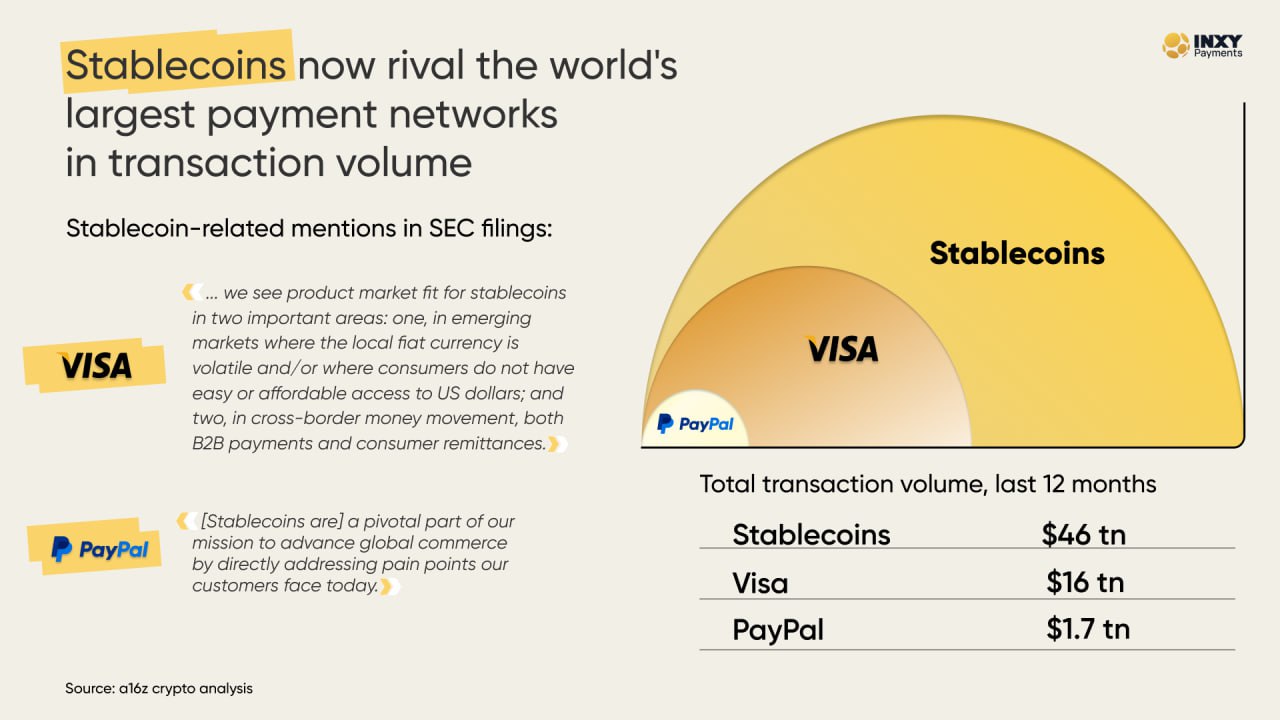
Case Studies: Companies Making the Switch
Let's dive into some real-world examples of businesses that have embraced stablecoin payments. Each company has its unique reasons, and their experiences offer valuable insights for others considering this path.
One notable case is a well-known online retailer. This company decided to accept USDC, DAI and USDT as part of their payment options. The primary motivation was the global reach of crypto. Customers from different countries found it easier to pay in stablecoins without worrying about currency conversion issues. It also allowed the retailer to reduce transaction fees, which were a burden when using traditional payment gateways.
Another interesting example is a tech startup focused on software development. They started accepting stablecoin payments for their services. The team found that using a crypto payment gateway streamlined their operations. It provided faster transaction times and reduced paperwork. The transparency of blockchain technology also appealed to their tech-savvy customers, who appreciated the added layer of security.
A third case involves a popular restaurant chain. The chain began to accept stablecoin payments during the pandemic. Traditional cash payments were less desirable due to health concerns. By adopting stablecoins, they not only offered a contactless payment solution but also attracted a younger clientele. Many of these customers were already familiar with crypto and eager to use it in everyday transactions.
Then there's a logistics company that made the switch. This company operates internationally, and stablecoins helped them manage cross-border payments more efficiently. The predictability of stablecoin values, unlike volatile cryptocurrencies, made financial planning easier. They could handle transactions with partners and vendors with greater confidence in cost predictability.
Lastly, a freelance platform adopted stablecoin payments to simplify payouts to freelancers around the globe. Freelancers appreciated receiving payments in USDC or USDT for their stability and ease of conversion to local currencies. This shift also solved issues related to delayed payments through traditional banking systems.
These examples illustrate the diverse motivations behind the switch to stablecoin payments. From reducing costs to improving speed and security, businesses find multiple benefits in adopting this modern approach. Each company's journey showcases how stablecoin payments can address specific challenges and open up new opportunities.
These stories reflect a broader trend. In 2024 and 2025, stablecoins became one of the fastest-growing payment methods worldwide, especially for online services and global businesses.
Regulatory Landscape in 2025
Stablecoin payments have been gaining traction, and 2025 is shaping up to be a pivotal year for their regulation. Governments around the world are crafting policies to manage these digital currencies. This is crucial as stablecoins like USDC and USDT become more popular in the business world.
One major development is the introduction of global standards. International bodies are working to create a unified framework for stablecoin regulation. This helps ensure that businesses using stablecoins can operate smoothly across borders. Without such standards, companies might face different rules in each country, making international trade complex.
Local governments are also busy. Each country is trying to balance innovation with security. They want to encourage the use of stablecoins while making sure that financial systems remain safe. For example, some countries are adopting stricter compliance measures. This means businesses need to ensure all transactions are transparent and traceable.
In the European Union, new laws are being drafted. These laws aim to protect consumers and prevent illegal activities. They require that stablecoin providers hold sufficient reserves. This ensures that the value of the stablecoins remains stable and reliable.
Meanwhile, in the United States, regulators are focusing on oversight. They want to ensure that stablecoin issuers are transparent about their operations. This includes regular audits and public disclosures. Such measures help build trust among users and businesses.
Asia is also seeing changes. Countries like Japan and Singapore are leading in creating crypto-friendly regulations. They are developing policies that encourage innovation while ensuring that user rights are protected.
These regulatory changes are significant for businesses. Companies need to stay informed and adapt to these new rules. Understanding the regulatory landscape is key to leveraging stablecoin payments effectively. As 2025 unfolds, businesses will need to navigate this evolving landscape carefully.
The Future of Payments: What’s Next?
Stablecoin payments are gaining popularity, and it's not hard to see why. They bring a fresh wave of possibilities to the table. Businesses are starting to notice how stablecoins can change the payment landscape. Let's explore what the future might hold.
One big reason stablecoins are appealing is their stability. Unlike other cryptocurrencies, stablecoins are tied to real-world assets like the US dollar. This means they don't bounce around in value as much. For businesses, this stability is a huge plus. They can accept payments without worrying about losing money due to market fluctuations.
Stablecoins also make international payments easier. In the past, sending money across borders was slow and costly. With stablecoins, transactions can be completed quickly and with lower fees. This is great news for companies working with international clients or suppliers. It allows them to save both time and money.
Security is another reason businesses are interested in stablecoins. Traditional payment systems can be vulnerable to fraud and hacking. Stablecoins offer a more secure option as transactions are recorded on a blockchain. This technology makes it difficult for unauthorized changes to occur.
Looking ahead, we might see stablecoins being used in more everyday transactions. Imagine buying a coffee or paying rent with stablecoins. As more businesses and consumers become comfortable with the technology, this could become a reality.
Stablecoins may also impact how we save and invest money. People are starting to explore options like earning interest on their stablecoin holdings. This could lead to new financial products and services emerging in the market.
In the coming years, regulations will play a crucial role in shaping the stablecoin landscape. Governments and financial institutions will likely establish rules to ensure safe and fair use. These regulations could boost trust and encourage more businesses to adopt stablecoin payments.
The future of payments is changing, and stablecoins are at the forefront. As technology continues to evolve, we can expect even more innovative uses for stablecoins. They have the potential to simplify and enhance the way we handle money.
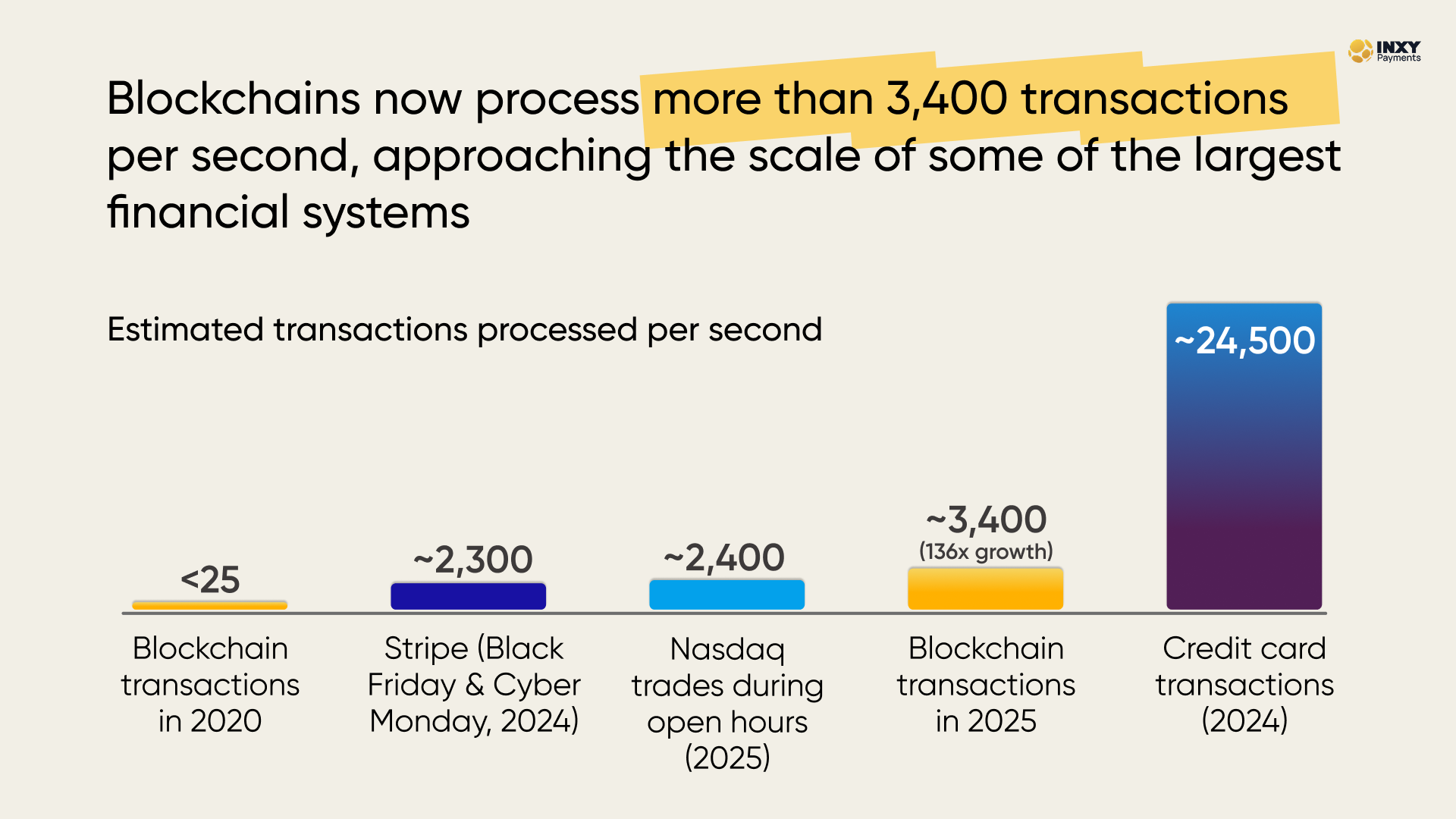
Supported Stablecoins & Blockchains (2025)
Many stablecoins run on different blockchains.
This makes payments fast and affordable anywhere in the world.
Supported stablecoins:
- USDT — ERC20, TRC20, BEP20, Polygon
- USDC — ERC20, TRC20, BEP20, Polygon
- DAI — ERC20, BEP20, Polygon
Other popular coins:
BTC · ETH · BNB · LTC · DOGE · TRX · MATIC
Supported blockchains:
Bitcoin · Ethereum · Tron · Polygon · Binance Smart Chain · Litecoin · Ton · and others.
The mix of currencies and blockchains makes stablecoin payments work for almost anyone, even in places where card payments fail.
FAQ
What are stablecoin payments and how do they work?
Stablecoin payments involve using digital currencies designed to minimize price volatility by pegging their value to a stable asset, like a fiat currency or commodity. They work like any other digital payment method but offer the added benefit of price stability, making them more reliable for transactions.
Why are stablecoins becoming popular in digital transactions?
Stablecoins are gaining popularity in digital transactions due to their ability to offer the benefits of cryptocurrencies, such as decentralization and transparency, while avoiding the price volatility associated with traditional cryptocurrencies. This makes them an attractive option for businesses looking for secure and stable payment methods.
What benefits do stablecoin payments offer to businesses?
Stablecoin payments provide several benefits, including lower transaction fees compared to traditional payment methods, faster processing times as transactions are often completed in seconds, and enhanced security due to blockchain technology, which reduces fraud and chargebacks.
What challenges do traditional payment methods face that stablecoins address?
Traditional payment methods often suffer from high transaction fees, lengthy processing times, and issues with cross-border payments. Stablecoins address these challenges by offering reduced fees, instantaneous transactions, and seamless international payments, thus providing a more efficient alternative.
Can you provide examples of businesses that have switched to stablecoin payments?
Many companies across various industries have transitioned to stablecoin payments. For instance, a tech company might use stablecoins to streamline international payroll, while an online retailer could adopt them to reduce transaction costs and improve payment processing speed.
How is the regulatory landscape for stablecoins evolving in 2025?
In 2025, the regulatory landscape for stablecoins is evolving to provide clearer guidelines and protections for businesses and consumers. Governments and financial bodies are working on frameworks to ensure stablecoin security and transparency, influencing business decisions towards stablecoin adoption.
In the European Union, the new MiCA framework brings clear rules for stablecoins and crypto service providers. These rules aim to protect users while supporting innovation. Similar frameworks are emerging in Asia, the U.S., and Latin America.
What does the future hold for stablecoin payments and their impact on the economy?
The future of stablecoin payments looks promising, with potential for widespread adoption as more businesses recognize their benefits. This could lead to significant changes in the payment industry, driving innovation and possibly reshaping economic structures by making transactions more efficient and accessible worldwide.

Best Stablecoins 2026: Top Picks
A quick guide to the best stablecoins of 2026. Learn what stablecoins are, how they work, their risks, yields, and which top coins to watch this year.
What Are Stablecoins?
Stablecoins are a type of cryptocurrency designed to keep a stable value. Unlike regular cryptocurrencies like Bitcoin, which can rise and fall in value quickly, stablecoins aim to stay consistent. They are often tied to real-world assets like the US dollar or gold. This connection helps prevent large price changes, making them useful for transactions and savings.
Think of stablecoins as digital versions of traditional money. They can be used for paying, saving, and trading without the worry of sudden value drops. Some stablecoins use algorithms to adjust their supply and maintain stability. Others hold reserves of the assets they are linked to. This dual approach helps users trust and rely on them for their financial needs.
Ranking by Market Capitalization
Market capitalization, often called "market cap," is a way to measure the total value of a stablecoin. Imagine it as the total worth of all the coins in circulation. When we talk about the best stablecoin in 2026, market cap is a key factor. It shows how popular and trusted a stablecoin is in the crypto world.
Let's break it down with an example. Think about two stablecoins, Coin A and Coin B. If Coin A has a market cap of $1 billion and Coin B has $500 million, Coin A is bigger. It means more people have invested in Coin A, showing more trust and usage.
Big market caps often mean more stability. Why? It is usually harder for someone to manipulate a large market. Plus, a bigger market cap can attract more traders and investors. But a higher market cap does not always mean less risk. It is still important to look at other factors, like the technology behind the coin and its management team.
In 2026, to find the best stablecoin by market cap, check which coins have grown the most. Look at their history and how they have performed over time. This can give you clues about which stablecoins might continue to grow and provide stability.

Yield Potential of Stablecoins
Exploring the yield potential of stablecoins can be quite the journey. Let's break it down. Some stablecoins offer staking options. This means you can earn interest by simply holding them in a specific wallet. It's like putting money in a bank account that gives you a little extra over time.
Another option is yield farming. This involves providing liquidity to certain platforms. You get rewarded with more coins. It's a bit like lending your coins to a friend and getting interest back.
But, be careful. While the potential for profit exists, risks are also there. Market conditions can change, affecting your returns. Always consider these factors when evaluating stablecoin yields.
Understanding Risks Involved
When we talk about stablecoins, the term "stable" often gives a sense of security. But is it really that simple? While stablecoins are designed to maintain a steady value, they come with their own set of risks. Let's break them down.
First up, we have the risk of losing the peg. Stablecoins are pegged to another asset, like the US dollar. But what if they lose this peg? When the market is volatile, the value of a stablecoin can drift away from its intended peg. This can happen due to insufficient reserves or sudden market shifts.
Next, consider regulatory risks. Governments around the world are still figuring out how to regulate cryptocurrencies, including stablecoins. Changes in laws can affect how stablecoins are used, traded, or even banned in certain regions. This uncertainty can impact their value and usability.
Then there's the risk of issuer default. Stablecoins are often backed by a reserve of fiat currency or other assets. If the issuer fails to manage these reserves properly, or if they face financial trouble, the stablecoin might not hold its value.
Also, technology plays a big role. Stablecoins operate on blockchain technology. While secure, blockchains can have bugs or be subject to cyber-attacks. If a stablecoin's technology is compromised, it can lead to loss of funds or trust.
Finally, liquidity risk shouldn't be overlooked. If there's a sudden rush to sell a particular stablecoin, there might not be enough buyers. This can make it hard to sell the stablecoin at its intended value, leading to potential losses.
Each of these risks reminds us that while stablecoins aim to offer stability, they are not without challenges. Understanding these risks can help you make informed decisions when dealing with stablecoins.
Top 5 Stablecoins for 2026
Stablecoins are digital currencies that aim to maintain a stable value. In 2026, the best stablecoins will likely be those that offer a good balance between security, yield, and risk. Here, we'll explore the top five stablecoins you might want to keep an eye on.
First up is Tether (USDT). Tether is one of the most used stablecoins. It's pegged to the US dollar, which means its value stays close to $1. Many people use Tether for trading because it offers stability in the volatile world of cryptocurrencies. However, some investors worry about its lack of transparency.
Next, we have USD Coin (USDC). Similar to Tether, USDC is also pegged to the US dollar. It's known for being transparent, as it undergoes regular audits. This makes it a popular choice for those who value security and trust.
Dai is another stablecoin to consider. Unlike USDT and USDC, Dai is not backed by US dollars in a bank account. Instead, it uses smart contracts on the Ethereum blockchain to keep its value stable. This decentralized approach appeals to those who prefer not to rely on traditional banking systems.
Binance USD (BUSD) is a stablecoin issued by Binance, one of the largest cryptocurrency exchanges in the world. BUSD is also pegged to the US dollar and is regulated, which provides an extra layer of security. It's a good choice for users who trade on the Binance platform.
Lastly, TrueUSD (TUSD) is a stablecoin that offers transparency and regular audits. Like other stablecoins, it is pegged to the US dollar. TrueUSD is popular among investors who prioritize a transparent and regulated approach to stablecoins.
These five stablecoins each offer something unique, from transparency to decentralization. As 2026 unfolds, these stablecoins might be the ones leading the charge in the crypto space.

Comparative Analysis of Stablecoins
When it comes to understanding stablecoins, comparing them can help you see the differences and similarities. Let's take a closer look at some popular stablecoins in 2026, focusing on capitalization, yield, and risks. This way, you can get a better idea of what makes each one unique.
Every stablecoin has its own market capitalization. This is the total value of all coins in circulation. For example, Tether (USDT) often has a large market cap, making it a strong player in the stablecoin field. In contrast, newer stablecoins might have smaller market caps, which can mean they are still gaining popularity.
Yield is another important factor. It refers to the return you might get from holding or staking the stablecoin. Some stablecoins offer attractive yields through different financial platforms. For instance, USDC might provide a steady yield for those who choose to lend or stake their coins. This makes it appealing to users looking for extra income.
Now, let's talk about risks. Every stablecoin carries some risk, but they differ in type and level. For instance, algorithmic stablecoins may face risks due to changes in their algorithms or market conditions. On the other hand, fiat-backed stablecoins like USDT and USDC might be exposed to regulatory risks. Understanding these risks can help you decide which stablecoin suits your needs.
To illustrate, consider Dai, an algorithmic stablecoin. Its value is maintained through smart contracts and collateralized assets. This makes Dai less dependent on traditional banks but more sensitive to market fluctuations. In comparison, fiat-backed coins like BUSD rely on reserves in a bank, offering more stability but less independence.
Stablecoin innovation doesn't stop here. New models and technologies are constantly emerging. These developments aim to address current limitations and provide new benefits. By staying informed about these changes, you can make smarter choices in the stablecoin market.
In summary, the best stablecoin for you depends on your goals and risk tolerance. Whether you prioritize high yield, market stability, or innovation, there's likely a stablecoin that fits your criteria. Keep exploring, and you'll find the one that aligns with your financial strategy.

Future of Stablecoins: Trends to Watch
As we look ahead to 2026, the stablecoin landscape is poised for significant changes. These digital assets, designed to maintain a stable value, are becoming an integral part of the financial ecosystem. Let's explore the trends that are shaping their future.
One major trend is the growing interest in central bank digital currencies (CBDCs). Governments around the world are exploring their own digital currencies, which could impact the role of stablecoins. For instance, if a country launches a successful CBDC, it may affect how private stablecoins are used within that economy. This could lead to a shift in demand and new regulatory challenges.
Another trend to watch is the rise of algorithmic stablecoins. Unlike traditional stablecoins backed by reserves, these use complex algorithms to maintain stability. TerraUSD and similar projects are examples of this innovation. While they offer potential benefits like decentralization, they also come with risks, as seen in past fluctuations. As technology improves, we may see more robust and reliable algorithmic stablecoins.
Regulation will play a crucial role in the stablecoin market. Authorities are keen to ensure that these digital currencies are safe and transparent for users. We can expect more comprehensive regulations to emerge, focusing on areas like reserve transparency and consumer protection. This could lead to increased trust and wider adoption.
The integration of stablecoins with decentralized finance (DeFi) platforms is another exciting development. Stablecoins provide liquidity and stability within these platforms, enabling more complex financial products. As DeFi grows, so will the demand for stablecoins, making them even more essential.
Finally, the use of stablecoins for cross-border transactions is likely to expand. Their ability to offer fast and low-cost transfers makes them attractive for international payments. This could challenge traditional banking systems and reshape how global transactions are conducted.
As these trends unfold, stablecoins will continue to evolve, playing a pivotal role in the future of finance.
FAQ
What are stablecoins and why are they important?
Stablecoins are a type of cryptocurrency designed to maintain a stable value, typically pegged to a reserve of assets like fiat currencies (e.g., USD) or commodities. They are important because they offer a refuge from the volatility typical of cryptocurrencies, making them a useful tool for transactions, savings, and as a base currency in trading.
How are stablecoins ranked by market capitalization in 2026?
Stablecoins in 2026 are ranked by market capitalization based on the total value of their circulating supply. This ranking reflects their adoption and trust within the market. Factors such as the size of reserves, transparency, and liquidity contribute to their market capitalization.
What yield opportunities do stablecoins offer?
Stablecoins provide yield opportunities through mechanisms such as interest-bearing accounts, staking, and lending platforms. These methods allow investors to earn returns in a low-risk environment, with yields often depending on the platform and specific stablecoin used.
What risks are involved in investing in stablecoins?
Investing in stablecoins involves risks such as regulatory changes, which can impact their legality and usage. Market volatility, while less than traditional cryptocurrencies, can still affect stablecoin value indirectly. Additionally, the stability of the assets backing the stablecoin is crucial, as poor management can lead to value fluctuation.
Which are the top 5 stablecoins to watch in 2026?
The top 5 stablecoins for 2026 are selected based on their market performance, adoption rate, and stability mechanisms. These include well-established names with strong backing and innovative newcomers offering unique features. Their strengths and weaknesses are analyzed to provide a comprehensive overview.
How can I compare different stablecoins effectively?
A comparative analysis involves examining stablecoins based on market capitalization, yield potential, and associated risks. Factors such as reserve transparency, regulatory compliance, and technological infrastructure are considered to help investors make informed decisions.
What future trends should we watch for stablecoins?
Future trends for stablecoins include increased integration into traditional financial systems, technological innovations such as enhanced privacy features, and evolving regulatory frameworks. These trends will shape their role in the financial ecosystem and influence their utility and adoption.

How to Integrate Crypto Payments into Your Business: A Practical Guide
Adding a crypto payment gateway to your business can open new doors. It lets you accept crypto payments from customers worldwide, bringing faster transactions, lower fees, and no chargebacks. But it’s not as simple as flipping a switch. To truly make crypto work for your business, there’s a list of things you need to get right.
Adding a crypto payment gateway to your business can open new doors. It lets you accept crypto payments from customers worldwide, bringing faster transactions, lower fees, and no chargebacks. But it’s not as simple as flipping a switch. To truly make crypto work for your business, there’s a list of things you need to get right.
Set Up a Digital Wallet
A wallet is where digital assets are stored. For daily operations, software wallets can be enough. But for larger amounts, businesses usually choose hardware wallets for added security.
Choose and Integrate a Payment Solution
You'll need a payment gateway that supports digital currencies. This might be a plugin for your e-commerce platform or a custom API integration. The goal is to make payment easy for customers and seamless for your team.
Handle Pricing and Exchange Rates
Decide how to display prices-directly in digital currency or by converting from your local currency at the moment of purchase. Make sure exchange rates are transparent for your customers.
Manage Volatility
Digital currencies are known for price swings. Have a strategy for dealing with this, such as converting to stablecoins or fiat currency immediately after payment.
Monitor Transaction Fees
Network fees can change depending on demand. Regularly review these costs to ensure they remain acceptable for your business.
Stay Compliant
Digital payments are subject to different rules in different regions. Make sure you understand your obligations around KYC (Know Your Customer), AML (Anti-Money Laundering), and other regulatory requirements.
Educate Your Team
Everyone involved should know how the system works-especially your customer service team, who may need to help customers with payment questions.
Communicate with Customers
Let your customers know that you now accept digital payments. Add clear messaging across your website, marketing materials, and checkout flow.
Test Before Launching
Run test payments to ensure the process is smooth from start to finish. This helps catch any issues before customers experience them.
Strengthen Security
Security is a top priority. Use strong authentication, multi-signature wallets, and cold storage for long-term holdings. Keep your security protocols updated.
Set Up Accounting Processes
Track every transaction carefully. Many tax authorities require detailed reporting of digital currency transactions, and having a solid system in place is essential.
Prepare Customer Support
Expect questions and occasional payment issues. Make it easy for customers to contact you and resolve problems quickly.
Stay Informed
The digital payments landscape evolves rapidly. Keep an eye on regulatory changes, new technologies, and market trends to stay ahead.
Get Tax Advice
Digital currency can create tax liabilities. Consult a tax advisor who understands how digital payments are handled in your jurisdiction.
Review and Optimize
Regularly review how digital payments are working for your business. Gather customer feedback and monitor performance to make improvements as needed.
How INXY Payments Supports These Steps
At INXY Payments, we've built our platform to address all these challenges in one place. Our service is designed for businesses that want to add digital currency payments with minimal friction and maximum compliance. Here's how we help:
- Auto-conversion: Incoming payments can be automatically converted to stablecoins or fiat currency to minimize volatility.
- Full Compliance: Our platform is fully compliant with MiCA and other EU regulations, with built-in tools for KYC and AML checks.
- Seamless Integration: Whether you use the API or our dashboard, setup is simple and fast.
- No Wallet Management: You don't need to create and maintain wallets on different blockchains or hold extra coins to pay network fees-we handle that for you.
- Custom Reports: We provide detailed, customized reports to simplify your accounting and tax filing.
- Security First: Advanced security features protect your funds at every step.
- Global Reach: We support payments worldwide and work across multiple industries.
- Expert Support: Our team offers personalized onboarding and ongoing assistance, including tax consultations and compliance help.
- Always Up-to-Date: We stay on top of blockchain updates and new infrastructure developments, so you don't have to worry about keeping up with tech changes.
Whether you want to accept bitcoin payments, send mass payouts in crypto, or add a seamless crypto billing option to your service, we've got you covered.
Let’s work together
See how easy it is to start with crypto payments without interrupting your current business flow