Best Payment Gateways for SaaS in 2026: From Traditional Fiat to Web3
Stop letting legacy payment bottlenecks kill your SaaS growth. 🚀 In 2026, relying solely on traditional credit card processing is a risk to your cash flow. High fees and chargebacks are outdated. Our latest guide breaks down the best payment gateways for B2B SaaS—from the reliability of Stripe to the borderless power of INXY Paygate. Inside this guide: Why crypto users have a 2x higher LTV and prefer annual plans. How the Auto-Convert Engine eliminates volatility risks for CFOs. The secret to Zero Chargebacks and instant global settlements. Future-proof your billing stack and tap into a global market of 800M+ digital asset users. Read more at INXY.io.
When closing high-ticket B2B SaaS deals or enterprise annual plans, traditional credit card processing often becomes a bottleneck rather than a solution. High cross-border fees and unexpected fund holds can paralyze your cash flow. In 2026, relying solely on legacy fiat processors is a risk. Your billing infrastructure needs to be as borderless and scalable as your software.
As we move deeper into 2026, SaaS billing has fundamentally evolved. While traditional fiat processors remain standard, the explosive demand for borderless, low-fee digital transactions makes cryptocurrency and stablecoin gateways a mandatory addition to any modern B2B tech stack. This guide breaks down the best payment gateways for SaaS businesses, comparing legacy providers with next-generation Web3 infrastructure to help you optimize your upfront revenue.
Key Features to Look for in a SaaS Payment Gateway
Before diving into the top providers, it is essential to define what makes a payment gateway effective for a SaaS and annual licensing model:
Global Reach & Multi-Currency: Support for international clients without exorbitant cross-border foreign exchange (FX) fees.
API & Native Integrations: Developer-friendly REST APIs and plugins for standard platforms (like WooCommerce, Shopify, or WHMCS).
Chargeback Protection: Mechanisms to protect your business from fraudulent chargebacks that persistently plague the digital goods industry.
Mass Payout Capabilities: Built-in tools to easily distribute affiliate commissions or international contractor payouts.
The Top Payment Gateways for SaaS in 2026
1. Stripe: The Traditional Fiat Giant
Stripe remains a dominant force in the SaaS ecosystem. Its robust API, advanced invoicing tools, and seamless checkout flows make it a default choice for many domestic startups.
Pros: Incredible developer tools, widespread consumer trust, and deep analytics.
Cons: High cross-border transaction fees and persistent vulnerability to chargeback fraud.
2. PayPal / Braintree: The Consumer Favorite
Braintree (owned by PayPal) offers extensive global brand recognition. It is an excellent choice for B2C software products looking for high conversion rates at checkout from everyday consumers.
Pros: High consumer trust, easy integration, supports Venmo and Apple Pay.
Cons: Strict compliance algorithms that can freeze funds without warning, high processing fees for international clients.

3. INXY Paygate: The Premier Web2 to Web3 Bridge
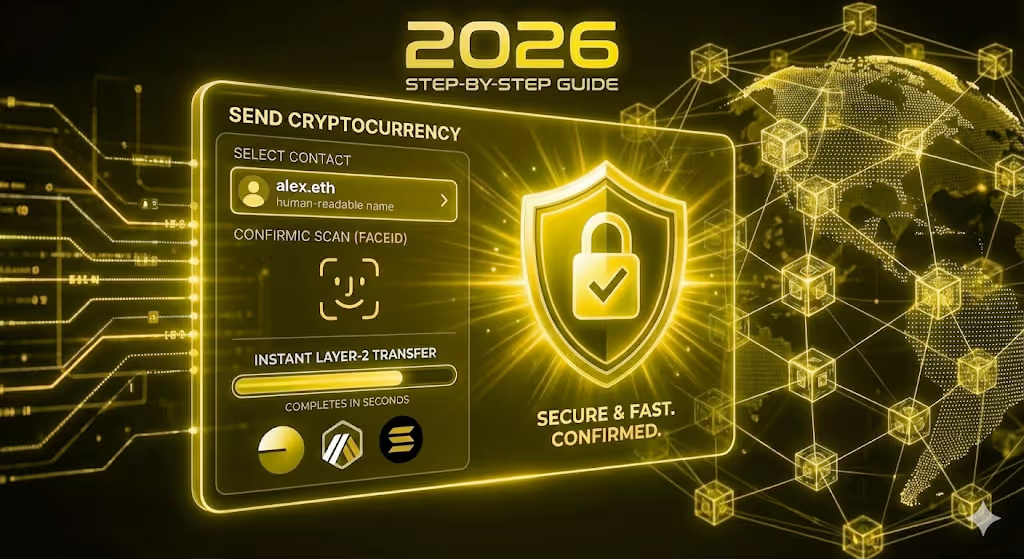
For modern SaaS companies, relying solely on traditional banking is a massive bottleneck. Enter INXY, a regulated, VC-backed cryptocurrency payment gateway that recently secured $3M from Flashpoint VC. INXY is specifically engineered for B2B enterprises and SaaS platforms looking to accept global payments without the friction of legacy banks. INXY acts as a seamless bridge, allowing you to offer a "Pay with Crypto" option while completely eliminating the technical risks normally associated with digital assets.
Boost Your Annual Payments: INXY Paygate strategically bypasses standard auto-billing. This is a massive advantage designed to boost your upfront cash flow. When dealing with high-ticket B2B software and large sums, utilizing stablecoins makes annual tariff plans the absolute most profitable option for both your business and your clients. You get the full yearly value immediately without the risk of monthly drop-offs.
The Auto-Convert Engine: The biggest fear for SaaS CFOs is crypto volatility. With INXY, if a client pays a $1,000 or $10,000 annual software license in Ethereum, the gateway's Auto-Convert feature instantly converts the incoming volatile asset into stablecoins (USDT/USDC) or fiat (EUR/USD). You get exact, predictable revenue.
Native SaaS Integrations: Instead of writing complex smart contracts, SaaS companies can use INXY’s robust APIs or ready-made plugins, including a native WHMCS module perfectly tailored for hosting, cloud services, and digital agencies.
Zero Chargebacks: Blockchain transactions are irreversible, meaning your business is completely protected from friendly fraud.
Built-in Mass Payouts: If you rely on an affiliate network, INXY allows you to automate global mass payouts via CSV uploads or API.
Feature Comparison Matrix
Choosing the right platform depends entirely on your target audience. Here is a high-level comparison of how these gateways stack up:
Why SaaS Businesses Are Adopting Crypto Invoicing
The shift toward stablecoin billing is not a temporary trend; it is a fundamental upgrade to global financial infrastructure. With over 824 million people globally owning crypto—representing more than 10% of the world's population—this is a massive, highly lucrative demographic ready to spend.
By integrating a Web3 gateway alongside your traditional fiat processors, you unlock several strategic advantages:
Massive Upfront Cash Flow: 60% of crypto users prefer to pay upfront for 12–36 month plans, compared to only 20% of credit card users.
Higher Spend & Unmatched LTV: Crypto buyers spend 2x more than traditional users. In fact, 43% of users spend more simply because crypto is offered as an option. Clients who pay in crypto consistently become the highest Lifetime Value (LTV) users—paying more and staying longer.
New Customer Acquisition: 40% of crypto clients are entirely new to the merchant, and 56% of users actively choose to shop more frequently at crypto-friendly businesses.
Lower Transaction Costs: Traditional gateways charge 2.9% + $0.30 per transaction, plus heavy cross-border fees. Crypto payments settle for fractions of a percent, saving high-volume companies thousands of dollars on annual contracts.
Instant Global Settlement: Instead of waiting 3 to 5 business days for an international wire transfer to clear, stablecoin payments settle in minutes.
Conclusion: Future-Proof Your SaaS Billing
In an increasingly borderless digital economy, restricting your customers to legacy credit card processing is a critical mistake. While platforms like Stripe and Braintree excel in their respective domestic markets, the future of global SaaS billing relies on secure, instant, and borderless transactions.
By implementing a specialized gateway, you can bypass the traditional hurdles of international finance. You gain the ability to tap into a high-spending demographic, automate your affiliate mass payouts, and completely eliminate chargeback fraud—all while receiving predictable, auto-converted fiat or stablecoin settlements. It is time to expand your checkout options and embrace the next generation of digital payments.

Stablecoins are a type of cryptocurrency designed to keep a stable value. Unlike regular cryptocurrencies like Bitcoin, which can rise and fall in value quickly, stablecoins aim to stay consistent. They are often tied to real-world assets like the US dollar or gold. This connection helps prevent large price changes, making them useful for transactions and savings.
Think of stablecoins as digital versions of traditional money. They can be used for paying, saving, and trading without the worry of sudden value drops. Some stablecoins use algorithms to adjust their supply and maintain stability. Others hold reserves of the assets they are linked to. This dual approach helps users trust and rely on them for their financial needs.
Ranking by Market Capitalization
Market capitalization, often called "market cap," is a way to measure the total value of a stablecoin. Imagine it as the total worth of all the coins in circulation. When we talk about the best stablecoin in 2026, market cap is a key factor. It shows how popular and trusted a stablecoin is in the crypto world.
Let's break it down with an example. Think about two stablecoins, Coin A and Coin B. If Coin A has a market cap of $1 billion and Coin B has $500 million, Coin A is bigger. It means more people have invested in Coin A, showing more trust and usage.
Big market caps often mean more stability. Why? It is usually harder for someone to manipulate a large market. Plus, a bigger market cap can attract more traders and investors. But a higher market cap does not always mean less risk. It is still important to look at other factors, like the technology behind the coin and its management team.
In 2026, to find the best stablecoin by market cap, check which coins have grown the most. Look at their history and how they have performed over time. This can give you clues about which stablecoins might continue to grow and provide stability.
Yield Potential of Stablecoins
Exploring the yield potential of stablecoins can be quite the journey. Let's break it down. Some stablecoins offer staking options. This means you can earn interest by simply holding them in a specific wallet. It's like putting money in a bank account that gives you a little extra over time.
Another option is yield farming. This involves providing liquidity to certain platforms. You get rewarded with more coins. It's a bit like lending your coins to a friend and getting interest back.
But, be careful. While the potential for profit exists, risks are also there. Market conditions can change, affecting your returns. Always consider these factors when evaluating stablecoin yields.
Understanding Risks Involved
When we talk about stablecoins, the term "stable" often gives a sense of security. But is it really that simple? While stablecoins are designed to maintain a steady value, they come with their own set of risks. Let's break them down.
First up, we have the risk of losing the peg. Stablecoins are pegged to another asset, like the US dollar. But what if they lose this peg? When the market is volatile, the value of a stablecoin can drift away from its intended peg. This can happen due to insufficient reserves or sudden market shifts.
Next, consider regulatory risks. Governments around the world are still figuring out how to regulate cryptocurrencies, including stablecoins. Changes in laws can affect how stablecoins are used, traded, or even banned in certain regions. This uncertainty can impact their value and usability.
Then there's the risk of issuer default. Stablecoins are often backed by a reserve of fiat currency or other assets. If the issuer fails to manage these reserves properly, or if they face financial trouble, the stablecoin might not hold its value.
Also, technology plays a big role. Stablecoins operate on blockchain technology. While secure, blockchains can have bugs or be subject to cyber-attacks. If a stablecoin's technology is compromised, it can lead to loss of funds or trust.
Finally, liquidity risk shouldn't be overlooked. If there's a sudden rush to sell a particular stablecoin, there might not be enough buyers. This can make it hard to sell the stablecoin at its intended value, leading to potential losses.
Each of these risks reminds us that while stablecoins aim to offer stability, they are not without challenges. Understanding these risks can help you make informed decisions when dealing with stablecoins.
Top 5 Stablecoins for 2026
Stablecoins are digital currencies that aim to maintain a stable value. In 2026, the best stablecoins will likely be those that offer a good balance between security, yield, and risk. Here, we'll explore the top five stablecoins you might want to keep an eye on.
First up is Tether (USDT). Tether is one of the most used stablecoins. It's pegged to the US dollar, which means its value stays close to $1. Many people use Tether for trading because it offers stability in the volatile world of cryptocurrencies. However, some investors worry about its lack of transparency.
Next, we have USD Coin (USDC). Similar to Tether, USDC is also pegged to the US dollar. It's known for being transparent, as it undergoes regular audits. This makes it a popular choice for those who value security and trust.
Dai is another stablecoin to consider. Unlike USDT and USDC, Dai is not backed by US dollars in a bank account. Instead, it uses smart contracts on the Ethereum blockchain to keep its value stable. This decentralized approach appeals to those who prefer not to rely on traditional banking systems.
Binance USD (BUSD) is a stablecoin issued by Binance, one of the largest cryptocurrency exchanges in the world. BUSD is also pegged to the US dollar and is regulated, which provides an extra layer of security. It's a good choice for users who trade on the Binance platform.
Lastly, TrueUSD (TUSD) is a stablecoin that offers transparency and regular audits. Like other stablecoins, it is pegged to the US dollar. TrueUSD is popular among investors who prioritize a transparent and regulated approach to stablecoins.
These five stablecoins each offer something unique, from transparency to decentralization. As 2026 unfolds, these stablecoins might be the ones leading the charge in the crypto space.
Comparative Analysis of Stablecoins
When it comes to understanding stablecoins, comparing them can help you see the differences and similarities. Let's take a closer look at some popular stablecoins in 2026, focusing on capitalization, yield, and risks. This way, you can get a better idea of what makes each one unique.
Every stablecoin has its own market capitalization. This is the total value of all coins in circulation. For example, Tether (USDT) often has a large market cap, making it a strong player in the stablecoin field. In contrast, newer stablecoins might have smaller market caps, which can mean they are still gaining popularity.
Yield is another important factor. It refers to the return you might get from holding or staking the stablecoin. Some stablecoins offer attractive yields through different financial platforms. For instance, USDC might provide a steady yield for those who choose to lend or stake their coins. This makes it appealing to users looking for extra income.
Now, let's talk about risks. Every stablecoin carries some risk, but they differ in type and level. For instance, algorithmic stablecoins may face risks due to changes in their algorithms or market conditions. On the other hand, fiat-backed stablecoins like USDT and USDC might be exposed to regulatory risks. Understanding these risks can help you decide which stablecoin suits your needs.
To illustrate, consider Dai, an algorithmic stablecoin. Its value is maintained through smart contracts and collateralized assets. This makes Dai less dependent on traditional banks but more sensitive to market fluctuations. In comparison, fiat-backed coins like BUSD rely on reserves in a bank, offering more stability but less independence.
Stablecoin innovation doesn't stop here. New models and technologies are constantly emerging. These developments aim to address current limitations and provide new benefits. By staying informed about these changes, you can make smarter choices in the stablecoin market.
In summary, the best stablecoin for you depends on your goals and risk tolerance. Whether you prioritize high yield, market stability, or innovation, there's likely a stablecoin that fits your criteria. Keep exploring, and you'll find the one that aligns with your financial strategy.
Future of Stablecoins: Trends to Watch
As we look ahead to 2026, the stablecoin landscape is poised for significant changes. These digital assets, designed to maintain a stable value, are becoming an integral part of the financial ecosystem. Let's explore the trends that are shaping their future.
One major trend is the growing interest in central bank digital currencies (CBDCs). Governments around the world are exploring their own digital currencies, which could impact the role of stablecoins. For instance, if a country launches a successful CBDC, it may affect how private stablecoins are used within that economy. This could lead to a shift in demand and new regulatory challenges.
Another trend to watch is the rise of algorithmic stablecoins. Unlike traditional stablecoins backed by reserves, these use complex algorithms to maintain stability. TerraUSD and similar projects are examples of this innovation. While they offer potential benefits like decentralization, they also come with risks, as seen in past fluctuations. As technology improves, we may see more robust and reliable algorithmic stablecoins.
Regulation will play a crucial role in the stablecoin market. Authorities are keen to ensure that these digital currencies are safe and transparent for users. We can expect more comprehensive regulations to emerge, focusing on areas like reserve transparency and consumer protection. This could lead to increased trust and wider adoption.
The integration of stablecoins with decentralized finance (DeFi) platforms is another exciting development. Stablecoins provide liquidity and stability within these platforms, enabling more complex financial products. As DeFi grows, so will the demand for stablecoins, making them even more essential.
Finally, the use of stablecoins for cross-border transactions is likely to expand. Their ability to offer fast and low-cost transfers makes them attractive for international payments. This could challenge traditional banking systems and reshape how global transactions are conducted.
As these trends unfold, stablecoins will continue to evolve, playing a pivotal role in the future of finance.
FAQ
What are stablecoins and why are they important?
Stablecoins are a type of cryptocurrency designed to maintain a stable value, typically pegged to a reserve of assets like fiat currencies (e.g., USD) or commodities. They are important because they offer a refuge from the volatility typical of cryptocurrencies, making them a useful tool for transactions, savings, and as a base currency in trading.
How are stablecoins ranked by market capitalization in 2026?
Stablecoins in 2026 are ranked by market capitalization based on the total value of their circulating supply. This ranking reflects their adoption and trust within the market. Factors such as the size of reserves, transparency, and liquidity contribute to their market capitalization.
What yield opportunities do stablecoins offer?
Stablecoins provide yield opportunities through mechanisms such as interest-bearing accounts, staking, and lending platforms. These methods allow investors to earn returns in a low-risk environment, with yields often depending on the platform and specific stablecoin used.
What risks are involved in investing in stablecoins?
Investing in stablecoins involves risks such as regulatory changes, which can impact their legality and usage. Market volatility, while less than traditional cryptocurrencies, can still affect stablecoin value indirectly. Additionally, the stability of the assets backing the stablecoin is crucial, as poor management can lead to value fluctuation.
Which are the top 5 stablecoins to watch in 2026?
The top 5 stablecoins for 2026 are selected based on their market performance, adoption rate, and stability mechanisms. These include well-established names with strong backing and innovative newcomers offering unique features. Their strengths and weaknesses are analyzed to provide a comprehensive overview.
How can I compare different stablecoins effectively?
A comparative analysis involves examining stablecoins based on market capitalization, yield potential, and associated risks. Factors such as reserve transparency, regulatory compliance, and technological infrastructure are considered to help investors make informed decisions.
What future trends should we watch for stablecoins?
Future trends for stablecoins include increased integration into traditional financial systems, technological innovations such as enhanced privacy features, and evolving regulatory frameworks. These trends will shape their role in the financial ecosystem and influence their utility and adoption.
This guide explains how to buy USDT, USDC, and DAI using the five most popular methods, including exchanges, bank transfers, cards, P2P platforms, crypto ATMs, and mobile apps. It breaks down the benefits of each option, helping readers choose the fastest and most cost-effective way to purchase stablecoins. The article also highlights key fees to consider and common mistakes to avoid. Strong emphasis is placed on security best practices to protect funds and personal data. By the end, readers know exactly how to buy stablecoins safely and confidently in 2026.
Stablecoins are a type of digital currency designed to keep their value stable. Unlike other cryptocurrencies, which can fluctuate wildly, stablecoins aim to maintain a fixed value. This stability makes them a popular choice for people who want to use digital money without worrying about price changes.
Many stablecoins are linked to traditional money like the US dollar. This link, often called pegging, helps keep their price steady. For example, if you buy one USDT, USDC, or DAI, it is usually worth about one US dollar. This makes it easy for people to understand and trust their value.
Stablecoins are used for various purposes. People can use them to send money across borders quickly and cheaply. They are also popular in trading, allowing users to move money between different cryptocurrencies without converting it back to traditional money. This flexibility makes stablecoins a key part of the digital currency world.
Why Buy USDT, USDC & DAI?
People often ask why they should invest in stablecoins like USDT, USDC, and DAI. These digital coins are tied to real-world currencies, like the US dollar. This makes them less risky than other cryptocurrencies that can jump up and down in value. Let's say you want to save money for a big purchase next year. Storing your money in stablecoins could help keep it safe from market swings.
Using stablecoins can also make transactions faster and cheaper. Imagine sending money to a friend in another country. Traditional banks can take days and charge high fees. But with USDT or USDC, the transfer is usually done in minutes, with lower costs. This speed can be a game-changer for both personal and business transactions.
DAI offers an interesting twist. It's a stablecoin managed by smart contracts on the blockchain, not by a central bank. This decentralization offers more control and transparency. If you value privacy and autonomy, DAI could be your go-to choice.
Choosing the Right Exchange
Picking the right exchange to buy USDT, USDC, and DAI can feel a bit like choosing a new car. You want reliability, trustworthiness, and something that fits your needs. Start by looking at the reputation of the exchange. Is it well-known and respected in the crypto community? Check user reviews and any news about security breaches.
Fees are another important factor. Some exchanges charge a percentage of your transaction, while others have flat fees. You want to find a balance between cost and convenience. Ease of use matters too. If the platform is too complex, it could lead to mistakes. Look for a user-friendly interface.
Consider the payment methods available. Can you use your credit card, bank transfer, or PayPal? More options mean more flexibility. Lastly, check if the exchange supports the stablecoins you want to buy. Not all exchanges offer USDT, USDC, and DAI. By taking these steps, you can choose an exchange that works best for you.
Using a Bank Transfer
Buying stablecoins like USDT, USDC, or DAI through a bank transfer can be a straightforward method. First, select a cryptocurrency exchange that allows bank transfers. Popular exchanges often have this option. Start by linking your bank account to the exchange. You might need to verify your identity, so have your ID ready. Once your account is linked, you'll transfer funds from your bank to the exchange. It may take a few days for the transfer to complete, depending on your bank's processing speed.
When your funds arrive in the exchange account, choose the stablecoin you want to buy. Then, enter the amount you wish to purchase and confirm the transaction. Bank transfers usually have lower fees compared to credit cards. This makes them a cost-effective choice. However, if you're in a rush, the slower processing time might not be ideal. Always check if there are any fees involved with your bank. Each bank's policies can vary, and it's good to know what to expect.
Credit and Debit Card Purchases
Buying stablecoins like USDT, USDC, and DAI with credit or debit cards is a popular choice. Why? It's quick and straightforward, just like buying your favorite online products. Many crypto exchanges allow you to link your card directly to their platform. Once linked, you can purchase stablecoins in just a few clicks.
It's important to know that some exchanges may charge a fee for card transactions. Fees can vary, so it's smart to compare before making a purchase. Also, keep an eye on your bank's foreign transaction fees, as these can add to your costs.
When using this method, security is key. Ensure your chosen exchange uses strong security measures. This helps protect your card and personal information. Always use trusted and verified platforms to avoid scams. Buying stablecoins with a card is easy, but it's wise to stay informed about costs and safety.
Peer-to-Peer (P2P) Platforms
Buying stablecoins like USDT, USDC, and DAI through P2P platforms can be a straightforward process. These platforms let you trade directly with another person, bypassing any middlemen. You can often find better deals because you're negotiating directly with sellers.
To get started, you'll need to register on a P2P platform. Most platforms require identity verification, but this is usually quick. Once registered, browse through the listings to find someone selling the stablecoin you want. Check their reputation score to ensure they're trustworthy.
After choosing a seller, you can initiate a trade. The platform will hold the stablecoin in escrow until the payment is complete. Payment methods vary, including bank transfers and digital wallets. Once the seller confirms the receipt of payment, the platform releases the stablecoin to you. This process makes P2P platforms a flexible option for buying stablecoins.
Using Crypto ATMs
Crypto ATMs have become a popular choice for people looking to buy stablecoins like USDT, USDC, and DAI. These machines offer a straightforward way to purchase digital currencies using cash or a credit card. You can find them in various locations, such as malls, convenience stores, and even airports.
To use a crypto ATM, you first need to find one near you. Websites and apps can help locate these machines. Once you reach the ATM, you choose the type of stablecoin you want to buy. The screen will guide you through the process, ensuring it's easy to follow.
Most crypto ATMs require you to scan a QR code from your digital wallet. This step links the purchased stablecoins directly to your wallet. If you don't have a digital wallet, some ATMs offer to create one for you on the spot. This feature is handy for beginners who might not have set up a wallet yet.
After choosing the stablecoin and scanning your wallet's QR code, you insert cash or use your credit card to make the purchase. The machine will show you the current rate and any fees involved. It's vital to check these rates and fees to ensure you're getting a good deal.
Crypto ATMs typically charge higher fees compared to online exchanges. This is due to the convenience they offer. But for those who prefer a quick, in-person transaction, the extra cost might be worth it. Plus, the process is often faster than waiting for bank transfers when buying online.
Overall, crypto ATMs provide a user-friendly option for buying stablecoins. With clear instructions and immediate transactions, they cater to both beginners and experienced users. As more ATMs pop up globally, they continue to make crypto transactions accessible to everyone.
Mobile Apps for Quick Purchases
Buying stablecoins like USDT, USDC, and DAI using mobile apps is a breeze in 2026. With just a tap, you can access digital currencies right from your smartphone. Let's explore how mobile apps have revolutionized the way we purchase stablecoins.
First off, mobile apps offer convenience. You can buy stablecoins anytime, anywhere. Whether you're at home, on the go, or even on vacation, your smartphone becomes a powerful tool for managing your digital assets. This flexibility is a game-changer for many people.
Now, let's talk about security. Mobile apps have stepped up their game with robust security features. Many apps use two-factor authentication, biometric logins, and encryption to protect your transactions. This ensures that your data and funds are safe from unauthorized access.
When it comes to speed, mobile apps are hard to beat. Transactions are often completed in seconds. This is especially useful when you need to buy stablecoins quickly due to market changes. No more waiting around for lengthy confirmations.
Mobile apps also offer user-friendly interfaces. They are designed to be intuitive, so even beginners can navigate through the app without hassle. Most apps provide step-by-step guides or tutorials to help you through the buying process.
Payment options are another highlight. Mobile apps typically support various payment methods like credit cards, bank transfers, and sometimes even PayPal. This variety makes it easier to choose a method that suits you best.
Customer support is also at your fingertips. Many mobile apps provide in-app chat support or detailed FAQs to assist users. If you face any issues, help is just a click away.
Let's not forget about notifications. Mobile apps can send you instant alerts about price changes or transaction statuses. This keeps you updated on your investments and helps you make timely decisions.
In 2026, buying stablecoins like USDT, USDC, and DAI through mobile apps is not just a trend, it's a preferred choice for many. The convenience, security, and speed make it a favored method for both new and seasoned users. So, if you haven't tried it yet, exploring mobile apps for stablecoin purchases might be a smart move.
Fees to Consider
When buying stablecoins like USDT, USDC, and DAI, fees can significantly impact your purchasing decision. Understanding these fees can help you find the best deals and avoid unnecessary costs. Let's break down the most common fees you may encounter.
Firstly, there's the transaction fee. This fee is charged by the platform where you buy your stablecoins. It can be a flat fee or a percentage of your purchase amount. For example, if a platform charges a 1% transaction fee and you're buying $100 worth of USDT, you'll pay an additional $1.
Another type of fee is the withdrawal fee. Once you've bought stablecoins, you might want to transfer them to a digital wallet. Some platforms charge a fee for this transfer. It's essential to check if the fee is fixed or varies depending on the amount you withdraw. A fixed fee can be more cost-effective if you're transferring a large amount.
Exchange rate fees can also play a role. When you use a credit card or bank transfer in a different currency, you might face a currency conversion fee. This fee is often hidden in the exchange rate offered by the platform. Comparing the exchange rate with the market rate can help you spot any discrepancies.
Some platforms offer discounts or even waive fees for using their native tokens or certain payment methods. For instance, if a platform has its token and you use it to pay for fees, you might get a discount. It's worth checking if such options are available to reduce your costs.
Lastly, be aware of inactivity fees. If you have an account on a platform but don't use it for a while, some platforms charge an inactivity fee. This is less common but can catch you off guard if you plan to hold your stablecoins for a long time without frequent activity.
To sum up, different platforms have different fee structures. It's crucial to read the fee schedules of various exchanges and platforms before deciding where to buy your USDT, USDC, or DAI. This knowledge will help you make informed decisions and keep more of your money in your pocket.
Security Tips When Buying Stablecoins
When you're diving into the world of stablecoins like USDT, USDC, and DAI, security should be at the top of your list. Let's break down some simple yet effective tips to keep your investments safe.
First things first, always use a secure and reputable exchange for your transactions. Popular exchanges often have stronger security measures in place, reducing the risk of hacks. Do a little research to find out which platforms have the best track record for security.
Another important step is to enable two-factor authentication (2FA) on your accounts. This adds an extra layer of protection by requiring not just a password, but a second piece of information that only you have access to. It's like having a double lock on your door.
Keep your private keys safe and never share them with anyone. Think of private keys as the password to your wallet. If someone else gets hold of them, they can access your funds. Consider using a hardware wallet to store your cryptocurrencies offline, away from online threats.
Phishing scams are another thing to watch out for. These are fake websites or emails that try to steal your information by pretending to be legitimate. Always double-check the URLs of the sites you visit and be cautious of links in emails.
Regularly update your software and wallets to the latest versions. Updates often contain security enhancements that protect against new threats. It's like keeping your antivirus software up-to-date to fend off viruses.
Lastly, be mindful of the information you share online, especially on social media. Publicly revealing details about your cryptocurrency holdings can make you a target for cybercriminals.
By following these tips, you can help secure your transactions and enjoy a safer experience in the world of stablecoins.
Conclusion: Your Path to Stablecoins
Navigating the world of stablecoins like USDT, USDC, and DAI can seem daunting at first. These digital currencies offer a stable alternative to more volatile cryptocurrencies. They are pegged to the value of traditional currencies, making them less subject to wild price swings. Let's explore how you can confidently step into the stablecoin space.
Imagine you're standing at the crossroads of traditional finance and the digital world. Stablecoins are like a bridge between these two realms. They combine the stability of fiat currencies with the advantages of blockchain technology. This makes them an attractive option for both seasoned investors and newcomers alike.
When you're considering buying stablecoins, think about why you want them. Are you looking to invest, send money overseas, or simply diversify your holdings? Knowing your purpose can help you choose the right stablecoin. For instance, USDT is widely used and easily accessible on many exchanges. USDC, on the other hand, is known for its transparency and regulatory compliance. DAI offers a decentralized option, which can appeal to those wary of centralized control.
Once you've decided on the stablecoin, it's time to find the best way to buy it. Consider factors like transaction fees, speed, and ease of use. You might choose a centralized exchange for its convenience or a decentralized one for its privacy. Each has its pros and cons, so weigh them carefully.
Before making a purchase, ensure your digital wallet is ready. This wallet will store your stablecoins securely. There are different types of wallets, such as hardware, software, and mobile wallets. Choose one that suits your needs and provides robust security.
Security is crucial when dealing with digital assets. Always use strong passwords and enable two-factor authentication. Be wary of phishing scams and other online threats. Keeping your assets safe is just as important as buying them.
As you venture into stablecoins, stay informed about market trends and regulatory changes. The world of cryptocurrency is ever-evolving, and being updated will help you make better decisions. Engage with online communities, read news articles, and follow industry experts to deepen your understanding.
Your journey into stablecoins can be rewarding. With careful planning and informed choices, you can make stablecoins work for you. Whether it's for investment, transactions, or hedging against volatility, stablecoins offer a world of opportunities. Embrace this digital frontier with confidence, and you'll find a stable path forward.
FAQ
What are stablecoins and why are USDT, USDC, and DAI popular?
Stablecoins are cryptocurrencies designed to minimize price volatility by being pegged to a reserve of assets, like fiat currency. USDT, USDC, and DAI are popular because they offer stability, making them ideal for trading, hedging, and transfers within the crypto ecosystem.
Why should I consider buying USDT, USDC, or DAI?
These stablecoins are beneficial for preserving value, facilitating seamless crypto transactions, and providing a reliable medium for trading and investment strategies without the volatility of other cryptocurrencies.
How do I choose the right exchange for buying stablecoins?
Look for exchanges with competitive rates, low fees, strong security measures, good user reviews, and those that offer the trading pairs you need. Consider factors like liquidity, user interface, and customer support as well.
Is it cost-effective to buy stablecoins using a bank transfer?
Yes, bank transfers often have lower fees compared to credit/debit card purchases. However, it's important to check the exchange's fee schedule and processing times to minimize costs and delays.
What should I know about buying stablecoins with a credit or debit card?
Purchasing with a credit or debit card is convenient but usually comes with higher fees and lower purchase limits. Ensure you're aware of the costs and verify the legitimacy and security of the platform you're using.
How can I use Peer-to-Peer (P2P) platforms to buy stablecoins?
P2P platforms allow you to buy stablecoins directly from other users, often at competitive rates. Ensure you use reputable platforms, check user ratings, and follow security measures to protect your transactions.
Are there any security tips I should follow when buying stablecoins?
Always enable two-factor authentication, use secure wallets, verify the legitimacy of exchanges or sellers, and avoid sharing personal information. Regularly monitor your accounts and transactions for any suspicious activity.
Crypto Payment Gateway vs. Processor: What’s the Difference?
While the terms are often used interchangeably, choosing between a Crypto Payment Gateway and a Crypto Processor can fundamentally change how your business handles digital assets. One acts as the technical bridge, while the other serves as a comprehensive financial engine.
If you’ve spent any time navigating the fintech landscape in 2026, you’ve likely noticed that "crypto payment gateway" and "crypto payment processor" are thrown around like synonyms. In casual conversation, that’s fine. But if you’re a business owner in the EU trying to optimize your checkout or manage a complex treasury, the distinction matters. It’s the difference between a sleek front-end interface and the heavy-duty engine room that actually moves the money.
Let’s break down the technicalities of these two components and see how they work together to modernize your business.
The Crypto Payment Gateway: Your Digital Storefront
Think of the Crypto Payment Gateway as the "front-end" layer. It is the bridge between your website and the blockchain. Its primary job is to handle the customer-facing part of the transaction.
When a customer clicks "Pay with Crypto," the gateway jumps into action:
Checkout UI: It displays the QR code or wallet address.
Real-time Rate Locking: It calculates the exact exchange rate between, say, Bitcoin and the Euro, and freezes it for a few minutes so the customer knows exactly what they’re paying.
Data Transmission: It securely passes the transaction details to the processor.
Essentially, the gateway is the digital equivalent of a Point-of-Sale (POS) terminal. It’s all about user experience and making sure the "handshake" between the customer and the merchant is secure and seamless.
The Crypto Payment Processor: The Engine Room
While the gateway handles the "hello," the Crypto Payment Processor handles the "settlement." This is the back-end infrastructure that manages the lifecycle of the funds after the customer hits send.
The processor’s responsibilities are significantly broader:
Blockchain Validation: It monitors the network to confirm the transaction has reached the required number of blocks.
Settlement & Conversion: This is the big one. If you invoiced for €1,000 but the customer paid in Bitcoin, the processor handles the conversion and ensures those funds are ready for your bank account.
Compliance (KYC/AML): It runs the necessary checks to ensure the transaction isn't linked to illicit activity—a non-negotiable for EU-based businesses under current regulations.
Payouts: It manages the transfer of funds from the crypto ecosystem into your corporate SEPA or SWIFT account.
Comparison at a Glance
Feature
Crypto Payment Gateway
Crypto Payment Processor
Primary Role
Front-end UI / Communication
Back-end settlement / Logistics
Focus
User Experience (UX)
Compliance & Fund Movement
Key Output
QR Codes, API Callbacks
Fiat Payouts, Tax Reporting
Analogy
The Card Reader on the counter
The Bank/Clearing House
Why the Distinction Matters for EU Businesses
In the European fintech market, precision is everything. If you only use a "gateway" without a robust processing layer, you might find yourself with a wallet full of crypto but no easy way to pay your local taxes or suppliers in fiat.
Conversely, a processor without a good gateway might provide great liquidity, but your customers will struggle with a clunky, manual checkout process that kills your conversion rate.
This is where integrated solutions come in. Platforms like INXY bridge this gap by functioning as a unified ecosystem. By combining an EU-licensed gateway (the part your customers see) with a powerful processing engine (the part your accountant loves), it removes the friction of managing two separate services.
Why "All-in-One" is the 2026 Standard
Modern fintech has moved past fragmented tools. For instance, INXY Payments focuses heavily on high-conversion gateways specifically for e-commerce, infrastructure and hosting providers. Because they operate as an EU-authorized VASP (Virtual Asset Service Provider), the processing side is built-in.
For a merchant, this means:
Zero Volatility: The rate is locked at the gateway level and settled instantly at the processor level.
Mass Payouts: You can collect payments via the gateway and immediately use those funds to pay global affiliates or remote teams via the processor’s API.
Legal Clarity: Since the processor handles the KYB (Know Your Business) and AML checks, the funds landing in your bank account are "clean" and fully documented for tax purposes.
Summary
A gateway gets you paid; a processor keeps you in business. While they serve different technical functions, the most successful companies in 2026 are those that don’t make their customers (or their dev teams) choose between the two.
By using an integrated platform like INXY, you get the best of both worlds: a checkout experience that converts and a back-end that settles without the headaches of traditional banking delays.