Best Payment Gateways for SaaS in 2026: From Traditional Fiat to Web3
Stop letting legacy payment bottlenecks kill your SaaS growth. 🚀 In 2026, relying solely on traditional credit card processing is a risk to your cash flow. High fees and chargebacks are outdated. Our latest guide breaks down the best payment gateways for B2B SaaS—from the reliability of Stripe to the borderless power of INXY Paygate. Inside this guide: Why crypto users have a 2x higher LTV and prefer annual plans. How the Auto-Convert Engine eliminates volatility risks for CFOs. The secret to Zero Chargebacks and instant global settlements. Future-proof your billing stack and tap into a global market of 800M+ digital asset users. Read more at INXY.io.
When closing high-ticket B2B SaaS deals or enterprise annual plans, traditional credit card processing often becomes a bottleneck rather than a solution. High cross-border fees and unexpected fund holds can paralyze your cash flow. In 2026, relying solely on legacy fiat processors is a risk. Your billing infrastructure needs to be as borderless and scalable as your software.
As we move deeper into 2026, SaaS billing has fundamentally evolved. While traditional fiat processors remain standard, the explosive demand for borderless, low-fee digital transactions makes cryptocurrency and stablecoin gateways a mandatory addition to any modern B2B tech stack. This guide breaks down the best payment gateways for SaaS businesses, comparing legacy providers with next-generation Web3 infrastructure to help you optimize your upfront revenue.
Key Features to Look for in a SaaS Payment Gateway
Before diving into the top providers, it is essential to define what makes a payment gateway effective for a SaaS and annual licensing model:
Global Reach & Multi-Currency: Support for international clients without exorbitant cross-border foreign exchange (FX) fees.
API & Native Integrations: Developer-friendly REST APIs and plugins for standard platforms (like WooCommerce, Shopify, or WHMCS).
Chargeback Protection: Mechanisms to protect your business from fraudulent chargebacks that persistently plague the digital goods industry.
Mass Payout Capabilities: Built-in tools to easily distribute affiliate commissions or international contractor payouts.
The Top Payment Gateways for SaaS in 2026
1. Stripe: The Traditional Fiat Giant
Stripe remains a dominant force in the SaaS ecosystem. Its robust API, advanced invoicing tools, and seamless checkout flows make it a default choice for many domestic startups.
Pros: Incredible developer tools, widespread consumer trust, and deep analytics.
Cons: High cross-border transaction fees and persistent vulnerability to chargeback fraud.
2. PayPal / Braintree: The Consumer Favorite
Braintree (owned by PayPal) offers extensive global brand recognition. It is an excellent choice for B2C software products looking for high conversion rates at checkout from everyday consumers.
Pros: High consumer trust, easy integration, supports Venmo and Apple Pay.
Cons: Strict compliance algorithms that can freeze funds without warning, high processing fees for international clients.
3. INXY Paygate: The Premier Web2 to Web3 Bridge
For modern SaaS companies, relying solely on traditional banking is a massive bottleneck. Enter INXY, a regulated, VC-backed cryptocurrency payment gateway that recently secured $3M from Flashpoint VC. INXY is specifically engineered for B2B enterprises and SaaS platforms looking to accept global payments without the friction of legacy banks. INXY acts as a seamless bridge, allowing you to offer a "Pay with Crypto" option while completely eliminating the technical risks normally associated with digital assets.
Boost Your Annual Payments: INXY Paygate strategically bypasses standard auto-billing. This is a massive advantage designed to boost your upfront cash flow. When dealing with high-ticket B2B software and large sums, utilizing stablecoins makes annual tariff plans the absolute most profitable option for both your business and your clients. You get the full yearly value immediately without the risk of monthly drop-offs.
The Auto-Convert Engine: The biggest fear for SaaS CFOs is crypto volatility. With INXY, if a client pays a $1,000 or $10,000 annual software license in Ethereum, the gateway's Auto-Convert feature instantly converts the incoming volatile asset into stablecoins (USDT/USDC) or fiat (EUR/USD). You get exact, predictable revenue.
Native SaaS Integrations: Instead of writing complex smart contracts, SaaS companies can use INXY’s robust APIs or ready-made plugins, including a native WHMCS module perfectly tailored for hosting, cloud services, and digital agencies.
Zero Chargebacks: Blockchain transactions are irreversible, meaning your business is completely protected from friendly fraud.
Built-in Mass Payouts: If you rely on an affiliate network, INXY allows you to automate global mass payouts via CSV uploads or API.
Feature Comparison Matrix
Choosing the right platform depends entirely on your target audience. Here is a high-level comparison of how these gateways stack up:
Why SaaS Businesses Are Adopting Crypto Invoicing
The shift toward stablecoin billing is not a temporary trend; it is a fundamental upgrade to global financial infrastructure. With over 824 million people globally owning crypto—representing more than 10% of the world's population—this is a massive, highly lucrative demographic ready to spend.
By integrating a Web3 gateway alongside your traditional fiat processors, you unlock several strategic advantages:
Massive Upfront Cash Flow: 60% of crypto users prefer to pay upfront for 12–36 month plans, compared to only 20% of credit card users.
Higher Spend & Unmatched LTV: Crypto buyers spend 2x more than traditional users. In fact, 43% of users spend more simply because crypto is offered as an option. Clients who pay in crypto consistently become the highest Lifetime Value (LTV) users—paying more and staying longer.
New Customer Acquisition: 40% of crypto clients are entirely new to the merchant, and 56% of users actively choose to shop more frequently at crypto-friendly businesses.
Lower Transaction Costs: Traditional gateways charge 2.9% + $0.30 per transaction, plus heavy cross-border fees. Crypto payments settle for fractions of a percent, saving high-volume companies thousands of dollars on annual contracts.
Instant Global Settlement: Instead of waiting 3 to 5 business days for an international wire transfer to clear, stablecoin payments settle in minutes.
Conclusion: Future-Proof Your SaaS Billing
In an increasingly borderless digital economy, restricting your customers to legacy credit card processing is a critical mistake. While platforms like Stripe and Braintree excel in their respective domestic markets, the future of global SaaS billing relies on secure, instant, and borderless transactions.
By implementing a specialized gateway, you can bypass the traditional hurdles of international finance. You gain the ability to tap into a high-spending demographic, automate your affiliate mass payouts, and completely eliminate chargeback fraud—all while receiving predictable, auto-converted fiat or stablecoin settlements. It is time to expand your checkout options and embrace the next generation of digital payments.
Stablecoin Payments: Why Businesses Switch in 2025
Discover why businesses worldwide are switching to stablecoin payments in 2025. Learn how stablecoins work, their benefits over traditional payments, real case studies, global regulations, and what the future of digital payments looks like
Stablecoin payments are a way to use digital currencies that are pegged to stable assets, like the US dollar. This means their value doesn't swing wildly like other cryptocurrencies. Imagine you're doing business online, and you want to avoid the ups and downs of Bitcoin's value. Stablecoins, like USDC, DAI and USDT, come in handy here. They offer the benefits of crypto without the same level of risk.
These payments work through a crypto payment gateway, which acts like a bridge. It lets businesses accept stablecoins and convert them into local currency if needed. This is helpful for companies that want to tap into the crypto market without holding onto volatile assets.
Think of stablecoin payments as a digital version of cash that you can use globally, without worrying about big price changes. They're fast, often cheaper than traditional methods, and open up new markets for businesses. This makes them a popular choice for companies looking to innovate in 2025. Stablecoins also help people in emerging markets who have no access to traditional banking. Many do not have a bank account, but almost everyone has a mobile phone. Stablecoins give these users a safe and simple way to pay online.
The Rise of Digital Transactions
Digital transactions have become increasingly popular as we move further into the 21st century. People use digital payments to buy things online, pay bills, and even send money to friends. This shift has been driven by the need for faster, more convenient ways to pay.
One example is mobile wallets, which let you store your credit or debit card information on your phone. This makes it easy to pay with just a tap. Businesses are also seeing the benefits. They can reach more customers who prefer digital payments, and they can process transactions more quickly.
Cryptocurrencies like Bitcoin and stablecoins like USDC and USDT offer new ways to pay digitally. These currencies are secure, and they don't rely on traditional banks. This can lower costs and increase access to financial services.
The growth of digital transactions is also supported by better technology. Faster internet speeds and improved security measures make it easier and safer for everyone to use digital payments. As more people and businesses adopt these methods, digital transactions are set to become the norm.
Today, more than 824 million people worldwide own cryptocurrency.
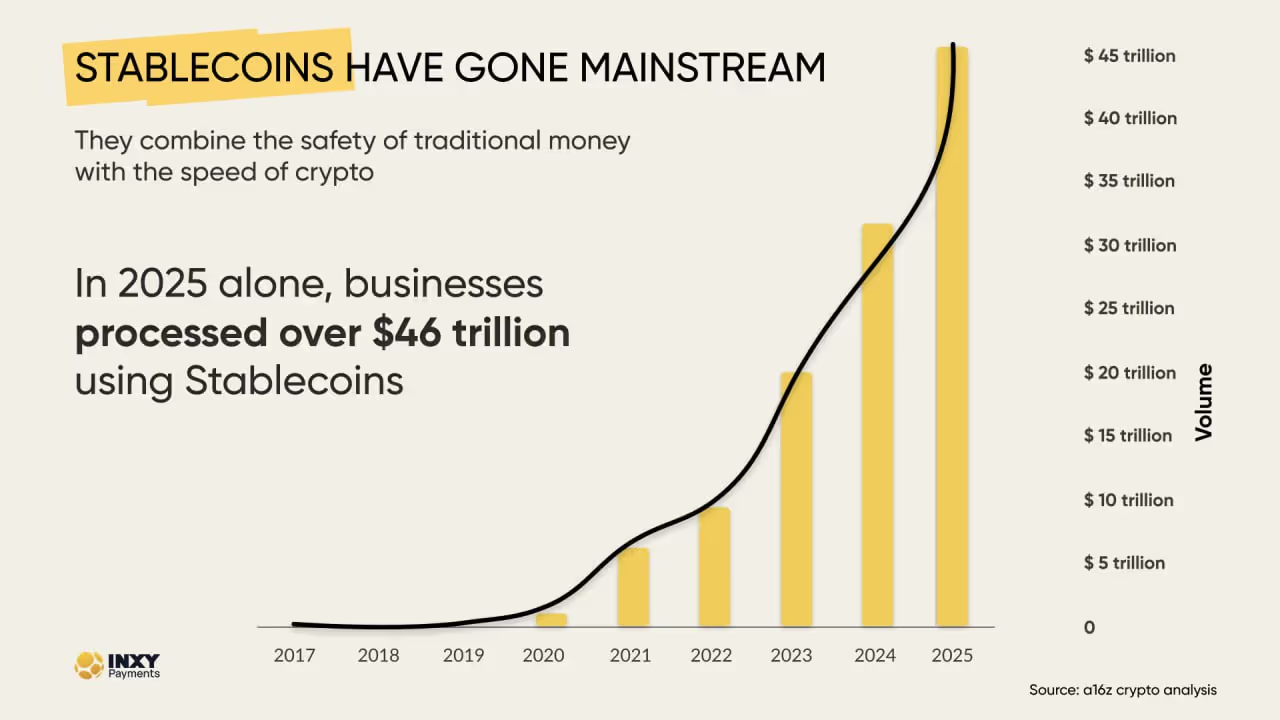
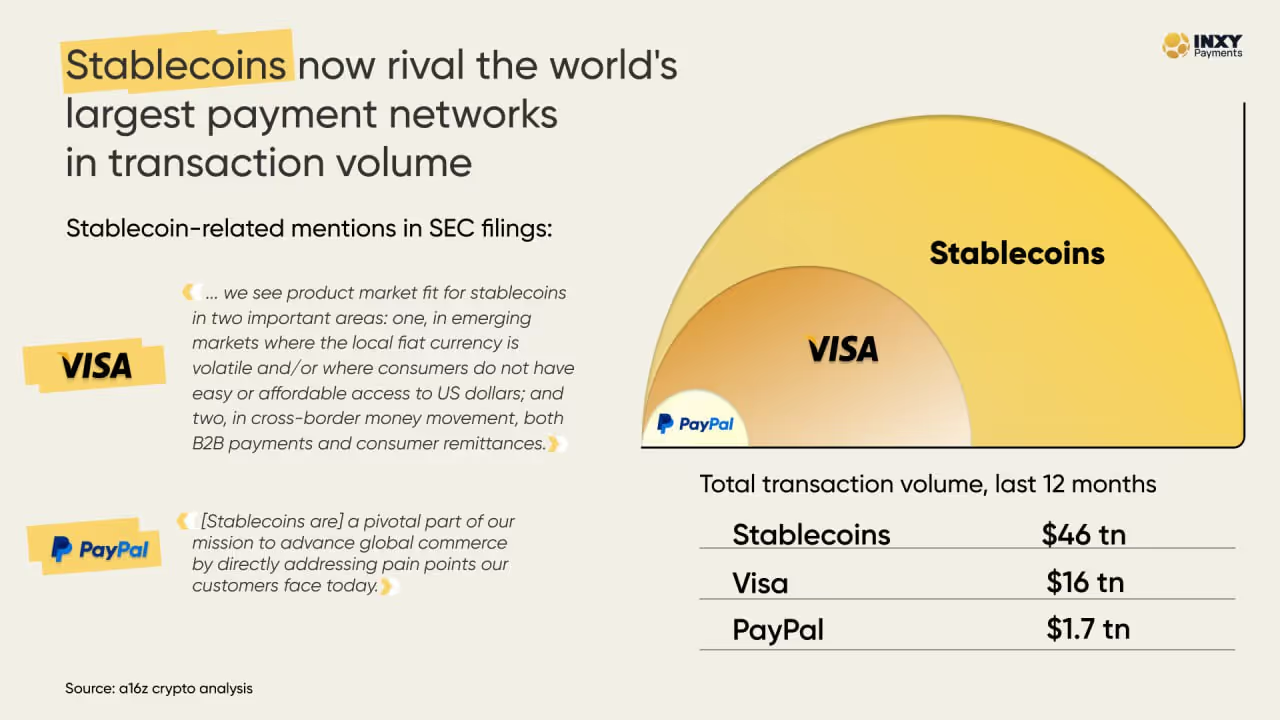
Stablecoins alone processed over $46 trillion last year — more than Visa and PayPal combined.
This shows that digital payments are not a niche trend. They are becoming the main way money moves online.
Benefits for Businesses
Stablecoin payments offer several advantages for businesses. They're less volatile than other cryptocurrencies like Bitcoin. Imagine you're a business owner. You want to know the value of your money won't change drastically overnight. Stablecoins, backed by assets like the US dollar, provide that peace of mind.
Transaction fees with stablecoins can be lower than traditional banking systems. This means businesses save money, especially on international transactions. For example, sending money across borders usually involves hefty fees. With stablecoins, these costs can be minimized.
Another perk is the speed. Traditional bank transfers can take days. Stablecoin transactions, on the other hand, can be processed in minutes. This speed is crucial for businesses that need quick access to funds. Plus, the use of stablecoins can open doors to new markets, reaching customers who prefer using digital currencies.
also let businesses reach new markets. Many people in emerging regions cannot use cards or access banks, but they can use digital wallets and stablecoins on their phones. This opens the door to millions of new customers who were previously locked out of traditional online payments.
Challenges of Traditional Payment Methods
When we talk about traditional payment methods, we're often referring to cash, credit cards, and bank transfers. While these methods have been the backbone of commerce for years, they come with their own set of challenges. Let's explore these issues to understand why businesses are looking at alternatives like stablecoin payments.
Traditional payments are slow and costly. Bank transfers and card payments can take days to settle, especially across borders. Fees are also high — from card fees to bank transfer fees to currency conversion charges — cutting into margins and slowing business growth.
Security is another concern. Credit card fraud and data breaches are not uncommon. When customers hand over their card details, there's always a risk of that information being misused. This situation not only affects the customers but can also damage the business's reputation. A single security breach might lead to a loss of customer trust, which takes a long time to rebuild.
Limited access is an issue too. Not everyone has access to credit cards or bank accounts. Some customers might prefer alternative payment methods like digital wallets or cryptocurrencies. Businesses that only accept traditional payments could miss out on potential sales from these customers. It's like having a store but keeping the door locked for some shoppers.
Traditional payments also lack transparency. It's often hard for both businesses and customers to track where the money is at any given moment. For example, if a payment is delayed, it can be challenging to pinpoint the reason or the stage at which it's stuck. This lack of visibility can cause frustration and distrust among customers.
Lastly, there's the issue of adaptability. As technology evolves, businesses need payment systems that can keep up with the changes. Traditional payment methods are often slow to adapt to new needs and innovations. For instance, they might struggle to integrate with new e-commerce platforms or to support emerging payment trends.
These challenges make it clear why businesses are exploring other options. Stablecoin payments offer solutions to some of these issues, providing a faster, more secure, and cost-effective alternative. As businesses continue to grow and change, finding flexible payment solutions becomes even more critical.
Case Studies: Companies Making the Switch
Let's dive into some real-world examples of businesses that have embraced stablecoin payments. Each company has its unique reasons, and their experiences offer valuable insights for others considering this path.
One notable case is a well-known online retailer. This company decided to accept USDC, DAI and USDT as part of their payment options. The primary motivation was the global reach of crypto. Customers from different countries found it easier to pay in stablecoins without worrying about currency conversion issues. It also allowed the retailer to reduce transaction fees, which were a burden when using traditional payment gateways.
Another interesting example is a tech startup focused on software development. They started accepting stablecoin payments for their services. The team found that using a crypto payment gateway streamlined their operations. It provided faster transaction times and reduced paperwork. The transparency of blockchain technology also appealed to their tech-savvy customers, who appreciated the added layer of security.
A third case involves a popular restaurant chain. The chain began to accept stablecoin payments during the pandemic. Traditional cash payments were less desirable due to health concerns. By adopting stablecoins, they not only offered a contactless payment solution but also attracted a younger clientele. Many of these customers were already familiar with crypto and eager to use it in everyday transactions.
Then there's a logistics company that made the switch. This company operates internationally, and stablecoins helped them manage cross-border payments more efficiently. The predictability of stablecoin values, unlike volatile cryptocurrencies, made financial planning easier. They could handle transactions with partners and vendors with greater confidence in cost predictability.
Lastly, a freelance platform adopted stablecoin payments to simplify payouts to freelancers around the globe. Freelancers appreciated receiving payments in USDC or USDT for their stability and ease of conversion to local currencies. This shift also solved issues related to delayed payments through traditional banking systems.
These examples illustrate the diverse motivations behind the switch to stablecoin payments. From reducing costs to improving speed and security, businesses find multiple benefits in adopting this modern approach. Each company's journey showcases how stablecoin payments can address specific challenges and open up new opportunities.
These stories reflect a broader trend. In 2024 and 2025, stablecoins became one of the fastest-growing payment methods worldwide, especially for online services and global businesses.
Regulatory Landscape in 2025
Stablecoin payments have been gaining traction, and 2025 is shaping up to be a pivotal year for their regulation. Governments around the world are crafting policies to manage these digital currencies. This is crucial as stablecoins like USDC and USDT become more popular in the business world.
One major development is the introduction of global standards. International bodies are working to create a unified framework for stablecoin regulation. This helps ensure that businesses using stablecoins can operate smoothly across borders. Without such standards, companies might face different rules in each country, making international trade complex.
Local governments are also busy. Each country is trying to balance innovation with security. They want to encourage the use of stablecoins while making sure that financial systems remain safe. For example, some countries are adopting stricter compliance measures. This means businesses need to ensure all transactions are transparent and traceable.
In the European Union, new laws are being drafted. These laws aim to protect consumers and prevent illegal activities. They require that stablecoin providers hold sufficient reserves. This ensures that the value of the stablecoins remains stable and reliable.
Meanwhile, in the United States, regulators are focusing on oversight. They want to ensure that stablecoin issuers are transparent about their operations. This includes regular audits and public disclosures. Such measures help build trust among users and businesses.
Asia is also seeing changes. Countries like Japan and Singapore are leading in creating crypto-friendly regulations. They are developing policies that encourage innovation while ensuring that user rights are protected.
These regulatory changes are significant for businesses. Companies need to stay informed and adapt to these new rules. Understanding the regulatory landscape is key to leveraging stablecoin payments effectively. As 2025 unfolds, businesses will need to navigate this evolving landscape carefully.
The Future of Payments: What’s Next?
Stablecoin payments are gaining popularity, and it's not hard to see why. They bring a fresh wave of possibilities to the table. Businesses are starting to notice how stablecoins can change the payment landscape. Let's explore what the future might hold.
One big reason stablecoins are appealing is their stability. Unlike other cryptocurrencies, stablecoins are tied to real-world assets like the US dollar. This means they don't bounce around in value as much. For businesses, this stability is a huge plus. They can accept payments without worrying about losing money due to market fluctuations.
Stablecoins also make international payments easier. In the past, sending money across borders was slow and costly. With stablecoins, transactions can be completed quickly and with lower fees. This is great news for companies working with international clients or suppliers. It allows them to save both time and money.
Security is another reason businesses are interested in stablecoins. Traditional payment systems can be vulnerable to fraud and hacking. Stablecoins offer a more secure option as transactions are recorded on a blockchain. This technology makes it difficult for unauthorized changes to occur.
Looking ahead, we might see stablecoins being used in more everyday transactions. Imagine buying a coffee or paying rent with stablecoins. As more businesses and consumers become comfortable with the technology, this could become a reality.
Stablecoins may also impact how we save and invest money. People are starting to explore options like earning interest on their stablecoin holdings. This could lead to new financial products and services emerging in the market.
In the coming years, regulations will play a crucial role in shaping the stablecoin landscape. Governments and financial institutions will likely establish rules to ensure safe and fair use. These regulations could boost trust and encourage more businesses to adopt stablecoin payments.
The future of payments is changing, and stablecoins are at the forefront. As technology continues to evolve, we can expect even more innovative uses for stablecoins. They have the potential to simplify and enhance the way we handle money.
Supported Stablecoins & Blockchains (2025)
Many stablecoins run on different blockchains. This makes payments fast and affordable anywhere in the world.
Supported stablecoins:
USDT — ERC20, TRC20, BEP20, Polygon
USDC — ERC20, TRC20, BEP20, Polygon
DAI — ERC20, BEP20, Polygon
Other popular coins: BTC · ETH · BNB · LTC · DOGE · TRX · MATIC
Supported blockchains: Bitcoin · Ethereum · Tron · Polygon · Binance Smart Chain · Litecoin · Ton · and others. The mix of currencies and blockchains makes stablecoin payments work for almost anyone, even in places where card payments fail.
FAQ
What are stablecoin payments and how do they work?
Stablecoin payments involve using digital currencies designed to minimize price volatility by pegging their value to a stable asset, like a fiat currency or commodity. They work like any other digital payment method but offer the added benefit of price stability, making them more reliable for transactions.
Why are stablecoins becoming popular in digital transactions?
Stablecoins are gaining popularity in digital transactions due to their ability to offer the benefits of cryptocurrencies, such as decentralization and transparency, while avoiding the price volatility associated with traditional cryptocurrencies. This makes them an attractive option for businesses looking for secure and stable payment methods.
What benefits do stablecoin payments offer to businesses?
Stablecoin payments provide several benefits, including lower transaction fees compared to traditional payment methods, faster processing times as transactions are often completed in seconds, and enhanced security due to blockchain technology, which reduces fraud and chargebacks.
What challenges do traditional payment methods face that stablecoins address?
Traditional payment methods often suffer from high transaction fees, lengthy processing times, and issues with cross-border payments. Stablecoins address these challenges by offering reduced fees, instantaneous transactions, and seamless international payments, thus providing a more efficient alternative.
Can you provide examples of businesses that have switched to stablecoin payments?
Many companies across various industries have transitioned to stablecoin payments. For instance, a tech company might use stablecoins to streamline international payroll, while an online retailer could adopt them to reduce transaction costs and improve payment processing speed.
How is the regulatory landscape for stablecoins evolving in 2025?
In 2025, the regulatory landscape for stablecoins is evolving to provide clearer guidelines and protections for businesses and consumers. Governments and financial bodies are working on frameworks to ensure stablecoin security and transparency, influencing business decisions towards stablecoin adoption.
In the European Union, the new MiCA framework brings clear rules for stablecoins and crypto service providers. These rules aim to protect users while supporting innovation. Similar frameworks are emerging in Asia, the U.S., and Latin America.
What does the future hold for stablecoin payments and their impact on the economy?
The future of stablecoin payments looks promising, with potential for widespread adoption as more businesses recognize their benefits. This could lead to significant changes in the payment industry, driving innovation and possibly reshaping economic structures by making transactions more efficient and accessible worldwide.
Sending crypto in 2026 is faster and more accessible thanks to improved wallets, lower network fees, and advanced blockchain technologies. This step-by-step guide explains how to send BTC, USDT, USDC, and ETH securely, compare transaction fees, track transfers, and stay ahead of future crypto transaction trends.
Cryptocurrency might sound complicated, but it's quite straightforward once you get the hang of it. At its core, cryptocurrency is a type of digital money. Unlike traditional currencies like the dollar or euro, crypto doesn't rely on banks. Instead, it uses technology called blockchain to keep track of transactions. This technology is like a digital ledger that records every transaction made.
Bitcoin is the most famous cryptocurrency, but there are many others like Ethereum, USDT, and USDC. Each has its own features and uses. For instance, Bitcoin is often used as a store of value, like gold. Ethereum, on the other hand, is known for its smart contracts. These are like self-executing contracts with the terms directly written into code.
Sending crypto involves creating a digital wallet. This wallet is a bit like a bank account but only for digital currencies. To send crypto, you need the recipient's wallet address. It's important to double-check this address because once you send crypto, you can't get it back if the address is wrong. Crypto transactions are generally fast and can be cheaper than traditional money transfers.
Choosing the Right Crypto Payment Platform
When it comes to sending crypto, picking the right payment platform is crucial. The options have expanded greatly by 2026, offering more choices than ever. But with choice comes the challenge of finding the best fit for your needs. Let's break down what to look for in a crypto payment platform.
First, consider the transaction fees. Different platforms charge varying fees for sending crypto. Some offer lower fees for particular cryptocurrencies like BTC, USDT, USDC, or ETH. It's smart to compare these fees as they can affect the overall cost of your transactions. A platform with lower fees can save you money in the long run.
Next, think about ease of use. Not all platforms are user-friendly. If you're new to crypto, look for a platform that offers a straightforward interface. Tutorials and customer support can also be a big help. A good platform should make the process of sending crypto as simple as possible.
Security is another key factor. You need a platform that keeps your funds safe. Look for platforms with strong security measures, such as two-factor authentication and encryption. You want assurance that your crypto won't fall into the wrong hands.
Consider the platform's reputation and reviews. A platform with positive reviews from other users can be a good sign. Check forums and social media for feedback. Sometimes, the experiences of others can guide you toward the right choice.
Finally, look at the supported cryptocurrencies. If you plan to send BTC, USDT, USDC, or ETH, make sure the platform supports these. Some platforms offer a wider range of cryptocurrencies, which can be useful if you plan to diversify your holdings.
In essence, selecting the right crypto payment platform involves balancing fees, usability, security, reputation, and currency support. By focusing on these aspects, you'll be well on your way to finding a platform that suits your needs.
Setting Up Your Crypto Wallet (ссылка на блог)
Setting up a crypto wallet is a crucial step in sending crypto. It's like having a digital bank account where you store your cryptocurrencies. Let's break down the process into simple steps.
First, you'll need to choose the type of wallet. There are several options like hardware wallets, mobile wallets, and desktop wallets. Each has its own benefits. For instance, hardware wallets are secure because they store your crypto offline. Mobile wallets are convenient for everyday use.
Once you've picked a wallet type, it's time to download or purchase it. If you're going for a software wallet, visit the official website or app store to download it. Be cautious of fake sites and apps. For hardware wallets, buy from a trusted source to avoid counterfeit products.
After installing your wallet, you'll need to create an account. During this step, you'll set up a strong password. This is vital for your wallet's security. You might also be required to set up two-factor authentication for an extra layer of protection.
You'll then receive a recovery phrase. This is a set of words you'll need if you ever lose access to your wallet. Write it down and store it somewhere safe. Never share this phrase with anyone.
Finally, add some crypto to your wallet. You can do this by purchasing crypto from an exchange or receiving it from someone else. Make sure to double-check wallet addresses when sending or receiving crypto to avoid mistakes. With these steps, you're ready to manage your crypto securely.
How to Send BTC, USDT, USDC, and ETH
Sending crypto can seem tricky, but it's quite simple once you get the hang of it. Let's break it down. First, you need a wallet. There are many options, like hardware wallets, mobile apps, or online platforms. Choose one that fits your needs and create an account.
When you're ready to send crypto, you'll need the recipient's wallet address. It's a long string of letters and numbers, so double-check it to avoid mistakes. For example, if you're sending Bitcoin (BTC), make sure the address is a BTC address. Sending crypto to the wrong type of address can result in a loss.
Next, enter the amount you want to send. Most platforms let you choose how much you want to pay in fees. Lower fees mean slower transactions, while paying more can speed things up. It's a balance between cost and time.
Once everything looks good, confirm the transaction. Some platforms may ask for additional verification, like a code sent to your phone or email. This step helps keep your crypto safe. After confirmation, the transaction is processed. Depending on the network, it can take a few minutes to complete.
Keeping track of the transaction is easy. You can use a blockchain explorer to see its status. Just enter your transaction ID or wallet address to follow its progress.
Comparing Transaction Fees
When sending crypto, transaction fees can vary greatly depending on the network you choose. Let’s break this down with a few clear examples.
Imagine you’re sending Bitcoin (BTC). The Bitcoin network can have relatively high fees, especially during periods of high demand. This often makes small transactions less cost-effective.
Now consider Ethereum (ETH). Ethereum transaction fees, known as gas fees, fluctuate depending on network congestion. During peak activity—such as popular NFT launches or intense DeFi usage—these fees can increase significantly.
The same principle applies to stablecoins like USDT and USDC. While their value remains stable, transaction fees depend entirely on the blockchain network used. An important detail to keep in mind is that gas fees are always paid in the native token of the blockchain, not in the stablecoin itself.
For example, if you send USDT on the Ethereum network (ERC-20), you must have enough ETH in your wallet to cover the gas fee. Similarly, when sending USDT on the Tron network (TRC-20), you need to hold TRX in addition to USDT. Without the native token on your balance, the transaction cannot be processed.
This is why networks like Tron are often chosen for USDT transfers—fees there are usually much lower. However, it’s essential to monitor your balance of native coins (ETH, TRX, etc.) to avoid failed transactions.
When choosing how to send crypto, always compare current network fees and make sure you have enough of the required native token. This approach helps keep your transactions smooth, predictable, and cost-effective.
Tracking Your Crypto Transactions
Keeping tabs on your crypto transactions can seem like a puzzle at first. Yet, with a few simple steps, it can become second nature. When you send crypto, each transaction gets recorded on a public ledger called a blockchain. This ledger is like a big book that everyone can see but no one can change. It helps ensure transparency and security.
To start tracking, you'll need a wallet. This is like your digital pocket for holding cryptocurrencies. Each wallet has a unique address, much like your house address, but for crypto. When you send crypto, it gets recorded with this address. Many wallets offer features allowing you to see your full transaction history. This is handy for checking past transfers or seeing who you've sent crypto to.
For those who like visuals, some platforms provide charts and graphs that show your transaction activity over time. These can help you spot patterns or unusual activity. If you're using a crypto payment platform, they might offer additional tools for managing and viewing your transactions. Some even offer alerts to notify you of any new activity, ensuring you're always in the loop.
If you're dealing with several types of crypto like BTC, USDT, USDC, or ETH, separate wallets might be needed. This keeps things organized and prevents confusion. For those wanting to dive deeper, blockchain explorers are available. These are online tools that let you search a transaction by entering your wallet address. They offer detailed info, such as transaction status and fees paid.
Tracking your crypto transactions isn't just about staying organized. It's a way to protect your crypto and understand your spending habits. With these tools, you can manage your crypto finances in a smart and secure way.
Future Trends in Crypto Transactions
The world of cryptocurrency is always on the move. As we look to 2026, several exciting trends are shaping how people send crypto. These changes are not just about technology but also about how we use crypto in everyday life.
One major trend is the rise of decentralized finance, or DeFi. DeFi platforms allow users to conduct financial transactions without a central authority, like a bank. This means lower fees and more control over your money when you send crypto. DeFi is growing fast, and more people are using it for everything from loans to savings accounts.
Another trend to watch is the integration of crypto into traditional financial systems. More banks and financial institutions are starting to accept and use cryptocurrencies. This means you might soon be able to send crypto directly from your bank account. It's a big step towards making crypto a part of everyday financial activities.
In addition to these changes, there is also a focus on improving the speed and efficiency of crypto transactions. Technologies like the Lightning Network for Bitcoin and Ethereum 2.0 are being developed to make transactions faster and cheaper. This could make sending crypto as quick and easy as sending a text message.
Security is another important area of development. As more people use crypto, the need for secure transactions becomes even more critical. New security measures, such as multi-signature wallets and advanced encryption techniques, are being introduced. These tools help protect users' funds and personal information.
Moreover, the use of stablecoins like USDT and USDC is growing. These are cryptocurrencies pegged to stable assets like the US dollar. They offer the benefits of digital currencies without the volatility. This makes them an attractive option for people looking to send crypto with minimal risk.
Lastly, there is an increasing focus on regulation. Governments around the world are working on new laws to govern cryptocurrency use. While some fear that regulation could stifle innovation, it could also make crypto more reliable and accessible to everyone.
As we move forward, these trends will shape the future of crypto transactions. Whether you're a seasoned investor or a newcomer, keeping an eye on these developments can help you make informed decisions about how to send crypto. The landscape is evolving, and with it, new opportunities are emerging for everyone.
FAQ
What is cryptocurrency and why are BTC, USDT, USDC, and ETH commonly used for sending?
Cryptocurrency is a digital or virtual form of currency that uses cryptography for security. BTC (Bitcoin), USDT (Tether), USDC (USD Coin), and ETH (Ethereum) are commonly used due to their widespread acceptance, liquidity, and relatively stable values, making them ideal for transactions.
How do I choose the right crypto payment platform for sending crypto with low fees?
When selecting a crypto payment platform, consider factors such as transaction fees, user interface, security features, and supported cryptocurrencies. Platforms like Binance, Coinbase, and Kraken are popular due to their competitive fees and reliability.
What steps are involved in setting up a secure crypto wallet?
To set up a secure crypto wallet, first choose between a hardware wallet (for maximum security) or a software wallet (for convenience). Download the wallet app or set up the hardware device, create a strong password, and ensure you have a backup of your recovery phrase.
Can you provide a step-by-step guide on sending BTC, USDT, USDC, and ETH?
Open your crypto wallet and select the cryptocurrency you wish to send.
Enter the recipient's wallet address.
Specify the amount to send.
Review the transaction details, including network fees.
Confirm and authorize the transaction.
Wait for transaction confirmation on the blockchain.
How can I compare transaction fees across different networks and platforms?
To compare transaction fees, research and compare the fee structures of each platform, focusing on network fees, withdrawal fees, and any additional service charges. Tools like CoinGecko and CoinMarketCap provide up-to-date fee comparisons.
What methods are available for tracking my crypto transactions?
You can track your crypto transactions using blockchain explorers such as Etherscan for ETH and its tokens or Blockchain.com for BTC. These tools allow you to enter the transaction ID to view the status and confirmations.
What future trends can we expect in crypto transactions by 2026?
By 2026, expect increased adoption of Layer 2 solutions for faster and cheaper transactions, greater integration of AI for improved fraud detection, and wider acceptance of crypto payments in mainstream finance, enhancing user experience and security.
This article compares USDT and USDC in 2026 with a focus on safety, regulation, and profitability. It explains how both stablecoins work, their key differences in transparency and reserve backing, and where each is most useful. Special attention is given to EU regulations and how MiCA has reduced USDT’s availability on regulated European exchanges. The article also covers market trends, interest opportunities, and real-world use cases. Readers get a clear recommendation based on location, risk tolerance, and financial goals.
Stablecoins are a type of cryptocurrency designed to maintain a stable value, often pegged to a currency like the US dollar. This means they don't have the wild price swings of other cryptocurrencies. Imagine having a digital coin that's as steady as the dollar in your pocket. That's what stablecoins aim to do. They provide a bridge between traditional finance and the digital world.
Why are they important? Well, they enable crypto payments without the fear of losing value overnight. For instance, if you send USDT or USDC to someone, you can be sure it will hold its value. These coins are popular for trading and saving money in the crypto market. They make it easy to move money around, whether you're shopping online or investing in digital assets.
Understanding USDT
Let's explore USDT, a popular stablecoin in the crypto world. USDT, also known as Tether, is pegged to the US dollar. This means each USDT is meant to equal one US dollar. People use USDT to avoid the high volatility often seen with other cryptocurrencies.
You might wonder how it stays so stable. The idea is simple: Tether claims to have reserves in US dollars for every USDT issued. This backing provides trust and stability for users.
USDT is widely used for crypto payments. Imagine buying Bitcoin or Ethereum with USDT instead of traditional money. It's faster and often cheaper. It also allows users to move funds between exchanges without converting to fiat money.
Understanding USDC
USDC, or USD Coin, is a type of digital currency known as a stablecoin. This means it is designed to have a stable value, unlike other cryptocurrencies that can be very volatile. USDC aims to maintain a 1:1 value with the US dollar, making it a popular choice for those looking to avoid the wild swings typical in the crypto world.
One key feature of USDC is its transparency. The company behind USDC, Circle, regularly shares reports on the reserves that back each coin. This helps build trust with users who want assurance that each USDC is truly backed by a dollar.
USDC is also built on the Ethereum blockchain, which means it can be used in various applications, from trading to paying for goods and services. This flexibility makes USDC useful for many crypto payment scenarios.
For example, if you want to send money to a friend in another country, you can use USDC to do this quickly and without high fees. This is one reason why many people consider USDC a reliable option in the stablecoin market.
By offering a stable value, transparency, and flexibility, USDC provides a practical choice for both beginners and seasoned crypto users.
Safety Considerations
When it comes to stablecoins, safety is a top priority. After all, no one wants to lose money because of a hack or technical glitch. So, how do USDT and USDC stack up in terms of safety? Let's break it down.
USDT, also known as Tether, has been around for a while. It's popular and widely used. However, it's faced some scrutiny over the years. There have been questions about its transparency and if it truly has enough reserves to back all the Tethers in circulation. These concerns can make people feel a bit uneasy.
On the other hand, USDC, which stands for USD Coin, is seen as more transparent. It's managed by a consortium called CENTRE, which includes big names like Coinbase and Circle. USDC regularly undergoes audits to prove its reserves, giving users more confidence.
Both stablecoins use blockchain technology to secure transactions. This technology is known for being secure and reliable. But, like anything digital, there are risks. Hackers are always looking for ways to exploit weaknesses. That's why it's crucial to use secure wallets and platforms to store your stablecoins.
In terms of regulation, USDC tends to be more compliant. It follows strict rules and guidelines to ensure its stability and safety. This can be reassuring for users who worry about legal issues.
So, when choosing between USDT and USDC, consider what matters most to you. Is it transparency, regulation, or something else? Each stablecoin has its strengths and weaknesses, so weigh them carefully.
The European Ban: A Major Setback for USDT in the EU
A significant recent development that cannot be ignored is the effective delisting of USDT on major cryptocurrency exchanges within the European Union. This move is a direct result of the EU's Markets in Crypto-Assets (MiCA) regulations.
What does this mean in practice?
While it's not illegal for individuals to hold or peer-to-peer trade USDT, regulated exchanges like Binance, Kraken, and others have suspended the trading of USDT for EU residents.
You can no longer easily exchange USDT for Euros or other cryptocurrencies on these mainstream platforms within the EU.
Why did this happen? The MiCA framework imposes strict requirements on stablecoin issuers, particularly concerning transparency and reserve backing. As reported by industry analysts, Tether's structure and level of transparency have so far not met the regulatory standards set by MiCA, leading to its removal from the regulated market.
What is the alternative for European users? This regulatory shift massively boosts the position of USDC. As a fully compliant and transparent stablecoin, USD Coin has become the dominant, regulated stablecoin of choice within the European single market. For EU-based traders and businesses, USDC is now the most liquid and accessible dollar-pegged stablecoin.
Profitability Analysis
When considering the profitability of USDT and USDC in 2026, it helps to look at their roles in the crypto market. Both stablecoins aim to provide stability, pegged to the US dollar. But how can one be more profitable than the other?
USDT, or Tether, is well-known for its liquidity. It's often used in trading because it's widely accepted on many crypto exchanges. This means more traders use USDT for quick exchanges between different cryptocurrencies. This high demand can sometimes lead to small profits from price fluctuations, even though it's a stablecoin.
Let's talk about USDC. It's issued by Circle and Coinbase, and it has a reputation for transparency. This trust can boost its utility. More businesses are open to accepting USDC for payments, which might make it more profitable for merchants and service providers. They can avoid the volatility of other cryptos while still enjoying the benefits of digital currency.
Now, consider the interest earnings. Some platforms offer interest on stablecoins. This is where the profitability can differ. USDC is often preferred for earning interest due to its transparency and backing. Users might find better interest rates on platforms that trust USDC's reserves.
In essence, USDT and USDC can both be profitable, but it depends on how they're used. For traders, USDT might offer quick gains. For those seeking interest or business utility, USDC could be the better choice. Understanding these nuances helps in deciding which stablecoin to use for different financial strategies.
Market Trends for 2026
The world of stablecoins like USDT and USDC is buzzing with changes as we look ahead to 2026. Crypto payment options are becoming more mainstream, and both USDT and USDC are riding this wave. But what can we expect in the next few years? Let's explore.
One of the big trends is the increasing use of stablecoins in everyday transactions. More people are using them to pay for goods and services. This is partly because stablecoins are pegged to the US dollar, making them less volatile than other cryptocurrencies. Businesses are also warming up to accepting stablecoins, which is good news for both USDT and USDC.
Another trend is the growing focus on regulation. Governments around the world are looking more closely at stablecoins. They want to ensure these digital currencies are safe and reliable. Regulations can affect how stablecoins are used and can impact their value. This means USDT and USDC might need to adapt to new rules to remain competitive.
In 2026, we might see more partnerships between stablecoin issuers and financial institutions. These partnerships aim to enhance trust and provide more services to users. Imagine being able to transfer your USDC from your crypto wallet directly to your bank account with ease. Such collaborations could make stablecoins more appealing and accessible.
Technology is another area where we see changes. Blockchain technology is evolving, and so is how stablecoins operate. Faster transaction times and lower fees could be possible. This would make using stablecoins more attractive to both businesses and individuals.
Environmental concerns are affecting the crypto world, and stablecoins are no exception. The energy consumption of blockchain networks is a hot topic. Both USDT and USDC issuers are looking for ways to reduce their environmental impact. This could involve adopting more energy-efficient technologies or supporting eco-friendly initiatives.
The competition between USDT and USDC is also something to watch. Each has its strengths and challenges. USDT is widely used, but USDC is praised for transparency. The balance between these factors could shift as the market evolves.
A key trend shaping the 2026 landscape is regulatory fragmentation. The EU's MiCA regulations have already created a clear divergence, with compliant stablecoins like USDC gaining official status while others, like USDT, are being pushed to the sidelines of the regulated market. This sets a precedent that other jurisdictions may follow, making regulatory compliance a primary factor for stablecoin survival and adoption.
Finally, the role of stablecoins in the global economy is expanding. They are becoming a bridge between traditional finance and the digital world. As more people globally gain access to the internet, stablecoins like USDT and USDC could play a crucial role in financial inclusion. This would allow more people to participate in the global economy without needing a traditional bank account.
These trends paint a dynamic picture for 2026. The stablecoin landscape is changing, and both USDT and USDC are at the heart of these changes. As we move forward, these developments can impact how we use and view stablecoins in our daily lives.
Conclusion: Which Is Better?
When it comes to choosing between USDT and USDC in 2026, the landscape has shifted significantly, especially for users in key markets like Europe.
USDT remains a giant in terms of global liquidity and is widely used for trading on international exchanges outside the EU. However, its lack of regulatory compliance in Europe is a major drawback. If you are based in the EU or plan to interact with the European market, USDT's utility is now severely limited.
USDC, on the other hand, is stronger than ever. Its commitment to transparency and regulatory compliance has positioned it as the premier stablecoin within the European Union and a trusted choice globally. If you value safety, future-proofing your assets, and seamless access to regulated exchanges, USDC is the clear winner.
The Verdict:
For traders outside the EU who prioritize deep liquidity on international platforms, USDT is still a tool, but one carrying higher regulatory risk.
For virtually everyone else, especially EU residents and those valuing long-term stability,USDC is the superior and safer choice for 2026. The European ban on USDT trading is a powerful indicator of where the market is heading: towards a regulated environment where transparency is paramount
FAQ
What are stablecoins and why are they important in the crypto market?
Stablecoins are a type of cryptocurrency designed to maintain a stable value, often pegged to a fiat currency like the US dollar. They are important because they provide a way for investors to mitigate volatility while still participating in the crypto market.
How does USDT differ from other stablecoins?
USDT, or Tether, was one of the first stablecoins and is widely used for trading and transactions. It is backed by reserves that include cash and other assets, although there has been controversy over its transparency and auditing practices.
Is USDT banned in the European Union?
No, USDT itself is not outright banned for individuals to hold. However, due to the EU's MiCA regulations, regulated cryptocurrency exchanges within the EU have suspended trading pairs for USDT. This means you cannot easily buy, sell, or trade USDT for other cryptocurrencies or euros on major licensed platforms like Binance, Kraken, etc., if you are an EU resident.
Can I still use USDT for business if I'm based in Europe?
This is a complex area. While holding might be permissible for individuals, using USDT for business operations—such as accepting it as payment from customers or using it for treasury management—carries significant regulatory risks under MiCA. The legal landscape is stringent, and non-compliance can lead to severe penalties.
What makes USDC a strong contender in the stablecoin market?
USDC, or USD Coin, is known for its transparency and regulatory compliance. It is fully backed by US dollars held in reserve and regularly audited, which enhances its credibility among investors seeking a reliable stablecoin.
What are the key safety considerations when choosing between USDT and USDC?
When evaluating safety, consider factors like regulatory compliance, audit transparency, and the backing of reserves. USDC is generally viewed as more transparent and compliant, whereas USDT has faced scrutiny over its reserve disclosures.
How does the profitability of USDT compare to USDC?
Profitability can be assessed through interest rates and yield opportunities. Both USDT and USDC offer interest through various platforms, but the rates can vary. It's important to compare the options available and consider your risk tolerance.
What market trends should investors watch for USDT and USDC in 2026?
In 2026, investors should watch for trends in adoption rates, regulatory changes, and technological advancements. Both USDT and USDC may see shifts in usage patterns as the cryptocurrency market evolves and matures.
Which stablecoin is likely to be the better choice in 2026: USDT or USDC?
The choice between USDT and USDC depends on your priorities. If transparency and regulatory compliance are paramount, USDC may be preferable. However, if market liquidity and usage are more critical, USDT could be more advantageous. Consider your investment goals carefully.






.avif)






.avif)