
Blog
In this dedicated blog page, we invite you to explore a wealth of knowledge, expertise, and inspiration that transcends traditional boundaries.

INXY Raises $7M to Expand Cross-Border Payment Infrastructure
INXY has secured new funding to continue building its global payments platform. The total round reached $7M. The company focuses on stablecoin infrastructure for businesses. Its tools help companies accept crypto and send payouts while keeping accounting in fiat.
INXY has secured new funding to continue building its global payments platform. The total round reached $7M.
The company focuses on stablecoin infrastructure for businesses. Its tools help companies accept crypto and send payouts while keeping accounting in fiat.
This funding comes at a time when global payments are changing. Traditional rails are slow and expensive. Cross-border transfers often take days and include multiple intermediaries.
Stablecoins offer a different path. They move value quickly and directly. They reduce friction in international transactions. Many businesses are starting to explore this model.
INXY builds infrastructure for this shift. The goal is simple. Let companies use crypto without becoming crypto companies.
The platform supports mass payouts, payment acceptance, and automated conversion. Funds can be sent globally and settled in EUR or USD.
The company has already processed over $2B in annual stablecoin volume. This shows growing demand for alternative payment rails.
The new capital will be used to:
– Expand the payments infrastructure.
– Strengthen compliance and regulatory alignment.
– Grow the team and product capabilities.
Regulation is also shaping the market. In Europe, frameworks like MiCA are creating clearer rules for crypto services. This makes it easier for businesses to adopt compliant solutions.
INXY positions itself in this new environment as a regulated infrastructure provider. It operates under EU and Canadian frameworks and focuses on low-risk business use cases.
The company believes the future of payments will be stablecoin-based, compliant, and invisible to the end user.
The work ahead is not about hype. It is about making payments simple, reliable, and global.
Articles

How to Automate Mass Crypto Payouts for International Freelancers
Wire transfers are draining freelance platform margins with high fees, opaque FX spreads, and week-long settlement delays. Automated mass crypto payouts via stablecoins like USDT and USDC eliminate these bottlenecks — processing thousands of global transactions in seconds through a single API call. This guide walks through the full transition: choosing the right digital assets, integrating a payout API, and automating reconciliation at scale.
How to Automate Mass Crypto Payouts for International Freelancers
It is payday, and your finance department is drowning in a massive spreadsheet filled with SWIFT codes, routing numbers, and fluctuating exchange rates. A few days later, your support channels are flooded with frustrated messages from international developers who still have not received their money because a correspondent bank mysteriously held the funds. If you operate a global freelance platform, a talent marketplace, or a remote agency, this logistical nightmare is likely your recurring reality. While hiring elite talent across borders is frictionless, compensating them remains stuck in the 1990s.
Legacy banking rails actively erode your profit margins with exorbitant fees and damage your reputation among top professionals. It is time to stop burning cash and developer hours on slow wire transfers. By transitioning to automated mass cryptocurrency payouts – specifically leveraging stablecoins you can execute thousands of global transactions simultaneously, settling payments in seconds rather than unpredictable weeks.
The Bottleneck of Traditional Global Payroll
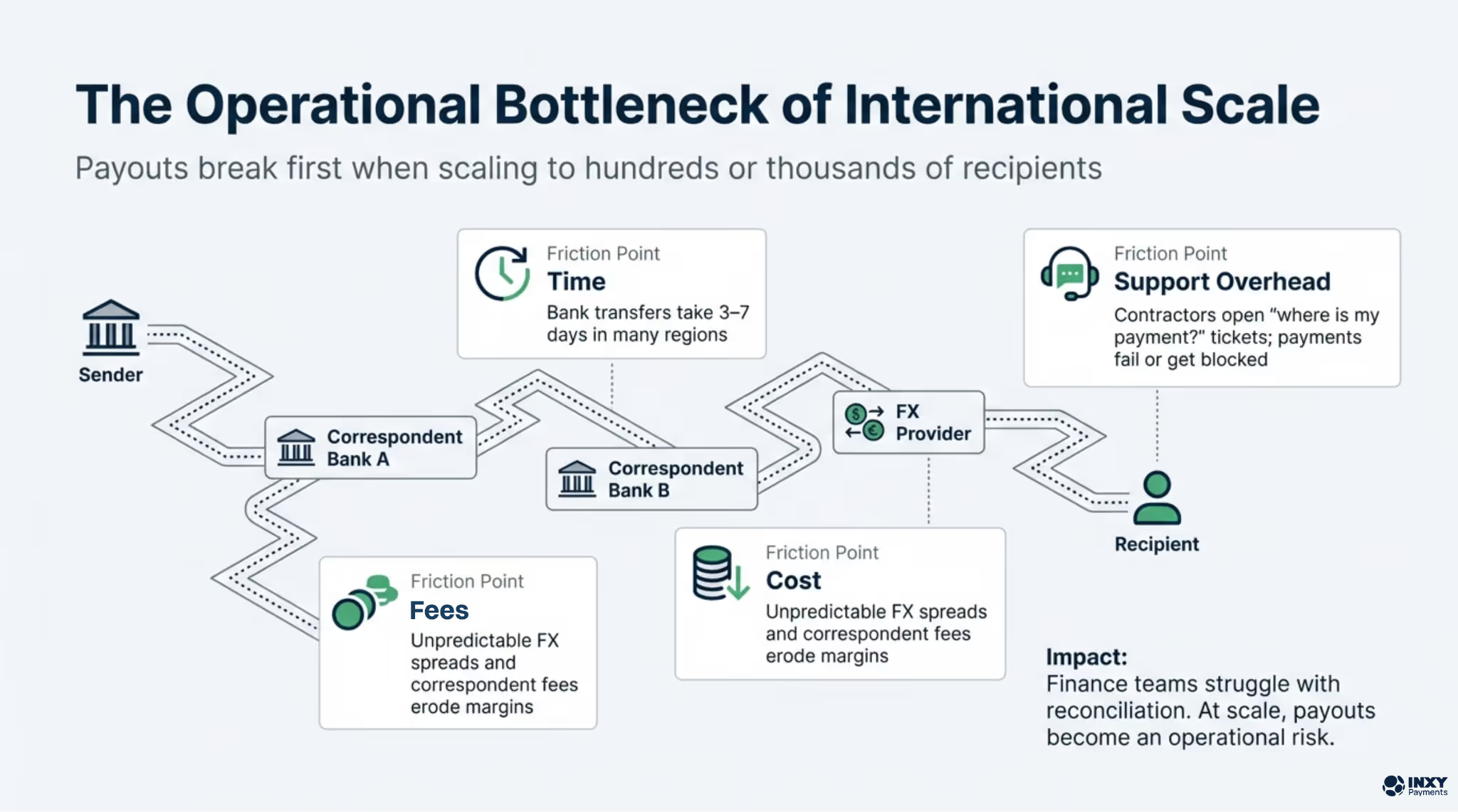
Processing international payroll through fiat channels involves a convoluted chain of intermediary banks, each extracting a cut and adding days to the settlement timeline. The traditional system is plagued by critical operational pain points for freelance platforms:
- Exorbitant Transaction Fees: Standard wire transfers cost $15 to $50 per transaction. This makes frequent micro-payouts to temporary contractors or gig workers entirely unfeasible.
- Unpredictable Settlement Delays: Cross-border payments routinely take three to seven business days to clear, causing immense anxiety for freelancers relying on timely income.
- Hidden FX Markups: Banks apply highly unfavorable foreign exchange spreads, directly reducing the contractor's purchasing power and causing disputes over missing funds.
- Severe Financial Exclusion: Talented professionals in emerging markets are often completely locked out of standard, legacy payment methods like PayPal or Stripe.
The Mechanics of Crypto Payout Automation
Shifting platform operations to cryptocurrency, particularly utilizing stablecoins like USDT or USDC, neutralizes these flaws. Because they are securely pegged to the US Dollar, they eliminate the price volatility of digital assets like Bitcoin.
The true transformative power for your platform lies in API automation. Instead of a finance manager manually processing invoices one by one, a mass payout system allows your backend infrastructure to trigger hundreds of transactions simultaneously through a single API call. Executed via automated batch processing on high-speed blockchains like Tron or Polygon, network fees drop to mere pennies.
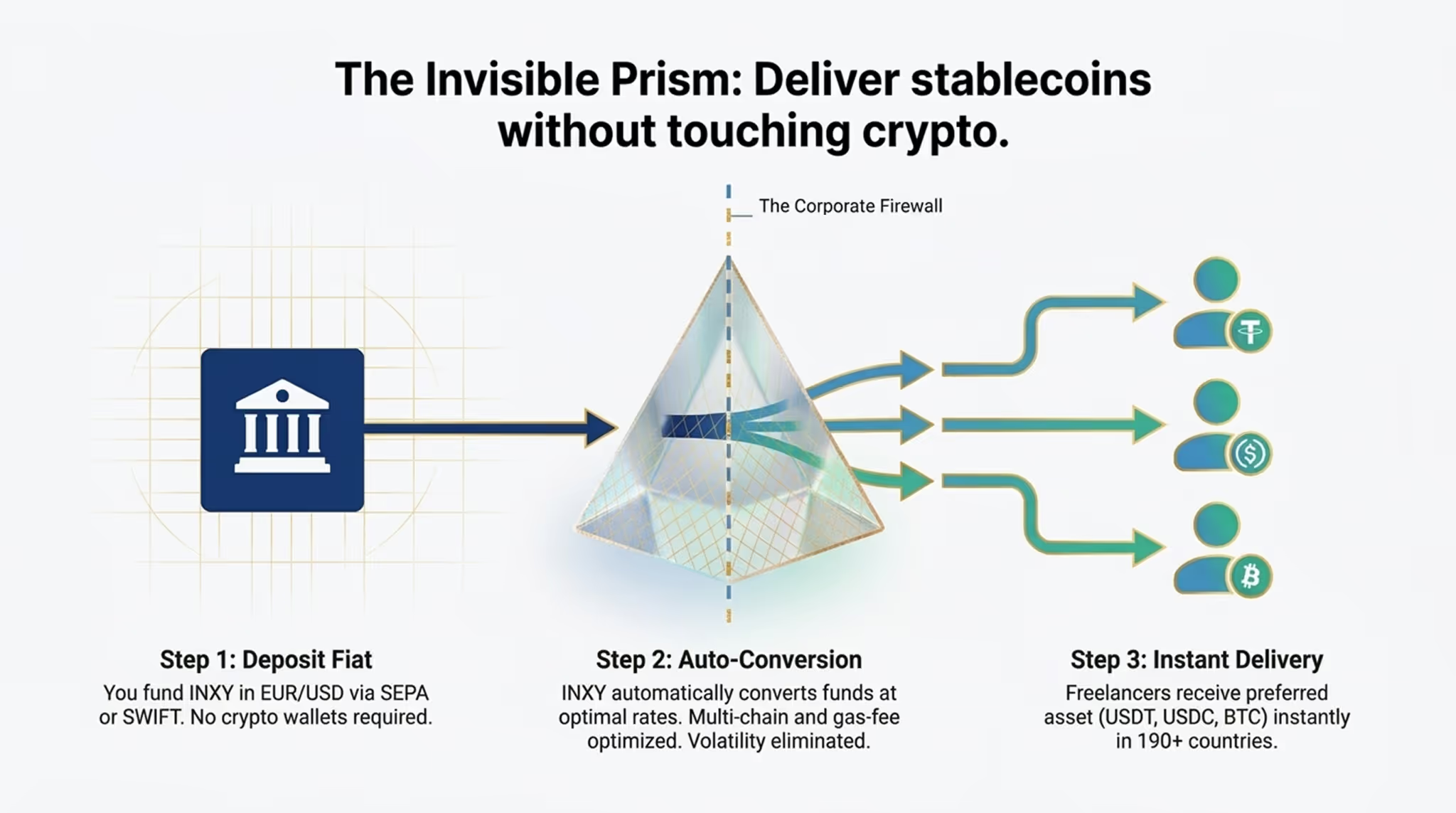
Step-by-Step Guide to Automating Global Payouts (тут нужна помощь Артем в правильности шагов)
Transitioning to a crypto-first compensation model requires a strategic technical approach to ensure smooth onboarding for your contractors:
- Select the Right Digital Assets: Default to stablecoins (USDT/USDC) on fast networks to ensure negligible gas fees and zero price volatility for the receiving party.
- Integrate a Payout API: Connect your backend directly to a dedicated crypto gateway supporting mass payout endpoints instead of trying to build and maintain complex nodes from scratch.
- Map Contractor Wallets: Update your platform onboarding flow to allow freelancers to securely save and verify their digital wallet addresses alongside their traditional profile data.
- Automate Trigger Events: Configure your platform's internal logic so that approved timesheets, completed milestones, or specific calendar dates automatically trigger the API payout calls.
- Streamline Reconciliation: Utilize a gateway that provides detailed transaction hashes and automated ledger updates so your accounting team can track successful disbursements in real-time.
INXY: The Premier Payout Gateway for Freelance Platforms
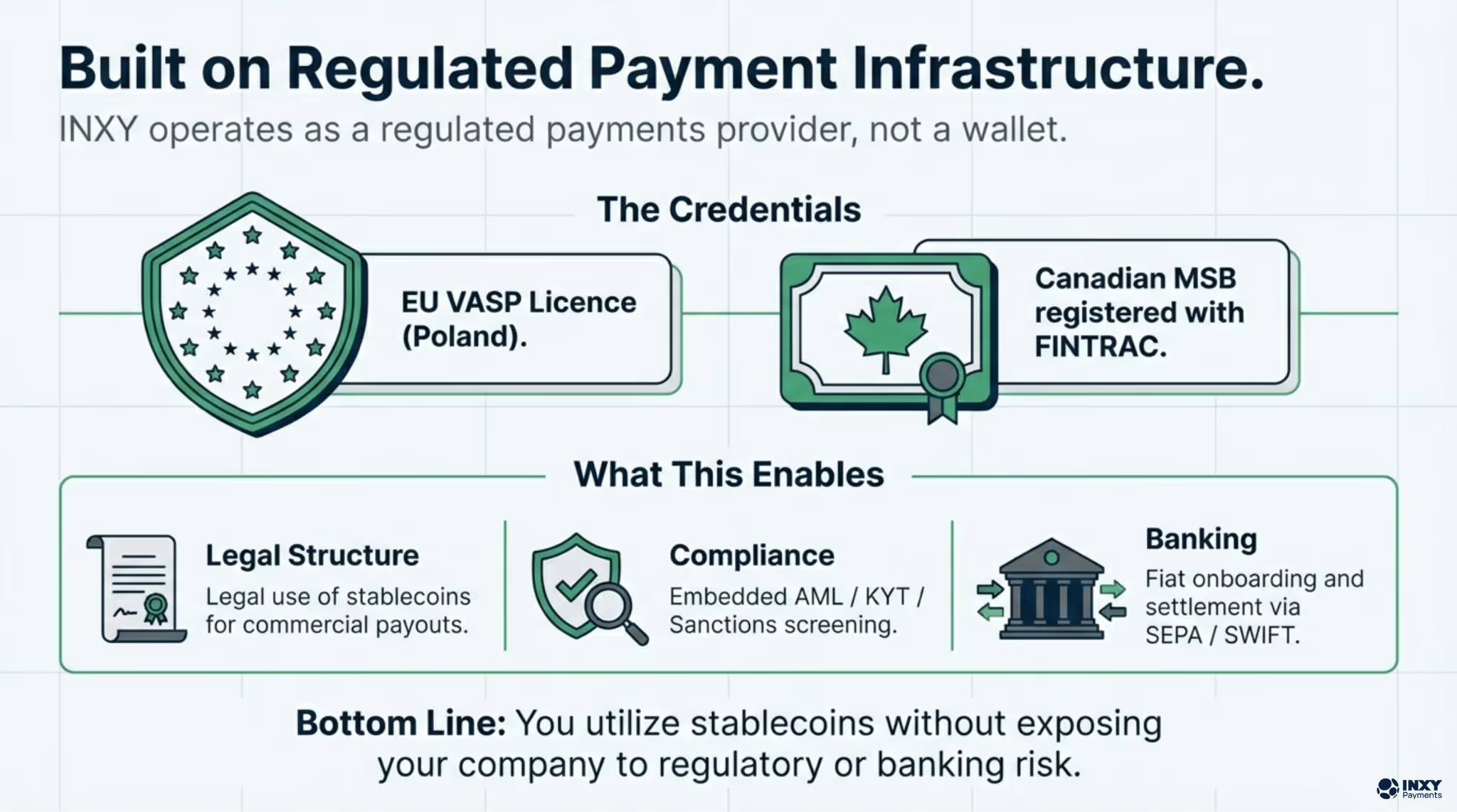
Implementing automated financial infrastructure requires an enterprise-grade technological backbone. For global talent marketplaces, remote agencies, and HR platforms modernizing their compensation systems, INXY stands out as the ultimate strategic partner.
INXY provides a powerful cryptocurrency payment gateway designed specifically for the high-volume, automated disbursement needs of the gig economy. By integrating the INXY API, your platform can automate mass crypto payroll effortlessly, completely removing the heavy lifting of blockchain node management. We act as the secure bridge between your administrative dashboard and the blockchain, ensuring rapid global settlement, automated transaction reconciliation, and flawless execution for every single contractor payout. Our infrastructure scales perfectly alongside your growing international workforce.
Conclusion
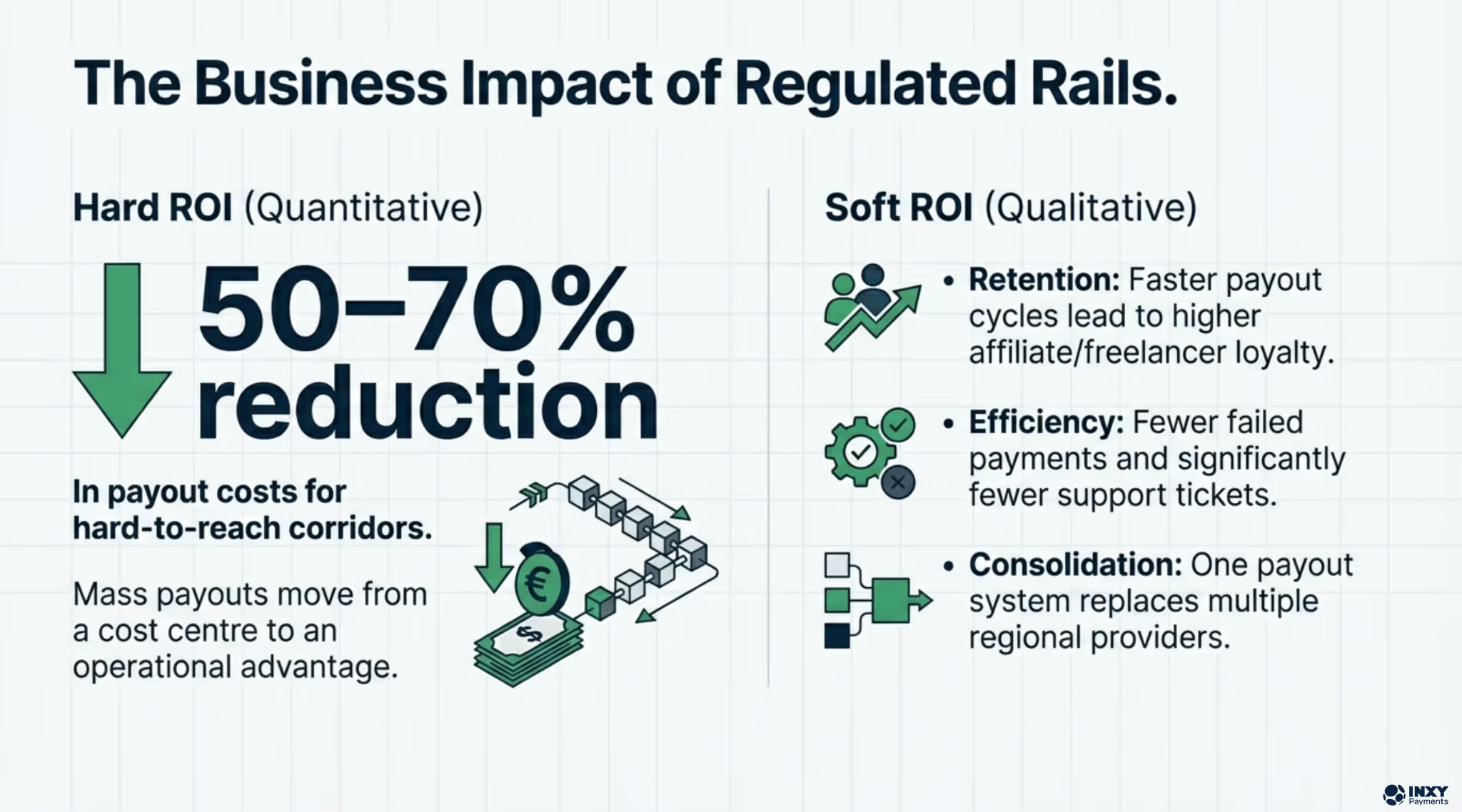
The future of global work is undeniably decentralized, and platform compensation methods must evolve to keep pace. Automating mass crypto payouts is not just an operational upgrade; it is a profound competitive advantage that attracts and retains top global talent who demand fast, transparent payments. Do not let outdated banking rails hold your platform's growth hostage.
Ready to revolutionize your payroll system and automate your global disbursements? Discover how our robust API solutions can scale your platform securely by visiting https://www.inxy.io/ today.

Navigating Crypto Compliance for Fintechs: How to Offer Stablecoins Safely
As global regulators tighten their grip on digital assets, offering stablecoins safely has become a critical challenge for fintechs. This guide explores how to navigate recent EU restrictions on USDT, why fully collateralized USDC is the gold standard for institutional compliance, and how integrating a multi-asset gateway like INXY protects your platform while providing seamless global transfers.
Navigating Crypto Compliance for Fintechs: How to Offer Stablecoins Safely
Imagine launching a killer feature that multiplies your transaction volume overnight, only to have regulators freeze your operations a week later. Welcome to the high-stakes reality of integrating stablecoins into your platform. Right now, digital dollars are powering the global economy, moving billions across borders daily. Your users are demanding it, and the business case for instant settlements is undeniable.
But there is a catch. Financial watchdogs globally are circling. Offering stablecoins is a massive growth lever for ambitious fintechs, but stepping into the crypto arena without an airtight compliance strategy is like walking a tightrope without a net. The ultimate challenge is navigating this regulatory minefield without sacrificing the seamless user experience your customers expect.
The Top Three: USDT, USDC, and DAI
Before diving into regulatory complexities, it is crucial to understand the stablecoin hierarchy and why diversifying your asset offerings is mandatory for compliance.
- Tether (USDT): While it currently holds the number one spot for global trading volume, USDT faces severe regulatory headwinds. Notably, the European Union has implemented strict restrictions and effective bans on USDT exchanges under new frameworks, forcing fintechs to rethink relying on a single asset.
- USD Coin (USDC): Sitting comfortably as the second most popular stablecoin, USDC is the gold standard for institutional compliance. It is a fully collateralized asset, genuinely backed 1:1 by actual US dollars and short-term assets, providing unparalleled transparency for strict regulators.
- DAI: Holding the third position globally, DAI offers a robust, decentralized alternative that maintains its peg through smart contracts and over-collateralization, rounding out the essential stablecoins for any modern financial platform.
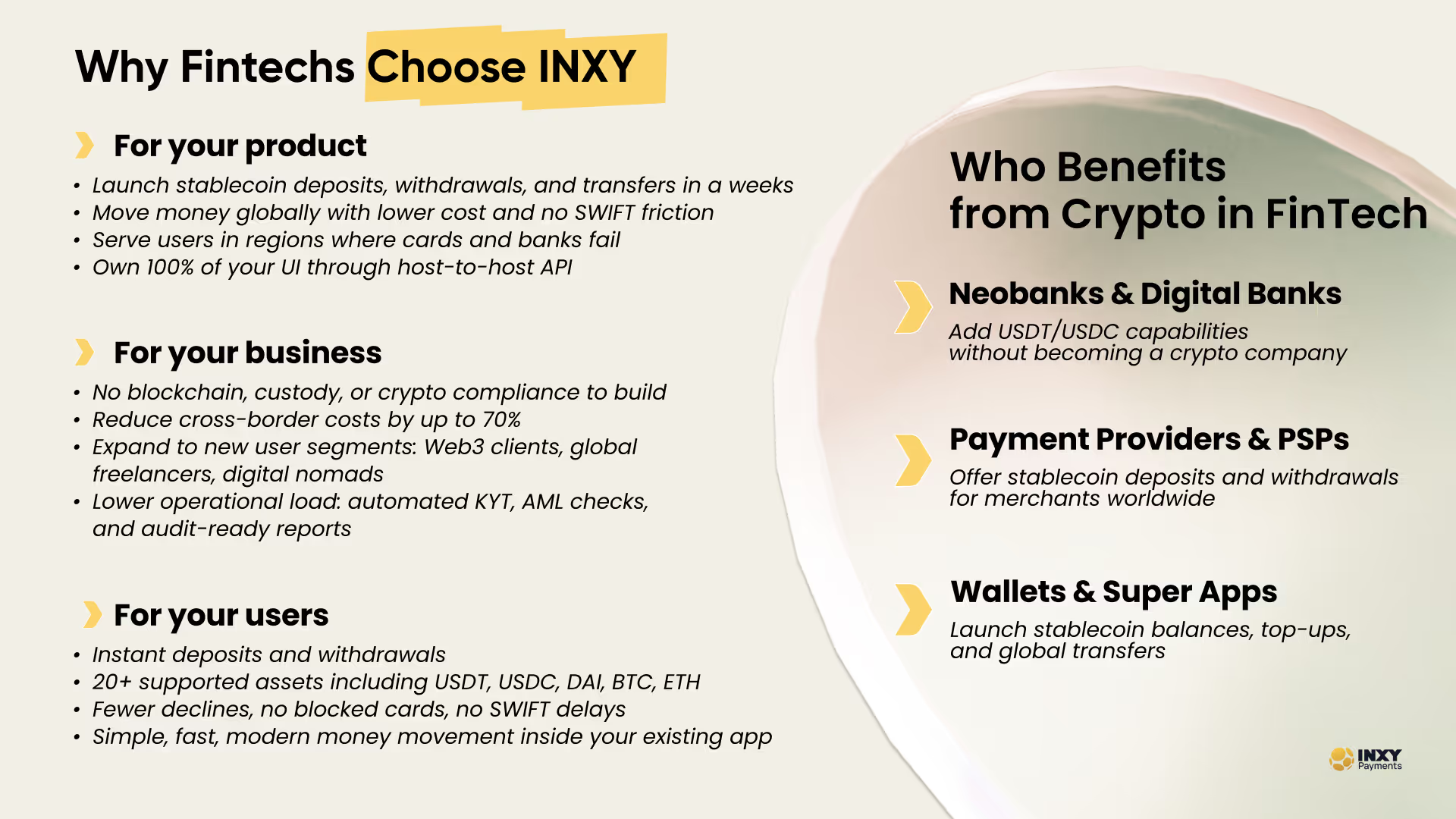
Key Regulatory Challenges in the Crypto Landscape
Offering stablecoins is not as simple as plugging into an API. Financial authorities are rapidly tightening their grip to prevent money laundering and systemic economic risks. First, stringent Know Your Customer (KYC) and Anti-Money Laundering (AML) directives require dynamic, ongoing monitoring. Second, the FATF Travel Rule mandates that institutions must securely share originator and beneficiary data for crypto transfers exceeding specific thresholds.
Finally, jurisdictional fragmentation creates a massive headache. The EU’s Markets in Crypto-Assets (MiCA) regulation perfectly exemplifies this, creating strict new rulebooks that directly restrict non-compliant stablecoins like USDT. This makes offering fully backed, transparent assets like USDC an absolute necessity for European operations.
Proven Strategies to Offer Stablecoins Compliantly
To protect your business from crippling fines while maximizing the incredible benefits of digital assets, you must follow these proven operational strategies:
- Diversify Your Assets: Do not rely solely on USDT. Offer USDC to satisfy strict regulatory requirements in the EU, and provide DAI for users seeking decentralized options.
- Implement Bank-Grade KYC/AML: Utilize automated identity verification systems that check users against global sanctions watchlists in real-time.
- Integrate Transaction Monitoring: Deploy sophisticated blockchain analytics tools to trace wallets, ensuring incoming funds are not linked to illicit activities.
- Geofence Restricted Jurisdictions: Utilize precise IP tracking to block specific stablecoin features in regions where they are explicitly banned or heavily restricted.
INXY as the Premier Crypto Payment Gateway Partner
Navigating this tangled web of regulations demands the right underlying technological infrastructure. This is where INXY steps in as the premier partner for fintech companies looking to integrate digital assets securely.
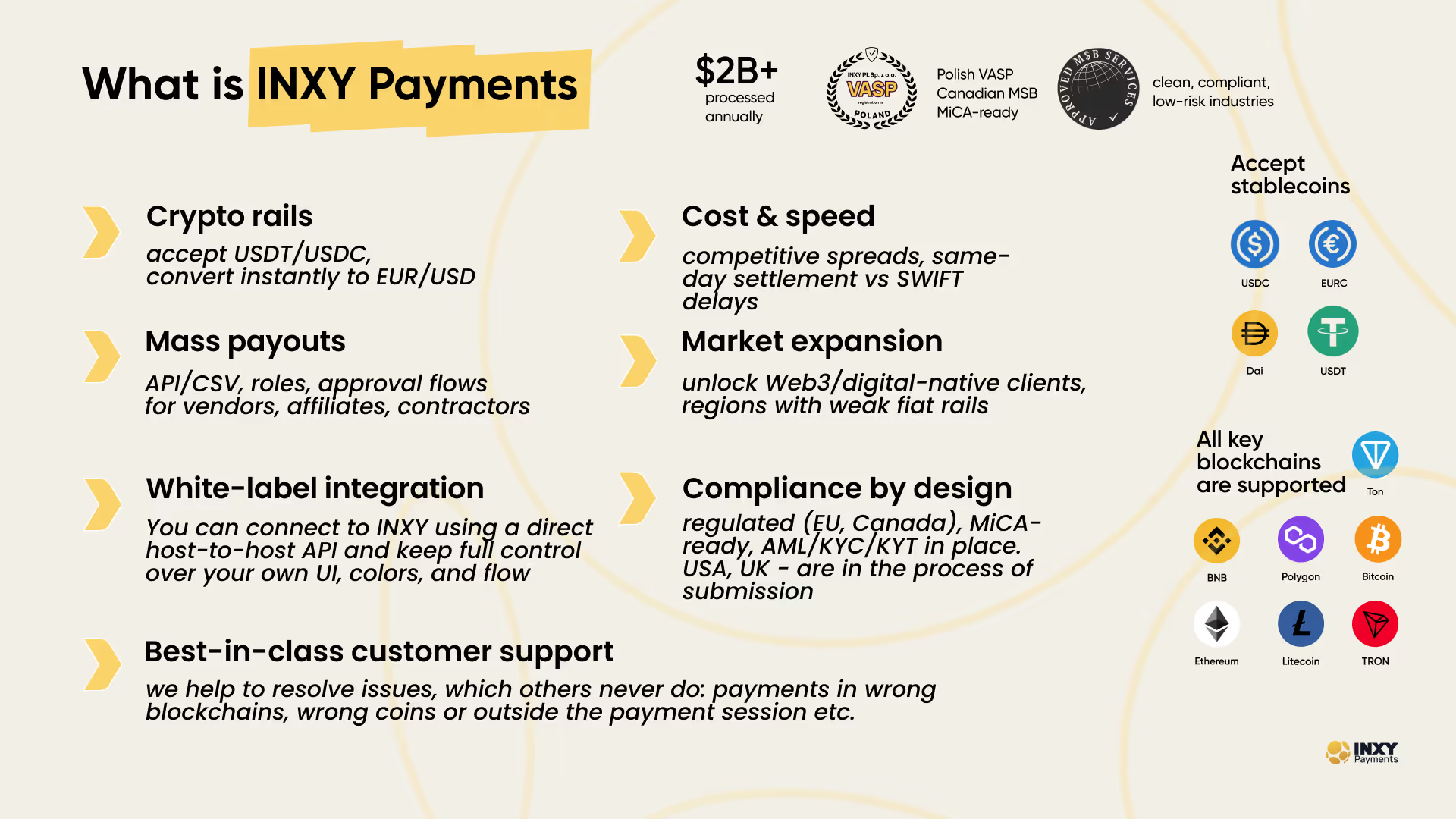
As a dedicated cryptocurrency payment gateway, INXY understands the exact pain points fintechs face. Most importantly, INXY natively supports all three of the top stablecoins: USDT, USDC, and DAI. Whether you need a reliable gateway to process fully backed USDC deposits in the heavily regulated EU market or high-speed APIs for global USDT and DAI transfers, INXY provides the robust backbone your application needs to scale while maintaining strict operational compliance.
Conclusion
The future of global payments is strictly digital, and stablecoins are leading the charge. While the fragmented regulatory environment is complex, it should not deter your business from innovating. By prioritizing proactive compliance, diversifying your asset offerings, and choosing the right technological allies, you can confidently offer secure stablecoin services to your users.
Ready to future-proof your financial platform? Discover how we can help you scale your operations compliantly by visiting https://www.inxy.io/fintech today.

Cheapest Crypto Exchanges
Industry insiders call it "death by a thousand cuts." Whether it's inflated spreads or high withdrawal fees, processing digital assets can be surprisingly expensive if you're using the wrong tools. In our latest guide, we break down: The Anatomy of Fees: Maker vs. Taker and the "Silent Cost" of spreads. Top Retail Exchanges: Where to find the lowest rates for day trading. The Business Trap: Why using a retail exchange for merchant payments is a costly mistake. For enterprises, the secret to cost-efficiency isn't a cheaper exchange—it's specialized infrastructure. Learn how INXY eliminates volatility risks and provides transparent, flat-rate processing.
Imagine closing a $100,000 international deal or executing a perfectly timed crypto trade, only to discover that thousands of dollars vanished into thin air before the funds even settled. The money wasn't stolen by hackers, nor was it lost to a sudden market crash. It was silently siphoned off by the very platform you trusted to process it.
This is the reality of hidden cryptocurrency fees—a silent killer often described by industry insiders as "death by a thousand cuts." Whether you are an active trader watching your portfolio bleed or a business owner seeing profit margins shrink, ignoring the complex fee structures of digital asset platforms is an expensive mistake. Finding the cheapest crypto exchange is not just about clicking the marketing banner that screams "0% trading fees"—it requires a deep understanding of how these platforms actually generate their revenue behind the scenes. In this guide, we will uncover the true costs of digital transactions, highlight the platforms offering the best rates, and reveal why modern businesses must use an entirely different infrastructure to protect their bottom line.

The Anatomy of Cryptocurrency Fees
To navigate the market effectively and keep more of your own money, you first need to understand the different tolls you pay along the way. Most users only look at the baseline trading fee, but the reality is much more complex:
- Maker and Taker Fees: This is the most common and transparent pricing model. A "Maker" provides liquidity to the market by placing a limit order that isn't immediately filled. A "Taker" removes liquidity by executing a market order against the existing order book. Because exchanges desperately want deep, active order books, Maker fees are almost always significantly cheaper than Taker fees.
- The Spread (The Silent Cost): This is the hidden difference between the highest price a buyer is willing to pay and the lowest price a seller is willing to accept. Platforms that aggressively advertise "zero fee trading" almost always make their money by inflating this spread. This means you are essentially getting a much worse exchange rate than the actual global market price.
- Deposit and Withdrawal Fees: Getting your money onto an exchange might be free, but taking it off rarely is. Depending on network congestion and the exchange's internal corporate policies, moving your Bitcoin or USDT to a private wallet or a bank account can carry shockingly high flat fees, completely negating any money you saved on trades.
Top Contenders: Where Retail Traders Pay Less
If you are an individual investor or a day trader, choosing the right platform can save you thousands of dollars over a year of active trading. While fee structures frequently evolve, a few industry giants consistently offer the most competitive rates:
- Binance: Globally recognized as the heavyweight champion of low fees. With baseline spot trading fees often starting around 0.1% (and dropping even lower if you hold their native BNB token), it remains the premier destination for high-volume traders seeking maximum cost-efficiency.
- Kraken (Pro): While Kraken's standard application is highly user-friendly, switching to the Kraken Pro interface unlocks heavily discounted maker and taker fees. It is widely praised for its strict transparency, meaning traders won't be blindsided by unexpected spread inflations during highly volatile market swings.
- KuCoin: Often hailed as the "people's exchange," KuCoin maintains a highly competitive baseline fee structure. It is particularly popular for investors dealing in micro-cap altcoins who want to maximize their purchasing power without being drained by high transactional costs.
The Business Trap: Why Cheap Exchanges Are Expensive for Merchants
Here is where the narrative sharply pivots. If you are an individual trading for personal profit, the exchanges listed above are perfect. But what if you are a business owner? What if you run an e-commerce store, a digital agency, or an international SaaS company, and you want to accept crypto payments from your clients?
Many businesses make the fatal mistake of directing customer payments directly into a standard retail exchange account. They assume that because the trading fees are low, it must be a cost-effective collection solution. In reality, it is a logistical and financial nightmare. When a business uses a retail exchange to process payments, they face a costly "Triple Threat":
- Customers are forced to pay unpredictable network gas fees just to send funds to your specific exchange wallet.
- The business faces severe volatility risks between the time the customer pays and the time the company manually logs in to convert the crypto to stable fiat.
- The company is eventually crushed by high, flat-rate withdrawal fees when attempting to move that accumulated revenue into a corporate bank account.

The Cost-Effective Enterprise Solution
To truly minimize fees and maximize corporate revenue, modern businesses do not use speculative trading exchanges to accept payments. Instead, they rely on specialized, enterprise-grade infrastructure: a dedicated crypto payment gateway like INXY PAYMENTS.
Engineered explicitly for B2B and merchant needs, INXY completely bypasses the predatory spread structures and withdrawal traps of retail exchanges. By integrating INXY into your business framework, you unlock a fundamentally superior economic model:
- Transparent Processing Rates: Unlike exchanges that hide exorbitant costs in the spread, a premium gateway like inxy.io offers flat, highly transparent processing fees. You know exactly what it costs to process a payment, allowing for accurate, predictable financial forecasting.
- Instant Conversion, Zero Volatility: To avoid the hidden, devastating cost of a sudden market crash, the gateway can instantly convert incoming crypto payments into stablecoins or fiat currency at the exact point of sale.
- Automated Accounting: Time is money. Instead of paying accountants to manually track individual wallet deposits across a retail exchange, INXY provides automated invoicing, robust reporting, and mass payout features, drastically reducing expensive administrative overhead.
Conclusion
Navigating the complex world of cryptocurrency fees requires looking past bold marketing slogans and understanding the actual mechanics of the platform. For individual investors, optimizing maker and taker fees on retail platforms is the key to maximizing portfolio returns. However, the corporate world requires a drastically different toolset. By shifting away from retail exchanges and leveraging a powerful crypto payment gateway like INXY, forward-thinking businesses can process global payments with minimal friction, absolute transparency, and unparalleled cost-efficiency.

How does Crypto Exchange work?
Explore the mechanics behind cryptocurrency exchanges, from matching engines and liquidity pools to the differences between CEXs and DEXs. While exchanges power the digital economy for traders, discover why forward-thinking businesses are turning to specialized crypto payment gateways to safely accept digital assets and drive revenue.
In May 2010, a hungry programmer made financial history by trading 10,000 Bitcoins for two Papa John’s pizzas. At the time, there were no global marketplaces, no flashing price tickers, and absolutely no liquidity—just a simple forum post and a massive leap of faith. Today, the landscape has transformed beyond recognition. Those same pizzas would now be worth hundreds of millions of dollars, and the digital asset market has evolved into a trillion-dollar ecosystem.
At the beating heart of this financial revolution is the cryptocurrency exchange. Whether you are a retail investor looking to buy your first fraction of a Bitcoin, a professional trader executing high-frequency strategies, or a modern business owner trying to tap into a global, borderless customer base, understanding what a crypto exchange is and how it functions is the crucial first step to entering the digital economy.

The Engine of the Digital Economy
On any given day, top cryptocurrency exchanges process combined trading volumes exceeding $100 billion. They are the bustling, hyper-active metropolises of the digital age.
At its core, a cryptocurrency exchange is a highly secure digital marketplace that allows users to buy, sell, or trade cryptocurrencies for other assets. These assets can include conventional fiat money (like US Dollars or Euros) or other digital tokens. Exchanges act as the vital intermediary, providing the infrastructure, security, and liquidity necessary for the global crypto market to operate 24/7 without interruption.
Under the Hood: How an Exchange Functions
How does a platform handle millions of transactions per second without collapsing? Buying crypto might look like a simple tap on a smartphone screen, but the magic happens under the hood through several interconnected, highly advanced systems:
- The Matching Engine: This is the absolute brain of the operation. The matching engine is an advanced software algorithm that continuously monitors and pairs buy and sell orders. When a buyer's bid meets a seller's asking price, the engine executes the trade in milliseconds.
- Order Books and Market Depth: An order book is an electronic, real-time ledger of all the outstanding buy and sell orders for a specific trading pair (e.g., BTC/USD). It visualizes the current market depth, allowing traders to gauge ongoing supply, demand, and potential price movements.
- Liquidity Pools: Liquidity dictates how easily an asset can be converted into cash without drastically affecting its market price. High liquidity means there are plenty of active buyers and sellers, resulting in lightning-fast transaction times and highly stable pricing.
- Integrated Wallets: To facilitate instant trading, exchanges provide users with proprietary digital wallets. This allows traders to temporarily store their funds directly within the platform’s ecosystem for rapid deployment.
Centralized vs. Decentralized Exchanges (CEX vs. DEX)
As the industry has matured, two distinct philosophies have emerged regarding how these marketplaces should operate:
- Centralized Exchanges (CEX): Platforms like Binance or Coinbase are owned and operated by a central corporate entity. They act as a trusted third party, offering deep institutional liquidity, fiat-to-crypto on-ramps, and user-friendly interfaces. The trade-off is that you must trust the corporation with the custody of your funds.
- Decentralized Exchanges (DEX): Platforms like Uniswap operate entirely on blockchain technology using automated smart contracts. There is no central authority. Users retain 100% control of their funds by connecting their own private wallets. While they offer superior privacy and eliminate centralized points of failure, they can be intimidating for beginners.

The Commercial Shift: Why Businesses Need More Than an Exchange
This is where the story shifts from pure speculation to real-world commercial utility. With over 420 million active cryptocurrency users worldwide, digital assets are no longer just a niche internet hobby. They represent a massive, highly lucrative, and untapped consumer base. Recent industry surveys reveal a staggering metric: merchants who begin accepting crypto payments see an average ROI of up to 327%, with nearly 40% of their crypto-paying customers being entirely new to the brand.
However, here is the critical catch for corporate adoption. While exchanges are engineering marvels for individual traders, they are fundamentally not optimized for commercial B2B operations. If an online retailer or a global enterprise wants to accept crypto, directing clients to a standard exchange order book is a logistical nightmare. It leads to severe accounting errors, subjects the company to unpredictable withdrawal fees, and exposes business revenue to extreme, day-to-day price volatility.
To truly capitalize on the crypto economy, modern businesses require specialized, enterprise-grade infrastructure. The optimal solution is an advanced crypto payment gateway like inxy.io.
Instead of forcing merchants to navigate the speculative chaos of a trading platform, inxy.io is built specifically for seamless corporate integration. As a premier crypto payment gateway, it bridges the gap between digital assets and traditional commerce by offering:
- An Automated Checkout Experience: It seamlessly integrates into a company's existing website or application, allowing global customers to pay in their preferred cryptocurrency in just a few clicks.
- Instant Volatility Shielding: A premium gateway like inxy.io can instantly convert volatile crypto payments into stablecoins or fiat currency at the exact moment of the transaction, protecting the merchant's bottom line from sudden market crashes.
- Cost-Efficiency and Compliance: By completely avoiding the heavy withdrawal constraints and hidden spread fees of retail exchanges, inxy.io provides transparent pricing, clear accounting, and professional invoicing tailored for corporate legal compliance.

Conclusion
Understanding the mechanics of a crypto exchange is essential for anyone navigating the modern financial landscape. They provide the necessary liquidity and global accessibility that keep the blockchain economy thriving. However, as digital assets move from the trading floor to the retail checkout, the tools we use must also evolve. While speculators will always rely on CEXs and DEXs, forward-thinking businesses must look toward specialized solutions. By leveraging a dedicated crypto payment gateway like inxy.io, companies can safely, efficiently, and profitably open their doors to the future of global commerce.

Best Payment Gateways for SaaS in 2026: From Traditional Fiat to Web3
Stop letting legacy payment bottlenecks kill your SaaS growth. 🚀 In 2026, relying solely on traditional credit card processing is a risk to your cash flow. High fees and chargebacks are outdated. Our latest guide breaks down the best payment gateways for B2B SaaS—from the reliability of Stripe to the borderless power of INXY Paygate. Inside this guide: Why crypto users have a 2x higher LTV and prefer annual plans. How the Auto-Convert Engine eliminates volatility risks for CFOs. The secret to Zero Chargebacks and instant global settlements. Future-proof your billing stack and tap into a global market of 800M+ digital asset users. Read more at INXY.io.
When closing high-ticket B2B SaaS deals or enterprise annual plans, traditional credit card processing often becomes a bottleneck rather than a solution. High cross-border fees and unexpected fund holds can paralyze your cash flow. In 2026, relying solely on legacy fiat processors is a risk. Your billing infrastructure needs to be as borderless and scalable as your software.
As we move deeper into 2026, SaaS billing has fundamentally evolved. While traditional fiat processors remain standard, the explosive demand for borderless, low-fee digital transactions makes cryptocurrency and stablecoin gateways a mandatory addition to any modern B2B tech stack. This guide breaks down the best payment gateways for SaaS businesses, comparing legacy providers with next-generation Web3 infrastructure to help you optimize your upfront revenue.
Key Features to Look for in a SaaS Payment Gateway
Before diving into the top providers, it is essential to define what makes a payment gateway effective for a SaaS and annual licensing model:
- Global Reach & Multi-Currency: Support for international clients without exorbitant cross-border foreign exchange (FX) fees.
- API & Native Integrations: Developer-friendly REST APIs and plugins for standard platforms (like WooCommerce, Shopify, or WHMCS).
- Chargeback Protection: Mechanisms to protect your business from fraudulent chargebacks that persistently plague the digital goods industry.
- Mass Payout Capabilities: Built-in tools to easily distribute affiliate commissions or international contractor payouts.
The Top Payment Gateways for SaaS in 2026
1. Stripe: The Traditional Fiat Giant
Stripe remains a dominant force in the SaaS ecosystem. Its robust API, advanced invoicing tools, and seamless checkout flows make it a default choice for many domestic startups.
- Pros: Incredible developer tools, widespread consumer trust, and deep analytics.
- Cons: High cross-border transaction fees and persistent vulnerability to chargeback fraud.
2. PayPal / Braintree: The Consumer Favorite
Braintree (owned by PayPal) offers extensive global brand recognition. It is an excellent choice for B2C software products looking for high conversion rates at checkout from everyday consumers.
- Pros: High consumer trust, easy integration, supports Venmo and Apple Pay.
- Cons: Strict compliance algorithms that can freeze funds without warning, high processing fees for international clients.

3. INXY Paygate: The Premier Web2 to Web3 Bridge
For modern SaaS companies, relying solely on traditional banking is a massive bottleneck. Enter INXY, a regulated, VC-backed cryptocurrency payment gateway that recently secured $3M from Flashpoint VC. INXY is specifically engineered for B2B enterprises and SaaS platforms looking to accept global payments without the friction of legacy banks. INXY acts as a seamless bridge, allowing you to offer a "Pay with Crypto" option while completely eliminating the technical risks normally associated with digital assets.
Boost Your Annual Payments: INXY Paygate strategically bypasses standard auto-billing. This is a massive advantage designed to boost your upfront cash flow. When dealing with high-ticket B2B software and large sums, utilizing stablecoins makes annual tariff plans the absolute most profitable option for both your business and your clients. You get the full yearly value immediately without the risk of monthly drop-offs.
- The Auto-Convert Engine: The biggest fear for SaaS CFOs is crypto volatility. With INXY, if a client pays a $1,000 or $10,000 annual software license in Ethereum, the gateway's Auto-Convert feature instantly converts the incoming volatile asset into stablecoins (USDT/USDC) or fiat (EUR/USD). You get exact, predictable revenue.
- Native SaaS Integrations: Instead of writing complex smart contracts, SaaS companies can use INXY’s robust APIs or ready-made plugins, including a native WHMCS module perfectly tailored for hosting, cloud services, and digital agencies.
- Zero Chargebacks: Blockchain transactions are irreversible, meaning your business is completely protected from friendly fraud.
- Built-in Mass Payouts: If you rely on an affiliate network, INXY allows you to automate global mass payouts via CSV uploads or API.
Feature Comparison Matrix
Choosing the right platform depends entirely on your target audience. Here is a high-level comparison of how these gateways stack up:

Why SaaS Businesses Are Adopting Crypto Invoicing
The shift toward stablecoin billing is not a temporary trend; it is a fundamental upgrade to global financial infrastructure. With over 824 million people globally owning crypto—representing more than 10% of the world's population—this is a massive, highly lucrative demographic ready to spend.
By integrating a Web3 gateway alongside your traditional fiat processors, you unlock several strategic advantages:
- Massive Upfront Cash Flow: 60% of crypto users prefer to pay upfront for 12–36 month plans, compared to only 20% of credit card users.
- Higher Spend & Unmatched LTV: Crypto buyers spend 2x more than traditional users. In fact, 43% of users spend more simply because crypto is offered as an option. Clients who pay in crypto consistently become the highest Lifetime Value (LTV) users—paying more and staying longer.
- New Customer Acquisition: 40% of crypto clients are entirely new to the merchant, and 56% of users actively choose to shop more frequently at crypto-friendly businesses.
- Lower Transaction Costs: Traditional gateways charge 2.9% + $0.30 per transaction, plus heavy cross-border fees. Crypto payments settle for fractions of a percent, saving high-volume companies thousands of dollars on annual contracts.
- Instant Global Settlement: Instead of waiting 3 to 5 business days for an international wire transfer to clear, stablecoin payments settle in minutes.

Conclusion: Future-Proof Your SaaS Billing
In an increasingly borderless digital economy, restricting your customers to legacy credit card processing is a critical mistake. While platforms like Stripe and Braintree excel in their respective domestic markets, the future of global SaaS billing relies on secure, instant, and borderless transactions.
By implementing a specialized gateway, you can bypass the traditional hurdles of international finance. You gain the ability to tap into a high-spending demographic, automate your affiliate mass payouts, and completely eliminate chargeback fraud—all while receiving predictable, auto-converted fiat or stablecoin settlements. It is time to expand your checkout options and embrace the next generation of digital payments.

The Future of Global Commerce: Cross-Border Crypto Payments vs. Bank Transfers
The Future of Global Commerce: Crypto Payments vs. Traditional Banking The $190 trillion cross-border payment market is undergoing a systemic shift. While traditional SWIFT transfers remain the bedrock of trade, blockchain-based solutions are no longer just an alternative—they are a strategic imperative. Key Takeaways: Settlement Velocity: Moving from 3-5 business days to near-instant, 24/7/365 availability. Cost Optimization: Reducing transaction fees by 60% to 80% by removing intermediary "hops." Risk Mitigation: Eliminating chargeback fraud through blockchain immutability and transparent tracking. As we move toward a hybrid financial ecosystem, understanding these digital rails is essential for any global enterprise. Read our full analysis on how to future-proof your payment stack.
The global cross-border payment market is a staggering financial behemoth, moving approximately $190 trillion annually across the world's economies. For decades, this massive flow of capital has been heavily dominated by traditional financial institutions, operating on infrastructure originally designed in the pre-digital era. However, the legacy correspondent banking system is currently facing unprecedented, systemic disruption from blockchain technology and digital assets. As global commerce accelerates and borders become increasingly blurred in the digital age, the debate between Cross-Border Crypto Payments vs. Bank Transfers has become one of the most critical conversations in the fintech and crypto processing industry.
While traditional bank transfers remain the undisputed bedrock of global trade—largely due to their established regulatory frameworks, institutional trust, and systemic stability—crypto payments are rapidly gaining ground. Driven primarily by the rise of stablecoins and decentralized finance (DeFi) networks, these digital alternatives are emerging as a significantly faster, cheaper, and more inclusive alternative for businesses operating on an international scale.
For Chief Financial Officers, treasury managers, and e-commerce leaders, understanding the nuances of these two fundamentally different financial rails is no longer optional; it is a strategic business imperative. In this comprehensive, deep-dive guide, we will break down exactly how these two systems compare across key operational metrics, the roadblocks that remain, and how you can position your enterprise to leverage automated crypto processing for future growth.
Exploring the Great Divide: Cross-Border Crypto Payments vs. Bank Transfers
To truly understand the shifting paradigm in global finance, business leaders must look under the hood of how money actually moves across borders. The differences between legacy fiat rails and decentralized blockchain ledgers fundamentally alter how businesses manage cash flow, mitigate risk, and scale their operations globally. Let us examine the core operational differences.
1. The Mechanics of Speed and Settlement
Time is money, and in international trade, settlement delays can create cascading cash-flow bottlenecks that stifle growth, frustrate suppliers, and complicate supply chain management.
Traditional Bank Transfers: Traditional cross-border payments rely heavily on the SWIFT (Society for Worldwide Interbank Financial Telecommunication) messaging network and a highly complex "correspondent banking" model. Because it is logistically impossible for every bank in the world to hold direct, bilateral relationships with every other bank globally, a single international payment cannot simply travel from Point A to Point B. Instead, it often "hops" through multiple intermediary banks before reaching its final destination.
- Timeframe: Because of these necessary intermediary hops, and the manual reconciliation required at each step, settlements typically take anywhere from 2 to 5 business days to clear.
- Limitations: Traditional transactions are strictly bound by localized banking cut-off times, weekends, and regional bank holidays. If a company in London sends a payment to a supplier in Tokyo on a Friday afternoon, that payment will sit in limbo until the following Monday—or longer, if there is a local holiday. This creates highly unpredictable cash-flow gaps.
Crypto & Blockchain Payments: Blockchain networks operate on a fundamentally different, modern architecture: a decentralized, single-ledger system. This technology allows for direct, peer-to-peer (P2P) transfers that bypass traditional intermediary banks entirely.
- Timeframe: Settlements on blockchain networks occur in a matter of seconds or minutes, regardless of the geographic distance between the sender and the receiver. For example, enterprise-grade networks like Ripple (XRP) or major fiat-backed stablecoins settle almost instantly.
- Limitations (or lack thereof): Cryptocurrencies and blockchain networks operate 24/7/365. They do not sleep, they do not observe weekends, and they do not pause for national holidays. This effectively eliminates the delays caused by traditional operating hours, allowing businesses to execute just-in-time cross-border settlements.
Professional Takeaway: If your business relies on rapid inventory turnover or immediate supplier payments, integrating a crypto payment gateway to facilitate stablecoin settlements can drastically improve your working capital cycles.

2. Cost Efficiency and the Death of Intermediaries
Profit margins on international sales and B2B vendor payments are frequently eroded by the opaque and compounding costs associated with moving money across borders.
Traditional Bank Transfers: The multi-hop nature of correspondent banking means that each intermediary institution involved in the transfer process extracts its own toll. This can come in the form of a flat processing fee, an unfavorable foreign exchange (FX) spread, or a network messaging fee.
- Impact: Transaction costs can be prohibitively high, especially for smaller retail payments, B2B micro-transactions, and remittances. According to recent data from the World Bank and the International Monetary Fund (IMF) [source: worldbank.org], high legacy banking fees remain one of the most significant barriers to global financial inclusion and frictionless international trade.
Crypto & Blockchain Payments: By systematically removing the middlemen from the transaction lifecycle, blockchain payments drastically reduce the costs associated with moving capital. The network validates the transaction programmatically, requiring only a small fraction of the fee traditionally charged by banks.
- Impact: Comprehensive market research indicates that utilizing crypto or stablecoin rails can reduce cross-border transaction fees by a staggering 60% to 80%. This reduction is particularly transformative for the global remittance market and for small-to-medium enterprises (SMEs) that were previously priced out of efficient global trade due to prohibitive SWIFT fees. For businesses processing thousands of international transactions monthly, these savings directly, and heavily, impact the bottom line.
Professional Takeaway: Audit your current cross-border payment flows. Calculate the total annual cost of FX spreads and wire fees. For many e-commerce and SaaS platforms, migrating even 20% of cross-border volume to a crypto processing solution yields immediate, measurable ROI.

3. Security, Transparency, and Finality
How businesses track their funds in transit, and how they protect themselves from fraud, differs wildly between traditional banking and blockchain processing.
Traditional Bank Transfers: While the legacy banking system is highly secure, stringently regulated, and heavily insured, traditional transfers can be notoriously opaque for the end-user. Businesses often experience high levels of uncertainty regarding the exact status of a payment mid-transit. Furthermore, they frequently lack visibility into the final fees that will be deducted by intermediary banks before the funds arrive.
Additionally, traditional systems allow for chargebacks and settlement reversals. While designed to protect consumers, chargebacks pose significant administrative burdens and financial risks for online merchants who fall victim to "friendly fraud."
Crypto & Blockchain Payments: Blockchain ledgers are mathematically immutable. Once a transaction is algorithmically verified and recorded on the chain, it is permanent and cannot be altered, spoofed, or deleted.
- Pros: This immutability provides total, unprecedented transparency. Anyone with the transaction hash can track the payment on the public ledger in real-time, eliminating the "where is my money?" anxiety. Furthermore, the irreversible nature of blockchain transactions entirely eliminates chargeback fraud—a massive relief for merchants, protecting businesses from unexpected revenue losses and malicious consumer behavior.
- Cons: The absolute finality of the blockchain is a double-edged sword. If funds are mistakenly sent to the wrong wallet address due to human error, they are generally unrecoverable. Unlike a bank, there is no centralized customer service hotline to reverse an erroneous blockchain transaction.
Professional Takeaway: To mitigate the risk of lost funds via human error, utilize automated crypto payment gateways that generate dynamic, single-use QR codes and exact-amount payment links, removing the need for manual address entry by your clients.
Key Risks and Roadblocks to Mainstream Adoption
While crypto payments offer operational superiority in speed and cost, they face significant hurdles that prevent total mainstream displacement of traditional banking. A balanced fintech strategy must acknowledge and navigate these challenges.
1. The Volatility Dilemma Legacy cryptocurrencies like Bitcoin (BTC) or Ethereum (ETH) are highly speculative assets. A 10% price swing during a brief transaction window makes them highly impractical for standard corporate functions, such as payroll distribution or invoice settlements. This is exactly why the market is pivoting heavily toward stablecoins—digital assets pegged 1:1 to fiat currencies like the US Dollar, combining the technological speed of crypto with the economic stability of traditional money.
2. Regulatory Uncertainty & Compliance Protocols Traditional banks have spent decades building robust, globally recognized Anti-Money Laundering (AML) and Know Your Customer (KYC) compliance frameworks. The pseudonymous nature of foundational cryptocurrencies complicates these essential compliance measures. Inconsistent, fragmented regulatory frameworks across different global jurisdictions make enterprise-level adoption risky for heavily audited corporations. Processing platforms must provide built-in compliance tools to bridge this gap safely.
3. Wholesale Dominance and Institutional Inertia Traditional financial systems are purpose-built to safely handle massive, multi-billion-dollar wholesale transactions between sovereign nations and multinational conglomerates. Currently, crypto payments represent only a small fraction of total global volume, primarily capturing retail, SME, and remittance flows. Unseating a $190 trillion entrenched system takes time.
The Future: Convergence Over Replacement
The consensus among top economic researchers and fintech analysts is that blockchain will not immediately replace traditional bank transfers; rather, the two systems are destined to integrate. We are moving toward a hybrid financial ecosystem.
Major financial institutions are already adopting blockchain infrastructure to modernize their own rails. For instance, J.P. Morgan has developed its own blockchain networks to facilitate 24/7 cross-border settlements for institutional clients. Additionally, global authorities and central banks are heavily researching and piloting Central Bank Digital Currencies (CBDCs). These sovereign digital assets aim to combine the speed, transparency, and efficiency of blockchain technology with the absolute trust, stability, and regulatory backing of traditional fiat money.
The future of the fintech processing industry lies in interoperability—systems that allow a business to accept a payment in a stablecoin from a client in Brazil, and have it instantly settled as fiat in a corporate bank account in Europe, entirely seamlessly.

Automating Business Processes with INXY
Navigating the transition from legacy finance to digital assets doesn't have to be a logistical nightmare. To stay competitive, modern businesses need payment infrastructure that is as dynamic and global as their customer base.
At INXY, we understand that navigating the complexities of Cross-Border Crypto Payments vs. Bank Transfers requires robust, reliable, and secure technology. Our cutting-edge payment gateway solutions are designed specifically to help forward-thinking enterprises automate their business processes, effortlessly bridging the gap between traditional fiat banking and the emerging crypto economy.
Whether you are looking to eliminate exorbitant SWIFT fees, accept cross-border stablecoin payments with zero volatility risk, or implement comprehensive cross-domain tracking for your payment flows, INXY provides the enterprise-grade infrastructure to make it happen seamlessly.
Ready to modernize your financial stack and expand your global reach without the friction of traditional banking? Explore our comprehensive suite of payment gateway solutions at INXY.io and discover how we can tailor an automated crypto processing strategy for your specific business needs. Contact our integration team today to future-proof your payment operations.
News
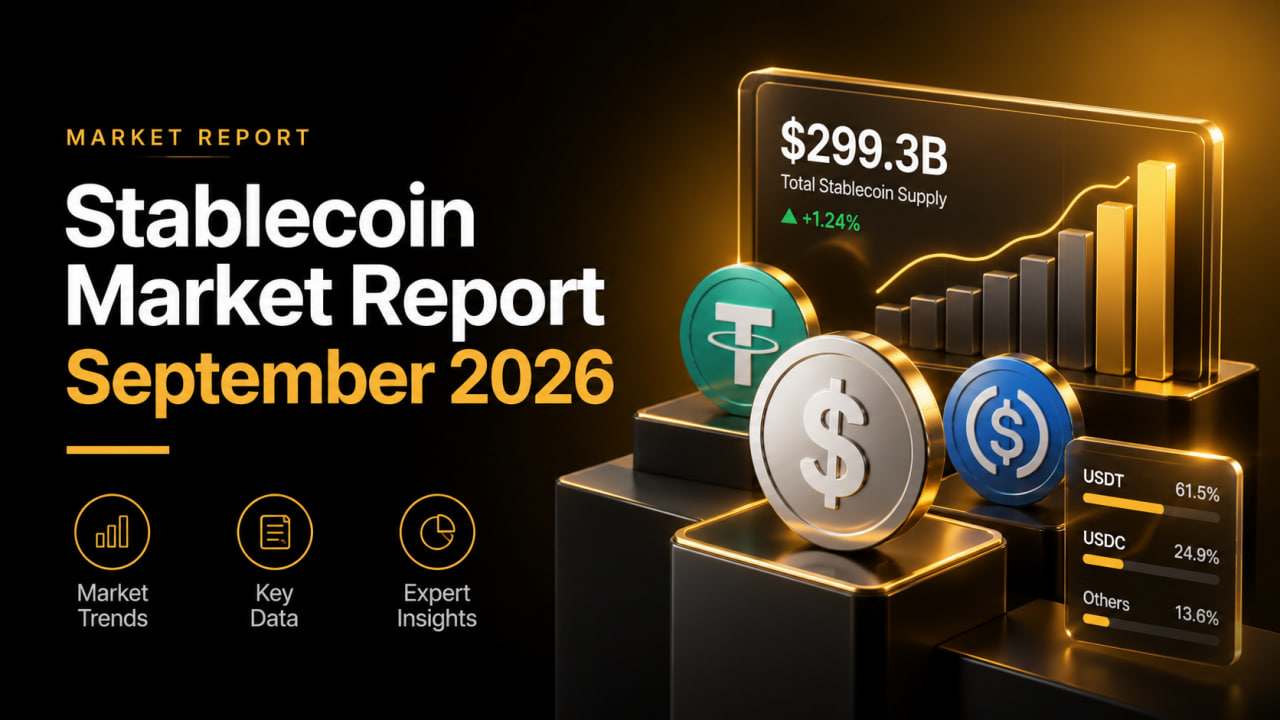
Stablecoin Market Report: September 2026 — Key Trends and Data
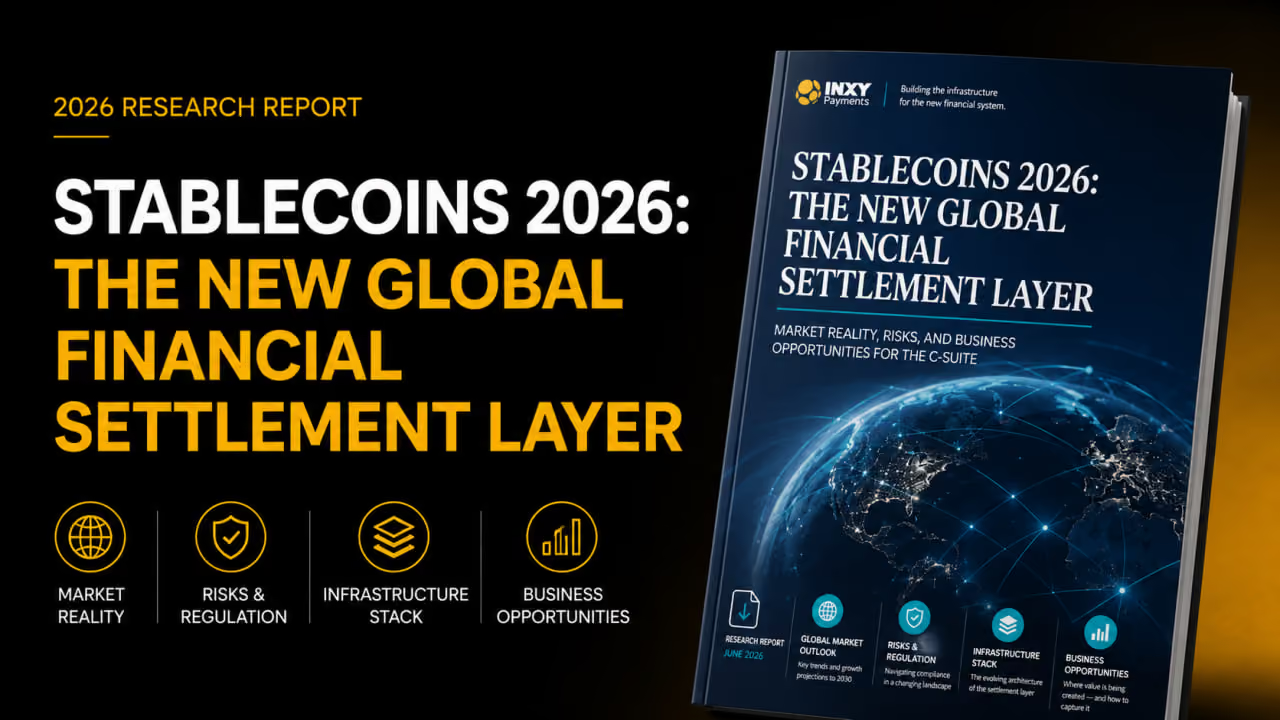
Stablecoins Report 2026: The New Global Financial Settlement Layer

INXY at Money 20/20 Europe 2026: Key Trends in Payments Infrastructure
Pracujmy razem
Pomoc ekspertów w celu zapewnienia sukcesu weryfikacji biznesowej