How to Automate Mass Crypto Payouts for International Freelancers
It is payday, and your finance department is drowning in a massive spreadsheet filled with SWIFT codes, routing numbers, and fluctuating exchange rates. A few days later, your support channels are flooded with frustrated messages from international developers who still have not received their money because a correspondent bank mysteriously held the funds. If you operate a global freelance platform, a talent marketplace, or a remote agency, this logistical nightmare is likely your recurring reality. While hiring elite talent across borders is frictionless, compensating them remains stuck in the 1990s.
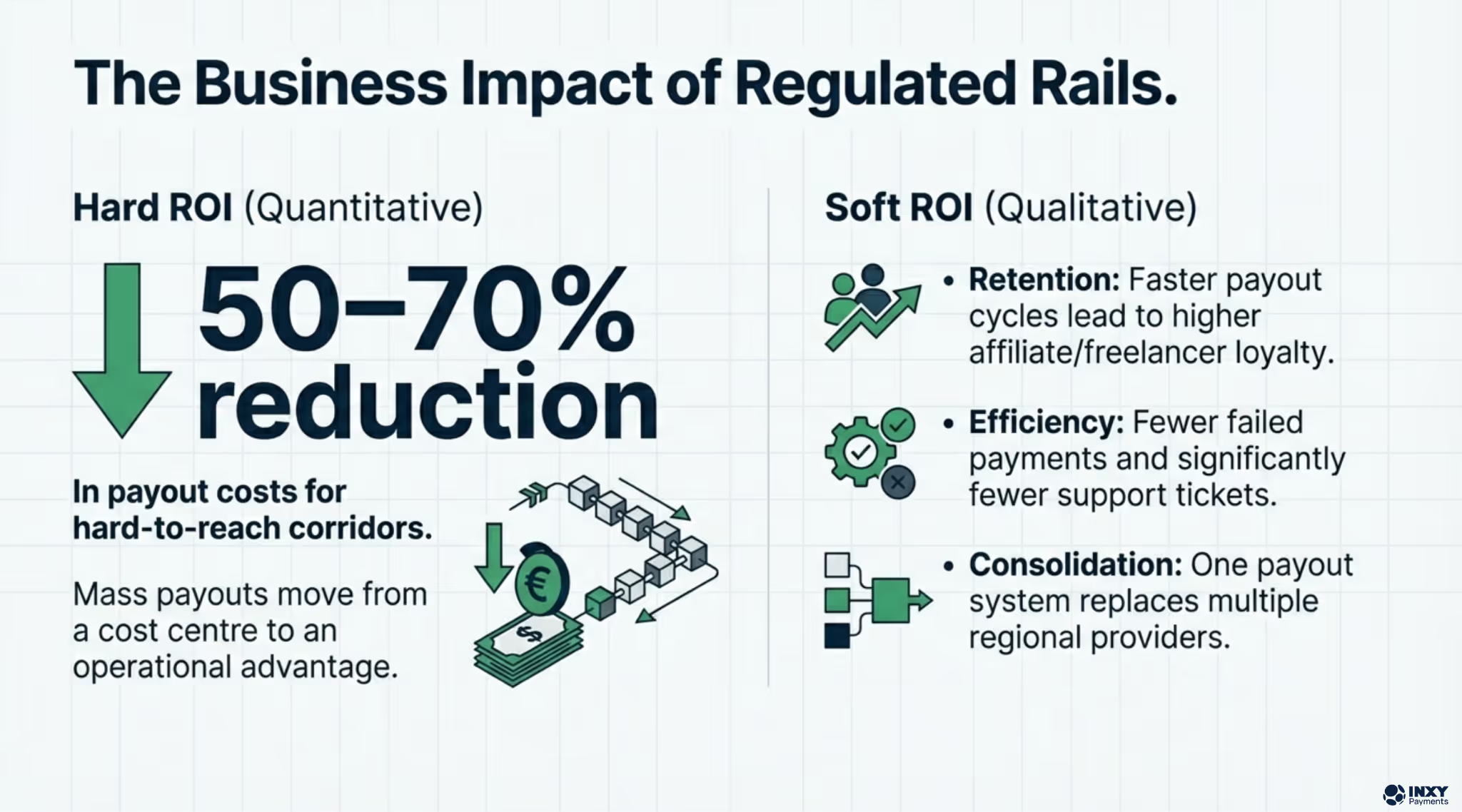
Legacy banking rails actively erode your profit margins with exorbitant fees and damage your reputation among top professionals. It is time to stop burning cash and developer hours on slow wire transfers. By transitioning to automated mass cryptocurrency payouts – specifically leveraging stablecoins you can execute thousands of global transactions simultaneously, settling payments in seconds rather than unpredictable weeks.
The Bottleneck of Traditional Global Payroll
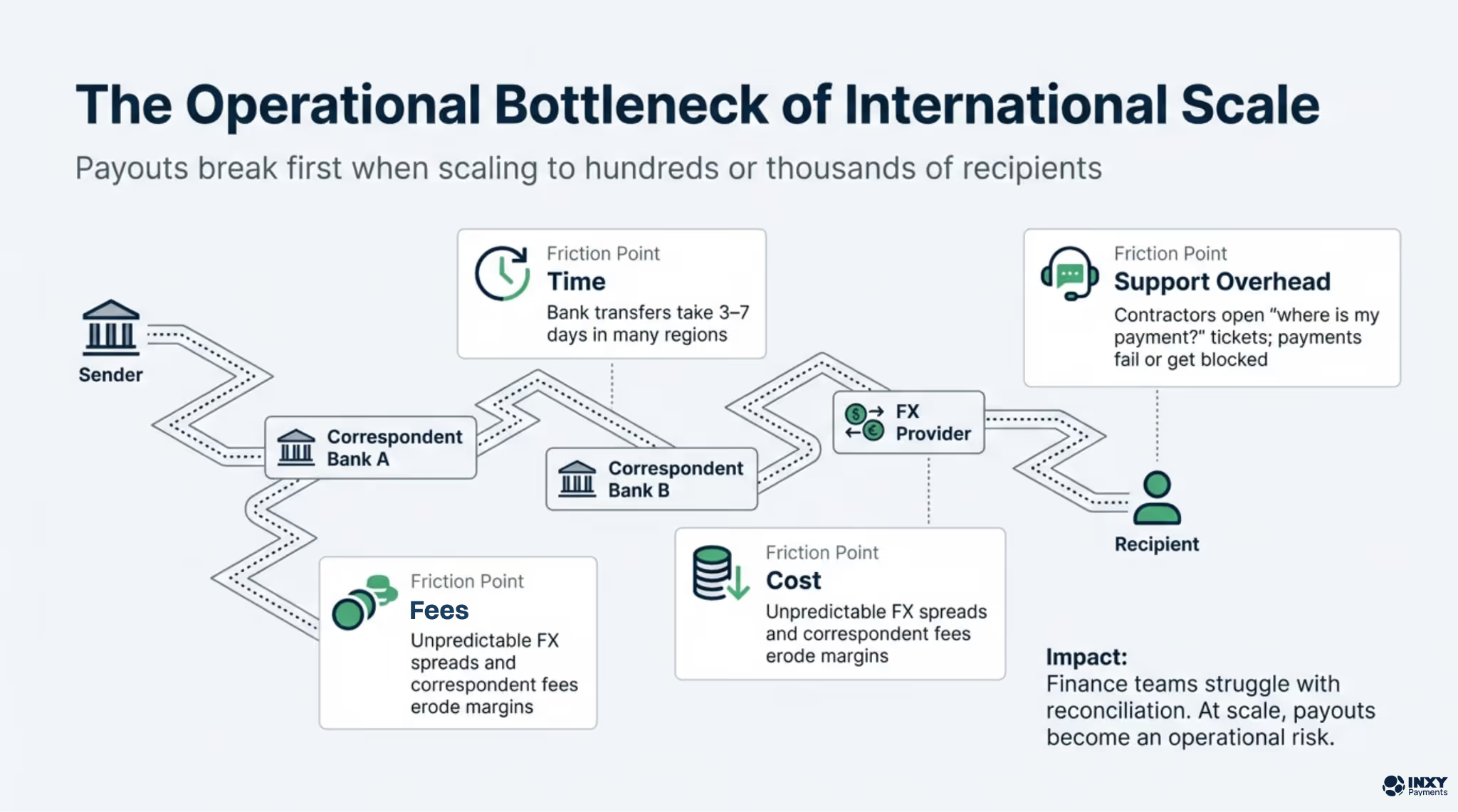
Processing international payroll through fiat channels involves a convoluted chain of intermediary banks, each extracting a cut and adding days to the settlement timeline. The traditional system is plagued by critical operational pain points for freelance platforms:
Exorbitant Transaction Fees: Standard wire transfers cost $15 to $50 per transaction. This makes frequent micro-payouts to temporary contractors or gig workers entirely unfeasible.
Unpredictable Settlement Delays: Cross-border payments routinely take three to seven business days to clear, causing immense anxiety for freelancers relying on timely income.
Hidden FX Markups: Banks apply highly unfavorable foreign exchange spreads, directly reducing the contractor's purchasing power and causing disputes over missing funds.
Severe Financial Exclusion: Talented professionals in emerging markets are often completely locked out of standard, legacy payment methods like PayPal or Stripe.
The Mechanics of Crypto Payout Automation
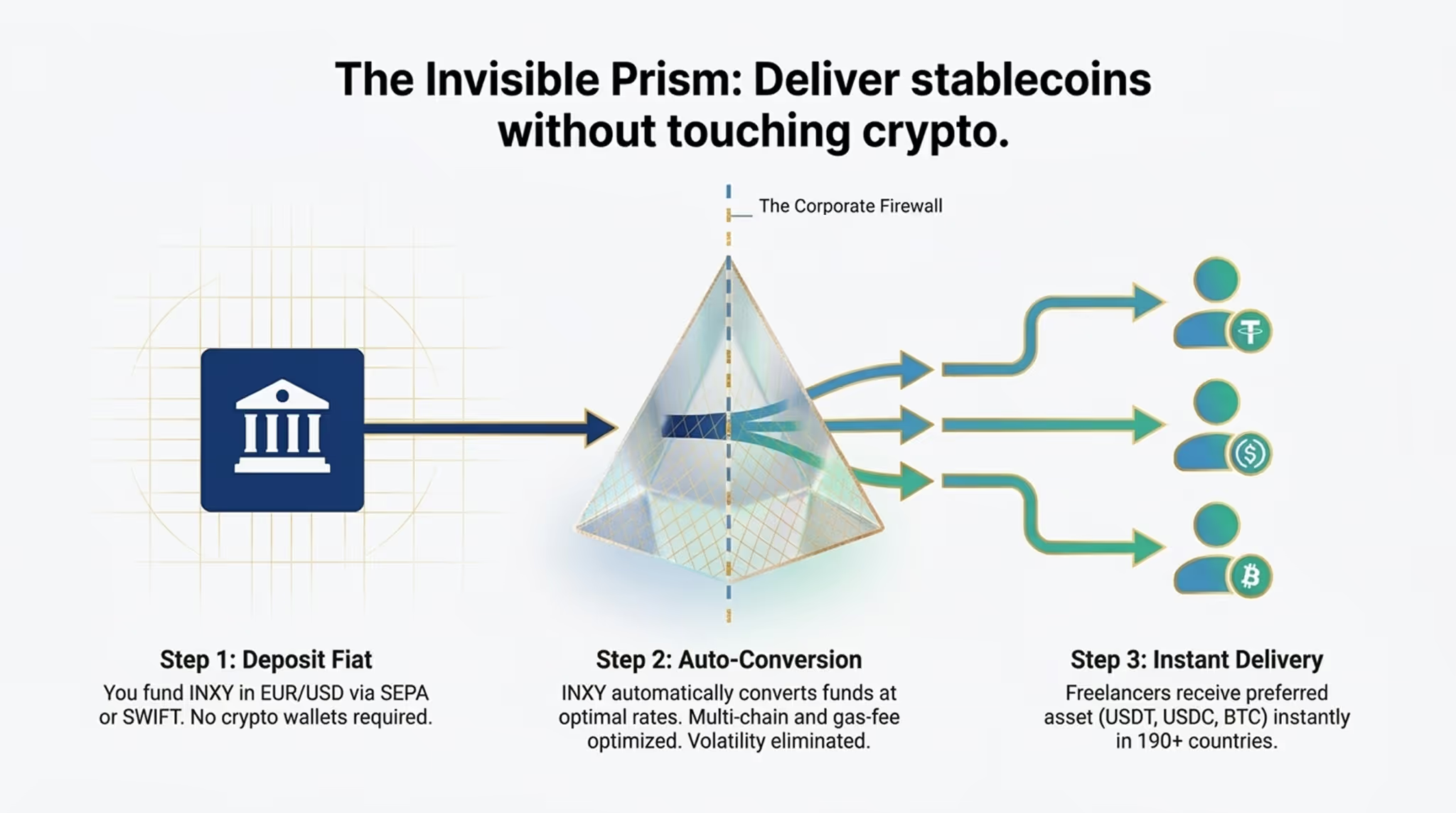
Shifting platform operations to cryptocurrency, particularly utilizing stablecoins like USDT or USDC, neutralizes these flaws. Because they are securely pegged to the US Dollar, they eliminate the price volatility of digital assets like Bitcoin.
The true transformative power for your platform lies in API automation. Instead of a finance manager manually processing invoices one by one, a mass payout system allows your backend infrastructure to trigger hundreds of transactions simultaneously through a single API call. Executed via automated batch processing on high-speed blockchains like Tron or Polygon, network fees drop to mere pennies.
Step-by-Step Guide to Automating Global Payouts (тут нужна помощь Артем в правильности шагов)
Transitioning to a crypto-first compensation model requires a strategic technical approach to ensure smooth onboarding for your contractors:
Select the Right Digital Assets: Default to stablecoins (USDT/USDC) on fast networks to ensure negligible gas fees and zero price volatility for the receiving party.
Integrate a Payout API: Connect your backend directly to a dedicated crypto gateway supporting mass payout endpoints instead of trying to build and maintain complex nodes from scratch.
Map Contractor Wallets: Update your platform onboarding flow to allow freelancers to securely save and verify their digital wallet addresses alongside their traditional profile data.
Automate Trigger Events: Configure your platform's internal logic so that approved timesheets, completed milestones, or specific calendar dates automatically trigger the API payout calls.
Streamline Reconciliation: Utilize a gateway that provides detailed transaction hashes and automated ledger updates so your accounting team can track successful disbursements in real-time.
INXY: The Premier Payout Gateway for Freelance Platforms
Implementing automated financial infrastructure requires an enterprise-grade technological backbone. For global talent marketplaces, remote agencies, and HR platforms modernizing their compensation systems, INXY stands out as the ultimate strategic partner.
INXY provides a powerful cryptocurrency payment gateway designed specifically for the high-volume, automated disbursement needs of the gig economy. By integrating the INXY API, your platform can automate mass crypto payroll effortlessly, completely removing the heavy lifting of blockchain node management. We act as the secure bridge between your administrative dashboard and the blockchain, ensuring rapid global settlement, automated transaction reconciliation, and flawless execution for every single contractor payout. Our infrastructure scales perfectly alongside your growing international workforce.
Conclusion
The future of global work is undeniably decentralized, and platform compensation methods must evolve to keep pace. Automating mass crypto payouts is not just an operational upgrade; it is a profound competitive advantage that attracts and retains top global talent who demand fast, transparent payments. Do not let outdated banking rails hold your platform's growth hostage.
Ready to revolutionize your payroll system and automate your global disbursements? Discover how our robust API solutions can scale your platform securely by visiting https://www.inxy.io/ today.
Crypto Checkout That Converts: Reducing Drop-off on Stablecoin Payments
You added crypto checkout to win new buyers — but the payment page is quietly leaking them. This guide breaks down exactly where stablecoin payments lose customers: network confusion, price-lock anxiety, wallet friction, unclear confirmations, and surprise fees. Learn the design and infrastructure fixes that turn a leaky pay page into one that converts — including why a well-built crypto checkout can beat cards, clearing ~99.9% of attempts with no chargebacks.
You added a crypto checkout to capture a new segment of buyers, and the demand is real — but the payment page is leaking customers. A shopper picks crypto, lands on the pay screen, hesitates, and disappears. That gap between intent and completed payment is checkout drop-off, and on crypto rails it has its own specific causes that most teams never diagnose.
This guide breaks down where stablecoin payments lose customers, the friction points that drive abandonment, and the concrete design and infrastructure choices that turn a leaky pay page into one that converts. The goal is simple: every shopper who chooses crypto should finish paying.
Why crypto checkouts lose customers
A crypto checkout is not just a card form with different logos. It introduces steps a Web2 buyer has never seen — choosing a network, copying an address, waiting for confirmations — and every unfamiliar step is a place to quit. Unlike a card decline, which the customer understands, a stalled or confusing crypto payment feels risky, and risk kills conversion.
Where drop-off actually happens
Most teams treat the checkout as a single event. It isn't. Crypto payment drop-off clusters at four distinct stages:
Method selection — the customer considers crypto but doesn't trust it on your site, so they bounce before starting.
Network and asset choice — faced with "ERC20 / TRC20 / BEP20" they don't recognize, they freeze.
Wallet action — copying an address or scanning a QR code, switching apps, and fearing a mistake.
Confirmation wait — the payment is sent but the page gives no clear signal it worked.
You cannot fix abandonment you can't see. Instrument each of these stages separately before changing anything.
Why a one-point conversion gain is worth chasing
Checkout is the highest-leverage surface you own. Traffic, ads, and product pages all exist to deliver a customer to this screen. Recovering even a few percentage points of crypto payment conversion rate here costs nothing in additional traffic — it simply stops you paying for visitors you then lose at the last step. For a business processing meaningful volume, a high-conversion gateway is not a nice-to-have; it is the difference between crypto being a growth channel and a vanity feature.
The main causes of stablecoin payment drop-off
Network and asset confusion
The single biggest source of friction is choice the customer can't evaluate. Asking a non-technical buyer to select between Tron, Ethereum, BNB Chain, and Polygon — each with different fees and speeds — is asking them to make a decision they're unqualified to make. Hesitation becomes abandonment.
Volatility and price-lock anxiety
If the amount due appears to move while the customer reads it, they assume they'll overpay or underpay. Even with stablecoin payments, buyers worry the quote will expire or shift. Without a visibly locked rate, the page feels unsafe.
Wallet friction and manual errors
Copy the address. Switch to the wallet app. Paste. Check the network matches. Confirm the gas. Send. Switch back. Each handoff is a chance to abandon — and the fear of sending funds to the wrong address or wrong chain is enough to make cautious buyers stop entirely.
Slow or unclear confirmation
A customer who has paid but sees a spinning loader with no explanation assumes the worst. On-chain confirmation times vary by network, and a checkout that doesn't explain the wait — or sets no expectation for it — converts the final, already-committed moment into a drop-off. (For the underlying mechanics, see our guide on how long crypto withdrawals and confirmations take.)
Fees, minimums, and surprise costs
A network fee that appears only at the final step, or a minimum the customer trips over, reads as a bait-and-switch. Surprise costs at the moment of payment are one of the most reliable abandonment triggers in any checkout — crypto included.
Missing trust and compliance signals
Crypto still carries a perception of risk for mainstream buyers. A pay page with no licensing, security, or brand reassurance gives a nervous customer every reason to close the tab. Trust is not decoration here; it is a conversion input.
How to design a crypto checkout that converts
Invoice in fiat, settle in stablecoins
Let the customer see the price in the currency they think in — EUR or USD — and pay in crypto behind the scenes, with automatic conversion to stablecoins or fiat on your side. This removes mental math, neutralizes volatility, and lets a Web2 buyer treat the transaction like any other payment. It is the foundation of a converting crypto checkout.
Reduce choices and default to the right network
Don't make the customer a blockchain expert. Pre-select a fast, low-fee network as the default and present asset options in plain language ("Pay with USDT" rather than "TRC20"). Fewer decisions mean fewer exit points. Every option you remove from the critical path is a conversion you keep.
Lock the rate and show a countdown
Display a fixed amount due with a clear, time-boxed quote ("This price is locked for 15:00"). A visible countdown does two things at once: it removes price anxiety and creates gentle urgency that pulls the customer through. Certainty converts.
Make the confirmation state legible
Tell the customer exactly what's happening: "Payment detected — confirming on-chain. This usually takes under a minute." Replace ambiguous spinners with a status that names the step and sets a time expectation. The moment after a customer pays is the worst possible time to leave them guessing.
Add fallback paths
Some customers will start a crypto payment and stall. Offer a clean way to switch methods or retry without losing the cart. A dead-end on a failed or abandoned crypto payment is a guaranteed loss; a graceful fallback recovers a share of it.
Build trust into the page
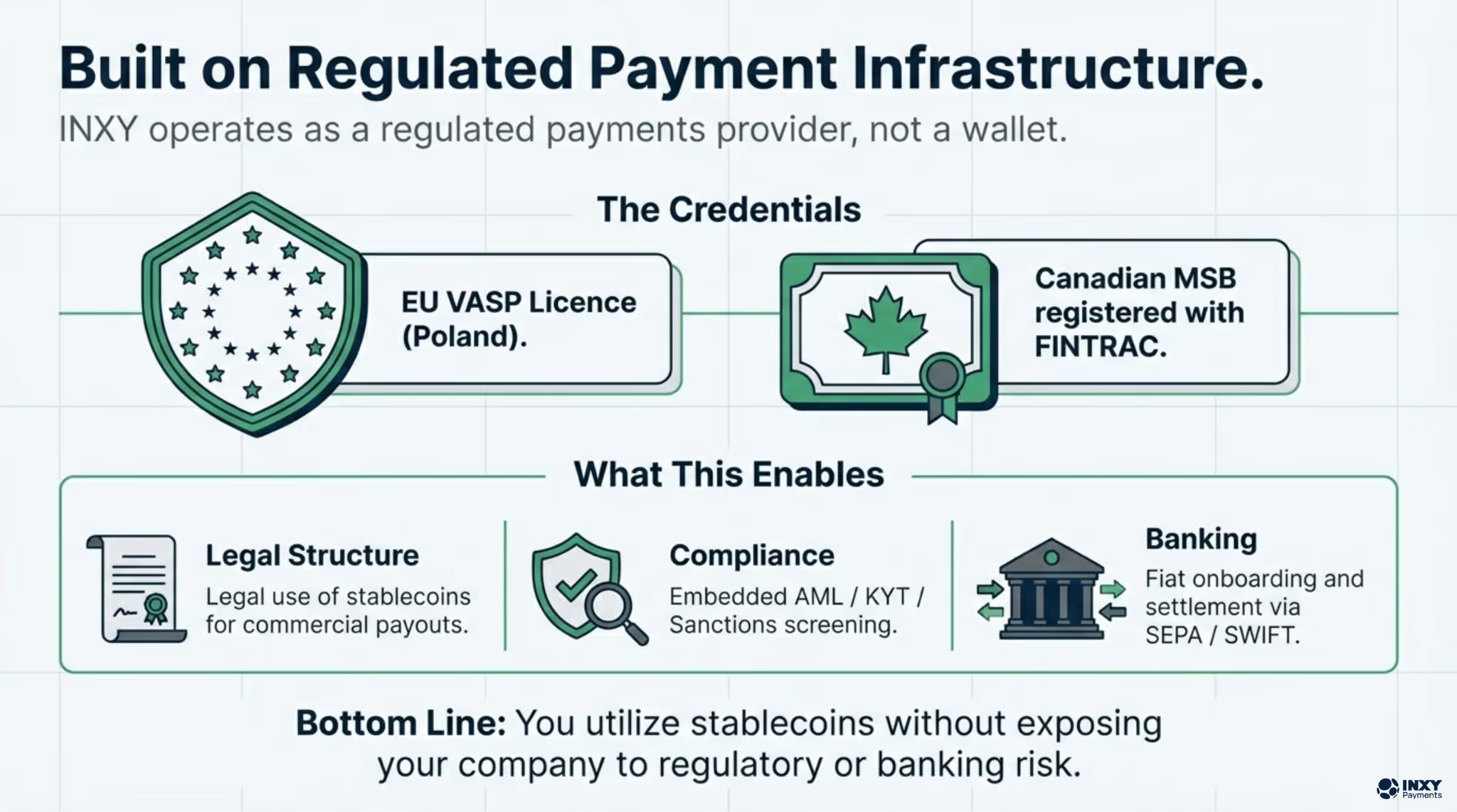
Show licensing and security signals where the customer makes the decision. INXY operates as licensed and regulated payment infrastructure with AML/KYB controls and partners including Sumsub, Elliptic, and Crystal — the kind of compliance signal that reassures a cautious buyer at exactly the right moment. Surface it; don't bury it in a footer.
Conversion benchmarks: crypto vs cards
When the checkout is built well, crypto doesn't just match card conversion — it can beat it. The structural advantages are real:
Cards fail far more often than most merchants realize — declines, 3-D Secure friction, and cross-border blocks routinely cost 5–30% of attempts. Crypto settlement is final and irreversible, which removes chargebacks entirely and lets a well-designed gateway clear close to every legitimate attempt. For merchants serving Europe, Asia, and LatAm, that reliability is a direct conversion uplift — INXY reports helping customers increase conversion rates by up to 40%. (For a wider comparison of providers and rails, see best payment gateways for SaaS in 2026.)
A pre-launch checklist
Before you ship a crypto checkout, confirm it does all of the following:
Prices in the customer's fiat currency, with conversion handled automatically.
Defaults to a fast, low-fee network instead of forcing a choice.
Locks the rate with a visible countdown.
Shows total cost up front, including any network fee — no surprises at the last step.
Names the confirmation step and sets a time expectation.
Offers a retry or fallback for stalled payments.
Displays trust and compliance signals on the pay page itself.
Tracks drop-off by stage, not just overall completion.
How INXY reduces crypto checkout drop-off
INXY's high-conversion API paygate is built around the principles above. Customers are invoiced in fiat and pay in crypto, with automatic conversion to stablecoins or fiat to remove volatility risk. You get settled in your bank account — in EUR or USD — as soon as the next day, with full reporting and an accounting-friendly setup for Web2 companies. The gateway supports 20+ cryptocurrencies across major networks (ERC20, TRC20, BEP20, Polygon, Tron, TON, and more), charges below 1% per transaction with no setup or hidden fees, and is engineered for a ~99.9% success rate.
The result is a checkout your customers finish — built to convert, not just to accept. Add it to your checkout page, webstore, platform, or app via API integration, or book a demo to see the conversion data for your business model.
FAQ
What causes drop-off on crypto checkouts? The most common causes are network and asset confusion, price-lock anxiety, manual wallet friction, unclear confirmation states, surprise fees, and missing trust signals. Each maps to a specific stage of the checkout, so the fix starts with measuring drop-off stage by stage rather than as a single number.
How do stablecoin payments improve checkout conversion? Stablecoins remove volatility from the transaction, so the amount due stays fixed while the customer pays. Pairing that with fiat-denominated pricing and automatic conversion lets a mainstream buyer complete a crypto payment as easily as a card payment — without exposure to price swings.
Is crypto checkout conversion really higher than cards? It can be. Crypto payments have no chargebacks and final settlement, and a well-built gateway can clear close to 99.9% of legitimate attempts versus 70–95% typical card success. The advantage is largest for cross-border and emerging-market customers, where cards are frequently declined or restricted.
Which network should a crypto checkout default to? Default to a fast, low-fee network so customers don't have to choose. Stablecoins on high-throughput networks settle in seconds for a fraction of the cost of slower chains, which both speeds confirmation and reduces the fee shown at checkout.
How do I add a high-conversion crypto checkout to my site? Use a payment gateway with API integration that handles fiat pricing, network selection, rate locking, and conversion for you. INXY integrates with your existing checkout, webstore, or app, and settles to your bank in EUR or USD — see get started.
Stablecoin Payments: Why Businesses Switch in 2025
Discover why businesses worldwide are switching to stablecoin payments in 2025. Learn how stablecoins work, their benefits over traditional payments, real case studies, global regulations, and what the future of digital payments looks like
5 min read
25.11.2025
Stablecoin Payments: Why Businesses Switch in 2025
What Are Stablecoin Payments?
Stablecoin payments are a way to use digital currencies that are pegged to stable assets, like the US dollar. This means their value doesn't swing wildly like other cryptocurrencies. Imagine you're doing business online, and you want to avoid the ups and downs of Bitcoin's value. Stablecoins, like USDC, DAI and USDT, come in handy here. They offer the benefits of crypto without the same level of risk.
These payments work through a crypto payment gateway, which acts like a bridge. It lets businesses accept stablecoins and convert them into local currency if needed. This is helpful for companies that want to tap into the crypto market without holding onto volatile assets.
Think of stablecoin payments as a digital version of cash that you can use globally, without worrying about big price changes. They're fast, often cheaper than traditional methods, and open up new markets for businesses. This makes them a popular choice for companies looking to innovate in 2025. Stablecoins also help people in emerging markets who have no access to traditional banking. Many do not have a bank account, but almost everyone has a mobile phone. Stablecoins give these users a safe and simple way to pay online.
The Rise of Digital Transactions
Digital transactions have become increasingly popular as we move further into the 21st century. People use digital payments to buy things online, pay bills, and even send money to friends. This shift has been driven by the need for faster, more convenient ways to pay.
One example is mobile wallets, which let you store your credit or debit card information on your phone. This makes it easy to pay with just a tap. Businesses are also seeing the benefits. They can reach more customers who prefer digital payments, and they can process transactions more quickly.
Cryptocurrencies like Bitcoin and stablecoins like USDC and USDT offer new ways to pay digitally. These currencies are secure, and they don't rely on traditional banks. This can lower costs and increase access to financial services.
The growth of digital transactions is also supported by better technology. Faster internet speeds and improved security measures make it easier and safer for everyone to use digital payments. As more people and businesses adopt these methods, digital transactions are set to become the norm.
Today, more than 824 million people worldwide own cryptocurrency.
Stablecoins alone processed over $46 trillion last year — more than Visa and PayPal combined.
This shows that digital payments are not a niche trend. They are becoming the main way money moves online.
Benefits for Businesses
Stablecoin payments offer several advantages for businesses. They're less volatile than other cryptocurrencies like Bitcoin. Imagine you're a business owner. You want to know the value of your money won't change drastically overnight. Stablecoins, backed by assets like the US dollar, provide that peace of mind.
Transaction fees with stablecoins can be lower than traditional banking systems. This means businesses save money, especially on international transactions. For example, sending money across borders usually involves hefty fees. With stablecoins, these costs can be minimized.
Another perk is the speed. Traditional bank transfers can take days. Stablecoin transactions, on the other hand, can be processed in minutes. This speed is crucial for businesses that need quick access to funds. Plus, the use of stablecoins can open doors to new markets, reaching customers who prefer using digital currencies.
also let businesses reach new markets. Many people in emerging regions cannot use cards or access banks, but they can use digital wallets and stablecoins on their phones. This opens the door to millions of new customers who were previously locked out of traditional online payments.
Challenges of Traditional Payment Methods
When we talk about traditional payment methods, we're often referring to cash, credit cards, and bank transfers. While these methods have been the backbone of commerce for years, they come with their own set of challenges. Let's explore these issues to understand why businesses are looking at alternatives like stablecoin payments.
Traditional payments are slow and costly. Bank transfers and card payments can take days to settle, especially across borders. Fees are also high — from card fees to bank transfer fees to currency conversion charges — cutting into margins and slowing business growth.
Security is another concern. Credit card fraud and data breaches are not uncommon. When customers hand over their card details, there's always a risk of that information being misused. This situation not only affects the customers but can also damage the business's reputation. A single security breach might lead to a loss of customer trust, which takes a long time to rebuild.
Limited access is an issue too. Not everyone has access to credit cards or bank accounts. Some customers might prefer alternative payment methods like digital wallets or cryptocurrencies. Businesses that only accept traditional payments could miss out on potential sales from these customers. It's like having a store but keeping the door locked for some shoppers.
Traditional payments also lack transparency. It's often hard for both businesses and customers to track where the money is at any given moment. For example, if a payment is delayed, it can be challenging to pinpoint the reason or the stage at which it's stuck. This lack of visibility can cause frustration and distrust among customers.
Lastly, there's the issue of adaptability. As technology evolves, businesses need payment systems that can keep up with the changes. Traditional payment methods are often slow to adapt to new needs and innovations. For instance, they might struggle to integrate with new e-commerce platforms or to support emerging payment trends.
These challenges make it clear why businesses are exploring other options. Stablecoin payments offer solutions to some of these issues, providing a faster, more secure, and cost-effective alternative. As businesses continue to grow and change, finding flexible payment solutions becomes even more critical.
Case Studies: Companies Making the Switch
Let's dive into some real-world examples of businesses that have embraced stablecoin payments. Each company has its unique reasons, and their experiences offer valuable insights for others considering this path.
One notable case is a well-known online retailer. This company decided to accept USDC, DAI and USDT as part of their payment options. The primary motivation was the global reach of crypto. Customers from different countries found it easier to pay in stablecoins without worrying about currency conversion issues. It also allowed the retailer to reduce transaction fees, which were a burden when using traditional payment gateways.
Another interesting example is a tech startup focused on software development. They started accepting stablecoin payments for their services. The team found that using a crypto payment gateway streamlined their operations. It provided faster transaction times and reduced paperwork. The transparency of blockchain technology also appealed to their tech-savvy customers, who appreciated the added layer of security.
A third case involves a popular restaurant chain. The chain began to accept stablecoin payments during the pandemic. Traditional cash payments were less desirable due to health concerns. By adopting stablecoins, they not only offered a contactless payment solution but also attracted a younger clientele. Many of these customers were already familiar with crypto and eager to use it in everyday transactions.
Then there's a logistics company that made the switch. This company operates internationally, and stablecoins helped them manage cross-border payments more efficiently. The predictability of stablecoin values, unlike volatile cryptocurrencies, made financial planning easier. They could handle transactions with partners and vendors with greater confidence in cost predictability.
Lastly, a freelance platform adopted stablecoin payments to simplify payouts to freelancers around the globe. Freelancers appreciated receiving payments in USDC or USDT for their stability and ease of conversion to local currencies. This shift also solved issues related to delayed payments through traditional banking systems.
These examples illustrate the diverse motivations behind the switch to stablecoin payments. From reducing costs to improving speed and security, businesses find multiple benefits in adopting this modern approach. Each company's journey showcases how stablecoin payments can address specific challenges and open up new opportunities.
These stories reflect a broader trend. In 2024 and 2025, stablecoins became one of the fastest-growing payment methods worldwide, especially for online services and global businesses.
Regulatory Landscape in 2025
Stablecoin payments have been gaining traction, and 2025 is shaping up to be a pivotal year for their regulation. Governments around the world are crafting policies to manage these digital currencies. This is crucial as stablecoins like USDC and USDT become more popular in the business world.
One major development is the introduction of global standards. International bodies are working to create a unified framework for stablecoin regulation. This helps ensure that businesses using stablecoins can operate smoothly across borders. Without such standards, companies might face different rules in each country, making international trade complex.
Local governments are also busy. Each country is trying to balance innovation with security. They want to encourage the use of stablecoins while making sure that financial systems remain safe. For example, some countries are adopting stricter compliance measures. This means businesses need to ensure all transactions are transparent and traceable.
In the European Union, new laws are being drafted. These laws aim to protect consumers and prevent illegal activities. They require that stablecoin providers hold sufficient reserves. This ensures that the value of the stablecoins remains stable and reliable.
Meanwhile, in the United States, regulators are focusing on oversight. They want to ensure that stablecoin issuers are transparent about their operations. This includes regular audits and public disclosures. Such measures help build trust among users and businesses.
Asia is also seeing changes. Countries like Japan and Singapore are leading in creating crypto-friendly regulations. They are developing policies that encourage innovation while ensuring that user rights are protected.
These regulatory changes are significant for businesses. Companies need to stay informed and adapt to these new rules. Understanding the regulatory landscape is key to leveraging stablecoin payments effectively. As 2025 unfolds, businesses will need to navigate this evolving landscape carefully.
The Future of Payments: What’s Next?
Stablecoin payments are gaining popularity, and it's not hard to see why. They bring a fresh wave of possibilities to the table. Businesses are starting to notice how stablecoins can change the payment landscape. Let's explore what the future might hold.
One big reason stablecoins are appealing is their stability. Unlike other cryptocurrencies, stablecoins are tied to real-world assets like the US dollar. This means they don't bounce around in value as much. For businesses, this stability is a huge plus. They can accept payments without worrying about losing money due to market fluctuations.
Stablecoins also make international payments easier. In the past, sending money across borders was slow and costly. With stablecoins, transactions can be completed quickly and with lower fees. This is great news for companies working with international clients or suppliers. It allows them to save both time and money.
Security is another reason businesses are interested in stablecoins. Traditional payment systems can be vulnerable to fraud and hacking. Stablecoins offer a more secure option as transactions are recorded on a blockchain. This technology makes it difficult for unauthorized changes to occur.
Looking ahead, we might see stablecoins being used in more everyday transactions. Imagine buying a coffee or paying rent with stablecoins. As more businesses and consumers become comfortable with the technology, this could become a reality.
Stablecoins may also impact how we save and invest money. People are starting to explore options like earning interest on their stablecoin holdings. This could lead to new financial products and services emerging in the market.
In the coming years, regulations will play a crucial role in shaping the stablecoin landscape. Governments and financial institutions will likely establish rules to ensure safe and fair use. These regulations could boost trust and encourage more businesses to adopt stablecoin payments.
The future of payments is changing, and stablecoins are at the forefront. As technology continues to evolve, we can expect even more innovative uses for stablecoins. They have the potential to simplify and enhance the way we handle money.
Supported Stablecoins & Blockchains (2025)
Many stablecoins run on different blockchains. This makes payments fast and affordable anywhere in the world.
Supported stablecoins:
USDT — ERC20, TRC20, BEP20, Polygon
USDC — ERC20, TRC20, BEP20, Polygon
DAI — ERC20, BEP20, Polygon
Other popular coins: BTC · ETH · BNB · LTC · DOGE · TRX · MATIC
Supported blockchains: Bitcoin · Ethereum · Tron · Polygon · Binance Smart Chain · Litecoin · Ton · and others. The mix of currencies and blockchains makes stablecoin payments work for almost anyone, even in places where card payments fail.
FAQ
What are stablecoin payments and how do they work?
Stablecoin payments involve using digital currencies designed to minimize price volatility by pegging their value to a stable asset, like a fiat currency or commodity. They work like any other digital payment method but offer the added benefit of price stability, making them more reliable for transactions.
Why are stablecoins becoming popular in digital transactions?
Stablecoins are gaining popularity in digital transactions due to their ability to offer the benefits of cryptocurrencies, such as decentralization and transparency, while avoiding the price volatility associated with traditional cryptocurrencies. This makes them an attractive option for businesses looking for secure and stable payment methods.
What benefits do stablecoin payments offer to businesses?
Stablecoin payments provide several benefits, including lower transaction fees compared to traditional payment methods, faster processing times as transactions are often completed in seconds, and enhanced security due to blockchain technology, which reduces fraud and chargebacks.
What challenges do traditional payment methods face that stablecoins address?
Traditional payment methods often suffer from high transaction fees, lengthy processing times, and issues with cross-border payments. Stablecoins address these challenges by offering reduced fees, instantaneous transactions, and seamless international payments, thus providing a more efficient alternative.
Can you provide examples of businesses that have switched to stablecoin payments?
Many companies across various industries have transitioned to stablecoin payments. For instance, a tech company might use stablecoins to streamline international payroll, while an online retailer could adopt them to reduce transaction costs and improve payment processing speed.
How is the regulatory landscape for stablecoins evolving in 2025?
In 2025, the regulatory landscape for stablecoins is evolving to provide clearer guidelines and protections for businesses and consumers. Governments and financial bodies are working on frameworks to ensure stablecoin security and transparency, influencing business decisions towards stablecoin adoption.
In the European Union, the new MiCA framework brings clear rules for stablecoins and crypto service providers. These rules aim to protect users while supporting innovation. Similar frameworks are emerging in Asia, the U.S., and Latin America.
What does the future hold for stablecoin payments and their impact on the economy?
The future of stablecoin payments looks promising, with potential for widespread adoption as more businesses recognize their benefits. This could lead to significant changes in the payment industry, driving innovation and possibly reshaping economic structures by making transactions more efficient and accessible worldwide.
How Long Do Crypto Withdrawals Take? Processing Times, Fees & Speed Explained
This guide breaks down realistic timeframes by network, the factors that slow withdrawals down, whether "instant" withdrawals are genuine, and how to keep withdrawal fees low.
How long do crypto withdrawals take? In most cases, a crypto withdrawal clears in anywhere from a few seconds to about an hour — but the real answer depends on the blockchain you use, network congestion, and your provider's internal processing. A USDT transfer on a fast network can settle in under a minute, while a Bitcoin withdrawal held for multiple confirmations can take 30–60 minutes. This guide breaks down realistic timeframes by network, the factors that slow withdrawals down, whether "instant" withdrawals are genuine, and how to keep withdrawal fees low.
What Is a Crypto Withdrawal?
A crypto withdrawal is the process of moving digital assets out of an account — typically an exchange, custodial wallet, or payment platform — to an external blockchain address you control. Unlike an internal transfer between two accounts on the same platform, a crypto currency withdrawal is recorded on-chain, which means it must be broadcast to the network, validated by miners or validators, and confirmed in one or more blocks before it is final.
Two distinct stages determine how long the whole thing takes:
Platform processing — the time your exchange or provider needs to review, batch, and sign the transaction before it ever touches the blockchain.
Blockchain confirmation — the time the network needs to include your transaction in a block and add enough subsequent blocks to consider it irreversible.
A delay at either stage affects the total. A platform can sit on a request for 30 minutes for security reasons even when the underlying network would settle it in seconds.
How Long Do Crypto Withdrawals Take on Average?
For a healthy network and a provider without manual holds, most crypto withdrawals complete within a few minutes to one hour. The variance comes almost entirely from which chain you pick.
Exchange processing time vs blockchain confirmation time
Platform processing usually adds a few seconds to several minutes. Many providers batch outgoing transactions or run automated risk checks before broadcasting. After broadcast, the clock is controlled by the network: your transaction needs to be picked up by validators and then earn a number of confirmations — additional blocks built on top of it. The more confirmations a provider requires, the safer the transaction and the longer the wait.
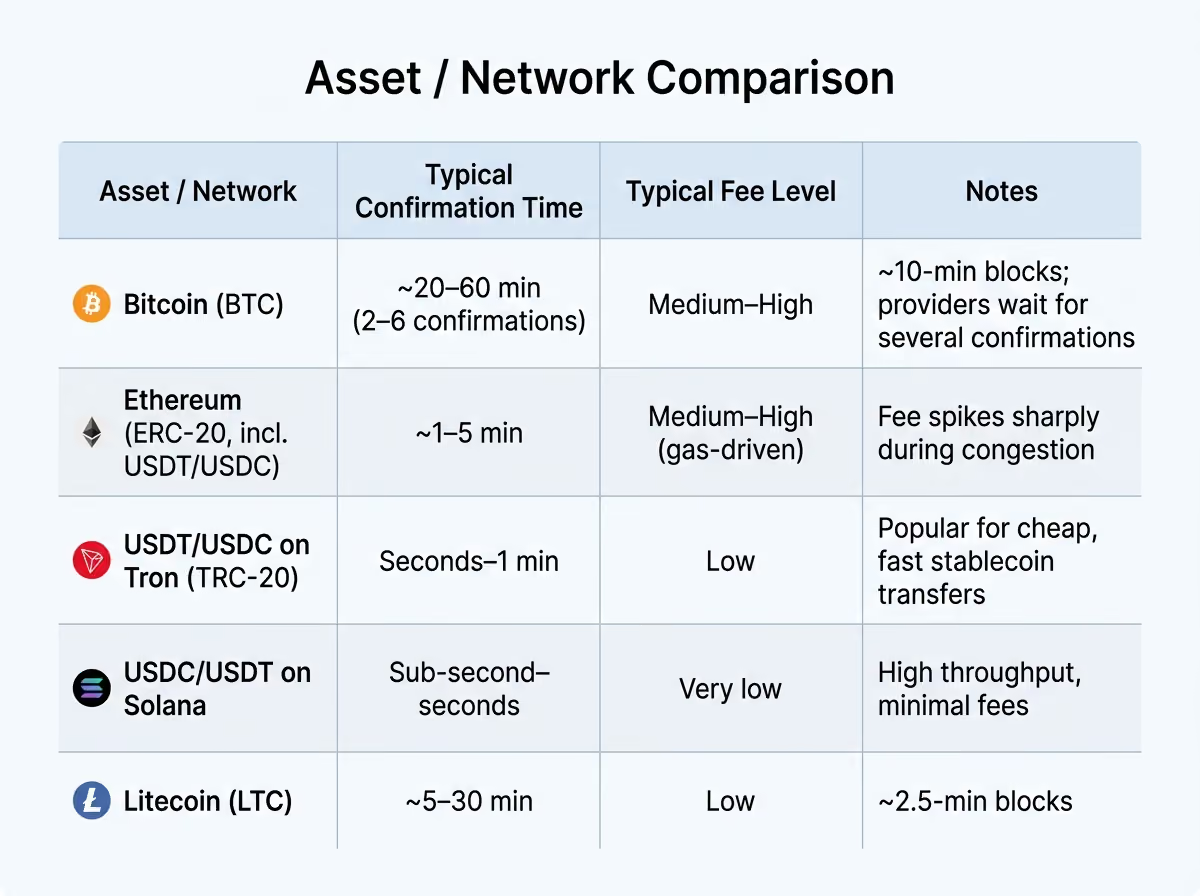
Typical withdrawal times by network
The table below shows realistic ranges. Treat these as typical, not guaranteed — congestion and provider policy shift them.
The practical takeaway: the asset and network you choose matter far more than the platform. Sending the same stablecoin over Tron instead of Ethereum can turn a multi-minute, higher-fee withdrawal into a near-instant, low-cost one.
What Affects Crypto Withdrawal Speed?
When a withdrawal takes longer than expected, the cause is almost always one of three things.
Network congestion and gas fees
Every blockchain has limited block space. When demand is high, transactions compete to get included, and those attaching higher fees are prioritized. On networks like Ethereum, a low fee during a busy period can leave your transaction pending for much longer. This is why the same crypto withdrawal can clear in seconds one day and crawl the next.
Exchange security holds and withdrawal limits
Providers routinely apply temporary holds to protect funds. Common triggers include:
A recent password, 2FA, or device change — many platforms freeze withdrawals for 24–48 hours afterward.
First-time withdrawals to a new address, which may need additional verification.
Amounts that exceed your tier's withdrawal limit, forcing a manual review or a split across days.
These holds are deliberate friction, not network delays — and they are the most common reason a withdrawal "stalls" while the blockchain itself is idle.
AML/KYC compliance checks
Regulated platforms screen withdrawals against anti-money-laundering and sanctions rules. Most checks are automated and invisible, but a flagged transaction can be paused for manual review. Larger amounts, transfers to newly seen addresses, or activity that breaks your normal pattern are more likely to be queued for a compliance look before release.
Are Instant Crypto Withdrawals Real?
The term instant crypto withdrawal is mostly marketing shorthand, and it means one of two things:
Genuinely fast settlement on a fast chain. On high-throughput networks like Solana, or stablecoins on Tron, an instant crypto withdrawal is effectively real — confirmation lands in seconds. There is no magic here; the network is simply fast and cheap.
Internal "instant" transfers. Some platforms advertise instant withdrawals that are actually off-chain movements between accounts on the same provider. These clear immediately because nothing is broadcast to the blockchain at all — which is fast, but only works inside that provider's ecosystem.
So crypto instant withdrawal is achievable, but read the fine print. A true on-chain "instant" withdrawal depends on the network you select. No provider can make a congested Bitcoin or Ethereum transaction settle instantly without raising the fee.
Crypto Withdrawal Fees Explained
Speed and cost are linked: paying a higher fee can buy faster inclusion, while choosing the wrong network can cost you both time and money. Understanding crypto withdrawal fees helps you optimize for both.
Network fees vs platform fees
A withdrawal fee usually has two components:
Network (miner/validator) fee — paid to the blockchain to process the transaction. This is dynamic and rises with congestion. It is unavoidable, though it varies enormously by chain.
Platform fee — an additional charge some providers add on top of the network fee. This is set by the provider and may be flat or percentage-based.
When comparing a crypto withdrawal fee across providers, separate these two. A platform advertising "zero fees" may still pass through a high network fee, and vice versa.
How to reduce crypto withdrawal fees
You have more control over cost than most people assume:
Choose the right network. Sending stablecoins over Tron or Solana instead of Ethereum is the single biggest lever for low fees.
Avoid peak congestion. Fees on busy chains drop when network demand falls.
Batch withdrawals. Consolidating several payouts into fewer transactions reduces total network fees — valuable for businesses running frequent transfers.
Mind the minimums. Small, frequent withdrawals get eaten by fixed costs; fewer, larger ones are more efficient.
For a crypto cash withdrawal — converting to fiat and sending to a bank — expect an extra layer of timing. The on-chain step may be fast, but the fiat leg typically settles in 1–5 business days depending on the banking rails (SEPA, SWIFT, ACH).
How Businesses Handle High-Volume Crypto Withdrawals
For a business paying suppliers, contractors, or affiliates, withdrawal speed is an operational metric, not a curiosity. Manual, one-by-one withdrawals on a slow or expensive network do not scale.
The businesses that get this right standardize on a few principles:
Default to fast, low-fee networks for routine payouts, reserving slower chains only when a counterparty specifically requires them.
Batch and automate outgoing transactions through an API rather than processing them by hand.
Build compliance into the flow so AML/KYC checks happen up front and don't stall releases later.
This is exactly the problem a dedicated payouts infrastructure solves. INXY's crypto payouts let businesses automate high-volume transfers across networks with predictable timing and fees, while exchange and conversion tools handle the asset and fiat legs. The result is withdrawal speed you can plan around instead of monitoring anxiously.
FAQ
How long do crypto withdrawals take? Most crypto withdrawals complete within a few minutes to an hour. Stablecoins on fast networks like Tron or Solana can settle in seconds, while Bitcoin withdrawals held for several confirmations typically take 30–60 minutes. Platform security holds can add more time independent of the network.
Why is my crypto withdrawal taking so long? The usual causes are network congestion, a provider security hold (often after a recent password or device change), an AML/KYC compliance review, or a low network fee that deprioritizes your transaction. The blockchain itself may be idle while a platform-side hold is the real delay.
What is the fastest crypto to withdraw? Stablecoins on high-throughput networks — such as USDT on Tron or USDC on Solana — are among the fastest and cheapest to withdraw, typically settling in seconds for a low fee.
Can I get instant crypto withdrawals? Yes, in two senses: genuinely fast on-chain settlement on networks like Solana or Tron, or off-chain "instant" transfers between accounts on the same platform. A truly instant crypto withdrawal on a congested network like Bitcoin or Ethereum, however, is not realistic without paying a premium fee.
What is a crypto withdrawal? A crypto withdrawal moves digital assets from an account to an external blockchain address you control. It is recorded on-chain and must be confirmed by the network, which distinguishes it from an instant internal transfer within a single platform.