
In May 2010, a hungry programmer made financial history by trading 10,000 Bitcoins for two Papa John’s pizzas. At the time, there were no global marketplaces, no flashing price tickers, and absolutely no liquidity—just a simple forum post and a massive leap of faith. Today, the landscape has transformed beyond recognition. Those same pizzas would now be worth hundreds of millions of dollars, and the digital asset market has evolved into a trillion-dollar ecosystem.
At the beating heart of this financial revolution is the cryptocurrency exchange. Whether you are a retail investor looking to buy your first fraction of a Bitcoin, a professional trader executing high-frequency strategies, or a modern business owner trying to tap into a global, borderless customer base, understanding what a crypto exchange is and how it functions is the crucial first step to entering the digital economy.

The Engine of the Digital Economy
On any given day, top cryptocurrency exchanges process combined trading volumes exceeding $100 billion. They are the bustling, hyper-active metropolises of the digital age.
At its core, a cryptocurrency exchange is a highly secure digital marketplace that allows users to buy, sell, or trade cryptocurrencies for other assets. These assets can include conventional fiat money (like US Dollars or Euros) or other digital tokens. Exchanges act as the vital intermediary, providing the infrastructure, security, and liquidity necessary for the global crypto market to operate 24/7 without interruption.
Under the Hood: How an Exchange Functions
How does a platform handle millions of transactions per second without collapsing? Buying crypto might look like a simple tap on a smartphone screen, but the magic happens under the hood through several interconnected, highly advanced systems:
- The Matching Engine: This is the absolute brain of the operation. The matching engine is an advanced software algorithm that continuously monitors and pairs buy and sell orders. When a buyer's bid meets a seller's asking price, the engine executes the trade in milliseconds.
- Order Books and Market Depth: An order book is an electronic, real-time ledger of all the outstanding buy and sell orders for a specific trading pair (e.g., BTC/USD). It visualizes the current market depth, allowing traders to gauge ongoing supply, demand, and potential price movements.
- Liquidity Pools: Liquidity dictates how easily an asset can be converted into cash without drastically affecting its market price. High liquidity means there are plenty of active buyers and sellers, resulting in lightning-fast transaction times and highly stable pricing.
- Integrated Wallets: To facilitate instant trading, exchanges provide users with proprietary digital wallets. This allows traders to temporarily store their funds directly within the platform’s ecosystem for rapid deployment.
Centralized vs. Decentralized Exchanges (CEX vs. DEX)
As the industry has matured, two distinct philosophies have emerged regarding how these marketplaces should operate:
- Centralized Exchanges (CEX): Platforms like Binance or Coinbase are owned and operated by a central corporate entity. They act as a trusted third party, offering deep institutional liquidity, fiat-to-crypto on-ramps, and user-friendly interfaces. The trade-off is that you must trust the corporation with the custody of your funds.
- Decentralized Exchanges (DEX): Platforms like Uniswap operate entirely on blockchain technology using automated smart contracts. There is no central authority. Users retain 100% control of their funds by connecting their own private wallets. While they offer superior privacy and eliminate centralized points of failure, they can be intimidating for beginners.

The Commercial Shift: Why Businesses Need More Than an Exchange
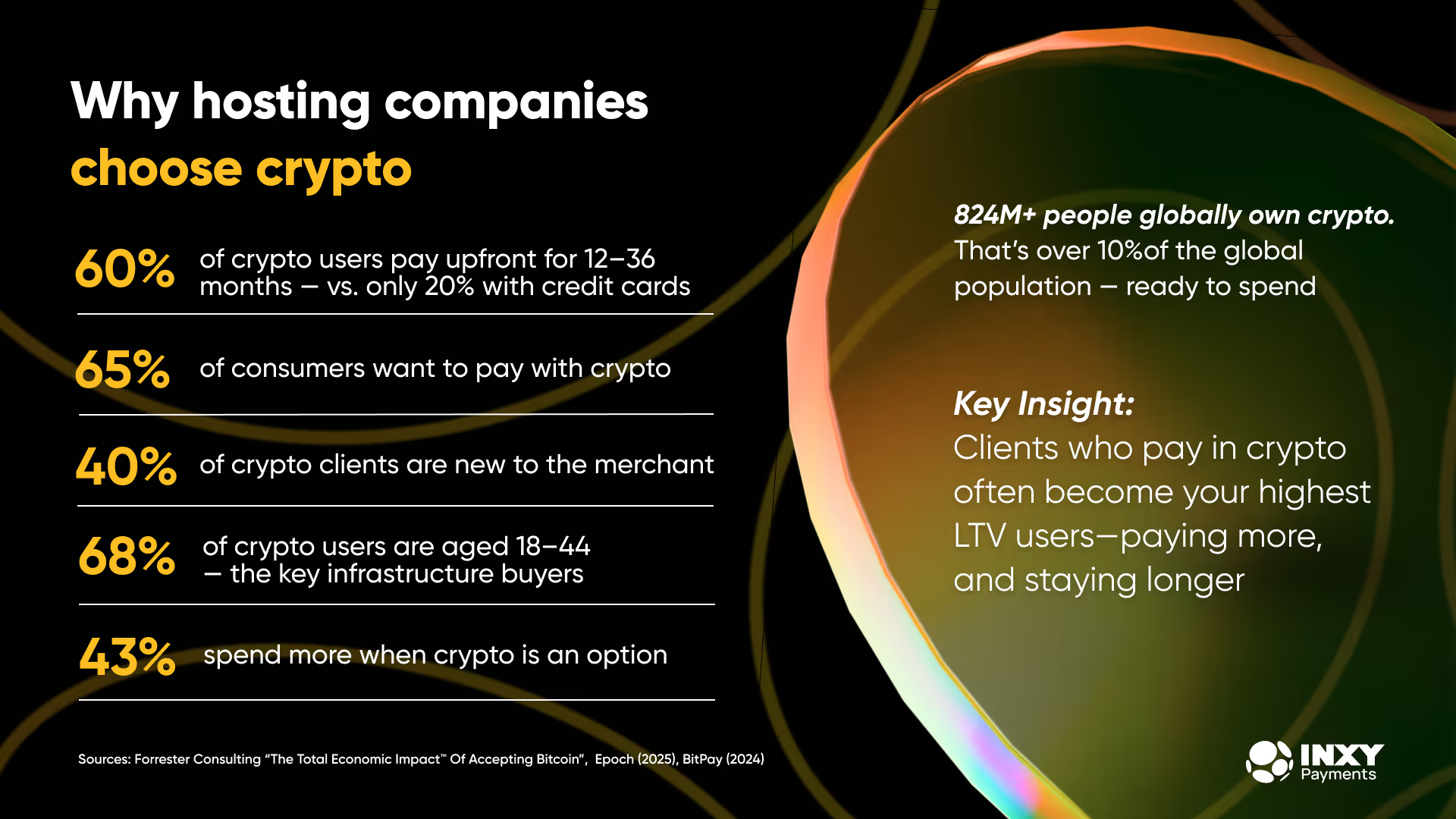
This is where the story shifts from pure speculation to real-world commercial utility. With over 420 million active cryptocurrency users worldwide, digital assets are no longer just a niche internet hobby. They represent a massive, highly lucrative, and untapped consumer base. Recent industry surveys reveal a staggering metric: merchants who begin accepting crypto payments see an average ROI of up to 327%, with nearly 40% of their crypto-paying customers being entirely new to the brand.
However, here is the critical catch for corporate adoption. While exchanges are engineering marvels for individual traders, they are fundamentally not optimized for commercial B2B operations. If an online retailer or a global enterprise wants to accept crypto, directing clients to a standard exchange order book is a logistical nightmare. It leads to severe accounting errors, subjects the company to unpredictable withdrawal fees, and exposes business revenue to extreme, day-to-day price volatility.
To truly capitalize on the crypto economy, modern businesses require specialized, enterprise-grade infrastructure. The optimal solution is an advanced crypto payment gateway like inxy.io.
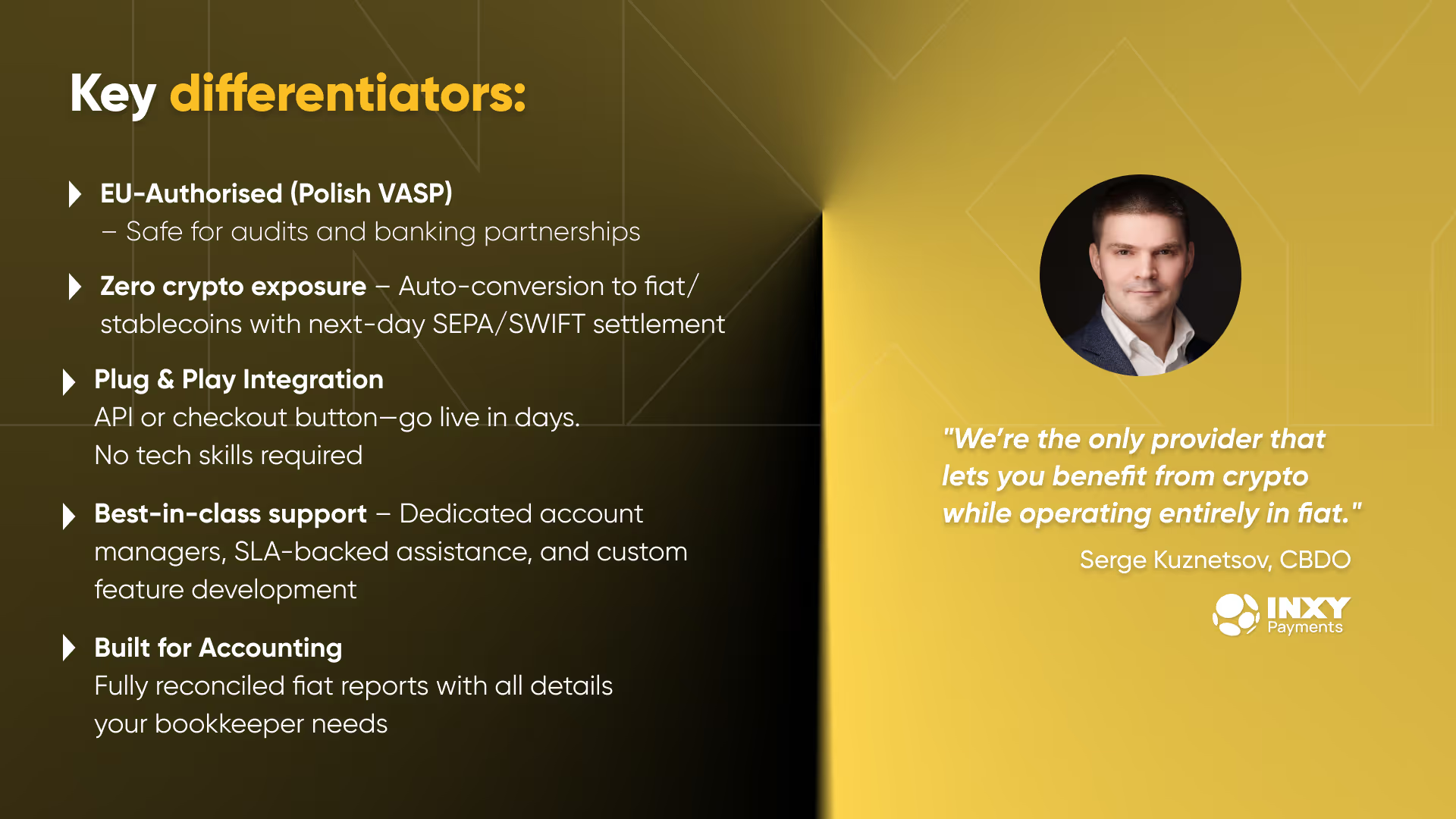
Instead of forcing merchants to navigate the speculative chaos of a trading platform, inxy.io is built specifically for seamless corporate integration. As a premier crypto payment gateway, it bridges the gap between digital assets and traditional commerce by offering:
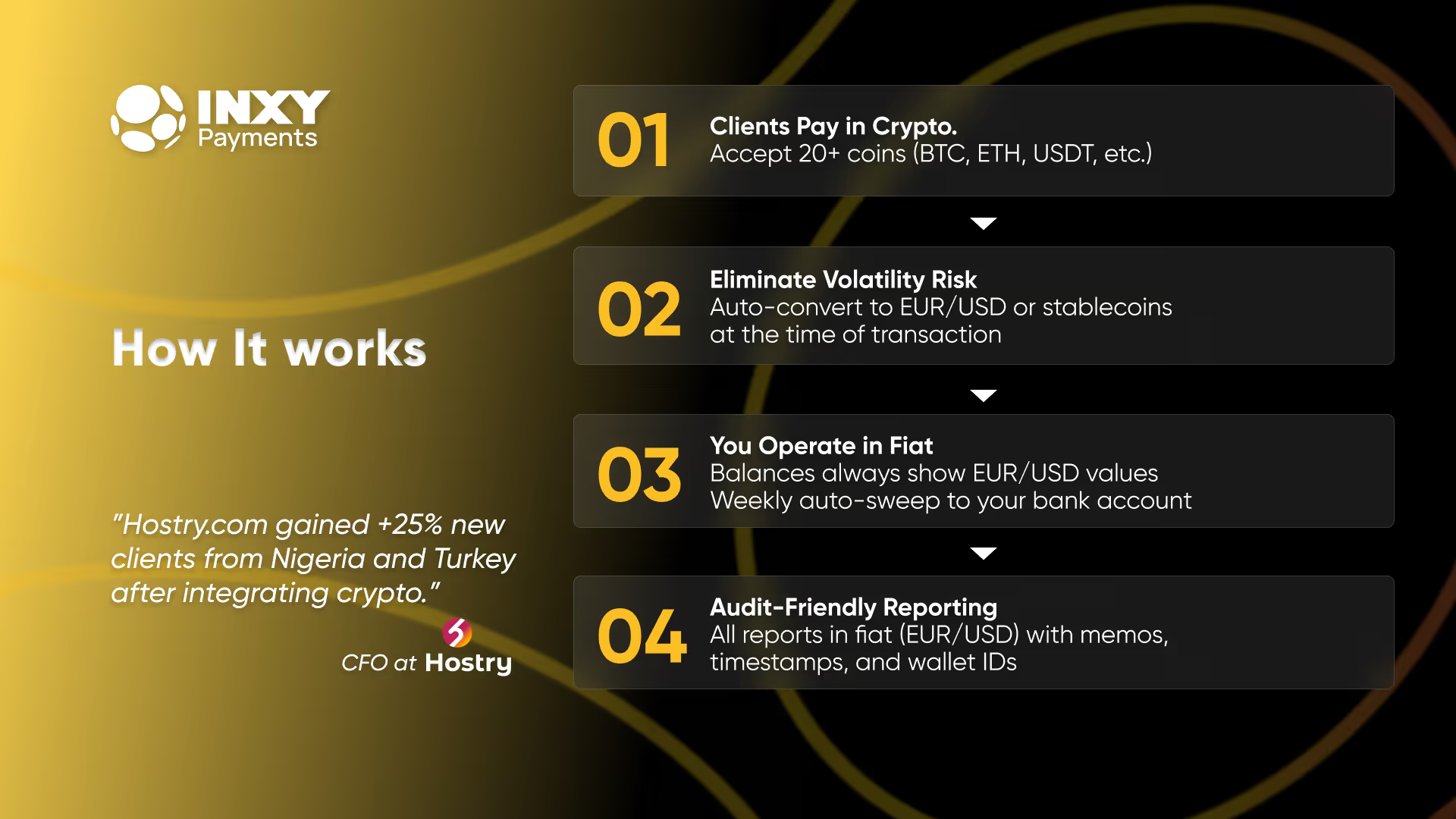
- An Automated Checkout Experience: It seamlessly integrates into a company's existing website or application, allowing global customers to pay in their preferred cryptocurrency in just a few clicks.
- Instant Volatility Shielding: A premium gateway like inxy.io can instantly convert volatile crypto payments into stablecoins or fiat currency at the exact moment of the transaction, protecting the merchant's bottom line from sudden market crashes.
- Cost-Efficiency and Compliance: By completely avoiding the heavy withdrawal constraints and hidden spread fees of retail exchanges, inxy.io provides transparent pricing, clear accounting, and professional invoicing tailored for corporate legal compliance.

Conclusion
Understanding the mechanics of a crypto exchange is essential for anyone navigating the modern financial landscape. They provide the necessary liquidity and global accessibility that keep the blockchain economy thriving. However, as digital assets move from the trading floor to the retail checkout, the tools we use must also evolve. While speculators will always rely on CEXs and DEXs, forward-thinking businesses must look toward specialized solutions. By leveraging a dedicated crypto payment gateway like inxy.io, companies can safely, efficiently, and profitably open their doors to the future of global commerce.