
How to profitably accept crypto for low-cost VPS and micro-cloud services
You provision a virtual machine, allocate the IP address, and send the customer an automated invoice for $4.99. Then, the traditional payment processor takes its cut: a standard $0.30 flat rate plus 2.9% of the total transaction. Just like that, nearly 10% of your gross revenue vanishes before the server even boots up. If you are operating in the micro-cloud and budget VPS market, your biggest competitor is not another hosting company; it is the legacy banking system actively eating your razor-thin profit margins.
Premium dedicated servers priced at $200 a month can easily absorb standard credit card fees. Low-cost infrastructure simply cannot. The survival and scalability of a budget IaaS (Infrastructure as a Service) provider depend entirely on extreme transaction efficiency. By strategically deploying cryptocurrency payments on low-fee blockchain networks, you can bypass fiat gateways, preserve your margins, and attract a global audience of developers who prefer decentralized payments.
Fiat gateways vs. Digital assets
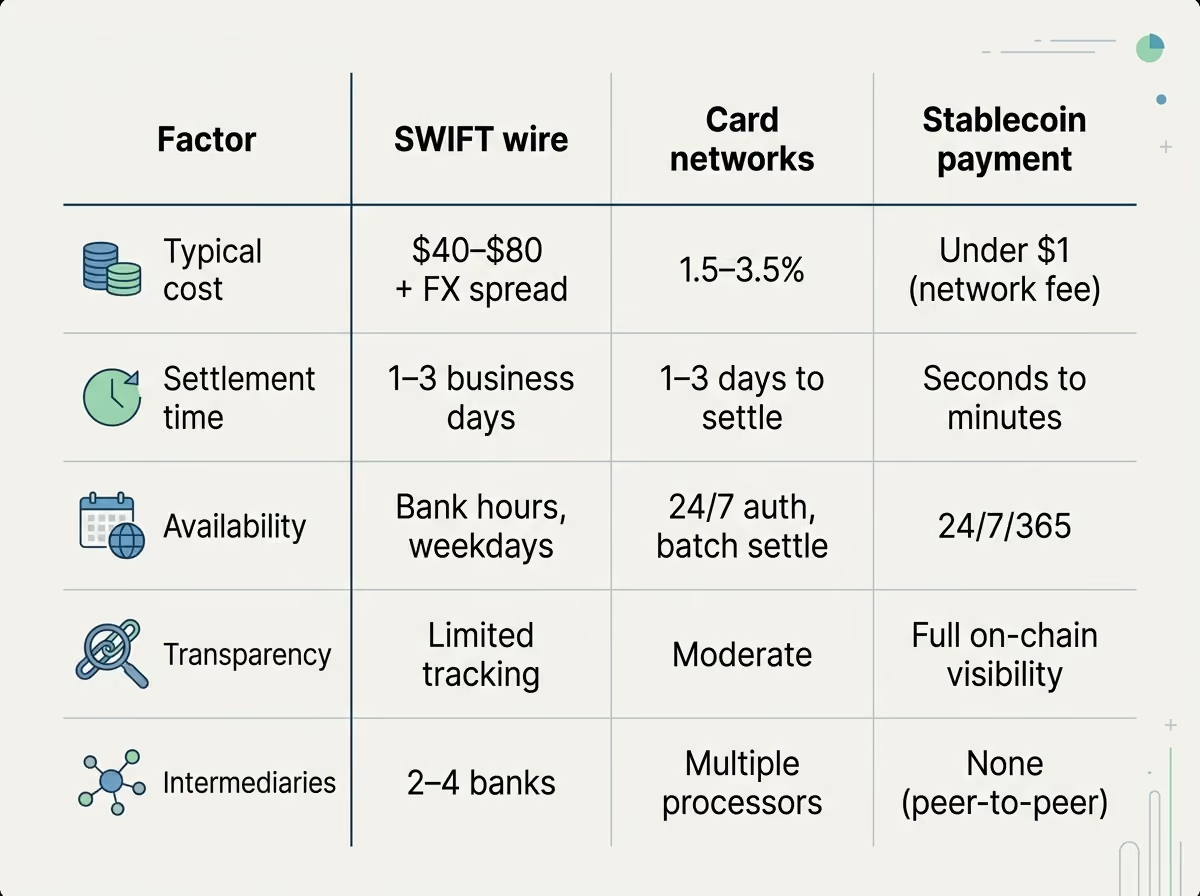
To understand why traditional billing is fundamentally broken for micro-cloud services, we must examine the harsh mathematics of a $5 monthly transaction.
Scenario A: The Fiat Processing Trap When a client pays a $5 invoice via Stripe or PayPal, the fixed $0.30 fee disproportionately damages the transaction. The total fee amounts to roughly $0.45. If your baseline infrastructure cost (electricity, bandwidth, hardware depreciation) for that specific virtual machine is $3.50, your actual profit is immediately slashed. Furthermore, if that user initiates a chargeback, you lose the server resources, the original $5, and are penalized with a $15 dispute fee. You have effectively paid money to host a server for a stranger.
Scenario B: High-Speed Blockchain Routing Now, consider processing that same $5 transaction using a stablecoin like USDT routed through a Layer-2 blockchain network (such as Polygon) or a high-throughput chain (like Tron/TRC-20). The transaction fee drops from $0.45 to a fraction of a penny. There are zero chargeback risks, no rolling reserves held by acquiring banks, and the funds settle into your company’s digital wallet in a matter of seconds. You keep 100% of the revenue you earned.
The operational blueprint for micro-transactions
You cannot simply paste a Bitcoin wallet address on your checkout page and expect profitability. Bitcoin network fees can sometimes exceed the cost of the VPS itself. To succeed in the micro-cloud space, providers must adopt a specialized operational architecture:
- Implement the Account "Top-Up" Model: Instead of forcing users to process a $4 crypto transaction every single month, shift your billing panel to a credit system. Require a minimum deposit of $20 in cryptocurrency, which is added to their account balance. Your system then automatically deducts the $4 daily or monthly from that pre-paid internal ledger.
- Enforce Stablecoin Dominance: Volatile assets are dangerous for low-margin services. Restrict micro-payments strictly to stablecoins like USDT and USDC. This guarantees that a $5 payment today remains worth exactly $5 when you need to pay your own upstream datacenter bills next week.
- Mandate Low-Cost Networks: Disable legacy networks like Ethereum (ERC-20) for small checkouts, as the gas fees will frustrate your users. Only present checkout options for TRC-20, BEP-20, or Polygon networks, ensuring the customer pays almost nothing to send you the funds.
Overcoming the implementation hurdle with INXY
Many hosting providers hesitate to adopt digital payments because tracking microscopic network fees, managing multiple blockchain nodes, and building custom billing integrations sounds like an administrative nightmare. This is exactly where INXY transforms your entire billing architecture.
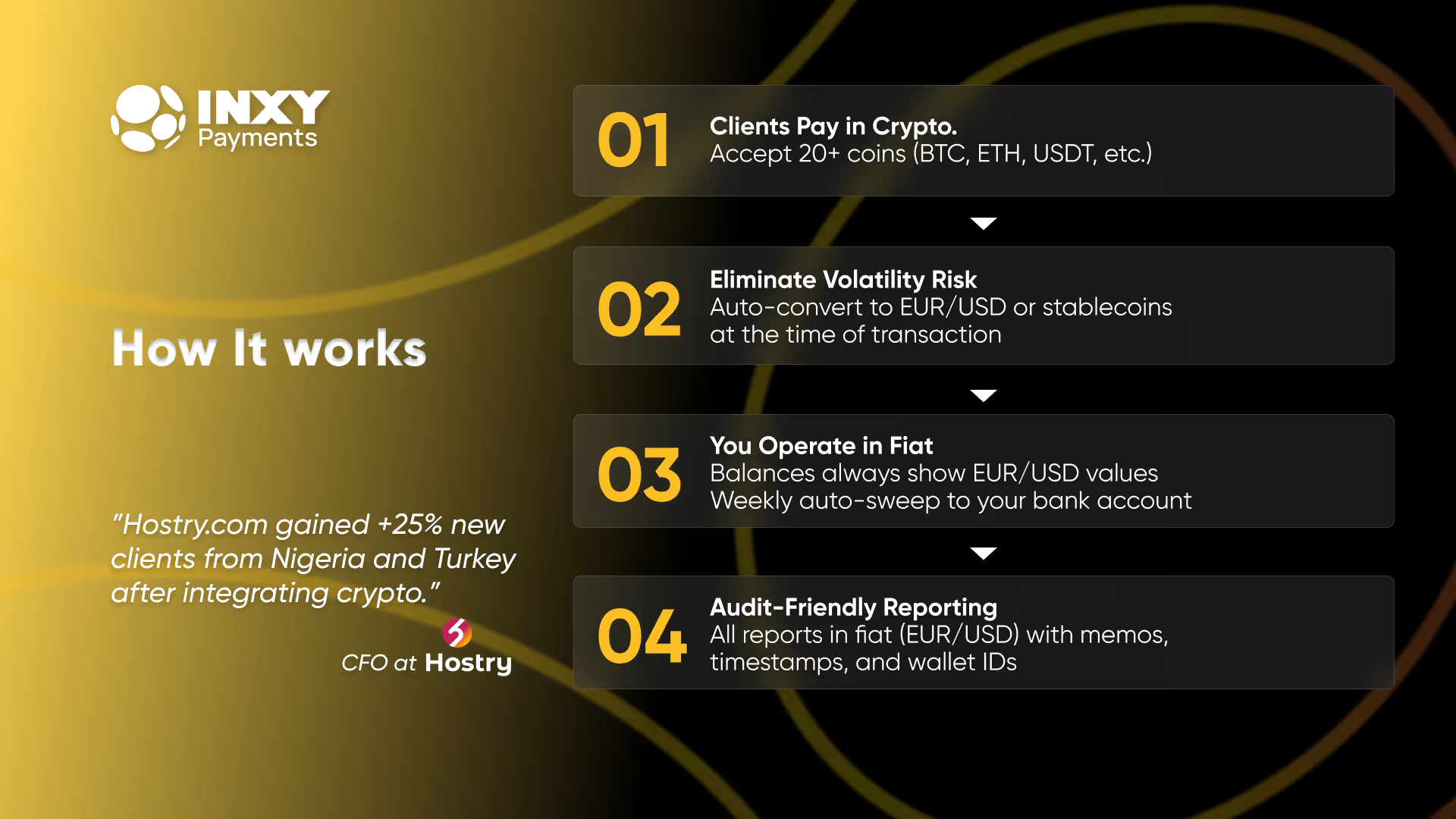
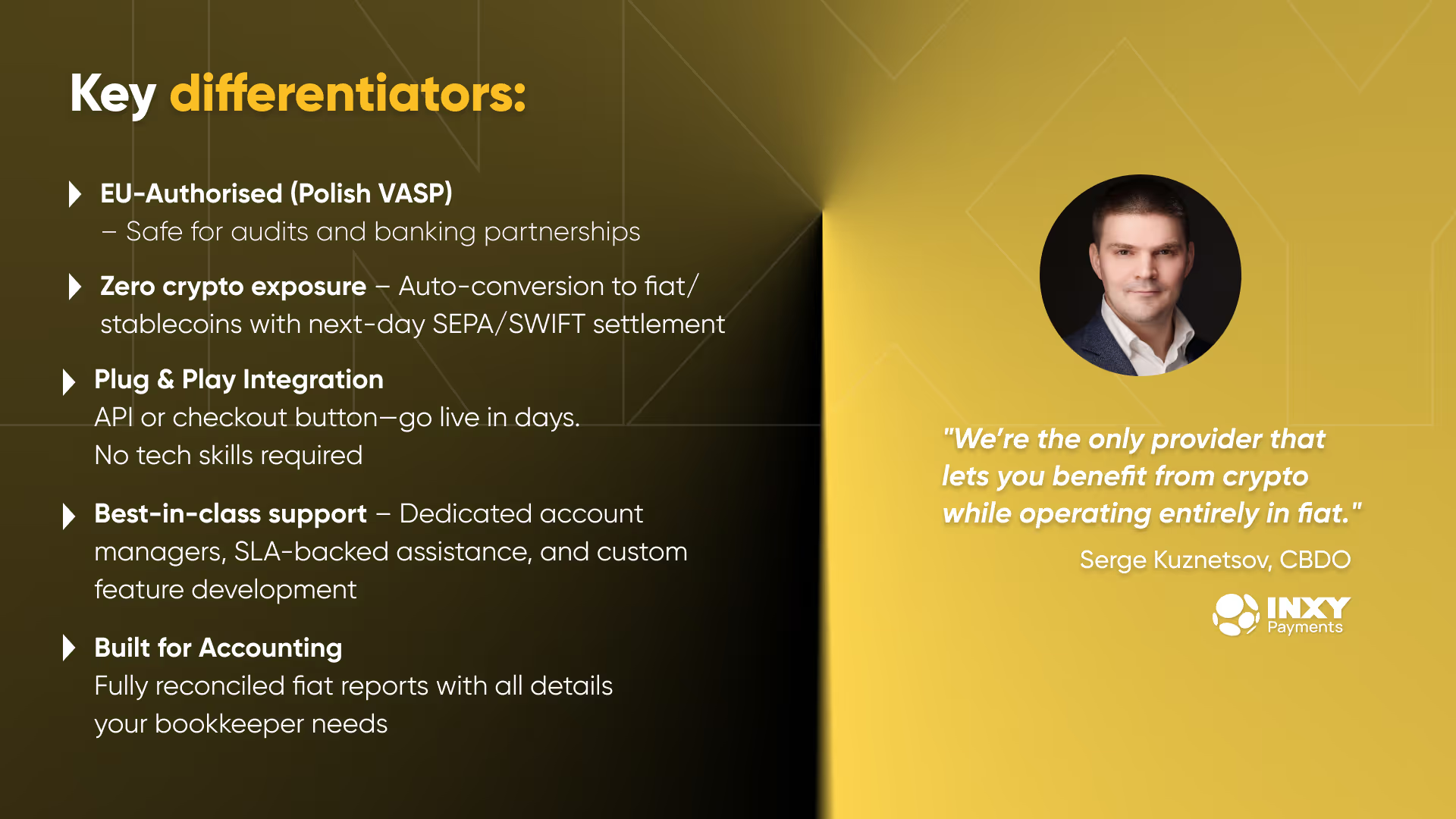
Unlike generic merchant processors, INXY is an enterprise-grade cryptocurrency payment gateway specifically designed to handle the high-frequency, low-cost routing required by modern cloud providers. We seamlessly integrate directly into your existing billing panels – whether you use WHMCS, HostBill, or a custom internal dashboard.
When you partner with INXY, you do not need to worry about manually verifying network confirmations or updating user balances. Our API automatically generates unique payment addresses, monitors the lowest-fee networks like Tron and Polygon, confirms the exact stablecoin deposit, and instantly updates the client's pre-paid balance on your server. INXY acts as your automated, invisible cashier, securing your revenue without the bloat of traditional banking.
Conclusion
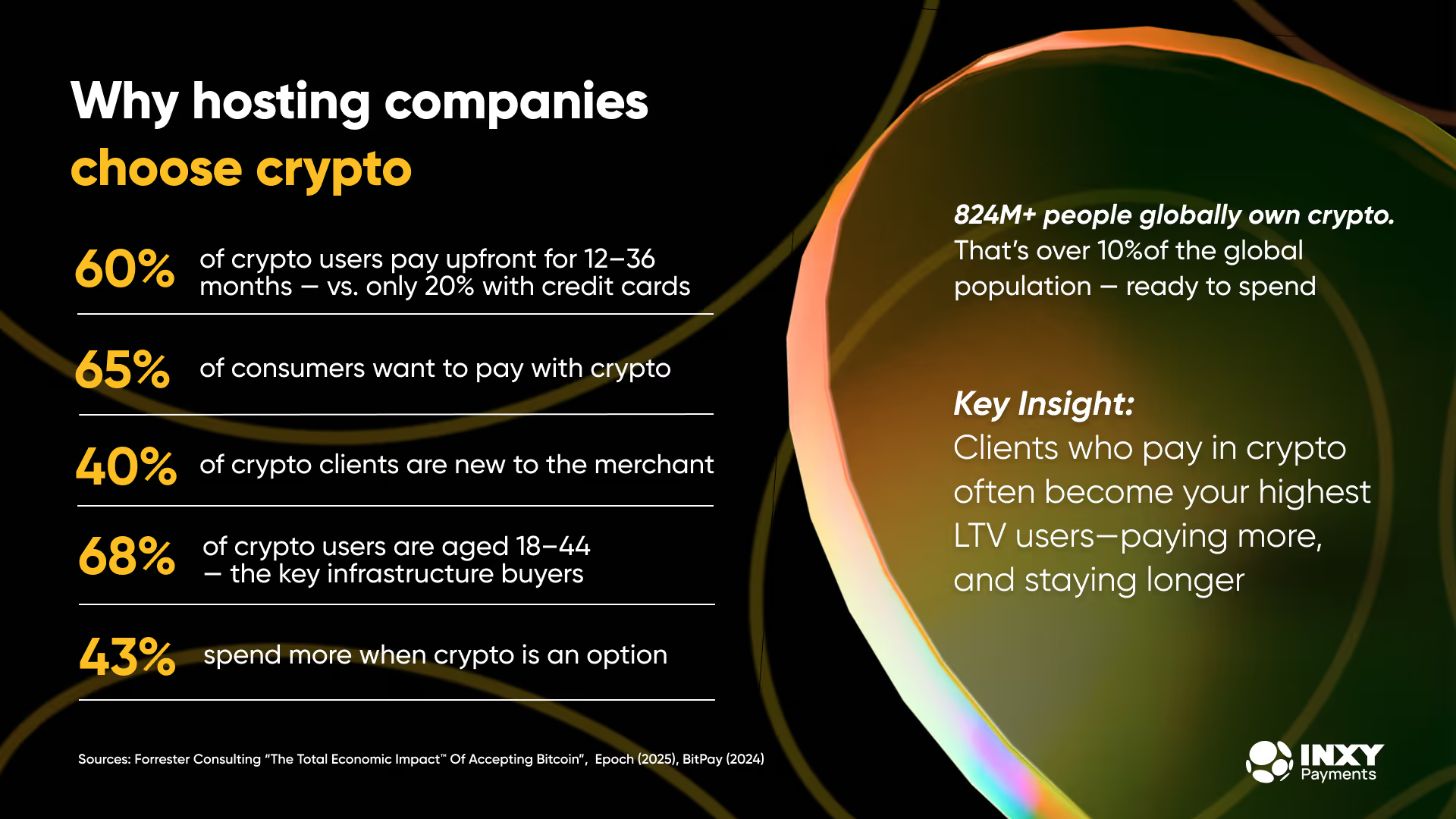
The micro-cloud sector thrives on volume and automation. Continuing to rely on payment processors that penalize small transactions is an unsustainable business model. By shifting to a crypto-native, pre-paid balance structure, you eliminate crippling flat fees, protect yourself from chargeback fraud, and capture a rapidly growing demographic of privacy-conscious developers.
Ready to stop giving away your profit margins to payment processors? Discover how our automated payment gateway can drastically improve your server profitability by visiting https://www.inxy.io/ today.