“Web3 payments” describe a new way to move money in which value travels directly across a blockchain network instead of through banks and card schemes. Unlike traditional online transactions, blockchain payments settle peer-to-peer on a public ledger, are verifiable by anyone, and can run without a central intermediary holding the funds. For businesses, this means faster settlement, lower cross-border costs, and programmable money that can enforce its own rules.
This guide explains what web3 payments are, how they work under the hood, where smart contracts fit in, and how they compare to the crypto checkout flows most merchants already know. It is written for founders, finance teams, and product managers evaluating whether on-chain rails belong in their stack.
What Are Web3 Payments?
Web3 payments are transactions executed on decentralized blockchain networks, where ownership of funds is tied to a cryptographic wallet rather than a bank account. The term “web3” refers to the third era of the internet — one built on open, user-owned protocols. In a payment context, web3 crypto payments let a payer send value (typically stablecoins such as USDC or USDT, or assets like ETH and BTC) straight to a recipient’s wallet, with the network itself confirming and recording the transfer.
Three properties separate web3 payments from conventional digital payments:
Self-custody. The payer controls the funds via private keys until the moment of transfer — there is no card issuer or bank acting as gatekeeper.
On-chain settlement. The transaction is final once confirmed by the network, usually in seconds to minutes, with no multi-day clearing cycle.
Programmability. Logic can be attached to the payment itself, so funds release only when predefined conditions are met.
The market context matters. According to recent industry analysis, fiat-backed stablecoins surpassed $300 billion in market capitalization in late 2025, with annualized on-chain settlement volumes in the mid-$20-trillion range — evidence that web3 rails are moving from experiment to real economic activity.
It helps to see where web3 payments sit relative to terms you already use. “Crypto payments” is the umbrella term for paying with digital assets at all. “Web3 payments” is the subset that runs on open, permissionless networks with user-held funds — as opposed to a closed processor that simply accepts coins and settles them to your bank. That difference in architecture is what unlocks the speed, reach, and automation covered below.
How Web3 Payments Work: Blockchain & Wallets
Blockchain payments rely on three components working together: a wallet that holds the keys, a blockchain network that validates transactions, and (for business use) a gateway that translates the on-chain event into something an accounting system can read. Here is the flow in plain terms.
The role of self-custody wallets
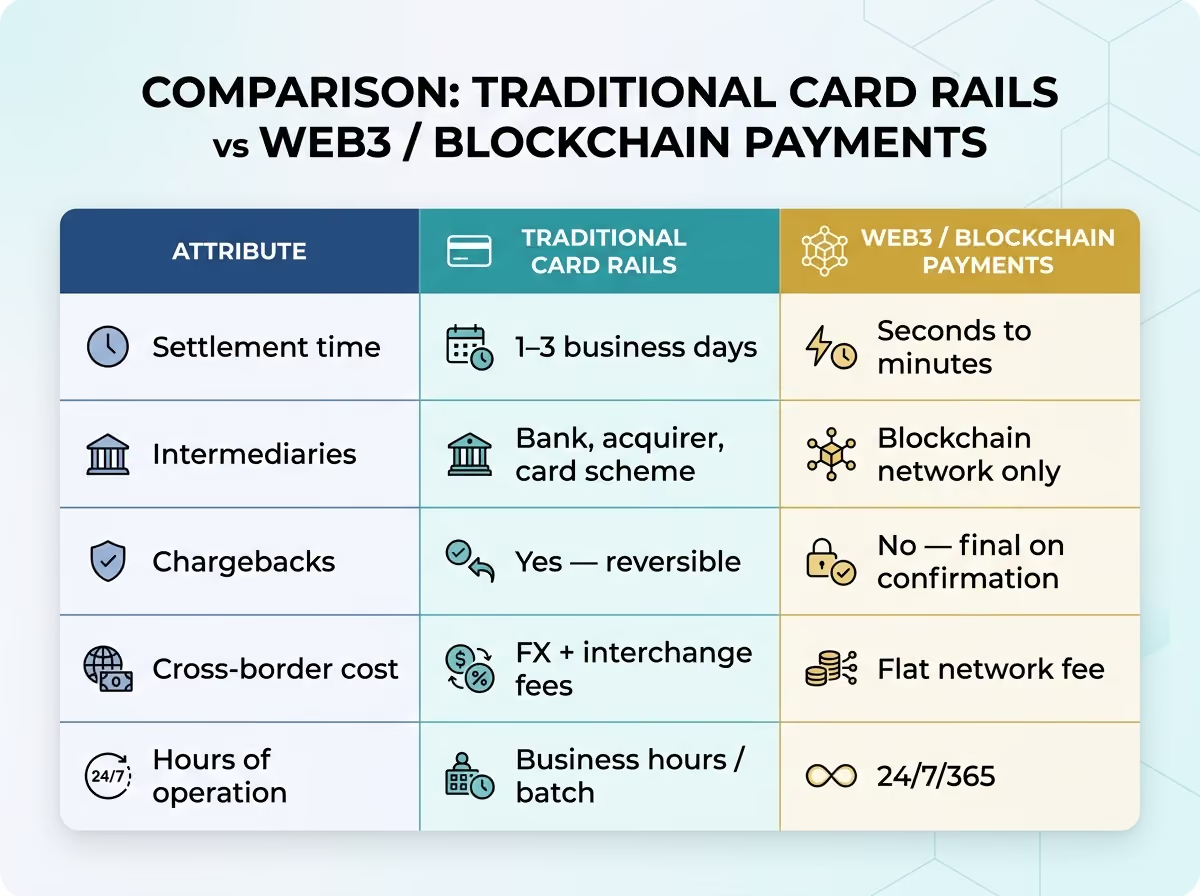
A crypto wallet does not “store” coins; it stores the private keys that prove ownership of a balance recorded on-chain. When a customer pays, their wallet signs the transaction with that key, authorizing the network to move the balance to the merchant’s address. Because the key never leaves the user, there is no card number to steal and no chargeback to reverse — a structural difference from card payments.
On-chain settlement vs. traditional rails
In a card transaction, authorization, clearing, and settlement happen across several institutions over one to three business days. With blockchain payments, validators confirm the transfer and write it to an immutable ledger in a single step. The table below summarizes the practical differences.
Smart Contract Payments Explained
Smart contract payments are blockchain transactions governed by self-executing code. A smart contract is a program deployed on-chain that automatically performs an action — release funds, split a payment, issue a refund — when its conditions are satisfied. No human has to intervene, and no party can alter the outcome once the contract is live.
Automated & programmable payments
This is where web3 moves beyond simple transfers. A smart contract can hold funds in escrow and release them only when a delivery is confirmed, automatically distribute revenue among several wallets, or stream a salary continuously over time. For businesses, programmable money reduces manual reconciliation and removes the trust gap in multi-party deals.
Consider a marketplace that owes three parties on every sale: the seller, an affiliate, and the platform itself. With cards, that single payment is captured, then split later through separate payout runs and reconciliation. A smart contract executes the split atomically — the moment funds arrive, each wallet receives its share in the same transaction. The same logic powers milestone-based contractor payments, automated refunds, and subscription renewals, all without a card on file or a manual approval step.
Escrow: funds lock until both sides meet their obligations.
Revenue splits: a single incoming payment is divided across partners in one transaction.
Recurring & usage-based billing: subscriptions and metered charges execute on-chain without a card on file.
Tokenized payment solutions
Tokenized payment solutions represent real-world value — a dollar, an invoice, a loyalty credit — as a transferable token on a blockchain. Stablecoins are the most widely used example: a token pegged 1:1 to fiat that combines the stability of a currency with the speed of crypto. Industry research estimates that B2B flows already account for roughly 40% of real-economy stablecoin payments and are growing about 65% per year, which is why tokenized settlement is becoming the default rail for cross-border business payments.
Web3 Payments vs. Traditional Crypto Checkout
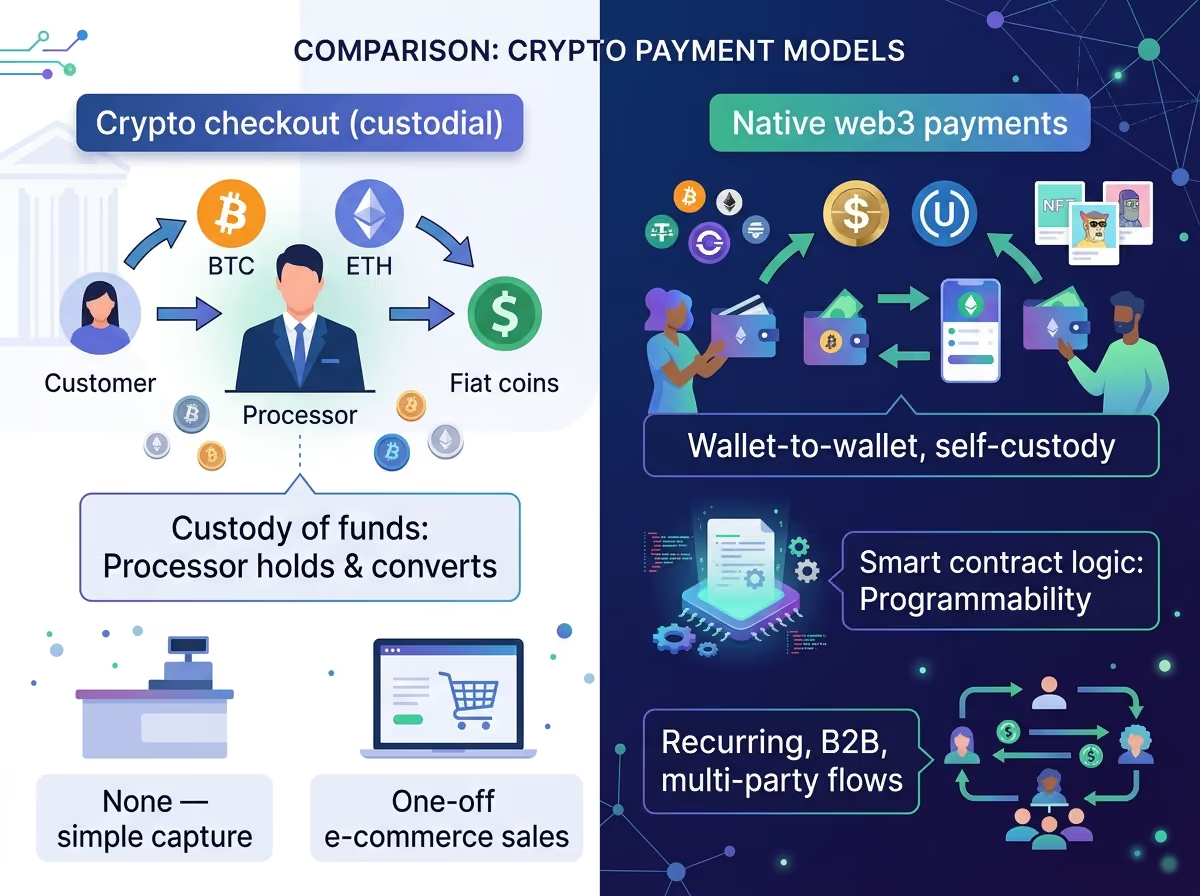
Many merchants already “accept crypto” through a hosted checkout that converts coins to fiat. That is a useful on-ramp, but it is not the same as a full web3 payment model. The distinction is about who controls the funds and whether the payment carries logic.
In practice the two coexist. A business might use a custodial checkout for retail customers while using native, programmable rails for supplier payouts and partner settlements. For a deeper breakdown of provider roles, see our guide on the difference between a crypto payment gateway and a processor.
Benefits & Risks for Businesses
Web3 payments — and the broader category of blockchain smart contracts for business — offer clear operational upside, but they come with trade-offs that finance and compliance teams should weigh.
Key benefits:
Near-instant, 24/7 settlement that frees up working capital.
Lower cross-border fees by removing correspondent-banking layers.
No chargebacks, reducing fraud exposure for digital goods.
Automation of escrow, splits, and recurring billing through smart contracts.
Risks to manage:
Price volatility on non-stablecoin assets — most businesses settle in stablecoins to neutralize this.
Irreversibility means errors and misdirected payments are hard to recover.
Regulatory obligations: under frameworks like the EU’s MiCA, you must work with a licensed VASP/CASP and apply KYC/AML and Travel Rule checks.
Smart-contract risk: poorly audited code can be exploited, so use vetted, audited contracts.
For most companies the practical answer is not to choose between safety and innovation, but to adopt web3 payments through a partner that has already solved custody, compliance, and key management. That keeps the operational benefits — speed, automation, global reach — while shifting the hardest security and regulatory work to infrastructure built for it.
How to Start Accepting Web3 Payments
You do not need to build blockchain infrastructure in-house. A compliant gateway abstracts the wallet, network, and conversion layers so you can accept on-chain payments with a standard integration. A practical path:
Choose your settlement asset. Stablecoins (USDC, USDT, DAI) are the standard for business to avoid volatility.
Select a regulated provider. Confirm licensing, multi-chain support, and KYC/AML coverage for your regions.
Integrate via API or plugin. Add the checkout or payout flow and connect webhooks to your back office.
Decide what to automate. Map which payments — escrow, splits, recurring — benefit from smart-contract logic.
INXY provides a regulated, EU-compliant gateway for exactly this. Explore the web3 payments solution and our smart-contract payment infrastructure, or read how to accept crypto payments in 2026 for the full setup walkthrough.
FAQ
What are web3 payments in simple terms? They are payments sent directly between crypto wallets over a blockchain, without a bank or card network in the middle. The network verifies and records the transfer.
Are web3 payments safe? The underlying blockchain settlement is highly secure and tamper-resistant. The main risks are user error, asset volatility, and smart-contract bugs — all manageable by using stablecoins, audited contracts, and a regulated gateway.
What is a smart contract payment? A payment controlled by on-chain code that executes automatically when set conditions are met — for example, releasing escrowed funds once delivery is confirmed.
How are web3 payments different from accepting Bitcoin at checkout? A standard crypto checkout is custodial and converts coins to fiat. Native web3 payments keep funds in self-custody and can carry programmable logic, making them better suited to recurring, B2B, and multi-party flows.
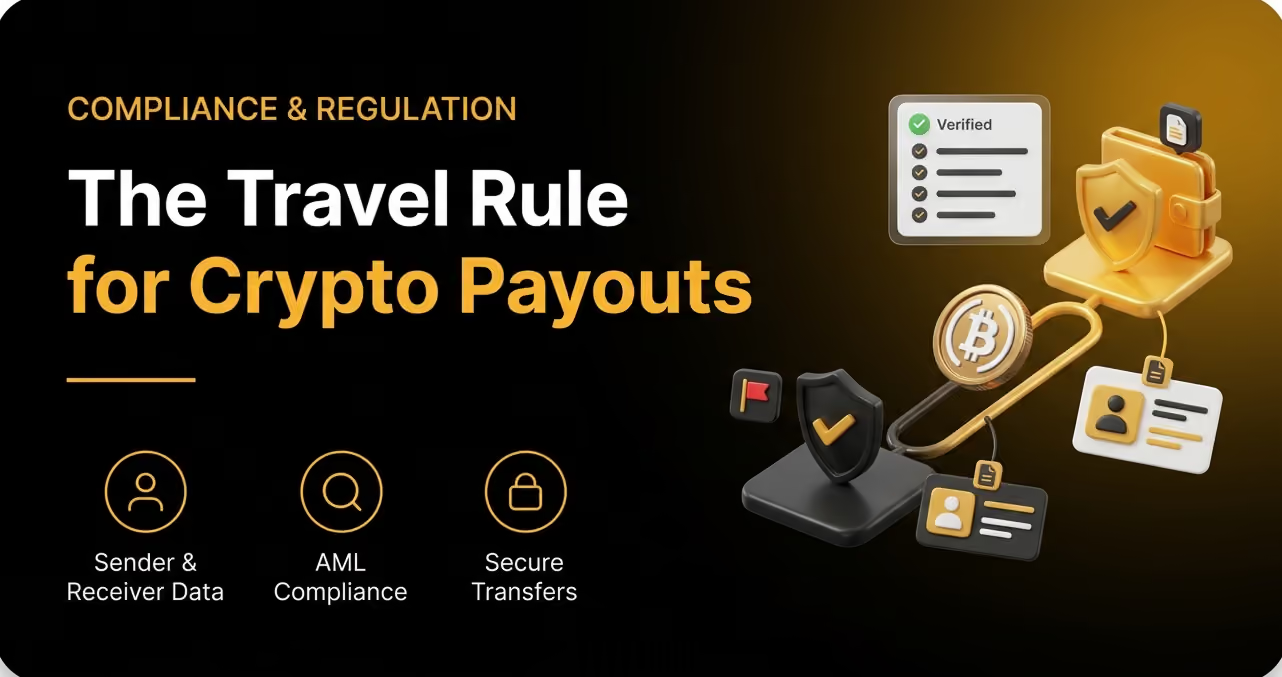
The Travel Rule for Crypto Payouts: What B2B Senders Must Know in 2026
The Travel Rule requires sender and recipient identity data to accompany crypto transfers, and in 2026 it directly affects any business paying contractors, suppliers, or partners in crypto. This guide breaks down the regulatory picture by region — the EU's no-threshold TFR, the US $3,000 BSA rule plus new GENIUS Act stablecoin obligations, and FATF's $1,000 baseline — and the exact originator/beneficiary data each payout must carry, including the extra step for self-hosted wallets. It then shows how a regulated crypto gateway runs pre-send screening, KYT/AML checks, and the Travel Rule inside the payout flow, so B2B senders stay compliant without building their own compliance stack.
If your business sends crypto payouts — to contractors, suppliers, affiliates, or partners — the crypto Travel Rule now sits between you and every transfer. It is the single piece of kyc aml crypto payments regulation most likely to delay, freeze, or return a B2B payout in 2026, and most senders only learn about it after a payment is held. This guide explains what the Travel Rule is, how the 2026 rules differ by region, what data must accompany each payout, and how a regulated crypto gateway runs the checks so you don't have to build a compliance stack yourself.
What the crypto Travel Rule is (and why it now applies to your payouts)
The Travel Rule is an anti-money-laundering standard that requires identifying information about the sender (originator) and recipient (beneficiary) to "travel" alongside a transfer of value. It originated in traditional banking and now applies to crypto.
FATF Recommendation 16, extended to crypto
The rule comes from the Financial Action Task Force (FATF), whose Recommendation 16 was extended in 2019 to cover virtual assets. The principle is simple: when a regulated provider moves crypto on a customer's behalf, it must collect, transmit, and retain originator and beneficiary details so that law enforcement can trace funds. FATF recommendations are influential but not law in themselves — each jurisdiction decides how to implement them, which is why the picture is fragmented (more on that below).
Who counts as a VASP — and when you are the originator
The obligation falls on Virtual Asset Service Providers (VASPs): exchanges, custodial wallet providers, and crypto payment gateways. When your business initiates a payout through such a provider, the provider is the "originating institution" and carries the Travel Rule duty — but it can only meet that duty with your data. In practice this means the gateway must know who you are paying and why, and you must be able to supply recipient details on demand. The compliance burden is shared: the provider operates the machinery, but incomplete sender data is the most common reason a payout stalls.
The 2026 regulatory picture: crypto compliance and regulations by region
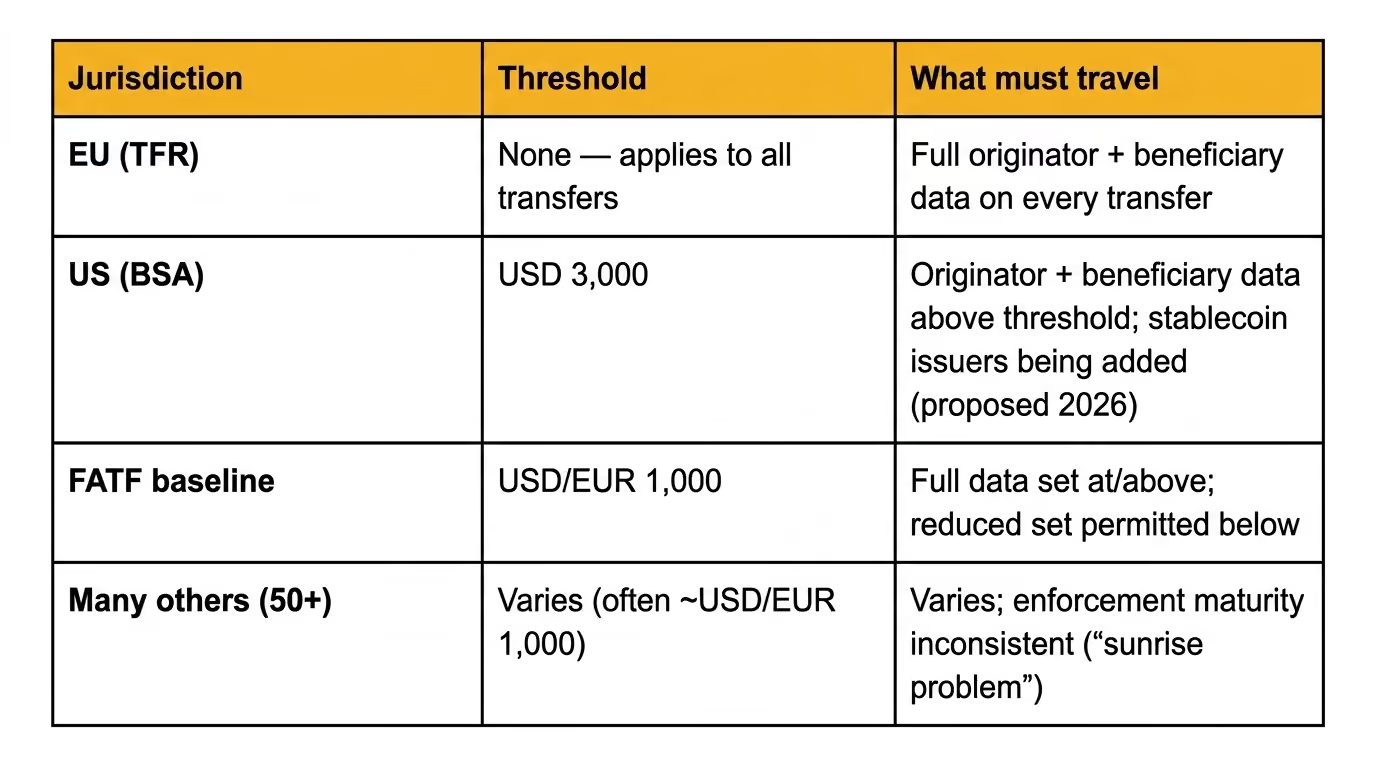
By 2026, over 50 jurisdictions have enacted Travel Rule legislation — roughly 73% of FATF-assessed jurisdictions, up from a far smaller base two years earlier. Enforcement maturity, thresholds, and required data still vary widely, so a payout that is routine in one corridor can be blocked in another.
EU — Transfer of Funds Regulation (TFR), no de-minimis threshold
The EU's recast Transfer of Funds Regulation (TFR) took effect on 30 December 2024. It is the strictest major regime: full originator and beneficiary data must accompany every crypto-asset transfer handled by a regulated provider, with no minimum threshold. A €5 payout and a €500,000 payout carry the same data obligation. The TFR operates alongside MiCA, the EU's broader crypto-asset framework, which governs licensing of providers.
US — Bank Secrecy Act Travel Rule, USD 3,000 threshold
In the United States the Travel Rule lives under the Bank Secrecy Act (BSA), administered by FinCEN, with a threshold of USD 3,000 — notably higher than FATF's recommendation. A 2026 development matters for stablecoin senders: following the GENIUS Act (signed July 2025), the U.S. Treasury proposed a rule on 8 April 2026 treating permitted stablecoin issuers as BSA financial institutions, subject to AML programs, recordkeeping, and the Travel Rule, with compliance expected around April 2027. The direction of travel is clear — stablecoin rails are being pulled fully into the same compliance perimeter as the banking system.
FATF global threshold and the "sunrise problem"
FATF recommends a standard threshold of USD/EUR 1,000, below which a reduced data set may apply. Because jurisdictions adopt the rule at different speeds, the industry faces the "sunrise problem": a compliant provider in a regulated market may need to send Travel Rule data to a counterparty in a market that has not yet implemented the rule and cannot receive it. For B2B senders this means a payout's success can depend on the recipient platform's jurisdiction, not just your own.
What data must "travel" with a B2B crypto payout
The required data set is consistent across regimes, even where thresholds differ.
Required originator (sender) fields
Name of the originator (your business or the paying entity).
Wallet address used for the transfer (or a transaction reference).
Physical/registered address, and in some regimes an official identifier or account number.
Required beneficiary (recipient) fields
Name of the recipient.
Wallet address receiving the funds.
In addition, the transaction amount, execution date, and a unique transaction identifier are recorded with every transfer. For your operations, the practical takeaway is that recipient name + wallet must be accurate and verifiable before you send — a mismatch is a hold.
Self-hosted (unhosted) wallet payouts — the extra step
Paying out to a self-hosted (non-custodial) wallet — common when paying contractors or partners who hold their own keys — changes the mechanics. There is no counterparty VASP to receive the Travel Rule message, so the data isn't transmitted onward; instead, your provider must still collect originator and beneficiary information from you, and above the relevant threshold may require verification of wallet ownership based on a risk assessment. Expect to attest that the recipient controls the destination address for larger payouts.
How a regulated crypto gateway runs the Travel Rule on outbound payouts
This is where a regulated crypto gateway earns its keep. Rather than connecting to Travel Rule messaging protocols, screening providers, and sanctions lists yourself, the gateway runs the controls inside the payout flow. Using INXY's outbound model as a concrete example, an outgoing payout passes through several gates before any transfer is created.
Pre-send checks — address risk and blacklist screening
A payout starts as a withdrawal request, not an immediate send. A pre-send validation stage runs first and can stop the operation with an error so that no transaction is ever formed. As part of this, the recipient address is looked up against historical risk data: a previously unseen address is treated cautiously, while a known address carries its last risk result. This means a problematic payout is caught at draft stage, not after funds have left.
KYT/AML screening of the recipient
Next is the outbound KYT (Know Your Transaction) sequence. The recipient address is checked against a blacklist; a match fails the request outright with no transaction created. If it clears, a risk provider screens the address and returns an outcome:
Low or Medium → the payout draft passes and proceeds.
High → the request fails, no transaction is created, and an error is returned.
This is the kyc aml crypto payments layer working in real time on the money leaving your account.
The Travel Rule message exchange
Only after screening passes does the Travel Rule step run, packaging and exchanging the required originator/beneficiary information with the counterparty provider where one exists. The payout then proceeds to settlement. The sequence matters: screen first, transmit data, then send.
Approved contacts and recipient allow-lists
Gateways typically maintain a contact list of approved recipients. A recipient flagged as declined blocks the payout regardless of other checks — a useful control for finance teams that want a vetted, reusable set of payees for recurring or mass payouts.
KYB is the gate to the platform; KYT is the gate to each transaction; the Travel Rule is the data that rides along with it. A gateway that handles all three is what "secure crypto payments" actually means in operational terms.
Compliance risks of getting payouts wrong
For a B2B sender, Travel Rule failures are not abstract — they hit cash flow and counterparties directly:
Held or returned transfers. Missing or mismatched recipient data is the most common cause of a stalled payout. Funds can sit in review or be returned, delaying contractor and supplier payments.
Counterparty refusal. If the receiving platform can't accept Travel Rule data (the sunrise problem) or flags your transfer, it may bounce the payment.
Regulatory exposure. Operating outbound flows without proper screening and recordkeeping exposes the business to AML penalties — increasingly so as stablecoin issuers are folded into BSA-style obligations.
Operational drag. Building and maintaining screening, sanctions, and Travel Rule messaging in-house is expensive and never "done," because rules and thresholds keep shifting.
How to automate crypto payouts without owning the compliance stack
The practical answer for most B2B senders is to run payouts through a regulated crypto gateway that treats the Travel Rule, KYT, and sanctions screening as part of the payout itself — not as something you bolt on.
With INXY, every outbound payout passes through pre-send validation, blacklist and KYT risk screening, and the Travel Rule step before settlement, and recurring payees can be managed through an approved contact list. Because the same flow is exposed via API and webhooks, you can run mass payouts — paying hundreds of contractors or partners at once — with compliance checks applied per recipient automatically, and receive status events back into your own systems. That is what "how to automate crypto payouts" looks like when compliance is built in rather than improvised.
If compliance posture is your priority, start with INXY's security & compliance capabilities; if payout mechanics are the focus, see crypto payouts and the cross-border and payroll options that build on the same rails.
FAQ
Does the Travel Rule apply to stablecoin payouts? Yes. Stablecoin transfers handled by a regulated provider are subject to the Travel Rule like any other virtual asset. In the EU, full data is required regardless of amount; in the US, stablecoin issuers are being brought explicitly into BSA Travel Rule obligations under a rule proposed in April 2026.
What is the Travel Rule threshold in 2026? It depends on the jurisdiction. FATF recommends USD/EUR 1,000; the US applies USD 3,000 under the BSA; the EU applies no threshold — every transfer carries full data.
Do I need to collect data for self-hosted (unhosted) wallet payouts? Yes. Even though there's no counterparty provider to receive the message, your gateway must still collect originator and beneficiary information, and above the relevant threshold may require proof that the recipient controls the destination wallet.
Is the Travel Rule the same as KYC? No. KYC/KYB verifies identity at onboarding. The Travel Rule governs the transmission of identity data alongside each transfer. They work together but are distinct obligations.
Who is responsible — the sender or the recipient platform? Both sides carry obligations. The originating provider must collect and transmit sender/recipient data; the beneficiary provider must receive and retain it. As the business initiating the payout, you're responsible for supplying accurate recipient information to your provider.
What is a Stablecoin? Complete Beginner’s Guide 2025
A beginner-friendly guide to stablecoins in 2025. Learn what stablecoins are, how they work, their main types, benefits, risks, and how to buy, store, and use them safely — plus a look at their future in digital finance
Stablecoins are one of the fastest-growing parts of the crypto market. In the last year alone, stablecoins processed tens of trillions of dollars in payments and moved value across borders faster than traditional bank rails. This guide explains what stablecoins are, how they work, and why more people and businesses are using them in 2025.
Understanding Stablecoins
Stablecoins are a type of cryptocurrency designed to maintain a stable value. Unlike other cryptocurrencies, whose prices can be unpredictable, stablecoins aim to stay consistent. They are often tied to real-world assets like the US dollar, gold, or even other cryptocurrencies.
Common examples are Tether (USDT), USD Coin (USDC), and DAI. All of them aim to keep a value close to 1 US dollar.This means 1 USDT should always equal 1 USD. People use stablecoins to avoid the wild swings of the crypto market while still enjoying the benefits of digital currency.
Stablecoins can be classified into three main types: fiat-collateralized, crypto-collateralized, and algorithmic. Fiat-collateralized stablecoins hold reserves in traditional currency. Crypto-collateralized ones use other cryptocurrencies as backing. Algorithmic stablecoins rely on smart contracts to manage supply and demand.
Stablecoins offer a bridge between the traditional financial world and the new age of digital currency, providing stability and trust. They're used for trading, payments, and as a store of value, making them popular among both crypto enthusiasts and businesses. People use stablecoins to send money abroad, pay freelancers, move funds between exchanges, or simply sit in “digital dollars” during volatile markets.
Types of Stablecoins
Stablecoins come in various forms, each with its own way of maintaining value. One type is fiat-collateralized stablecoins. These are backed by traditional currencies like the US dollar. For example, Tether (USDT) is a well-known fiat-backed stablecoin. You deposit one dollar into a bank, and you get one digital token.
Then, there are crypto-collateralized stablecoins. Instead of using traditional money, they use other cryptocurrencies as reserves. A popular example here is DAI, which is backed by Ethereum. It's a bit more complex, but it offers greater transparency through smart contracts.
Finally, we have algorithmic stablecoins. These don't use collateral. Instead, they rely on algorithms to control the supply of the coin, similar to how central banks manage currencies. If the price goes up, the system releases more coins to lower the price. If it drops, coins are taken out of circulation to raise it. This method is innovative but can be risky.
How Stablecoins Work
Stablecoins are a type of cryptocurrency designed to keep their value stable. Unlike other cryptocurrencies, which can have wild price swings, stablecoins aim to stay around a fixed value. This stability often comes from linking the stablecoin to a real-world asset like the US dollar.
One common method is to hold reserves. For example, if a stablecoin is tied to the dollar, the issuer might keep one dollar in reserve for every stablecoin issued. This ensures that users can exchange stablecoins for real dollars at any time.
Another method involves using algorithms to manage supply. If demand for the stablecoin rises, the system may release more coins to keep the price steady. If demand falls, it might buy back coins to maintain balance.
These strategies help stablecoins stay steady, making them useful for trading, accepting payments, or cashing out without worrying about losing value.
Benefits of Using Stablecoins
Stablecoins have gained popularity for several reasons. One major advantage is their price stability. Traditional cryptocurrencies like Bitcoin and Ethereum can have wild price swings, making them less reliable for day-to-day transactions. In contrast, stablecoins are usually tied to stable assets like the US dollar, ensuring their value remains relatively constant.
Another benefit is the ease of international transactions. If you need to send money across borders, stablecoins can be a faster and cheaper alternative to traditional bank transfers. They don't require high fees and middlemen, making the process more efficient.
Stablecoins also provide a way to enter the crypto market without the risk of losing value quickly. For those new to crypto, they offer a stepping stone, allowing you to participate in the digital economy without the stress of market fluctuations. Plus, businesses can accept stablecoins as payment, knowing their value won't drop overnight.
Stablecoins are also helpful in places where banks do not work well or many people do not have bank accounts. A phone and a simple wallet app are often enough to receive stablecoins, which makes them useful in many emerging markets.
Lastly, stablecoins can be easily exchanged for other cryptocurrencies or even cashed out to traditional money. This flexibility makes them a practical choice for both consumers and businesses looking to explore digital currencies with minimal risk.
How to Buy Stablecoins
Buying stablecoins can seem tricky at first, but it’s pretty simple once you break it down. First, you need a crypto wallet. This is a digital tool to store, send, and receive stablecoins. You can find many wallets online, so pick one that suits your needs.
Next, choose a crypto exchange. This is a platform where you can buy and sell stablecoins. Popular exchanges are user-friendly, making it easy to trade. Once you pick an exchange, create an account and verify your identity.
Now, you’re ready to buy. Deposit money into your exchange account. Then, search for the stablecoin you want and make a purchase. You can buy with cash, or exchange other cryptocurrencies. After buying, transfer the stablecoins to your wallet for safekeeping. This ensures your coins are secure and easy to access when you need them.
You do not always need to buy stablecoins directly. Some people earn them by doing freelance work, selling online services, or getting paid by friends and family abroad.
Exchanging Stablecoins for Cash
When you want to turn your stablecoins into cash, it's not as tricky as it may sound. First, you'll need to find a crypto exchange that accepts stablecoins. Many big exchanges do, like Binance or Coinbase. Once you're signed up, you can transfer your stablecoins to the exchange. It’s a bit like moving money from one bank to another.
After your stablecoins are on the exchange, you can find the option to cash out. This usually involves choosing a fiat currency like USD or EUR, and then selling your stablecoins for that currency. The exchange does the math and shows you how much money you'll receive.
Next, you need to decide how to receive your cash. Most exchanges offer a few ways: you can transfer it straight to your bank account, use a debit card linked to the exchange, or sometimes even get a physical check. Each method may have different fees, so it's wise to check those before you decide.
Lastly, be aware of the time it takes for the money to reach you. Some methods are quick, while others might take a few days. The speed often depends on your bank or the exchange. So, it's good to plan ahead, especially if you need the cash soon.
In some countries, people also use peer-to-peer (P2P) platforms or local fintech apps to swap stablecoins for local money.
Storing Stablecoins Safely
When it comes to keeping your stablecoins, safety is key. Let's break it down into simple steps. First, think about where you want to store them. A crypto wallet is your go-to option. There are two main types: hot wallets and cold wallets.
Hot wallets are online. They are easy to access, making them perfect for frequent transactions. If you often exchange or accept crypto, this might be your choice. But, online wallets can be more vulnerable to hacks.
Cold wallets, on the other hand, are offline. They're like a digital vault, keeping your coins away from the internet. This makes them safer from online threats. If you're planning to hold onto your stablecoins for a while, this is a solid option.
Now, let's talk about setting up a wallet. It's not as hard as it sounds! Most wallets come with user-friendly apps. You download the app, create an account, and you're set. You'll receive a private key, a kind of password, which is crucial. Keep it safe and never share it.
Another way to secure your coins is by using two-factor authentication. This adds an extra layer of security. Even if someone gets your password, they can't access your wallet without the second factor.
Choosing a reliable wallet provider is important, too. Look for reviews and ensure the provider has a good track record. Some popular options include Ledger, Trezor, and Coinbase.
You should also back up your wallet. Most wallets allow you to do this through a recovery phrase. Write it down and store it in a safe place. If you lose access to your wallet, this phrase can help you get back in.
Lastly, stay informed. The crypto world changes fast. New security features and threats can emerge. Keep an eye on updates from your wallet provider and the stablecoin community.
By following these steps, you can store your stablecoins safely and with confidence.
Stablecoins vs. Traditional Cryptocurrencies
When we talk about stablecoins and traditional cryptocurrencies, it's like comparing apples and oranges. Both are fruits, but they taste different. Stablecoins are designed to keep their value steady, usually tied to a stable asset like the US dollar. This makes them less wild in terms of price swings. On the flip side, traditional cryptocurrencies, like Bitcoin, are known for their roller-coaster prices, which can go up or down sharply in a short time.
Stablecoins are great when you want to avoid the crazy ups and downs of traditional crypto. Think of them as a safe harbor in a stormy sea. They give you a way to hold digital assets without worrying about losing value overnight. This stability is why some people prefer them for daily transactions or saving.
Traditional cryptocurrencies can be exciting for those who enjoy high-risk, high-reward scenarios. If you buy a cryptocurrency like Bitcoin at the right time, you could make a lot of money. But, you could also lose a lot if the value drops. This unpredictability makes them less appealing for regular transactions but more attractive for investment.
Both types of digital assets have their uses. Stablecoins are often used for things like remittances or when users want to cash out of a volatile market without going back to regular money. Traditional cryptocurrencies are used for things like long-term investments or when someone wants to participate in a decentralized financial system.
It's important to choose the right one based on your needs. If you want stability and predictability, stablecoins are a good choice. If you are looking for potential big gains and can handle the risk, traditional cryptocurrencies might be more your style.
The Future of Stablecoins
The future of stablecoins looks promising yet complex. As we step into 2025, stablecoins are playing a bigger role in the financial world. More businesses are starting to accept them as payment. This trend is likely to continue, making stablecoins a significant part of global trade. Stablecoins are unique because they combine the benefits of cryptocurrency with the stability of traditional money. They are not as volatile as other cryptocurrencies, which makes them attractive for everyday transactions.
Governments around the world are also paying attention to stablecoins. Some are considering creating their own versions, often called Central Bank Digital Currencies (CBDCs). These digital currencies could change how we use money. For instance, they might make international payments faster and cheaper. While this is an exciting development, it also brings challenges. Governments must ensure these digital currencies are secure and private.
Technology is another important factor shaping the future of stablecoins. Innovations in blockchain technology can make stablecoins more efficient and secure. For example, improvements in smart contracts might automate many financial processes. This could reduce the need for intermediaries, like banks, in certain transactions. However, these technological advancements also require careful management. Developers must ensure these systems are safe from hacking and other threats.
There are also social aspects to consider. As more people use stablecoins, they might change how we think about money. Younger generations, who are more comfortable with digital technology, may adopt stablecoins more quickly. This could lead to a shift away from traditional cash. Yet, not everyone has access to the internet or digital devices. This digital divide could create inequality if stablecoins become too widespread.
Lastly, the regulatory landscape for stablecoins is still evolving. Different countries have different rules, which can create confusion. Clear and consistent regulations are essential for stablecoins to thrive. These rules can help protect users and ensure the financial system remains stable.
New rules like the European Union’s MiCA framework, and similar proposals in other regions, aim to make sure stablecoins are properly backed, audited, and safe for everyday use.
As we navigate these changes, it's clear that stablecoins will continue to develop. How we adapt to these changes will determine the role stablecoins play in our everyday lives.
Risks Associated with Stablecoins
Stablecoins may seem like the safer side of crypto, but they come with their own risks. One major concern is regulatory risk. Governments around the world are still figuring out how to regulate these digital currencies. This means rules can change quickly, affecting the value and legality of stablecoins.
Another risk is the trust in the issuer. Stablecoins are usually backed by assets like dollars or gold. But if the issuer doesn't actually hold enough assets, the stablecoin might not be as stable as it seems. It's important to check if an issuer undergoes regular audits to verify their reserves.
Technology risk is also significant. Stablecoins rely on blockchain technology, which can have vulnerabilities. Hackers could exploit these to steal funds. While security measures improve over time, no system is completely safe.
There is also platform risk. If you keep stablecoins on an exchange or lending platform and that company fails or gets hacked, you can lose access to your funds even if the stablecoin itself still works.
Market risk is another factor to consider. Even if a stablecoin is backed by a strong asset, the market value of that asset can fluctuate. For example, if a stablecoin is pegged to the dollar, and the dollar's value drops, the stablecoin could lose value as well.
Finally, there's the risk of liquidity. In times of financial stress, there might not be enough buyers for the stablecoin. This can make it hard to exchange or cash out quickly. Always evaluate if a stablecoin has ample liquidity before investing.
Understanding these risks can help you make better decisions about using or investing in stablecoins. Being aware of potential pitfalls helps in navigating the world of crypto with more confidence.
Conclusion: Embracing Stablecoins
Stablecoins are becoming more important in the world of digital money. They offer a mix of the best things about traditional currency and cryptocurrencies. These coins are designed to keep a stable value. This makes them less risky than other cryptocurrencies like Bitcoin, which can change in value a lot.
Stablecoins are tied to something stable, often the US dollar or a similar asset. This link helps them keep their value steady. Stablecoins can be used for many things. You can use them to buy things, send money to friends, or even save money. They make it easy to trade goods and services without worrying about the value going up or down too much.
If you want to start using stablecoins, first you need a digital wallet. Many online platforms let you create one quickly. Once you have a wallet, you can buy stablecoins with your regular money. You can also exchange them with other cryptocurrencies. When you want to use your stablecoins, you can send them to someone else or cash them out to your bank account.
Stablecoins can be accepted by many online stores and businesses. Some people use them to pay for everyday things, like groceries or bills. Others might use them for bigger purchases, like electronics or travel. The flexibility of stablecoins makes them appealing to many people, especially those who regularly use digital money.
Stablecoins also have a role in the world of finance. They are often used in lending and borrowing. Some people use them to earn interest, similar to a savings account. Others might take loans in stablecoins, knowing the value won't change too much. This stability is one of the main reasons stablecoins are trusted by many.
As the popularity of stablecoins grows, more people and businesses will likely start accepting them. This trend could lead to a future where stablecoins become a common part of everyday life. They offer a bridge between traditional money and the digital world, making financial transactions easier and more secure.
They are also useful in places where banking is weak. A simple mobile phone is enough to receive stablecoins, so people in emerging markets can get paid or send money online even without a bank account.
FAQ
What exactly is a stablecoin?
A stablecoin is a type of cryptocurrency designed to have a stable value, often pegged to a fiat currency like the US dollar, a commodity like gold, or a basket of assets. This stability makes them unique compared to more volatile cryptocurrencies like Bitcoin.
How are stablecoins different from traditional cryptocurrencies?
Stablecoins are designed to maintain a consistent value, reducing volatility, while traditional cryptocurrencies like Bitcoin and Ethereum can experience significant price fluctuations. This makes stablecoins more suitable for transactions and savings.
What are the main types of stablecoins?
The main types of stablecoins include fiat-collateralized, which are backed by a reserve of fiat currency; crypto-collateralized, which use other cryptocurrencies as collateral; and algorithmic stablecoins, which rely on algorithms to manage supply and demand and maintain their peg.
Why should I use stablecoins?
Stablecoins offer the stability of fiat currencies with the advantages of cryptocurrencies, such as fast and low-cost transactions. They are useful for trading, remittances, and as a hedge against cryptocurrency volatility.
How can I buy stablecoins?
You can purchase stablecoins on cryptocurrency exchanges using other cryptocurrencies or fiat currency. Once bought, they can be stored in a digital wallet that supports stablecoins.
Can I exchange stablecoins for cash?
Yes, you can convert stablecoins back into fiat currency through various platforms, including cryptocurrency exchanges and some financial services. The process usually involves selling your stablecoins for fiat currency, which can then be withdrawn to a bank account.
What are the risks associated with using stablecoins?
While stablecoins offer stability, they also come with risks such as regulatory scrutiny, potential de-pegging from their intended value, and the reliability of the backing assets. It's important to research and choose reputable stablecoins to mitigate these risks.
Who uses stablecoins today?
Stablecoins are used by traders, online shops, freelancers, remittance senders, and people in emerging markets who want a simple way to hold “digital dollars”. Many crypto platforms and fintech apps also use them as a base currency for payments.
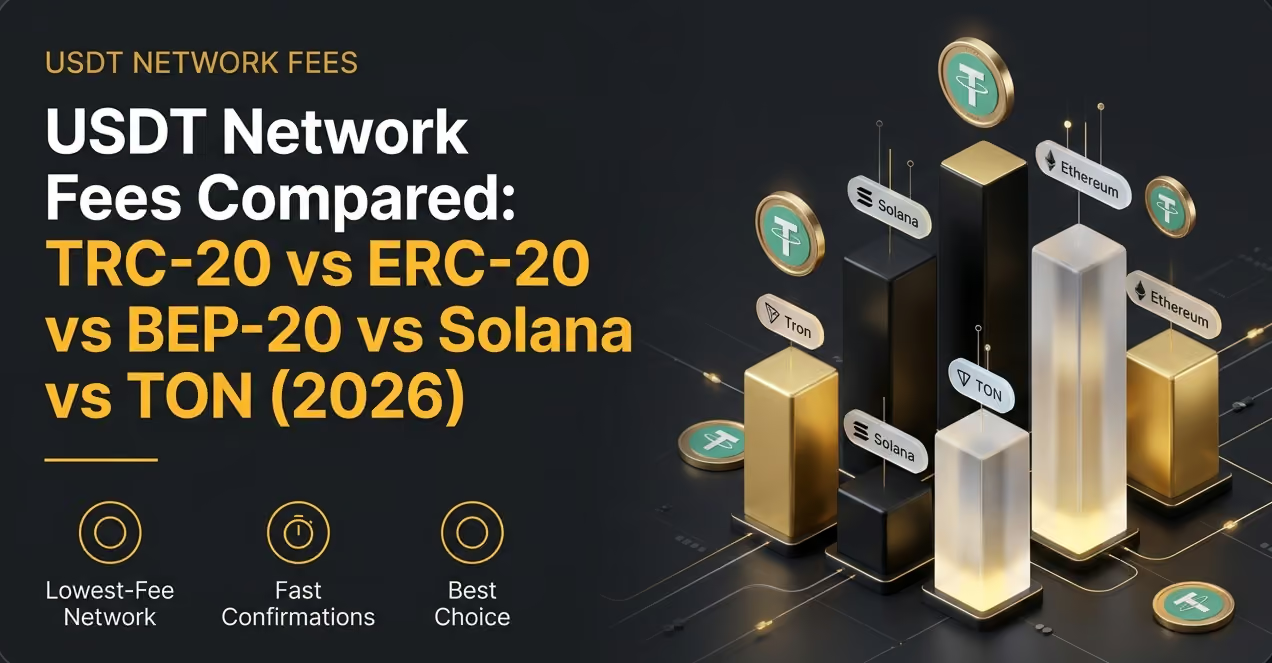
USDT Network Fees Compared: TRC-20 vs ERC-20 vs BEP-20 vs Solana vs TON (2026)
USDT is a single asset, but it lives on more than a dozen blockchains — and the network you choose can change the cost of a transfer by 100x or more. For a one-off payment that's a rounding error. For a business sending thousands of payouts a month, picking the wrong chain quietly burns thousands of dollars.
USDT is a single asset, but it lives on more than a dozen blockchains — and the network you choose can change the cost of a transfer by 100x or more. For a one-off payment that's a rounding error. For a business sending thousands of payouts a month, picking the wrong chain quietly burns thousands of dollars.
This is a practical breakdown of the cheapest network to send USDT in 2026, what drives the fee on each chain, and how to match the network to the payout.
Why USDT fees vary so much
The fee to move USDT has nothing to do with Tether itself. It's the network's gas fee — paid in the chain's native token — that varies:
On Ethereum (ERC-20) you pay ETH gas, which is priced by network congestion and can spike sharply.
On Tron (TRC-20) you pay in TRX energy/bandwidth, which is low and stable.
On Solana, TON, and BNB Chain, base fees are engineered to be very small.
So "how much does it cost to send USDT" is really "which network did you send it on."
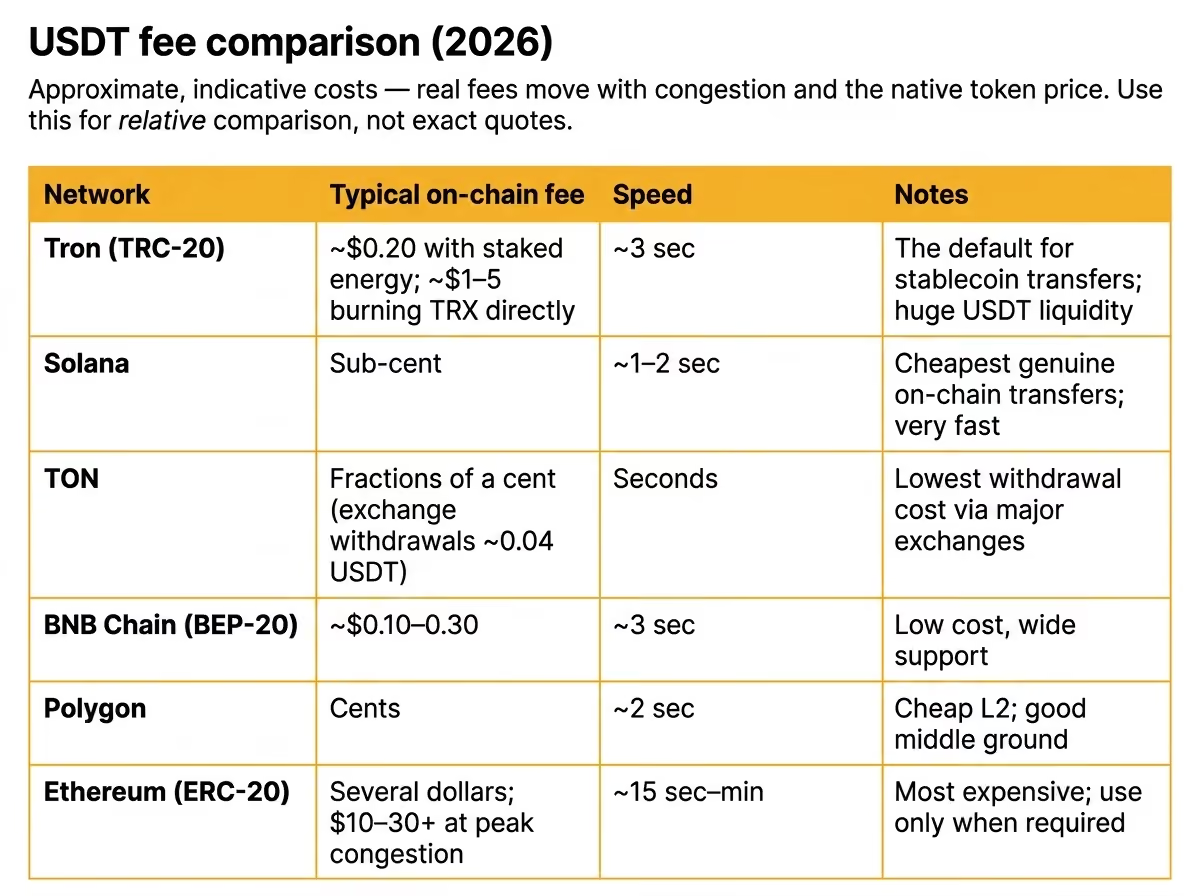
USDT fee comparison (2026)
Approximate, indicative costs — real fees move with congestion and the native token price. Use this for relative comparison, not exact quotes.
The short version: for pure on-chain cost, Solana and TRC-20 lead, with TON unbeatable for exchange withdrawals. ERC-20 is the most expensive and should be reserved for recipients who specifically need it.
Match the network to the payout amount
Cheapest isn't always "correct." The right network depends on the size of the transfer and where the recipient wants the funds.
Micro-payouts (under ~$50): TRC-20, Solana, or TON. Fees would otherwise eat a meaningful slice of the payment.
Standard payouts ($50–$5,000): Solana, Polygon, or TRC-20 keep costs to pennies while settling fast.
Large transfers (over ~$5,000): Cost matters less relative to the amount. ERC-20 is acceptable if the counterparty requires it — the $10–20 fee is small against the principal, and Ethereum's liquidity and integrations are unmatched.
Beyond the headline fee
Fee-per-transfer is the obvious number. Three others matter just as much at scale:
1. Recipient acceptance. The cheapest network is useless if the recipient's wallet or exchange doesn't support it. Always confirm the network before sending — cross-network mistakes are irreversible.
2. Native-token overhead. Every network needs its gas token in your wallet. Running payouts across five chains means monitoring and topping up five different balances — an operational cost that doesn't show up in the per-transfer fee.
3. Failed and stuck transfers. Underpriced gas on congested networks means stuck transactions and support tickets. Reliability has a cost, too.
How platforms cut costs further
When you run payouts through a fiat-native platform instead of manually, network fees stop being your problem in two ways:
Automatic routing. The platform sends each payout on a supported low-fee network without you managing gas on every chain.
No native-token juggling. You fund a balance in EUR or USD; the provider handles conversion and gas. Your reporting stays in fiat.
That removes the hidden operational cost of multi-chain payouts, not just the visible per-transfer fee.
Frequently asked questions
What is the cheapest network to send USDT? For on-chain self-custody transfers, Solana and Tron (TRC-20) are cheapest, and TON offers the lowest withdrawal fees on major exchanges. Ethereum (ERC-20) is the most expensive.
Is TRC-20 always the cheapest for USDT? Not always. TRC-20 is very cheap and has the deepest USDT liquidity, but Solana and TON can be cheaper still per transfer. TRC-20 remains the most widely accepted low-fee option.
Why is sending USDT on Ethereum so expensive? ERC-20 transfers pay ETH gas, priced by network demand. During congestion, a single USDT transfer can exceed $30 in gas.
Does the network affect how much USDT the recipient receives? The network sets the fee you pay to send. Choosing a low-fee chain means more of your budget reaches recipients, especially across many small payouts.
Can I send USDT across networks? An address is tied to one network. To move USDT between chains you need a bridge or an exchange — you can't send TRC-20 USDT directly to an ERC-20 address.
Send on the right network, automatically
If you're running regular USDT payouts, you shouldn't be managing gas tokens across five blockchains. INXY's mass USDT payouts route each transfer over low-fee networks and report everything back in EUR or USD — so you get the cheapest path without the multi-chain overhead. New to bulk sending? Start with our step-by-step USDT payout guide.





.avif)