

How long do crypto withdrawals take? In most cases, a crypto withdrawal clears in anywhere from a few seconds to about an hour — but the real answer depends on the blockchain you use, network congestion, and your provider's internal processing. A USDT transfer on a fast network can settle in under a minute, while a Bitcoin withdrawal held for multiple confirmations can take 30–60 minutes. This guide breaks down realistic timeframes by network, the factors that slow withdrawals down, whether "instant" withdrawals are genuine, and how to keep withdrawal fees low.
What Is a Crypto Withdrawal?
A crypto withdrawal is the process of moving digital assets out of an account — typically an exchange, custodial wallet, or payment platform — to an external blockchain address you control. Unlike an internal transfer between two accounts on the same platform, a crypto currency withdrawal is recorded on-chain, which means it must be broadcast to the network, validated by miners or validators, and confirmed in one or more blocks before it is final.
Two distinct stages determine how long the whole thing takes:
- Platform processing — the time your exchange or provider needs to review, batch, and sign the transaction before it ever touches the blockchain.
- Blockchain confirmation — the time the network needs to include your transaction in a block and add enough subsequent blocks to consider it irreversible.
A delay at either stage affects the total. A platform can sit on a request for 30 minutes for security reasons even when the underlying network would settle it in seconds.
How Long Do Crypto Withdrawals Take on Average?
For a healthy network and a provider without manual holds, most crypto withdrawals complete within a few minutes to one hour. The variance comes almost entirely from which chain you pick.
Exchange processing time vs blockchain confirmation time
Platform processing usually adds a few seconds to several minutes. Many providers batch outgoing transactions or run automated risk checks before broadcasting. After broadcast, the clock is controlled by the network: your transaction needs to be picked up by validators and then earn a number of confirmations — additional blocks built on top of it. The more confirmations a provider requires, the safer the transaction and the longer the wait.
Typical withdrawal times by network
The table below shows realistic ranges. Treat these as typical, not guaranteed — congestion and provider policy shift them.
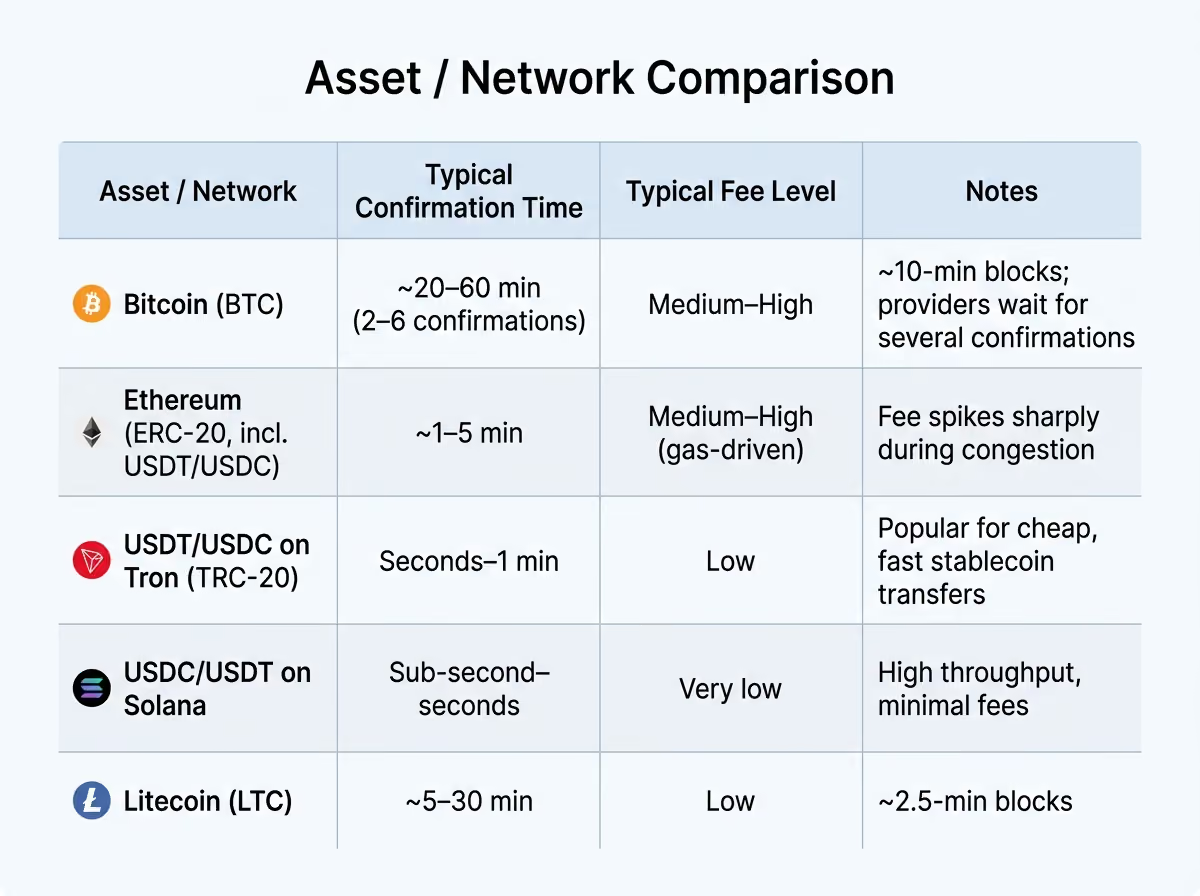
The practical takeaway: the asset and network you choose matter far more than the platform. Sending the same stablecoin over Tron instead of Ethereum can turn a multi-minute, higher-fee withdrawal into a near-instant, low-cost one.
What Affects Crypto Withdrawal Speed?
When a withdrawal takes longer than expected, the cause is almost always one of three things.
Network congestion and gas fees
Every blockchain has limited block space. When demand is high, transactions compete to get included, and those attaching higher fees are prioritized. On networks like Ethereum, a low fee during a busy period can leave your transaction pending for much longer. This is why the same crypto withdrawal can clear in seconds one day and crawl the next.
Exchange security holds and withdrawal limits
Providers routinely apply temporary holds to protect funds. Common triggers include:
- A recent password, 2FA, or device change — many platforms freeze withdrawals for 24–48 hours afterward.
- First-time withdrawals to a new address, which may need additional verification.
- Amounts that exceed your tier's withdrawal limit, forcing a manual review or a split across days.
These holds are deliberate friction, not network delays — and they are the most common reason a withdrawal "stalls" while the blockchain itself is idle.
AML/KYC compliance checks
Regulated platforms screen withdrawals against anti-money-laundering and sanctions rules. Most checks are automated and invisible, but a flagged transaction can be paused for manual review. Larger amounts, transfers to newly seen addresses, or activity that breaks your normal pattern are more likely to be queued for a compliance look before release.
Are Instant Crypto Withdrawals Real?
The term instant crypto withdrawal is mostly marketing shorthand, and it means one of two things:
- Genuinely fast settlement on a fast chain. On high-throughput networks like Solana, or stablecoins on Tron, an instant crypto withdrawal is effectively real — confirmation lands in seconds. There is no magic here; the network is simply fast and cheap.
- Internal "instant" transfers. Some platforms advertise instant withdrawals that are actually off-chain movements between accounts on the same provider. These clear immediately because nothing is broadcast to the blockchain at all — which is fast, but only works inside that provider's ecosystem.
So crypto instant withdrawal is achievable, but read the fine print. A true on-chain "instant" withdrawal depends on the network you select. No provider can make a congested Bitcoin or Ethereum transaction settle instantly without raising the fee.
Crypto Withdrawal Fees Explained
Speed and cost are linked: paying a higher fee can buy faster inclusion, while choosing the wrong network can cost you both time and money. Understanding crypto withdrawal fees helps you optimize for both.
Network fees vs platform fees
A withdrawal fee usually has two components:
- Network (miner/validator) fee — paid to the blockchain to process the transaction. This is dynamic and rises with congestion. It is unavoidable, though it varies enormously by chain.
- Platform fee — an additional charge some providers add on top of the network fee. This is set by the provider and may be flat or percentage-based.
When comparing a crypto withdrawal fee across providers, separate these two. A platform advertising "zero fees" may still pass through a high network fee, and vice versa.
How to reduce crypto withdrawal fees
You have more control over cost than most people assume:
- Choose the right network. Sending stablecoins over Tron or Solana instead of Ethereum is the single biggest lever for low fees.
- Avoid peak congestion. Fees on busy chains drop when network demand falls.
- Batch withdrawals. Consolidating several payouts into fewer transactions reduces total network fees — valuable for businesses running frequent transfers.
- Mind the minimums. Small, frequent withdrawals get eaten by fixed costs; fewer, larger ones are more efficient.
For a crypto cash withdrawal — converting to fiat and sending to a bank — expect an extra layer of timing. The on-chain step may be fast, but the fiat leg typically settles in 1–5 business days depending on the banking rails (SEPA, SWIFT, ACH).
How Businesses Handle High-Volume Crypto Withdrawals
For a business paying suppliers, contractors, or affiliates, withdrawal speed is an operational metric, not a curiosity. Manual, one-by-one withdrawals on a slow or expensive network do not scale.
The businesses that get this right standardize on a few principles:
- Default to fast, low-fee networks for routine payouts, reserving slower chains only when a counterparty specifically requires them.
- Batch and automate outgoing transactions through an API rather than processing them by hand.
- Build compliance into the flow so AML/KYC checks happen up front and don't stall releases later.
This is exactly the problem a dedicated payouts infrastructure solves. INXY's crypto payouts let businesses automate high-volume transfers across networks with predictable timing and fees, while exchange and conversion tools handle the asset and fiat legs. The result is withdrawal speed you can plan around instead of monitoring anxiously.
FAQ
How long do crypto withdrawals take? Most crypto withdrawals complete within a few minutes to an hour. Stablecoins on fast networks like Tron or Solana can settle in seconds, while Bitcoin withdrawals held for several confirmations typically take 30–60 minutes. Platform security holds can add more time independent of the network.
Why is my crypto withdrawal taking so long? The usual causes are network congestion, a provider security hold (often after a recent password or device change), an AML/KYC compliance review, or a low network fee that deprioritizes your transaction. The blockchain itself may be idle while a platform-side hold is the real delay.
What is the fastest crypto to withdraw? Stablecoins on high-throughput networks — such as USDT on Tron or USDC on Solana — are among the fastest and cheapest to withdraw, typically settling in seconds for a low fee.
Can I get instant crypto withdrawals? Yes, in two senses: genuinely fast on-chain settlement on networks like Solana or Tron, or off-chain "instant" transfers between accounts on the same platform. A truly instant crypto withdrawal on a congested network like Bitcoin or Ethereum, however, is not realistic without paying a premium fee.
What is a crypto withdrawal? A crypto withdrawal moves digital assets from an account to an external blockchain address you control. It is recorded on-chain and must be confirmed by the network, which distinguishes it from an instant internal transfer within a single platform.
Ready to move crypto on a timeline you can plan around? Explore INXY's crypto payout and exchange tools for fast, low-fee transfers at scale.