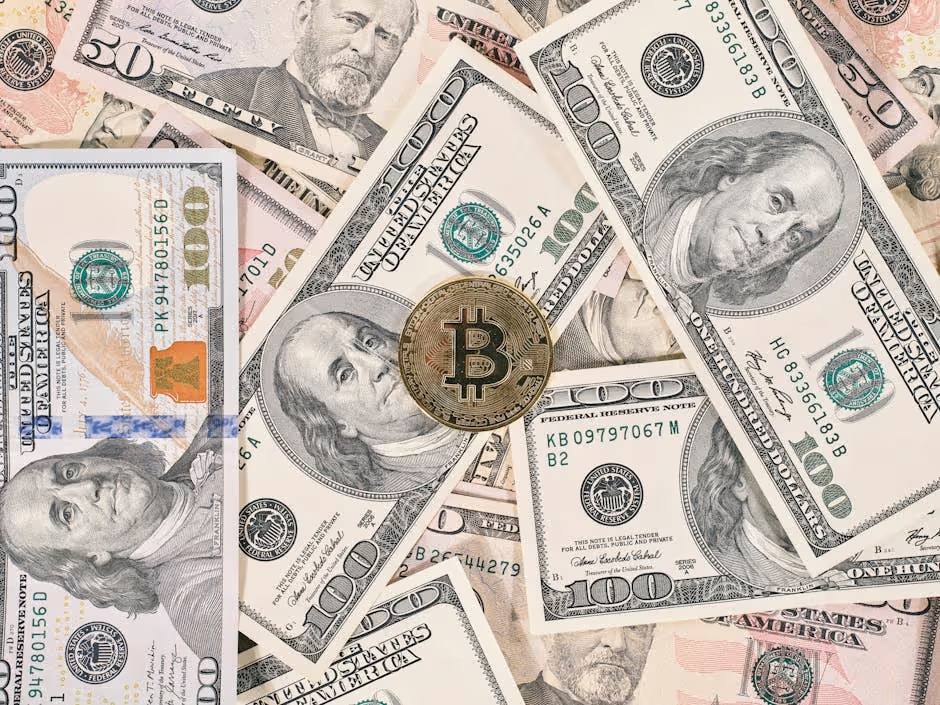
How to Integrate Crypto Payments into Your Business: A Practical Guide
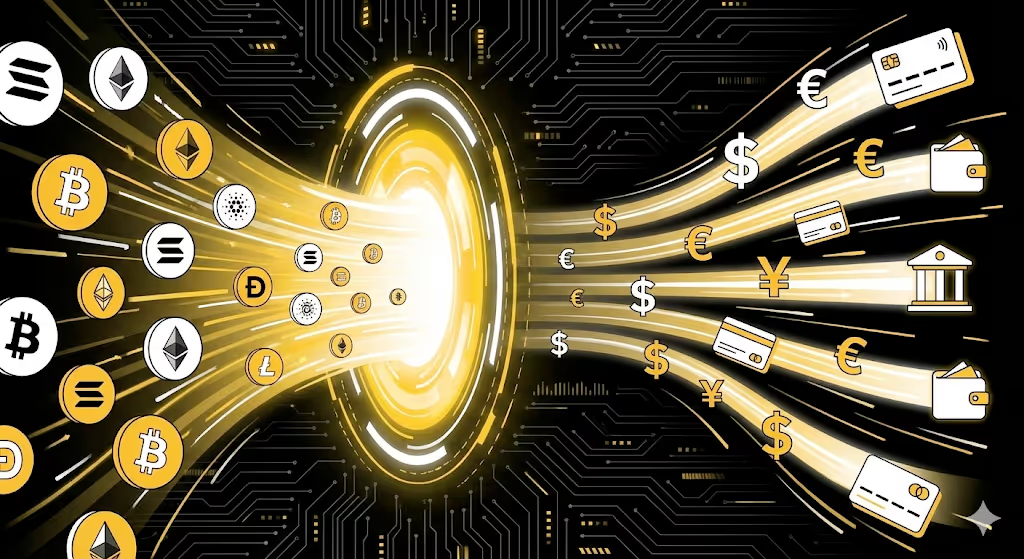
Adding a crypto payment gateway to your business can open new doors. It lets you accept crypto payments from customers worldwide, bringing faster transactions, lower fees, and no chargebacks. But it’s not as simple as flipping a switch. To truly make crypto work for your business, there’s a list of things you need to get right.
Adding a crypto payment gateway to your business can open new doors. It lets you accept crypto payments from customers worldwide, bringing faster transactions, lower fees, and no chargebacks. But it’s not as simple as flipping a switch. To truly make crypto work for your business, there’s a list of things you need to get right.
Set Up a Digital Wallet
A wallet is where digital assets are stored. For daily operations, software wallets can be enough. But for larger amounts, businesses usually choose hardware wallets for added security.
Choose and Integrate a Payment Solution
You'll need a payment gateway that supports digital currencies. This might be a plugin for your e-commerce platform or a custom API integration. The goal is to make payment easy for customers and seamless for your team.
Handle Pricing and Exchange Rates
Decide how to display prices-directly in digital currency or by converting from your local currency at the moment of purchase. Make sure exchange rates are transparent for your customers.
Manage Volatility
Digital currencies are known for price swings. Have a strategy for dealing with this, such as converting to stablecoins or fiat currency immediately after payment.
Monitor Transaction Fees
Network fees can change depending on demand. Regularly review these costs to ensure they remain acceptable for your business.
Stay Compliant
Digital payments are subject to different rules in different regions. Make sure you understand your obligations around KYC (Know Your Customer), AML (Anti-Money Laundering), and other regulatory requirements.
Educate Your Team
Everyone involved should know how the system works-especially your customer service team, who may need to help customers with payment questions.
Communicate with Customers
Let your customers know that you now accept digital payments. Add clear messaging across your website, marketing materials, and checkout flow.
Test Before Launching
Run test payments to ensure the process is smooth from start to finish. This helps catch any issues before customers experience them.
Strengthen Security
Security is a top priority. Use strong authentication, multi-signature wallets, and cold storage for long-term holdings. Keep your security protocols updated.
Set Up Accounting Processes
Track every transaction carefully. Many tax authorities require detailed reporting of digital currency transactions, and having a solid system in place is essential.
Prepare Customer Support
Expect questions and occasional payment issues. Make it easy for customers to contact you and resolve problems quickly.
Stay Informed
The digital payments landscape evolves rapidly. Keep an eye on regulatory changes, new technologies, and market trends to stay ahead.
Get Tax Advice
Digital currency can create tax liabilities. Consult a tax advisor who understands how digital payments are handled in your jurisdiction.
Review and Optimize
Regularly review how digital payments are working for your business. Gather customer feedback and monitor performance to make improvements as needed.
How INXY Payments Supports These Steps
At INXY Payments, we've built our platform to address all these challenges in one place. Our service is designed for businesses that want to add digital currency payments with minimal friction and maximum compliance. Here's how we help:
Auto-conversion: Incoming payments can be automatically converted to stablecoins or fiat currency to minimize volatility.
Full Compliance: Our platform is fully compliant with MiCA and other EU regulations, with built-in tools for KYC and AML checks.
Seamless Integration: Whether you use the API or our dashboard, setup is simple and fast.
No Wallet Management: You don't need to create and maintain wallets on different blockchains or hold extra coins to pay network fees-we handle that for you.
Custom Reports: We provide detailed, customized reports to simplify your accounting and tax filing.
Security First: Advanced security features protect your funds at every step.
Global Reach: We support payments worldwide and work across multiple industries.
Expert Support: Our team offers personalized onboarding and ongoing assistance, including tax consultations and compliance help.
Always Up-to-Date: We stay on top of blockchain updates and new infrastructure developments, so you don't have to worry about keeping up with tech changes.
Whether you want to accept bitcoin payments, send mass payouts in crypto, or add a seamless crypto billing option to your service, we've got you covered.
Crypto withdrawals in 2026 are faster, safer, and more user-friendly than ever, driven by instant fiat off-ramps, low commission fees, and reliable customer support. This article explores how modern exchanges, stablecoins, and regulatory standards are shaping seamless withdrawal experiences for users worldwide.
Crypto withdrawals have come a long way in a few years. In the early days, you might have waited hours or even days to move your crypto from an exchange to your wallet. The process often felt like watching paint dry, with delays due to network congestion and slow processing times.
Fast forward to today, and things have changed drastically. Exchanges have improved their systems, often offering near-instant withdrawals. This speed boost is thanks to advancements in blockchain technology and increased competition among exchanges. Everyone wants to offer the fastest service.
Let’s not forget the role of stablecoins like USDT and USDC. These digital currencies provide a stable value, making it easier to convert crypto to fiat. Users can quickly exchange cryptocurrency for stablecoins and then withdraw them to traditional bank accounts.
Regulatory licenses play a part, too. A licensed crypto exchange has better systems in place to ensure smooth transactions, giving users peace of mind. Plus, with customer support available 24/7, any hiccup can be resolved quickly, ensuring a seamless withdrawal process.
Finally, low commission fees have made it more attractive to withdraw funds frequently, encouraging more users to engage with the system. Crypto withdrawals today are faster, cheaper, and more reliable than ever before.
What to Look for in an Exchange
When choosing a crypto exchange, there are several key factors to consider. These can make your experience smoother and safer. Let's dive into what's important.
First, look for a regulatory license. This ensures the exchange follows rules and protects your funds. Exchanges with a license are generally more trustworthy and are less likely to face legal issues.
Next, consider customer support. Reliable exchanges offer 24/7 support. This is crucial if you need help at an odd hour or face an urgent issue. Quick assistance can save you time and stress.
Another factor is the variety of cryptocurrencies available. A good exchange offers many options, including popular stablecoins like USDT and USDC. This ensures you can trade or withdraw the currencies you need.
Low commission fees are also important. High fees can eat into your profits, so look for exchanges that offer competitive rates. This is especially vital if you trade frequently or make large withdrawals.
Withdrawal limits can vary widely between exchanges. Ensure the exchange you choose allows for the withdrawal amounts you require. Some exchanges might have low limits, which can be frustrating.
Finally, consider the user interface. A clear and easy-to-navigate platform can make trading and withdrawing much simpler. An intuitive design helps you avoid mistakes and saves you time.
Choosing the right exchange can make your crypto journey more enjoyable. By keeping these factors in mind, you can find an exchange that meets your needs and offers a smooth experience.
Top Exchanges for Fast Withdrawals in 2026
Finding the best exchanges for quick crypto withdrawals can save time and provide peace of mind. In 2026, a few standout platforms offer impressive speed and efficiency. Let's take a look at some of the top contenders.
One such exchange is Binance. Known for its robust features, it offers fast transaction speeds, making it a favorite among traders. With its low commission rates, users can withdraw crypto without breaking the bank. The exchange supports stablecoins like USDT and USDC, which are popular choices for those seeking stability.
Coinbase is another popular platform. It has a strong reputation for security and ease of use. The exchange provides a seamless withdrawal process, which is vital for those needing quick access to their funds. It's especially attractive to users who value customer support available 24/7.
Kraken also makes the list. It's well-regarded for its regulatory licenses and high trust level. The platform's withdrawal limits are flexible, catering to both casual users and high-volume traders. Kraken's user-friendly interface ensures that even beginners can manage their withdrawals with ease.
Each of these exchanges offers unique benefits, but all share a common goal: making crypto withdrawal as fast and straightforward as possible. By choosing the right platform, users can enjoy a smooth experience while managing their crypto assets.
Instant Fiat Off-Ramp Options
Navigating the crypto world can be tricky, especially when it comes to converting your digital coins into cash. This is where instant fiat off-ramp options come into play. These are services that let you switch your cryptocurrency to regular money like dollars or euros quickly and easily. Let’s break it down.
Imagine you've traded on a crypto exchange and now want your earnings in your bank account. Instant fiat off-ramps make this possible in a snap. They work by linking your crypto wallet to your bank account or card. Once connected, you can transfer funds swiftly and with minimal fuss.
Many exchanges offer this service, providing convenience for users. Some popular ones might include platforms that support stablecoins like USDT or USDC, known for their steady value. By using these stablecoins, you often enjoy lower fees and faster processing.
These off-ramps also come with various features. Some offer 24/7 customer support to help with any issues. Others have low commission rates, ensuring you keep more of your money. Keep an eye out for platforms with regulatory licenses for added security. This means they are approved by financial authorities and are safer to use.
In a nutshell, instant fiat off-ramps are a great option for those looking to access their money quickly. They simplify the process, making crypto withdrawals easier and faster than ever before.
Low Commission Fees Explained
Low commission fees are a key factor when choosing a crypto exchange for withdrawals. These fees are what the exchange charges you for using their service. They can vary widely between different platforms. Some exchanges might offer very low fees, while others could be more expensive.
When you withdraw your cryptocurrency, the commission fee is usually taken as a small percentage of the total amount you're moving. If you're new to this, think of it like a small toll you pay to use a road. The lower the toll, the cheaper your trip.
Let's take an example. Imagine you have 100 USDT and you want to withdraw it. If the exchange charges a 1% commission fee, you'd pay 1 USDT as the fee. This means you'd end up with 99 USDT after the withdrawal. In some cases, exchanges might have a fixed fee instead of a percentage.
It's important to check the fee structure before making a withdrawal. Some exchanges might look like they have low fees, but they could have hidden costs. Always read the fine print to avoid surprises. This way, you get to keep more of your money when withdrawing from your crypto exchange.
Stablecoins: A Safe Bet for Withdrawals
Stablecoins have become popular in recent years, especially for those looking to make crypto withdrawals. They provide stability in a market known for its wild swings. Unlike other cryptocurrencies, stablecoins are tied to a stable asset, like the US dollar. This link helps keep their value steady, making them a reliable option for users who want to avoid volatility.
There are many types of stablecoins, with USDT and USDC being among the most well-known. USDT, or Tether, is one of the first stablecoins and is widely used in exchanges. It's popular for its large market cap and liquidity. On the other hand, USDC is backed by actual US dollars held in reserve. This backing gives users confidence in its value, as it is regularly audited for transparency.
Using stablecoins for withdrawals can be a smart choice. Since they hold a stable value, you can withdraw your funds without worrying about losing money due to sudden price drops. Exchanges often support stablecoins, allowing easy conversion to fiat currency. This process is usually fast and can help users access their funds quickly.
Let me illustrate this with a simple example. If you have one Bitcoin and its value drops by $1,000 overnight, you lose $1,000 if you hold it. However, if you convert that Bitcoin to USDC before the drop, your value stays the same, protecting your investment. This security is why many users prefer stablecoins for withdrawals.
Stablecoins also often come with low transaction fees compared to other cryptocurrencies. This feature makes them appealing not just for withdrawals but for everyday transactions as well. They offer a cost-effective way to move money across borders, making them suitable for international users.
In the growing world of crypto exchanges, stablecoins provide an attractive solution for those looking to withdraw funds. Their stability, reliability, and low fees make them a go-to choice for many. As the crypto market evolves, stablecoins are likely to remain a key player in ensuring secure and efficient withdrawals.
Customer Support 24/7: Why It Matters
When you think about crypto exchanges, you might focus on fees or the variety of coins available. But there's another important aspect: customer support. Imagine trading in the middle of the night and facing a sudden problem. You don't want to wait for hours or even days to get help. That's where 24/7 customer support comes in.
Having access to assistance around the clock can make a big difference. Let's say you're trying to process a crypto withdrawal, but something goes wrong. Maybe the transaction is stuck, or you can't find your funds. With 24/7 support, you can get help immediately, no matter what time it is. This quick response can ease your stress and resolve issues faster.
Crypto trading doesn't follow a nine-to-five schedule. Markets are open 24 hours a day, seven days a week. So, it's only fair that support services match this availability. Whether you're in New York or Tokyo, or anywhere in between, having someone to turn to is crucial.
Now, you might wonder what makes good customer support. It's not just about being available. It's about having knowledgeable staff who understand crypto exchanges inside out. They should be able to guide you through complex processes, like how to exchange cryptocurrency or deal with withdrawal limits.
Good support teams also know how to help with regulatory license questions. This is important because crypto laws can vary widely between countries. You want someone who can explain these rules and help ensure you're compliant.
Then there's the matter of stablecoins like USDT and USDC. Sometimes, you might want to convert your crypto into these to avoid market volatility. If you're unsure how to do this, a good support team can walk you through it.
Lastly, let's talk about communication. A good support team will offer multiple contact methods. Whether you prefer email, chat, or phone, you should have options. This flexibility can make it easier to get the help you need.
In summary, 24/7 customer support is more than a convenience. It's a key part of a good crypto exchange experience. With it, you're not alone, no matter when you trade or where you are in the world. So, when choosing an exchange, consider how well they support their users. It might save you time and trouble later on.
FAQ
What are the key trends in crypto withdrawals in 2026?
In 2026, crypto withdrawals have evolved significantly with a focus on speed and convenience. Instant fiat off-ramps and low commission fees are prominent trends, driven by technological advancements and growing user demand for efficient transactions.
What factors should I consider when choosing a crypto exchange for withdrawals?
When selecting a crypto exchange, consider factors like withdrawal speed, limits, commission fees, security measures, and customer support availability. These elements can greatly impact your overall experience and costs.
Which exchanges are known for the fastest crypto withdrawals in 2026?
The top exchanges for fast withdrawals in 2026 include platforms that offer instant fiat off-ramps, low fees, and robust customer support. Specific names may vary, but look for exchanges with a reputation for speed and reliability.
Why are instant fiat off-ramps important for crypto withdrawals?
Instant fiat off-ramps allow users to quickly convert their crypto into fiat currency, enhancing the user experience by providing immediate access to funds. This feature is crucial for those who need fast liquidity.
How do low commission fees impact my crypto withdrawals?
Low commission fees reduce the overall cost of withdrawing crypto, making transactions more affordable. This is especially important for frequent traders or those dealing in large volumes, as it can lead to significant savings.
What role do stablecoins play in crypto withdrawals?
Stablecoins like USDT and USDC offer a stable value, making them a reliable option for quick and secure crypto withdrawals. They help mitigate volatility risks and facilitate smoother transactions.
Why is 24/7 customer support crucial for crypto exchanges?
24/7 customer support is vital as it ensures that users can resolve issues or get assistance at any time, enhancing trust and satisfaction. This can be particularly important during urgent transactions or when facing technical difficulties.
How to Integrate a Crypto Payment API: A Developer’s Guide for 2026
Integrating crypto payments is no longer just about generating a wallet address—it’s about building a robust, scalable financial pipeline. In this 2026 Developer’s Guide, we strip away the complexity of blockchain interactions and provide a clear roadmap for API integration.
How to Integrate a Crypto Payment API: A Developer’s Guide for 2026
In the fast-moving world of fintech, the question is no longer if a business should accept cryptocurrency, but how seamlessly it can be integrated. As we move through 2026, the European market has reached a point of high maturity. With the full enforcement of MiCA (Markets in Crypto-Assets) regulations, crypto payments have transitioned from a niche experiment to a standardized financial tool for EU-based enterprises.
For developers and product managers, integrating a crypto payment API is now as streamlined as traditional fiat gateways, provided you follow the right architectural patterns.
1. Understanding the 2026 Integration Workflow
Modern crypto integration follows a predictable RESTful pattern. Unlike the early days of manual wallet monitoring, today’s gateways handle the blockchain's complexity, allowing your backend to interact with simple JSON payloads.
The standard lifecycle of a crypto payment includes:
Initialization: Your server requests a unique payment address for a specific order.
Monitoring: The gateway monitors the blockchain (Bitcoin, Ethereum, Tron, etc.) for incoming transactions.
Confirmation: The gateway verifies the transaction depth (number of block confirmations).
Webhook Notification: Your system receives an asynchronous callback to update the order status.
2. Step-by-Step API Integration
Phase A: Environment Setup
Before hitting production, high-quality gateways provide a Sandbox environment. This allows you to simulate successful payments, timeouts, and underpayments without risking real capital. You’ll typically need two headers for every request:
X-API-KEY: Your unique identifier.
X-PAY-SIGNATURE: A HMAC-SHA512 hash to ensure data integrity.
Phase B: Creating the Payment
To start a checkout, your backend sends a POST request to the /invoices or /payments endpoint.
The gateway responds with a destination address and a QR code URL. In 2026, the best UX practice is to offer "Invisible Crypto"—where the user sees a familiar interface, and the gateway handles the real-time conversion behind the scenes.
Phase C: Handling the Webhook
This is the most critical part of the integration. Since blockchain transactions are asynchronous, your server must be ready to receive a POST callback.
Pro Tip: Always verify the webhook signature. Never update an order status based solely on the incoming payload without checking that the request actually originated from your provider.
3. Security and Compliance in the EU
In the 2026 fintech landscape, security isn't just about encryption; it's about regulatory alignment. Within the EU, businesses must ensure their payment partner adheres to Transfer of Funds Regulation (TFR) and AML (Anti-Money Laundering) standards.
When choosing a provider, look for features like:
Auto-Conversion: Instantly swapping volatile assets into stablecoins or EUR to protect your margins.
Audit-Ready Reporting: Financial statements that your accounting team can actually use for VAT and tax filings.
This is where specialized gateways like INXY (inxy.io) excel. Built specifically for the EU market, INXY acts as a regulated bridge. It doesn't just provide an API; it provides a compliant infrastructure that allows Web2 companies to scale into Web3 without the headache of managing private keys or worrying about crypto volatility. By integrating a solution like INXY, businesses can reduce processing fees by up to 70% compared to traditional card networks, while benefiting from instant SEPA settlements.
4. Testing and Optimization
Before going live, run "Chaos Tests" on your integration. What happens if a user sends too little? What if they pay after the 20-minute price-lock window? A robust API should provide clear error codes for these scenarios, allowing your frontend to guide the user toward a resolution—such as a partial refund or a top-up payment.
Conclusion
Integrating a crypto payment API in 2026 is a strategic move that opens your business to a global, tech-savvy audience. By utilizing professional gateways that handle the heavy lifting of compliance and conversion, your team can focus on what matters: the product.
Ready to modernize your payment stack? Would you like me to draft a technical checklist for your dev team to use during the INXY sandbox testing phase?
This article compares USDT and USDC in 2026 with a focus on safety, regulation, and profitability. It explains how both stablecoins work, their key differences in transparency and reserve backing, and where each is most useful. Special attention is given to EU regulations and how MiCA has reduced USDT’s availability on regulated European exchanges. The article also covers market trends, interest opportunities, and real-world use cases. Readers get a clear recommendation based on location, risk tolerance, and financial goals.
Stablecoins are a type of cryptocurrency designed to maintain a stable value, often pegged to a currency like the US dollar. This means they don't have the wild price swings of other cryptocurrencies. Imagine having a digital coin that's as steady as the dollar in your pocket. That's what stablecoins aim to do. They provide a bridge between traditional finance and the digital world.
Why are they important? Well, they enable crypto payments without the fear of losing value overnight. For instance, if you send USDT or USDC to someone, you can be sure it will hold its value. These coins are popular for trading and saving money in the crypto market. They make it easy to move money around, whether you're shopping online or investing in digital assets.
Understanding USDT
Let's explore USDT, a popular stablecoin in the crypto world. USDT, also known as Tether, is pegged to the US dollar. This means each USDT is meant to equal one US dollar. People use USDT to avoid the high volatility often seen with other cryptocurrencies.
You might wonder how it stays so stable. The idea is simple: Tether claims to have reserves in US dollars for every USDT issued. This backing provides trust and stability for users.
USDT is widely used for crypto payments. Imagine buying Bitcoin or Ethereum with USDT instead of traditional money. It's faster and often cheaper. It also allows users to move funds between exchanges without converting to fiat money.
Understanding USDC
USDC, or USD Coin, is a type of digital currency known as a stablecoin. This means it is designed to have a stable value, unlike other cryptocurrencies that can be very volatile. USDC aims to maintain a 1:1 value with the US dollar, making it a popular choice for those looking to avoid the wild swings typical in the crypto world.
One key feature of USDC is its transparency. The company behind USDC, Circle, regularly shares reports on the reserves that back each coin. This helps build trust with users who want assurance that each USDC is truly backed by a dollar.
USDC is also built on the Ethereum blockchain, which means it can be used in various applications, from trading to paying for goods and services. This flexibility makes USDC useful for many crypto payment scenarios.
For example, if you want to send money to a friend in another country, you can use USDC to do this quickly and without high fees. This is one reason why many people consider USDC a reliable option in the stablecoin market.
By offering a stable value, transparency, and flexibility, USDC provides a practical choice for both beginners and seasoned crypto users.
Safety Considerations
When it comes to stablecoins, safety is a top priority. After all, no one wants to lose money because of a hack or technical glitch. So, how do USDT and USDC stack up in terms of safety? Let's break it down.
USDT, also known as Tether, has been around for a while. It's popular and widely used. However, it's faced some scrutiny over the years. There have been questions about its transparency and if it truly has enough reserves to back all the Tethers in circulation. These concerns can make people feel a bit uneasy.
On the other hand, USDC, which stands for USD Coin, is seen as more transparent. It's managed by a consortium called CENTRE, which includes big names like Coinbase and Circle. USDC regularly undergoes audits to prove its reserves, giving users more confidence.
Both stablecoins use blockchain technology to secure transactions. This technology is known for being secure and reliable. But, like anything digital, there are risks. Hackers are always looking for ways to exploit weaknesses. That's why it's crucial to use secure wallets and platforms to store your stablecoins.
In terms of regulation, USDC tends to be more compliant. It follows strict rules and guidelines to ensure its stability and safety. This can be reassuring for users who worry about legal issues.
So, when choosing between USDT and USDC, consider what matters most to you. Is it transparency, regulation, or something else? Each stablecoin has its strengths and weaknesses, so weigh them carefully.
The European Ban: A Major Setback for USDT in the EU
A significant recent development that cannot be ignored is the effective delisting of USDT on major cryptocurrency exchanges within the European Union. This move is a direct result of the EU's Markets in Crypto-Assets (MiCA) regulations.
What does this mean in practice?
While it's not illegal for individuals to hold or peer-to-peer trade USDT, regulated exchanges like Binance, Kraken, and others have suspended the trading of USDT for EU residents.
You can no longer easily exchange USDT for Euros or other cryptocurrencies on these mainstream platforms within the EU.
Why did this happen? The MiCA framework imposes strict requirements on stablecoin issuers, particularly concerning transparency and reserve backing. As reported by industry analysts, Tether's structure and level of transparency have so far not met the regulatory standards set by MiCA, leading to its removal from the regulated market.
What is the alternative for European users? This regulatory shift massively boosts the position of USDC. As a fully compliant and transparent stablecoin, USD Coin has become the dominant, regulated stablecoin of choice within the European single market. For EU-based traders and businesses, USDC is now the most liquid and accessible dollar-pegged stablecoin.
Profitability Analysis
When considering the profitability of USDT and USDC in 2026, it helps to look at their roles in the crypto market. Both stablecoins aim to provide stability, pegged to the US dollar. But how can one be more profitable than the other?
USDT, or Tether, is well-known for its liquidity. It's often used in trading because it's widely accepted on many crypto exchanges. This means more traders use USDT for quick exchanges between different cryptocurrencies. This high demand can sometimes lead to small profits from price fluctuations, even though it's a stablecoin.
Let's talk about USDC. It's issued by Circle and Coinbase, and it has a reputation for transparency. This trust can boost its utility. More businesses are open to accepting USDC for payments, which might make it more profitable for merchants and service providers. They can avoid the volatility of other cryptos while still enjoying the benefits of digital currency.
Now, consider the interest earnings. Some platforms offer interest on stablecoins. This is where the profitability can differ. USDC is often preferred for earning interest due to its transparency and backing. Users might find better interest rates on platforms that trust USDC's reserves.
In essence, USDT and USDC can both be profitable, but it depends on how they're used. For traders, USDT might offer quick gains. For those seeking interest or business utility, USDC could be the better choice. Understanding these nuances helps in deciding which stablecoin to use for different financial strategies.
Market Trends for 2026
The world of stablecoins like USDT and USDC is buzzing with changes as we look ahead to 2026. Crypto payment options are becoming more mainstream, and both USDT and USDC are riding this wave. But what can we expect in the next few years? Let's explore.
One of the big trends is the increasing use of stablecoins in everyday transactions. More people are using them to pay for goods and services. This is partly because stablecoins are pegged to the US dollar, making them less volatile than other cryptocurrencies. Businesses are also warming up to accepting stablecoins, which is good news for both USDT and USDC.
Another trend is the growing focus on regulation. Governments around the world are looking more closely at stablecoins. They want to ensure these digital currencies are safe and reliable. Regulations can affect how stablecoins are used and can impact their value. This means USDT and USDC might need to adapt to new rules to remain competitive.
In 2026, we might see more partnerships between stablecoin issuers and financial institutions. These partnerships aim to enhance trust and provide more services to users. Imagine being able to transfer your USDC from your crypto wallet directly to your bank account with ease. Such collaborations could make stablecoins more appealing and accessible.
Technology is another area where we see changes. Blockchain technology is evolving, and so is how stablecoins operate. Faster transaction times and lower fees could be possible. This would make using stablecoins more attractive to both businesses and individuals.
Environmental concerns are affecting the crypto world, and stablecoins are no exception. The energy consumption of blockchain networks is a hot topic. Both USDT and USDC issuers are looking for ways to reduce their environmental impact. This could involve adopting more energy-efficient technologies or supporting eco-friendly initiatives.
The competition between USDT and USDC is also something to watch. Each has its strengths and challenges. USDT is widely used, but USDC is praised for transparency. The balance between these factors could shift as the market evolves.
A key trend shaping the 2026 landscape is regulatory fragmentation. The EU's MiCA regulations have already created a clear divergence, with compliant stablecoins like USDC gaining official status while others, like USDT, are being pushed to the sidelines of the regulated market. This sets a precedent that other jurisdictions may follow, making regulatory compliance a primary factor for stablecoin survival and adoption.
Finally, the role of stablecoins in the global economy is expanding. They are becoming a bridge between traditional finance and the digital world. As more people globally gain access to the internet, stablecoins like USDT and USDC could play a crucial role in financial inclusion. This would allow more people to participate in the global economy without needing a traditional bank account.
These trends paint a dynamic picture for 2026. The stablecoin landscape is changing, and both USDT and USDC are at the heart of these changes. As we move forward, these developments can impact how we use and view stablecoins in our daily lives.
Conclusion: Which Is Better?
When it comes to choosing between USDT and USDC in 2026, the landscape has shifted significantly, especially for users in key markets like Europe.
USDT remains a giant in terms of global liquidity and is widely used for trading on international exchanges outside the EU. However, its lack of regulatory compliance in Europe is a major drawback. If you are based in the EU or plan to interact with the European market, USDT's utility is now severely limited.
USDC, on the other hand, is stronger than ever. Its commitment to transparency and regulatory compliance has positioned it as the premier stablecoin within the European Union and a trusted choice globally. If you value safety, future-proofing your assets, and seamless access to regulated exchanges, USDC is the clear winner.
The Verdict:
For traders outside the EU who prioritize deep liquidity on international platforms, USDT is still a tool, but one carrying higher regulatory risk.
For virtually everyone else, especially EU residents and those valuing long-term stability,USDC is the superior and safer choice for 2026. The European ban on USDT trading is a powerful indicator of where the market is heading: towards a regulated environment where transparency is paramount
FAQ
What are stablecoins and why are they important in the crypto market?
Stablecoins are a type of cryptocurrency designed to maintain a stable value, often pegged to a fiat currency like the US dollar. They are important because they provide a way for investors to mitigate volatility while still participating in the crypto market.
How does USDT differ from other stablecoins?
USDT, or Tether, was one of the first stablecoins and is widely used for trading and transactions. It is backed by reserves that include cash and other assets, although there has been controversy over its transparency and auditing practices.
Is USDT banned in the European Union?
No, USDT itself is not outright banned for individuals to hold. However, due to the EU's MiCA regulations, regulated cryptocurrency exchanges within the EU have suspended trading pairs for USDT. This means you cannot easily buy, sell, or trade USDT for other cryptocurrencies or euros on major licensed platforms like Binance, Kraken, etc., if you are an EU resident.
Can I still use USDT for business if I'm based in Europe?
This is a complex area. While holding might be permissible for individuals, using USDT for business operations—such as accepting it as payment from customers or using it for treasury management—carries significant regulatory risks under MiCA. The legal landscape is stringent, and non-compliance can lead to severe penalties.
What makes USDC a strong contender in the stablecoin market?
USDC, or USD Coin, is known for its transparency and regulatory compliance. It is fully backed by US dollars held in reserve and regularly audited, which enhances its credibility among investors seeking a reliable stablecoin.
What are the key safety considerations when choosing between USDT and USDC?
When evaluating safety, consider factors like regulatory compliance, audit transparency, and the backing of reserves. USDC is generally viewed as more transparent and compliant, whereas USDT has faced scrutiny over its reserve disclosures.
How does the profitability of USDT compare to USDC?
Profitability can be assessed through interest rates and yield opportunities. Both USDT and USDC offer interest through various platforms, but the rates can vary. It's important to compare the options available and consider your risk tolerance.
What market trends should investors watch for USDT and USDC in 2026?
In 2026, investors should watch for trends in adoption rates, regulatory changes, and technological advancements. Both USDT and USDC may see shifts in usage patterns as the cryptocurrency market evolves and matures.
Which stablecoin is likely to be the better choice in 2026: USDT or USDC?
The choice between USDT and USDC depends on your priorities. If transparency and regulatory compliance are paramount, USDC may be preferable. However, if market liquidity and usage are more critical, USDT could be more advantageous. Consider your investment goals carefully.







.avif)