Gemini said Here is a concise blog summary optimized for readability and engagement, designed to pull readers into the full guide.
Blog Summary: Integrating Crypto via INXY for WHMCS In 2026, cryptocurrency has moved beyond speculation to become a primary "production" currency for global digital services. For hosting providers and agencies using WHMCS, the shift toward stablecoins—the "Internet’s dollar"—is a critical competitive advantage. This guide explores how to integrate the INXY Payment Gateway, a robust solution designed to bridge the gap between traditional billing and the modern crypto economy.
In 2026, the fintech landscape is shifting from speculation to production. For hosting providers, VPN services, and digital agencies using WHMCS, the question is no longer if you should accept cryptocurrency, but how efficiently you can do it. With stablecoins becoming the "Internet’s dollar" for cross-border flows, integrating a robust payment gateway is essential for maintaining a competitive edge in the EU and global markets.
One of the most seamless ways to bridge the gap between traditional billing and the crypto economy is through the INXY Payment Gateway. This guide provides a detailed walkthrough for setting up the INXY module on your WHMCS platform.
1. Why Crypto for WHMCS in 2026?
Integrating crypto payments into your billing system offers several strategic advantages:
Lower Fees: Traditional processors often charge 2–4% for international payments, while gateways like INXY provide more cost-effective alternatives.
Chargeback Protection: Blockchain transactions are immutable; once confirmed, they cannot be reversed by the sender, eliminating the administrative burden of fraudulent chargebacks.
Global Reach: Crypto allows you to accept payments from customers in regions with restrictive banking or unstable local currencies without multi-day delays.
2. System Requirements
Before installation, ensure your environment meets the following criteria for the INXY module (Version 1.0.3):
Location: Go to Merchant settings → API in the INXY dashboard and paste the URL.
5. Advanced Matching and Underpayment Rules
Crypto transactions can sometimes result in minor amount differences due to network fees. INXY handles this through the config.php file:
Amount Deviation: By default, the module accepts payments within 1% of the requested amount. For WHMCS, it is recommended to set 'amount_deviation_percentage' = 49 to reduce unnecessary top-up attempts and align with WHMCS's partial payment flow.
Time Window: Payments must arrive within 2 hours in production (30 minutes in Sandbox) to be automatically matched.
6. Summary of Payment Outcomes
Status
Customer Experience
WHMCS Admin Status
Paid in Full
Invoice shows "Paid".
Order marked as paid.
Overpaid
Extra amount added as credit.
Visible credit in account.
Partially Paid
"Awaiting payment" status.
Balance reduced by amount received.
Expired
"Expired" status on page.
Order remains unpaid.
By implementing INXY, you provide your users with a modern, 24/7 payment rail that settles in seconds, ensuring your hosting or digital business stays ahead of the curve in 2026.
Would you like me to draft a series of social media posts to announce your new crypto payment options to your customers?
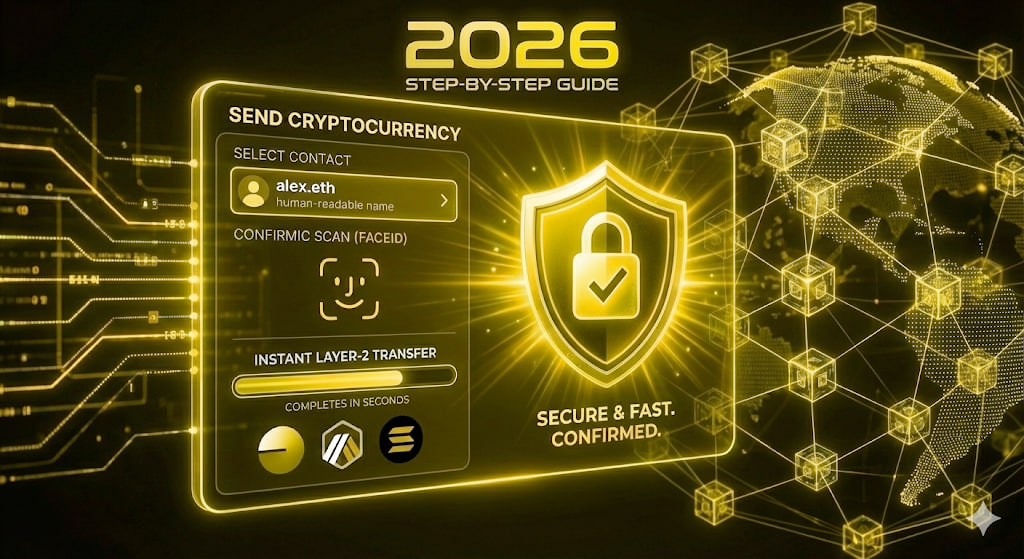
Sending crypto in 2026 is faster and more accessible thanks to improved wallets, lower network fees, and advanced blockchain technologies. This step-by-step guide explains how to send BTC, USDT, USDC, and ETH securely, compare transaction fees, track transfers, and stay ahead of future crypto transaction trends.
Cryptocurrency might sound complicated, but it's quite straightforward once you get the hang of it. At its core, cryptocurrency is a type of digital money. Unlike traditional currencies like the dollar or euro, crypto doesn't rely on banks. Instead, it uses technology called blockchain to keep track of transactions. This technology is like a digital ledger that records every transaction made.
Bitcoin is the most famous cryptocurrency, but there are many others like Ethereum, USDT, and USDC. Each has its own features and uses. For instance, Bitcoin is often used as a store of value, like gold. Ethereum, on the other hand, is known for its smart contracts. These are like self-executing contracts with the terms directly written into code.
Sending crypto involves creating a digital wallet. This wallet is a bit like a bank account but only for digital currencies. To send crypto, you need the recipient's wallet address. It's important to double-check this address because once you send crypto, you can't get it back if the address is wrong. Crypto transactions are generally fast and can be cheaper than traditional money transfers.
Choosing the Right Crypto Payment Platform
When it comes to sending crypto, picking the right payment platform is crucial. The options have expanded greatly by 2026, offering more choices than ever. But with choice comes the challenge of finding the best fit for your needs. Let's break down what to look for in a crypto payment platform.
First, consider the transaction fees. Different platforms charge varying fees for sending crypto. Some offer lower fees for particular cryptocurrencies like BTC, USDT, USDC, or ETH. It's smart to compare these fees as they can affect the overall cost of your transactions. A platform with lower fees can save you money in the long run.
Next, think about ease of use. Not all platforms are user-friendly. If you're new to crypto, look for a platform that offers a straightforward interface. Tutorials and customer support can also be a big help. A good platform should make the process of sending crypto as simple as possible.
Security is another key factor. You need a platform that keeps your funds safe. Look for platforms with strong security measures, such as two-factor authentication and encryption. You want assurance that your crypto won't fall into the wrong hands.
Consider the platform's reputation and reviews. A platform with positive reviews from other users can be a good sign. Check forums and social media for feedback. Sometimes, the experiences of others can guide you toward the right choice.
Finally, look at the supported cryptocurrencies. If you plan to send BTC, USDT, USDC, or ETH, make sure the platform supports these. Some platforms offer a wider range of cryptocurrencies, which can be useful if you plan to diversify your holdings.
In essence, selecting the right crypto payment platform involves balancing fees, usability, security, reputation, and currency support. By focusing on these aspects, you'll be well on your way to finding a platform that suits your needs.
Setting Up Your Crypto Wallet (ссылка на блог)
Setting up a crypto wallet is a crucial step in sending crypto. It's like having a digital bank account where you store your cryptocurrencies. Let's break down the process into simple steps.
First, you'll need to choose the type of wallet. There are several options like hardware wallets, mobile wallets, and desktop wallets. Each has its own benefits. For instance, hardware wallets are secure because they store your crypto offline. Mobile wallets are convenient for everyday use.
Once you've picked a wallet type, it's time to download or purchase it. If you're going for a software wallet, visit the official website or app store to download it. Be cautious of fake sites and apps. For hardware wallets, buy from a trusted source to avoid counterfeit products.
After installing your wallet, you'll need to create an account. During this step, you'll set up a strong password. This is vital for your wallet's security. You might also be required to set up two-factor authentication for an extra layer of protection.
You'll then receive a recovery phrase. This is a set of words you'll need if you ever lose access to your wallet. Write it down and store it somewhere safe. Never share this phrase with anyone.
Finally, add some crypto to your wallet. You can do this by purchasing crypto from an exchange or receiving it from someone else. Make sure to double-check wallet addresses when sending or receiving crypto to avoid mistakes. With these steps, you're ready to manage your crypto securely.
How to Send BTC, USDT, USDC, and ETH
Sending crypto can seem tricky, but it's quite simple once you get the hang of it. Let's break it down. First, you need a wallet. There are many options, like hardware wallets, mobile apps, or online platforms. Choose one that fits your needs and create an account.
When you're ready to send crypto, you'll need the recipient's wallet address. It's a long string of letters and numbers, so double-check it to avoid mistakes. For example, if you're sending Bitcoin (BTC), make sure the address is a BTC address. Sending crypto to the wrong type of address can result in a loss.
Next, enter the amount you want to send. Most platforms let you choose how much you want to pay in fees. Lower fees mean slower transactions, while paying more can speed things up. It's a balance between cost and time.
Once everything looks good, confirm the transaction. Some platforms may ask for additional verification, like a code sent to your phone or email. This step helps keep your crypto safe. After confirmation, the transaction is processed. Depending on the network, it can take a few minutes to complete.
Keeping track of the transaction is easy. You can use a blockchain explorer to see its status. Just enter your transaction ID or wallet address to follow its progress.
Comparing Transaction Fees
When sending crypto, transaction fees can vary greatly depending on the network you choose. Let’s break this down with a few clear examples.
Imagine you’re sending Bitcoin (BTC). The Bitcoin network can have relatively high fees, especially during periods of high demand. This often makes small transactions less cost-effective.
Now consider Ethereum (ETH). Ethereum transaction fees, known as gas fees, fluctuate depending on network congestion. During peak activity—such as popular NFT launches or intense DeFi usage—these fees can increase significantly.
The same principle applies to stablecoins like USDT and USDC. While their value remains stable, transaction fees depend entirely on the blockchain network used. An important detail to keep in mind is that gas fees are always paid in the native token of the blockchain, not in the stablecoin itself.
For example, if you send USDT on the Ethereum network (ERC-20), you must have enough ETH in your wallet to cover the gas fee. Similarly, when sending USDT on the Tron network (TRC-20), you need to hold TRX in addition to USDT. Without the native token on your balance, the transaction cannot be processed.
This is why networks like Tron are often chosen for USDT transfers—fees there are usually much lower. However, it’s essential to monitor your balance of native coins (ETH, TRX, etc.) to avoid failed transactions.
When choosing how to send crypto, always compare current network fees and make sure you have enough of the required native token. This approach helps keep your transactions smooth, predictable, and cost-effective.
Tracking Your Crypto Transactions
Keeping tabs on your crypto transactions can seem like a puzzle at first. Yet, with a few simple steps, it can become second nature. When you send crypto, each transaction gets recorded on a public ledger called a blockchain. This ledger is like a big book that everyone can see but no one can change. It helps ensure transparency and security.
To start tracking, you'll need a wallet. This is like your digital pocket for holding cryptocurrencies. Each wallet has a unique address, much like your house address, but for crypto. When you send crypto, it gets recorded with this address. Many wallets offer features allowing you to see your full transaction history. This is handy for checking past transfers or seeing who you've sent crypto to.
For those who like visuals, some platforms provide charts and graphs that show your transaction activity over time. These can help you spot patterns or unusual activity. If you're using a crypto payment platform, they might offer additional tools for managing and viewing your transactions. Some even offer alerts to notify you of any new activity, ensuring you're always in the loop.
If you're dealing with several types of crypto like BTC, USDT, USDC, or ETH, separate wallets might be needed. This keeps things organized and prevents confusion. For those wanting to dive deeper, blockchain explorers are available. These are online tools that let you search a transaction by entering your wallet address. They offer detailed info, such as transaction status and fees paid.
Tracking your crypto transactions isn't just about staying organized. It's a way to protect your crypto and understand your spending habits. With these tools, you can manage your crypto finances in a smart and secure way.
Future Trends in Crypto Transactions
The world of cryptocurrency is always on the move. As we look to 2026, several exciting trends are shaping how people send crypto. These changes are not just about technology but also about how we use crypto in everyday life.
One major trend is the rise of decentralized finance, or DeFi. DeFi platforms allow users to conduct financial transactions without a central authority, like a bank. This means lower fees and more control over your money when you send crypto. DeFi is growing fast, and more people are using it for everything from loans to savings accounts.
Another trend to watch is the integration of crypto into traditional financial systems. More banks and financial institutions are starting to accept and use cryptocurrencies. This means you might soon be able to send crypto directly from your bank account. It's a big step towards making crypto a part of everyday financial activities.
In addition to these changes, there is also a focus on improving the speed and efficiency of crypto transactions. Technologies like the Lightning Network for Bitcoin and Ethereum 2.0 are being developed to make transactions faster and cheaper. This could make sending crypto as quick and easy as sending a text message.
Security is another important area of development. As more people use crypto, the need for secure transactions becomes even more critical. New security measures, such as multi-signature wallets and advanced encryption techniques, are being introduced. These tools help protect users' funds and personal information.
Moreover, the use of stablecoins like USDT and USDC is growing. These are cryptocurrencies pegged to stable assets like the US dollar. They offer the benefits of digital currencies without the volatility. This makes them an attractive option for people looking to send crypto with minimal risk.
Lastly, there is an increasing focus on regulation. Governments around the world are working on new laws to govern cryptocurrency use. While some fear that regulation could stifle innovation, it could also make crypto more reliable and accessible to everyone.
As we move forward, these trends will shape the future of crypto transactions. Whether you're a seasoned investor or a newcomer, keeping an eye on these developments can help you make informed decisions about how to send crypto. The landscape is evolving, and with it, new opportunities are emerging for everyone.
FAQ
What is cryptocurrency and why are BTC, USDT, USDC, and ETH commonly used for sending?
Cryptocurrency is a digital or virtual form of currency that uses cryptography for security. BTC (Bitcoin), USDT (Tether), USDC (USD Coin), and ETH (Ethereum) are commonly used due to their widespread acceptance, liquidity, and relatively stable values, making them ideal for transactions.
How do I choose the right crypto payment platform for sending crypto with low fees?
When selecting a crypto payment platform, consider factors such as transaction fees, user interface, security features, and supported cryptocurrencies. Platforms like Binance, Coinbase, and Kraken are popular due to their competitive fees and reliability.
What steps are involved in setting up a secure crypto wallet?
To set up a secure crypto wallet, first choose between a hardware wallet (for maximum security) or a software wallet (for convenience). Download the wallet app or set up the hardware device, create a strong password, and ensure you have a backup of your recovery phrase.
Can you provide a step-by-step guide on sending BTC, USDT, USDC, and ETH?
Open your crypto wallet and select the cryptocurrency you wish to send.
Enter the recipient's wallet address.
Specify the amount to send.
Review the transaction details, including network fees.
Confirm and authorize the transaction.
Wait for transaction confirmation on the blockchain.
How can I compare transaction fees across different networks and platforms?
To compare transaction fees, research and compare the fee structures of each platform, focusing on network fees, withdrawal fees, and any additional service charges. Tools like CoinGecko and CoinMarketCap provide up-to-date fee comparisons.
What methods are available for tracking my crypto transactions?
You can track your crypto transactions using blockchain explorers such as Etherscan for ETH and its tokens or Blockchain.com for BTC. These tools allow you to enter the transaction ID to view the status and confirmations.
What future trends can we expect in crypto transactions by 2026?
By 2026, expect increased adoption of Layer 2 solutions for faster and cheaper transactions, greater integration of AI for improved fraud detection, and wider acceptance of crypto payments in mainstream finance, enhancing user experience and security.
How to Integrate Crypto Payments into Your Business: A Practical Guide
Adding a crypto payment gateway to your business can open new doors. It lets you accept crypto payments from customers worldwide, bringing faster transactions, lower fees, and no chargebacks. But it’s not as simple as flipping a switch. To truly make crypto work for your business, there’s a list of things you need to get right.
5 min read
2.5.2025
Adding a crypto payment gateway to your business can open new doors. It lets you accept crypto payments from customers worldwide, bringing faster transactions, lower fees, and no chargebacks. But it’s not as simple as flipping a switch. To truly make crypto work for your business, there’s a list of things you need to get right.
Set Up a Digital Wallet
A wallet is where digital assets are stored. For daily operations, software wallets can be enough. But for larger amounts, businesses usually choose hardware wallets for added security.
Choose and Integrate a Payment Solution
You'll need a payment gateway that supports digital currencies. This might be a plugin for your e-commerce platform or a custom API integration. The goal is to make payment easy for customers and seamless for your team.
Handle Pricing and Exchange Rates
Decide how to display prices-directly in digital currency or by converting from your local currency at the moment of purchase. Make sure exchange rates are transparent for your customers.
Manage Volatility
Digital currencies are known for price swings. Have a strategy for dealing with this, such as converting to stablecoins or fiat currency immediately after payment.
Monitor Transaction Fees
Network fees can change depending on demand. Regularly review these costs to ensure they remain acceptable for your business.
Stay Compliant
Digital payments are subject to different rules in different regions. Make sure you understand your obligations around KYC (Know Your Customer), AML (Anti-Money Laundering), and other regulatory requirements.
Educate Your Team
Everyone involved should know how the system works-especially your customer service team, who may need to help customers with payment questions.
Communicate with Customers
Let your customers know that you now accept digital payments. Add clear messaging across your website, marketing materials, and checkout flow.
Test Before Launching
Run test payments to ensure the process is smooth from start to finish. This helps catch any issues before customers experience them.
Strengthen Security
Security is a top priority. Use strong authentication, multi-signature wallets, and cold storage for long-term holdings. Keep your security protocols updated.
Set Up Accounting Processes
Track every transaction carefully. Many tax authorities require detailed reporting of digital currency transactions, and having a solid system in place is essential.
Prepare Customer Support
Expect questions and occasional payment issues. Make it easy for customers to contact you and resolve problems quickly.
Stay Informed
The digital payments landscape evolves rapidly. Keep an eye on regulatory changes, new technologies, and market trends to stay ahead.
Get Tax Advice
Digital currency can create tax liabilities. Consult a tax advisor who understands how digital payments are handled in your jurisdiction.
Review and Optimize
Regularly review how digital payments are working for your business. Gather customer feedback and monitor performance to make improvements as needed.
How INXY Payments Supports These Steps
At INXY Payments, we've built our platform to address all these challenges in one place. Our service is designed for businesses that want to add digital currency payments with minimal friction and maximum compliance. Here's how we help:
Auto-conversion: Incoming payments can be automatically converted to stablecoins or fiat currency to minimize volatility.
Full Compliance: Our platform is fully compliant with MiCA and other EU regulations, with built-in tools for KYC and AML checks.
Seamless Integration: Whether you use the API or our dashboard, setup is simple and fast.
No Wallet Management: You don't need to create and maintain wallets on different blockchains or hold extra coins to pay network fees-we handle that for you.
Custom Reports: We provide detailed, customized reports to simplify your accounting and tax filing.
Security First: Advanced security features protect your funds at every step.
Global Reach: We support payments worldwide and work across multiple industries.
Expert Support: Our team offers personalized onboarding and ongoing assistance, including tax consultations and compliance help.
Always Up-to-Date: We stay on top of blockchain updates and new infrastructure developments, so you don't have to worry about keeping up with tech changes.
Whether you want to accept bitcoin payments, send mass payouts in crypto, or add a seamless crypto billing option to your service, we've got you covered.
Choosing the best crypto exchange in 2026 depends on fees, transaction speed, security, and overall user experience. This guide compares leading crypto exchanges, highlights platforms with low fees and fast performance, and explains what to look for to trade safely and efficiently in a rapidly evolving market.
Crypto exchanges are platforms where you can buy, sell, or trade cryptocurrencies. Imagine them like a stock market but for digital coins. They let you swap your Bitcoin for Ethereum or convert your dollars into a stablecoin.
These exchanges come in two main types: centralized and decentralized. Centralized ones, like Binance, have a company behind them that manages everything. They often offer better security and customer service. Decentralized exchanges, or DEXs, let you trade directly with others, giving you more control over your assets.
When choosing an exchange, look for low commission fees and fast transaction speed. Some platforms set withdrawal limits, so check those if you plan on moving large amounts. Mass payouts are a feature to seek if you need to distribute funds to many users. Each exchange has its pros and cons, so consider what's important to you before diving in.
Criteria for Selection
Choosing the best crypto exchange in 2026 isn't a walk in the park. It's all about weighing different aspects. First, let's talk about fees. Lower fees mean you keep more of your money. Some exchanges offer low commission rates, making them attractive to traders who buy and sell often.
Next up is transaction speed. Fast transaction times allow you to buy or sell quickly, which is crucial in the fast-moving world of crypto. Nobody wants to wait around while prices are changing.
Security is a big deal too. With the rise in cyber threats, knowing your money is safe is essential. Exchanges that invest in top-notch security measures, like two-factor authentication and cold storage, stand out.
Consider withdrawal limits as well. High limits mean you can access your funds whenever you want. It's important for those who deal with large amounts of cryptocurrency.
Mass payouts are another factor. If you're involved in crypto mining or other activities that require frequent payouts, you'll want an exchange that handles mass payouts efficiently.
Stablecoin availability is something to think about. Exchanges that support various stablecoins can provide more options for trading or holding value.
Each of these criteria plays a role in finding the best exchange. Balancing them based on your needs will help you make the right choice.
Top Crypto Exchanges for Low Fees
When it comes to buying and selling crypto, fees can really add up. That's why it's key to choose a cryptocurrency exchange that offers low fees. Some exchanges charge a flat fee for every trade, while others use a percentage of the trade amount. For instance, if you trade a large amount, a percentage fee might cost you more.
Binance and Kraken are often praised for their low fees. Binance, for example, charges a very small percentage for each trade. This can save you a lot over time, especially if you're trading frequently. Kraken also offers competitive fees, making it a favorite for many traders.
Another option to consider is using a stablecoin. Some exchanges offer discounts or lower fees when you trade with stablecoins. This can be a smart way to keep costs down. It's important to check each exchange's fee schedule before you start trading. This way, you won't get any nasty surprises down the road. Choosing the right exchange can help you maximize your investment without losing too much to fees.
Fastest Crypto Exchanges
When you're dealing with cryptocurrency, every second counts. Transaction speed is a big deal in the crypto world. It's all about how fast you can buy, sell, or transfer your digital coins. Some exchanges stand out because they let you do this super quickly. Let's dive into what makes these exchanges tick.
First off, why does speed matter? Imagine you're at a store, and you want to buy something. You hand over your money, but the cashier takes forever to process it. Frustrating, right? The same goes for crypto exchanges. A fast exchange means you can make trades when the market is right for you. It's like being the first in line for a new gadget release.
So, what makes an exchange fast? It's a mix of technology and strategy. These exchanges use cutting-edge servers and networks. They're always upgrading to handle more transactions at once. Think of it like a highway. More lanes and fewer traffic lights mean you get to your destination faster.
One example of a speedy exchange is Binance. Known for its lightning-fast transactions, Binance uses technology that can process over a million orders per second. This means you rarely have to wait to complete a trade. KuCoin is another name that pops up when we talk speed. They have a reputation for quick order processing, ensuring users can jump on market opportunities without delay.
But speed isn't just about the tech. It's also about the user experience. Fast exchanges have simple and intuitive interfaces. This means you spend less time figuring out how to make a trade and more time actually trading. It's like shopping online with a website that's easy to navigate.
However, don't forget about security. A fast exchange is great, but it must also be safe. The best exchanges balance speed with security measures to protect your money and information. After all, no one wants a fast transaction if it puts their assets at risk.
In 2026, the fastest exchanges will likely combine advanced technology with user-friendly designs. They'll cater to both beginners and experts, ensuring everyone can trade quickly and securely. As the crypto world evolves, speed will remain a key factor in choosing the right exchange for you.
Security Features of Leading Exchanges
When we talk about crypto exchanges, security is a big deal. In 2026, exchanges are stepping up their game to keep your digital assets safe. They use several strong security features, and here’s a look at some of them.
One of the main features is two-factor authentication (2FA). This adds an extra layer of protection by requiring not just a password but also a code sent to your phone. So, even if someone gets your password, they can't access your account without your phone.
Another key feature is cold storage. This means keeping most of the cryptocurrency offline, away from potential hackers. Cold storage is like a vault for your digital coins, making it much harder for online thieves to get to them.
Exchanges also use encryption to protect data. This scrambles information so that it can only be read by someone with the right key. It keeps your personal and financial details secure from prying eyes.
Some exchanges go even further by offering insurance to cover potential losses. This means if there’s a security breach, you might get compensated. It’s like having a safety net for your investments.
Regular audits are also part of the security measures. These audits check the exchange's systems for vulnerabilities. It's a way to catch and fix problems before they can be exploited by hackers.
Look out for exchanges that have a strong track record of keeping user funds secure. They often have security teams working around the clock to monitor for suspicious activity. These teams are crucial in preventing attacks and responding quickly if something goes wrong.
In 2026, exchanges are more prepared than ever to protect your assets. By using advanced security features, they aim to provide a safe environment for trading and investing in cryptocurrencies.
User Experience and Support
When choosing a crypto exchange, user experience is key. A well-designed platform helps users find what they need quickly. Imagine trying to trade in a cluttered market; it's confusing and stressful. Similarly, a clean and intuitive interface makes trading smoother. Many top exchanges offer easy navigation with clear labels. Even beginners can understand where to click and what to do next.
Support is another crucial factor. In the crypto world, issues can arise anytime, and quick help is often needed. Good exchanges offer 24/7 customer support, ready to assist whether it's a technical glitch or a simple question. Some exchanges even provide live chat, where you can get instant answers instead of waiting for an email reply.
Let's talk about mobile apps. Many users trade on the go, using phones or tablets. A good mobile app mirrors the desktop experience. It should be fast, not freeze, and support all functions, like buying, selling, or checking balances. Imagine being able to trade while waiting for a bus or during a lunch break.
Feedback from other users is valuable. Reviews and ratings give insights into what an exchange does well and where it might lack. If many users mention slow response times from support, it might be a red flag. On the other hand, praise for quick help boosts confidence in the platform.
Language support is also important. Crypto is global, and exchanges should support multiple languages. This makes it easier for non-English speakers to navigate and understand the platform. A user-friendly exchange speaks the user's language, not just literally but also figuratively, by making every step clear and simple.
Conclusion: Choosing the Right Exchange
Picking the right crypto exchange can feel like choosing the right tool for a job. Different exchanges offer different features, so it's crucial to know what you need. Let's break down the key factors to help you make an informed choice.
First, think about fees. Some exchanges charge high fees for transactions, which can eat into your profits. Look for exchanges with low commission rates. This is especially important if you plan to trade frequently. Compare the fee structures of various exchanges to find the most cost-effective option.
Next, consider transaction speed. If you're looking to make quick trades, an exchange with fast transaction processing is essential. Slow transaction speeds can lead to missed opportunities, especially in the fast-paced crypto market. Check user reviews or test the platform yourself to see how quickly it processes transactions.
Security is another critical factor. An exchange must have robust security measures to protect your funds. Look for exchanges that offer two-factor authentication and cold storage options. These features help safeguard your assets against hacks and breaches.
Withdrawal limits are also important. Some exchanges have strict limits on how much you can withdraw at one time. If you plan to move large amounts of crypto, ensure the exchange allows for mass payouts. Check the withdrawal policies of each exchange to avoid unexpected restrictions later.
Stablecoins can offer stability in a volatile market. If you want to minimize risk, consider an exchange that supports a wide range of stablecoins. Stablecoins retain their value better than other cryptocurrencies, making them a safer choice during market fluctuations.
Finally, think about user experience. A user-friendly interface can make trading smoother and less stressful. Look for exchanges with intuitive designs and helpful customer support. This can make a big difference, especially if you're new to cryptocurrency trading.
By focusing on these factors—fees, speed, security, withdrawal limits, stablecoins, and user experience—you can find a crypto exchange that meets your needs. Make sure to research thoroughly before making your choice. Each factor plays a part in ensuring a positive trading experience.
FAQ
What are crypto exchanges, and why are they important?
Crypto exchanges are platforms that facilitate the buying, selling, and trading of cryptocurrencies. They are crucial for the cryptocurrency ecosystem as they provide the necessary infrastructure for market liquidity and price discovery.
What factors should I consider when choosing a crypto exchange in 2026?
Key factors to consider include the exchange's fee structure, transaction speed, security measures, user experience, and customer support. These elements determine the overall efficiency and safety of your trading experience.
Which crypto exchanges are known for having the lowest fees?
Exchanges that offer low commission rates and competitive pricing are highlighted in the 'Top Crypto Exchanges for Low Fees' section. These platforms provide cost-effective trading solutions and are ideal for frequent traders.
What makes an exchange fast, and why is speed important?
An exchange's speed is determined by the efficiency of its transaction processing system. Fast exchanges enable quick buying and selling of cryptocurrencies, which is essential for taking advantage of market opportunities and minimizing slippage.
How do top exchanges ensure the security of user funds and data?
Leading exchanges implement advanced security measures such as two-factor authentication, encryption protocols, cold storage for assets, and regular security audits to safeguard user funds and sensitive information.
How can I evaluate the user experience and support of a crypto exchange?
Assess the platform's user interface for ease of navigation and accessibility. In addition, consider the quality and availability of customer support services, including responsiveness and the range of support channels offered.
What are some tips for choosing the right crypto exchange for my needs?
Consider your trading priorities, such as cost, speed, and security. Evaluate the exchange's reputation and reviews, and ensure it supports the cryptocurrencies you wish to trade. Tailor your choice based on your individual needs and trading strategy.