Gemini said Here is a concise blog summary optimized for readability and engagement, designed to pull readers into the full guide.
Blog Summary: Integrating Crypto via INXY for WHMCS In 2026, cryptocurrency has moved beyond speculation to become a primary "production" currency for global digital services. For hosting providers and agencies using WHMCS, the shift toward stablecoins—the "Internet’s dollar"—is a critical competitive advantage. This guide explores how to integrate the INXY Payment Gateway, a robust solution designed to bridge the gap between traditional billing and the modern crypto economy.
In 2026, the fintech landscape is shifting from speculation to production. For hosting providers, VPN services, and digital agencies using WHMCS, the question is no longer if you should accept cryptocurrency, but how efficiently you can do it. With stablecoins becoming the "Internet’s dollar" for cross-border flows, integrating a robust payment gateway is essential for maintaining a competitive edge in the EU and global markets.
One of the most seamless ways to bridge the gap between traditional billing and the crypto economy is through the INXY Payment Gateway. This guide provides a detailed walkthrough for setting up the INXY module on your WHMCS platform.
1. Why Crypto for WHMCS in 2026?
Integrating crypto payments into your billing system offers several strategic advantages:
Lower Fees: Traditional processors often charge 2–4% for international payments, while gateways like INXY provide more cost-effective alternatives.
Chargeback Protection: Blockchain transactions are immutable; once confirmed, they cannot be reversed by the sender, eliminating the administrative burden of fraudulent chargebacks.
Global Reach: Crypto allows you to accept payments from customers in regions with restrictive banking or unstable local currencies without multi-day delays.
2. System Requirements
Before installation, ensure your environment meets the following criteria for the INXY module (Version 1.0.3):
Location: Go to Merchant settings → API in the INXY dashboard and paste the URL.
5. Advanced Matching and Underpayment Rules
Crypto transactions can sometimes result in minor amount differences due to network fees. INXY handles this through the config.php file:
Amount Deviation: By default, the module accepts payments within 1% of the requested amount. For WHMCS, it is recommended to set 'amount_deviation_percentage' = 49 to reduce unnecessary top-up attempts and align with WHMCS's partial payment flow.
Time Window: Payments must arrive within 2 hours in production (30 minutes in Sandbox) to be automatically matched.
6. Summary of Payment Outcomes
Status
Customer Experience
WHMCS Admin Status
Paid in Full
Invoice shows "Paid".
Order marked as paid.
Overpaid
Extra amount added as credit.
Visible credit in account.
Partially Paid
"Awaiting payment" status.
Balance reduced by amount received.
Expired
"Expired" status on page.
Order remains unpaid.
By implementing INXY, you provide your users with a modern, 24/7 payment rail that settles in seconds, ensuring your hosting or digital business stays ahead of the curve in 2026.
Would you like me to draft a series of social media posts to announce your new crypto payment options to your customers?
Sending crypto in 2026 is faster and more accessible thanks to improved wallets, lower network fees, and advanced blockchain technologies. This step-by-step guide explains how to send BTC, USDT, USDC, and ETH securely, compare transaction fees, track transfers, and stay ahead of future crypto transaction trends.
Cryptocurrency might sound complicated, but it's quite straightforward once you get the hang of it. At its core, cryptocurrency is a type of digital money. Unlike traditional currencies like the dollar or euro, crypto doesn't rely on banks. Instead, it uses technology called blockchain to keep track of transactions. This technology is like a digital ledger that records every transaction made.
Bitcoin is the most famous cryptocurrency, but there are many others like Ethereum, USDT, and USDC. Each has its own features and uses. For instance, Bitcoin is often used as a store of value, like gold. Ethereum, on the other hand, is known for its smart contracts. These are like self-executing contracts with the terms directly written into code.
Sending crypto involves creating a digital wallet. This wallet is a bit like a bank account but only for digital currencies. To send crypto, you need the recipient's wallet address. It's important to double-check this address because once you send crypto, you can't get it back if the address is wrong. Crypto transactions are generally fast and can be cheaper than traditional money transfers.
Choosing the Right Crypto Payment Platform
When it comes to sending crypto, picking the right payment platform is crucial. The options have expanded greatly by 2026, offering more choices than ever. But with choice comes the challenge of finding the best fit for your needs. Let's break down what to look for in a crypto payment platform.
First, consider the transaction fees. Different platforms charge varying fees for sending crypto. Some offer lower fees for particular cryptocurrencies like BTC, USDT, USDC, or ETH. It's smart to compare these fees as they can affect the overall cost of your transactions. A platform with lower fees can save you money in the long run.
Next, think about ease of use. Not all platforms are user-friendly. If you're new to crypto, look for a platform that offers a straightforward interface. Tutorials and customer support can also be a big help. A good platform should make the process of sending crypto as simple as possible.
Security is another key factor. You need a platform that keeps your funds safe. Look for platforms with strong security measures, such as two-factor authentication and encryption. You want assurance that your crypto won't fall into the wrong hands.
Consider the platform's reputation and reviews. A platform with positive reviews from other users can be a good sign. Check forums and social media for feedback. Sometimes, the experiences of others can guide you toward the right choice.
Finally, look at the supported cryptocurrencies. If you plan to send BTC, USDT, USDC, or ETH, make sure the platform supports these. Some platforms offer a wider range of cryptocurrencies, which can be useful if you plan to diversify your holdings.
In essence, selecting the right crypto payment platform involves balancing fees, usability, security, reputation, and currency support. By focusing on these aspects, you'll be well on your way to finding a platform that suits your needs.
Setting Up Your Crypto Wallet (ссылка на блог)
Setting up a crypto wallet is a crucial step in sending crypto. It's like having a digital bank account where you store your cryptocurrencies. Let's break down the process into simple steps.
First, you'll need to choose the type of wallet. There are several options like hardware wallets, mobile wallets, and desktop wallets. Each has its own benefits. For instance, hardware wallets are secure because they store your crypto offline. Mobile wallets are convenient for everyday use.
Once you've picked a wallet type, it's time to download or purchase it. If you're going for a software wallet, visit the official website or app store to download it. Be cautious of fake sites and apps. For hardware wallets, buy from a trusted source to avoid counterfeit products.
After installing your wallet, you'll need to create an account. During this step, you'll set up a strong password. This is vital for your wallet's security. You might also be required to set up two-factor authentication for an extra layer of protection.
You'll then receive a recovery phrase. This is a set of words you'll need if you ever lose access to your wallet. Write it down and store it somewhere safe. Never share this phrase with anyone.
Finally, add some crypto to your wallet. You can do this by purchasing crypto from an exchange or receiving it from someone else. Make sure to double-check wallet addresses when sending or receiving crypto to avoid mistakes. With these steps, you're ready to manage your crypto securely.
How to Send BTC, USDT, USDC, and ETH
Sending crypto can seem tricky, but it's quite simple once you get the hang of it. Let's break it down. First, you need a wallet. There are many options, like hardware wallets, mobile apps, or online platforms. Choose one that fits your needs and create an account.
When you're ready to send crypto, you'll need the recipient's wallet address. It's a long string of letters and numbers, so double-check it to avoid mistakes. For example, if you're sending Bitcoin (BTC), make sure the address is a BTC address. Sending crypto to the wrong type of address can result in a loss.
Next, enter the amount you want to send. Most platforms let you choose how much you want to pay in fees. Lower fees mean slower transactions, while paying more can speed things up. It's a balance between cost and time.
Once everything looks good, confirm the transaction. Some platforms may ask for additional verification, like a code sent to your phone or email. This step helps keep your crypto safe. After confirmation, the transaction is processed. Depending on the network, it can take a few minutes to complete.
Keeping track of the transaction is easy. You can use a blockchain explorer to see its status. Just enter your transaction ID or wallet address to follow its progress.
Comparing Transaction Fees
When sending crypto, transaction fees can vary greatly depending on the network you choose. Let’s break this down with a few clear examples.
Imagine you’re sending Bitcoin (BTC). The Bitcoin network can have relatively high fees, especially during periods of high demand. This often makes small transactions less cost-effective.
Now consider Ethereum (ETH). Ethereum transaction fees, known as gas fees, fluctuate depending on network congestion. During peak activity—such as popular NFT launches or intense DeFi usage—these fees can increase significantly.
The same principle applies to stablecoins like USDT and USDC. While their value remains stable, transaction fees depend entirely on the blockchain network used. An important detail to keep in mind is that gas fees are always paid in the native token of the blockchain, not in the stablecoin itself.
For example, if you send USDT on the Ethereum network (ERC-20), you must have enough ETH in your wallet to cover the gas fee. Similarly, when sending USDT on the Tron network (TRC-20), you need to hold TRX in addition to USDT. Without the native token on your balance, the transaction cannot be processed.
This is why networks like Tron are often chosen for USDT transfers—fees there are usually much lower. However, it’s essential to monitor your balance of native coins (ETH, TRX, etc.) to avoid failed transactions.
When choosing how to send crypto, always compare current network fees and make sure you have enough of the required native token. This approach helps keep your transactions smooth, predictable, and cost-effective.
Tracking Your Crypto Transactions
Keeping tabs on your crypto transactions can seem like a puzzle at first. Yet, with a few simple steps, it can become second nature. When you send crypto, each transaction gets recorded on a public ledger called a blockchain. This ledger is like a big book that everyone can see but no one can change. It helps ensure transparency and security.
To start tracking, you'll need a wallet. This is like your digital pocket for holding cryptocurrencies. Each wallet has a unique address, much like your house address, but for crypto. When you send crypto, it gets recorded with this address. Many wallets offer features allowing you to see your full transaction history. This is handy for checking past transfers or seeing who you've sent crypto to.
For those who like visuals, some platforms provide charts and graphs that show your transaction activity over time. These can help you spot patterns or unusual activity. If you're using a crypto payment platform, they might offer additional tools for managing and viewing your transactions. Some even offer alerts to notify you of any new activity, ensuring you're always in the loop.
If you're dealing with several types of crypto like BTC, USDT, USDC, or ETH, separate wallets might be needed. This keeps things organized and prevents confusion. For those wanting to dive deeper, blockchain explorers are available. These are online tools that let you search a transaction by entering your wallet address. They offer detailed info, such as transaction status and fees paid.
Tracking your crypto transactions isn't just about staying organized. It's a way to protect your crypto and understand your spending habits. With these tools, you can manage your crypto finances in a smart and secure way.
Future Trends in Crypto Transactions
The world of cryptocurrency is always on the move. As we look to 2026, several exciting trends are shaping how people send crypto. These changes are not just about technology but also about how we use crypto in everyday life.
One major trend is the rise of decentralized finance, or DeFi. DeFi platforms allow users to conduct financial transactions without a central authority, like a bank. This means lower fees and more control over your money when you send crypto. DeFi is growing fast, and more people are using it for everything from loans to savings accounts.
Another trend to watch is the integration of crypto into traditional financial systems. More banks and financial institutions are starting to accept and use cryptocurrencies. This means you might soon be able to send crypto directly from your bank account. It's a big step towards making crypto a part of everyday financial activities.
In addition to these changes, there is also a focus on improving the speed and efficiency of crypto transactions. Technologies like the Lightning Network for Bitcoin and Ethereum 2.0 are being developed to make transactions faster and cheaper. This could make sending crypto as quick and easy as sending a text message.
Security is another important area of development. As more people use crypto, the need for secure transactions becomes even more critical. New security measures, such as multi-signature wallets and advanced encryption techniques, are being introduced. These tools help protect users' funds and personal information.
Moreover, the use of stablecoins like USDT and USDC is growing. These are cryptocurrencies pegged to stable assets like the US dollar. They offer the benefits of digital currencies without the volatility. This makes them an attractive option for people looking to send crypto with minimal risk.
Lastly, there is an increasing focus on regulation. Governments around the world are working on new laws to govern cryptocurrency use. While some fear that regulation could stifle innovation, it could also make crypto more reliable and accessible to everyone.
As we move forward, these trends will shape the future of crypto transactions. Whether you're a seasoned investor or a newcomer, keeping an eye on these developments can help you make informed decisions about how to send crypto. The landscape is evolving, and with it, new opportunities are emerging for everyone.
FAQ
What is cryptocurrency and why are BTC, USDT, USDC, and ETH commonly used for sending?
Cryptocurrency is a digital or virtual form of currency that uses cryptography for security. BTC (Bitcoin), USDT (Tether), USDC (USD Coin), and ETH (Ethereum) are commonly used due to their widespread acceptance, liquidity, and relatively stable values, making them ideal for transactions.
How do I choose the right crypto payment platform for sending crypto with low fees?
When selecting a crypto payment platform, consider factors such as transaction fees, user interface, security features, and supported cryptocurrencies. Platforms like Binance, Coinbase, and Kraken are popular due to their competitive fees and reliability.
What steps are involved in setting up a secure crypto wallet?
To set up a secure crypto wallet, first choose between a hardware wallet (for maximum security) or a software wallet (for convenience). Download the wallet app or set up the hardware device, create a strong password, and ensure you have a backup of your recovery phrase.
Can you provide a step-by-step guide on sending BTC, USDT, USDC, and ETH?
Open your crypto wallet and select the cryptocurrency you wish to send.
Enter the recipient's wallet address.
Specify the amount to send.
Review the transaction details, including network fees.
Confirm and authorize the transaction.
Wait for transaction confirmation on the blockchain.
How can I compare transaction fees across different networks and platforms?
To compare transaction fees, research and compare the fee structures of each platform, focusing on network fees, withdrawal fees, and any additional service charges. Tools like CoinGecko and CoinMarketCap provide up-to-date fee comparisons.
What methods are available for tracking my crypto transactions?
You can track your crypto transactions using blockchain explorers such as Etherscan for ETH and its tokens or Blockchain.com for BTC. These tools allow you to enter the transaction ID to view the status and confirmations.
What future trends can we expect in crypto transactions by 2026?
By 2026, expect increased adoption of Layer 2 solutions for faster and cheaper transactions, greater integration of AI for improved fraud detection, and wider acceptance of crypto payments in mainstream finance, enhancing user experience and security.
What is a Stablecoin? Complete Beginner’s Guide 2025
A beginner-friendly guide to stablecoins in 2025. Learn what stablecoins are, how they work, their main types, benefits, risks, and how to buy, store, and use them safely — plus a look at their future in digital finance
5 min read
25.11.2025
What is a Stablecoin? Complete Beginner’s Guide 2025
Stablecoins are one of the fastest-growing parts of the crypto market. In the last year alone, stablecoins processed tens of trillions of dollars in payments and moved value across borders faster than traditional bank rails. This guide explains what stablecoins are, how they work, and why more people and businesses are using them in 2025.
Understanding Stablecoins
Stablecoins are a type of cryptocurrency designed to maintain a stable value. Unlike other cryptocurrencies, whose prices can be unpredictable, stablecoins aim to stay consistent. They are often tied to real-world assets like the US dollar, gold, or even other cryptocurrencies.
Common examples are Tether (USDT), USD Coin (USDC), and DAI. All of them aim to keep a value close to 1 US dollar.This means 1 USDT should always equal 1 USD. People use stablecoins to avoid the wild swings of the crypto market while still enjoying the benefits of digital currency.
Stablecoins can be classified into three main types: fiat-collateralized, crypto-collateralized, and algorithmic. Fiat-collateralized stablecoins hold reserves in traditional currency. Crypto-collateralized ones use other cryptocurrencies as backing. Algorithmic stablecoins rely on smart contracts to manage supply and demand.
Stablecoins offer a bridge between the traditional financial world and the new age of digital currency, providing stability and trust. They're used for trading, payments, and as a store of value, making them popular among both crypto enthusiasts and businesses. People use stablecoins to send money abroad, pay freelancers, move funds between exchanges, or simply sit in “digital dollars” during volatile markets.
Types of Stablecoins
Stablecoins come in various forms, each with its own way of maintaining value. One type is fiat-collateralized stablecoins. These are backed by traditional currencies like the US dollar. For example, Tether (USDT) is a well-known fiat-backed stablecoin. You deposit one dollar into a bank, and you get one digital token.
Then, there are crypto-collateralized stablecoins. Instead of using traditional money, they use other cryptocurrencies as reserves. A popular example here is DAI, which is backed by Ethereum. It's a bit more complex, but it offers greater transparency through smart contracts.
Finally, we have algorithmic stablecoins. These don't use collateral. Instead, they rely on algorithms to control the supply of the coin, similar to how central banks manage currencies. If the price goes up, the system releases more coins to lower the price. If it drops, coins are taken out of circulation to raise it. This method is innovative but can be risky.
How Stablecoins Work
Stablecoins are a type of cryptocurrency designed to keep their value stable. Unlike other cryptocurrencies, which can have wild price swings, stablecoins aim to stay around a fixed value. This stability often comes from linking the stablecoin to a real-world asset like the US dollar.
One common method is to hold reserves. For example, if a stablecoin is tied to the dollar, the issuer might keep one dollar in reserve for every stablecoin issued. This ensures that users can exchange stablecoins for real dollars at any time.
Another method involves using algorithms to manage supply. If demand for the stablecoin rises, the system may release more coins to keep the price steady. If demand falls, it might buy back coins to maintain balance.
These strategies help stablecoins stay steady, making them useful for trading, accepting payments, or cashing out without worrying about losing value.
Benefits of Using Stablecoins
Stablecoins have gained popularity for several reasons. One major advantage is their price stability. Traditional cryptocurrencies like Bitcoin and Ethereum can have wild price swings, making them less reliable for day-to-day transactions. In contrast, stablecoins are usually tied to stable assets like the US dollar, ensuring their value remains relatively constant.
Another benefit is the ease of international transactions. If you need to send money across borders, stablecoins can be a faster and cheaper alternative to traditional bank transfers. They don't require high fees and middlemen, making the process more efficient.
Stablecoins also provide a way to enter the crypto market without the risk of losing value quickly. For those new to crypto, they offer a stepping stone, allowing you to participate in the digital economy without the stress of market fluctuations. Plus, businesses can accept stablecoins as payment, knowing their value won't drop overnight.
Stablecoins are also helpful in places where banks do not work well or many people do not have bank accounts. A phone and a simple wallet app are often enough to receive stablecoins, which makes them useful in many emerging markets.
Lastly, stablecoins can be easily exchanged for other cryptocurrencies or even cashed out to traditional money. This flexibility makes them a practical choice for both consumers and businesses looking to explore digital currencies with minimal risk.
How to Buy Stablecoins
Buying stablecoins can seem tricky at first, but it’s pretty simple once you break it down. First, you need a crypto wallet. This is a digital tool to store, send, and receive stablecoins. You can find many wallets online, so pick one that suits your needs.
Next, choose a crypto exchange. This is a platform where you can buy and sell stablecoins. Popular exchanges are user-friendly, making it easy to trade. Once you pick an exchange, create an account and verify your identity.
Now, you’re ready to buy. Deposit money into your exchange account. Then, search for the stablecoin you want and make a purchase. You can buy with cash, or exchange other cryptocurrencies. After buying, transfer the stablecoins to your wallet for safekeeping. This ensures your coins are secure and easy to access when you need them.
You do not always need to buy stablecoins directly. Some people earn them by doing freelance work, selling online services, or getting paid by friends and family abroad.
Exchanging Stablecoins for Cash
When you want to turn your stablecoins into cash, it's not as tricky as it may sound. First, you'll need to find a crypto exchange that accepts stablecoins. Many big exchanges do, like Binance or Coinbase. Once you're signed up, you can transfer your stablecoins to the exchange. It’s a bit like moving money from one bank to another.
After your stablecoins are on the exchange, you can find the option to cash out. This usually involves choosing a fiat currency like USD or EUR, and then selling your stablecoins for that currency. The exchange does the math and shows you how much money you'll receive.
Next, you need to decide how to receive your cash. Most exchanges offer a few ways: you can transfer it straight to your bank account, use a debit card linked to the exchange, or sometimes even get a physical check. Each method may have different fees, so it's wise to check those before you decide.
Lastly, be aware of the time it takes for the money to reach you. Some methods are quick, while others might take a few days. The speed often depends on your bank or the exchange. So, it's good to plan ahead, especially if you need the cash soon.
In some countries, people also use peer-to-peer (P2P) platforms or local fintech apps to swap stablecoins for local money.
Storing Stablecoins Safely
When it comes to keeping your stablecoins, safety is key. Let's break it down into simple steps. First, think about where you want to store them. A crypto wallet is your go-to option. There are two main types: hot wallets and cold wallets.
Hot wallets are online. They are easy to access, making them perfect for frequent transactions. If you often exchange or accept crypto, this might be your choice. But, online wallets can be more vulnerable to hacks.
Cold wallets, on the other hand, are offline. They're like a digital vault, keeping your coins away from the internet. This makes them safer from online threats. If you're planning to hold onto your stablecoins for a while, this is a solid option.
Now, let's talk about setting up a wallet. It's not as hard as it sounds! Most wallets come with user-friendly apps. You download the app, create an account, and you're set. You'll receive a private key, a kind of password, which is crucial. Keep it safe and never share it.
Another way to secure your coins is by using two-factor authentication. This adds an extra layer of security. Even if someone gets your password, they can't access your wallet without the second factor.
Choosing a reliable wallet provider is important, too. Look for reviews and ensure the provider has a good track record. Some popular options include Ledger, Trezor, and Coinbase.
You should also back up your wallet. Most wallets allow you to do this through a recovery phrase. Write it down and store it in a safe place. If you lose access to your wallet, this phrase can help you get back in.
Lastly, stay informed. The crypto world changes fast. New security features and threats can emerge. Keep an eye on updates from your wallet provider and the stablecoin community.
By following these steps, you can store your stablecoins safely and with confidence.
Stablecoins vs. Traditional Cryptocurrencies
When we talk about stablecoins and traditional cryptocurrencies, it's like comparing apples and oranges. Both are fruits, but they taste different. Stablecoins are designed to keep their value steady, usually tied to a stable asset like the US dollar. This makes them less wild in terms of price swings. On the flip side, traditional cryptocurrencies, like Bitcoin, are known for their roller-coaster prices, which can go up or down sharply in a short time.
Stablecoins are great when you want to avoid the crazy ups and downs of traditional crypto. Think of them as a safe harbor in a stormy sea. They give you a way to hold digital assets without worrying about losing value overnight. This stability is why some people prefer them for daily transactions or saving.
Traditional cryptocurrencies can be exciting for those who enjoy high-risk, high-reward scenarios. If you buy a cryptocurrency like Bitcoin at the right time, you could make a lot of money. But, you could also lose a lot if the value drops. This unpredictability makes them less appealing for regular transactions but more attractive for investment.
Both types of digital assets have their uses. Stablecoins are often used for things like remittances or when users want to cash out of a volatile market without going back to regular money. Traditional cryptocurrencies are used for things like long-term investments or when someone wants to participate in a decentralized financial system.
It's important to choose the right one based on your needs. If you want stability and predictability, stablecoins are a good choice. If you are looking for potential big gains and can handle the risk, traditional cryptocurrencies might be more your style.
The Future of Stablecoins
The future of stablecoins looks promising yet complex. As we step into 2025, stablecoins are playing a bigger role in the financial world. More businesses are starting to accept them as payment. This trend is likely to continue, making stablecoins a significant part of global trade. Stablecoins are unique because they combine the benefits of cryptocurrency with the stability of traditional money. They are not as volatile as other cryptocurrencies, which makes them attractive for everyday transactions.
Governments around the world are also paying attention to stablecoins. Some are considering creating their own versions, often called Central Bank Digital Currencies (CBDCs). These digital currencies could change how we use money. For instance, they might make international payments faster and cheaper. While this is an exciting development, it also brings challenges. Governments must ensure these digital currencies are secure and private.
Technology is another important factor shaping the future of stablecoins. Innovations in blockchain technology can make stablecoins more efficient and secure. For example, improvements in smart contracts might automate many financial processes. This could reduce the need for intermediaries, like banks, in certain transactions. However, these technological advancements also require careful management. Developers must ensure these systems are safe from hacking and other threats.
There are also social aspects to consider. As more people use stablecoins, they might change how we think about money. Younger generations, who are more comfortable with digital technology, may adopt stablecoins more quickly. This could lead to a shift away from traditional cash. Yet, not everyone has access to the internet or digital devices. This digital divide could create inequality if stablecoins become too widespread.
Lastly, the regulatory landscape for stablecoins is still evolving. Different countries have different rules, which can create confusion. Clear and consistent regulations are essential for stablecoins to thrive. These rules can help protect users and ensure the financial system remains stable.
New rules like the European Union’s MiCA framework, and similar proposals in other regions, aim to make sure stablecoins are properly backed, audited, and safe for everyday use.
As we navigate these changes, it's clear that stablecoins will continue to develop. How we adapt to these changes will determine the role stablecoins play in our everyday lives.
Risks Associated with Stablecoins
Stablecoins may seem like the safer side of crypto, but they come with their own risks. One major concern is regulatory risk. Governments around the world are still figuring out how to regulate these digital currencies. This means rules can change quickly, affecting the value and legality of stablecoins.
Another risk is the trust in the issuer. Stablecoins are usually backed by assets like dollars or gold. But if the issuer doesn't actually hold enough assets, the stablecoin might not be as stable as it seems. It's important to check if an issuer undergoes regular audits to verify their reserves.
Technology risk is also significant. Stablecoins rely on blockchain technology, which can have vulnerabilities. Hackers could exploit these to steal funds. While security measures improve over time, no system is completely safe.
There is also platform risk. If you keep stablecoins on an exchange or lending platform and that company fails or gets hacked, you can lose access to your funds even if the stablecoin itself still works.
Market risk is another factor to consider. Even if a stablecoin is backed by a strong asset, the market value of that asset can fluctuate. For example, if a stablecoin is pegged to the dollar, and the dollar's value drops, the stablecoin could lose value as well.
Finally, there's the risk of liquidity. In times of financial stress, there might not be enough buyers for the stablecoin. This can make it hard to exchange or cash out quickly. Always evaluate if a stablecoin has ample liquidity before investing.
Understanding these risks can help you make better decisions about using or investing in stablecoins. Being aware of potential pitfalls helps in navigating the world of crypto with more confidence.
Conclusion: Embracing Stablecoins
Stablecoins are becoming more important in the world of digital money. They offer a mix of the best things about traditional currency and cryptocurrencies. These coins are designed to keep a stable value. This makes them less risky than other cryptocurrencies like Bitcoin, which can change in value a lot.
Stablecoins are tied to something stable, often the US dollar or a similar asset. This link helps them keep their value steady. Stablecoins can be used for many things. You can use them to buy things, send money to friends, or even save money. They make it easy to trade goods and services without worrying about the value going up or down too much.
If you want to start using stablecoins, first you need a digital wallet. Many online platforms let you create one quickly. Once you have a wallet, you can buy stablecoins with your regular money. You can also exchange them with other cryptocurrencies. When you want to use your stablecoins, you can send them to someone else or cash them out to your bank account.
Stablecoins can be accepted by many online stores and businesses. Some people use them to pay for everyday things, like groceries or bills. Others might use them for bigger purchases, like electronics or travel. The flexibility of stablecoins makes them appealing to many people, especially those who regularly use digital money.
Stablecoins also have a role in the world of finance. They are often used in lending and borrowing. Some people use them to earn interest, similar to a savings account. Others might take loans in stablecoins, knowing the value won't change too much. This stability is one of the main reasons stablecoins are trusted by many.
As the popularity of stablecoins grows, more people and businesses will likely start accepting them. This trend could lead to a future where stablecoins become a common part of everyday life. They offer a bridge between traditional money and the digital world, making financial transactions easier and more secure.
They are also useful in places where banking is weak. A simple mobile phone is enough to receive stablecoins, so people in emerging markets can get paid or send money online even without a bank account.
FAQ
What exactly is a stablecoin?
A stablecoin is a type of cryptocurrency designed to have a stable value, often pegged to a fiat currency like the US dollar, a commodity like gold, or a basket of assets. This stability makes them unique compared to more volatile cryptocurrencies like Bitcoin.
How are stablecoins different from traditional cryptocurrencies?
Stablecoins are designed to maintain a consistent value, reducing volatility, while traditional cryptocurrencies like Bitcoin and Ethereum can experience significant price fluctuations. This makes stablecoins more suitable for transactions and savings.
What are the main types of stablecoins?
The main types of stablecoins include fiat-collateralized, which are backed by a reserve of fiat currency; crypto-collateralized, which use other cryptocurrencies as collateral; and algorithmic stablecoins, which rely on algorithms to manage supply and demand and maintain their peg.
Why should I use stablecoins?
Stablecoins offer the stability of fiat currencies with the advantages of cryptocurrencies, such as fast and low-cost transactions. They are useful for trading, remittances, and as a hedge against cryptocurrency volatility.
How can I buy stablecoins?
You can purchase stablecoins on cryptocurrency exchanges using other cryptocurrencies or fiat currency. Once bought, they can be stored in a digital wallet that supports stablecoins.
Can I exchange stablecoins for cash?
Yes, you can convert stablecoins back into fiat currency through various platforms, including cryptocurrency exchanges and some financial services. The process usually involves selling your stablecoins for fiat currency, which can then be withdrawn to a bank account.
What are the risks associated with using stablecoins?
While stablecoins offer stability, they also come with risks such as regulatory scrutiny, potential de-pegging from their intended value, and the reliability of the backing assets. It's important to research and choose reputable stablecoins to mitigate these risks.
Who uses stablecoins today?
Stablecoins are used by traders, online shops, freelancers, remittance senders, and people in emerging markets who want a simple way to hold “digital dollars”. Many crypto platforms and fintech apps also use them as a base currency for payments.
Stablecoin Payments: Why Businesses Switch in 2025
Discover why businesses worldwide are switching to stablecoin payments in 2025. Learn how stablecoins work, their benefits over traditional payments, real case studies, global regulations, and what the future of digital payments looks like
5 min read
25.11.2025
Stablecoin Payments: Why Businesses Switch in 2025
What Are Stablecoin Payments?
Stablecoin payments are a way to use digital currencies that are pegged to stable assets, like the US dollar. This means their value doesn't swing wildly like other cryptocurrencies. Imagine you're doing business online, and you want to avoid the ups and downs of Bitcoin's value. Stablecoins, like USDC, DAI and USDT, come in handy here. They offer the benefits of crypto without the same level of risk.
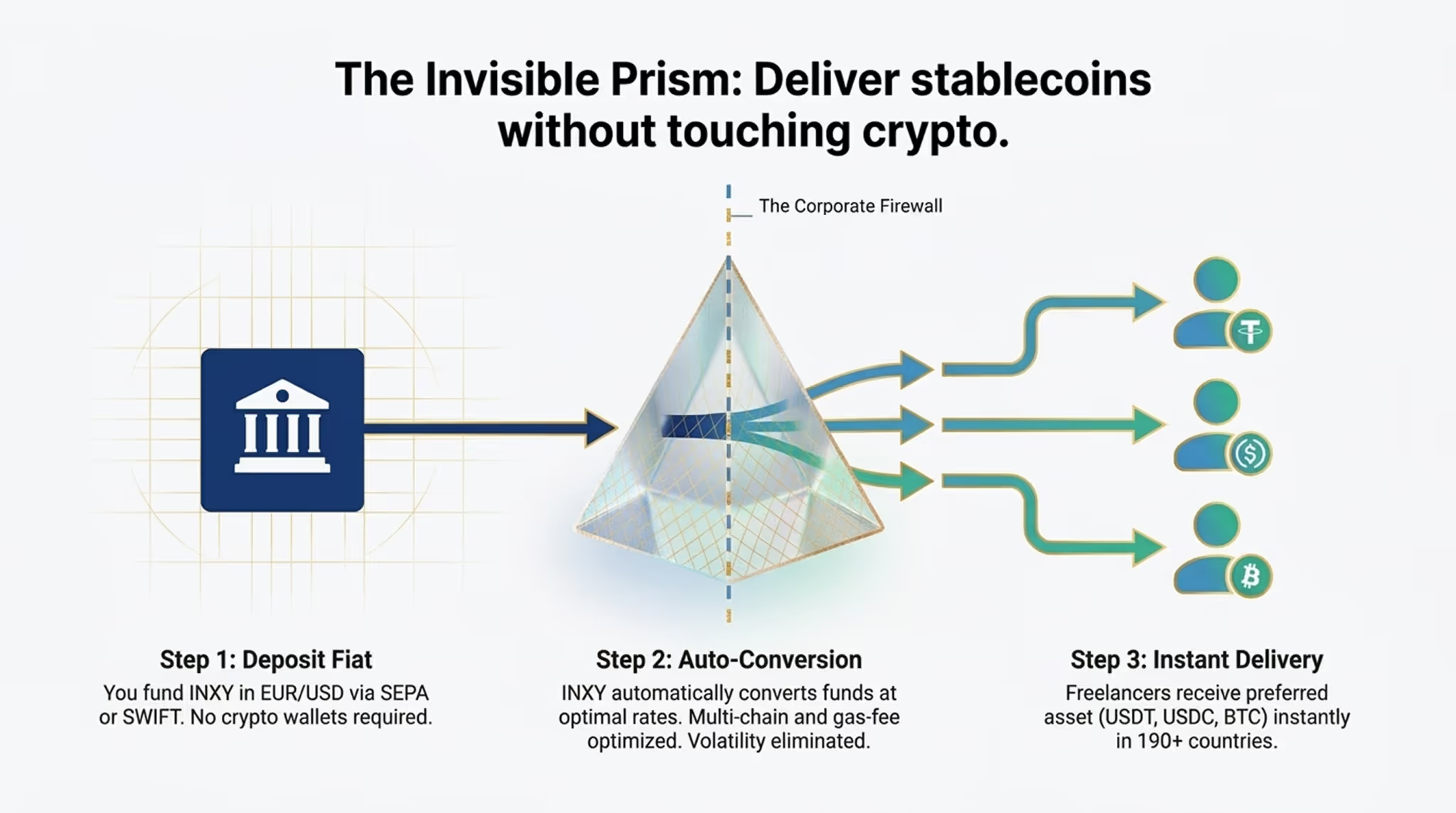
These payments work through a crypto payment gateway, which acts like a bridge. It lets businesses accept stablecoins and convert them into local currency if needed. This is helpful for companies that want to tap into the crypto market without holding onto volatile assets.
Think of stablecoin payments as a digital version of cash that you can use globally, without worrying about big price changes. They're fast, often cheaper than traditional methods, and open up new markets for businesses. This makes them a popular choice for companies looking to innovate in 2025. Stablecoins also help people in emerging markets who have no access to traditional banking. Many do not have a bank account, but almost everyone has a mobile phone. Stablecoins give these users a safe and simple way to pay online.
The Rise of Digital Transactions
Digital transactions have become increasingly popular as we move further into the 21st century. People use digital payments to buy things online, pay bills, and even send money to friends. This shift has been driven by the need for faster, more convenient ways to pay.
One example is mobile wallets, which let you store your credit or debit card information on your phone. This makes it easy to pay with just a tap. Businesses are also seeing the benefits. They can reach more customers who prefer digital payments, and they can process transactions more quickly.
Cryptocurrencies like Bitcoin and stablecoins like USDC and USDT offer new ways to pay digitally. These currencies are secure, and they don't rely on traditional banks. This can lower costs and increase access to financial services.
The growth of digital transactions is also supported by better technology. Faster internet speeds and improved security measures make it easier and safer for everyone to use digital payments. As more people and businesses adopt these methods, digital transactions are set to become the norm.
Today, more than 824 million people worldwide own cryptocurrency.
Stablecoins alone processed over $46 trillion last year — more than Visa and PayPal combined.
This shows that digital payments are not a niche trend. They are becoming the main way money moves online.
Benefits for Businesses
Stablecoin payments offer several advantages for businesses. They're less volatile than other cryptocurrencies like Bitcoin. Imagine you're a business owner. You want to know the value of your money won't change drastically overnight. Stablecoins, backed by assets like the US dollar, provide that peace of mind.
Transaction fees with stablecoins can be lower than traditional banking systems. This means businesses save money, especially on international transactions. For example, sending money across borders usually involves hefty fees. With stablecoins, these costs can be minimized.
Another perk is the speed. Traditional bank transfers can take days. Stablecoin transactions, on the other hand, can be processed in minutes. This speed is crucial for businesses that need quick access to funds. Plus, the use of stablecoins can open doors to new markets, reaching customers who prefer using digital currencies.
also let businesses reach new markets. Many people in emerging regions cannot use cards or access banks, but they can use digital wallets and stablecoins on their phones. This opens the door to millions of new customers who were previously locked out of traditional online payments.
Challenges of Traditional Payment Methods
When we talk about traditional payment methods, we're often referring to cash, credit cards, and bank transfers. While these methods have been the backbone of commerce for years, they come with their own set of challenges. Let's explore these issues to understand why businesses are looking at alternatives like stablecoin payments.
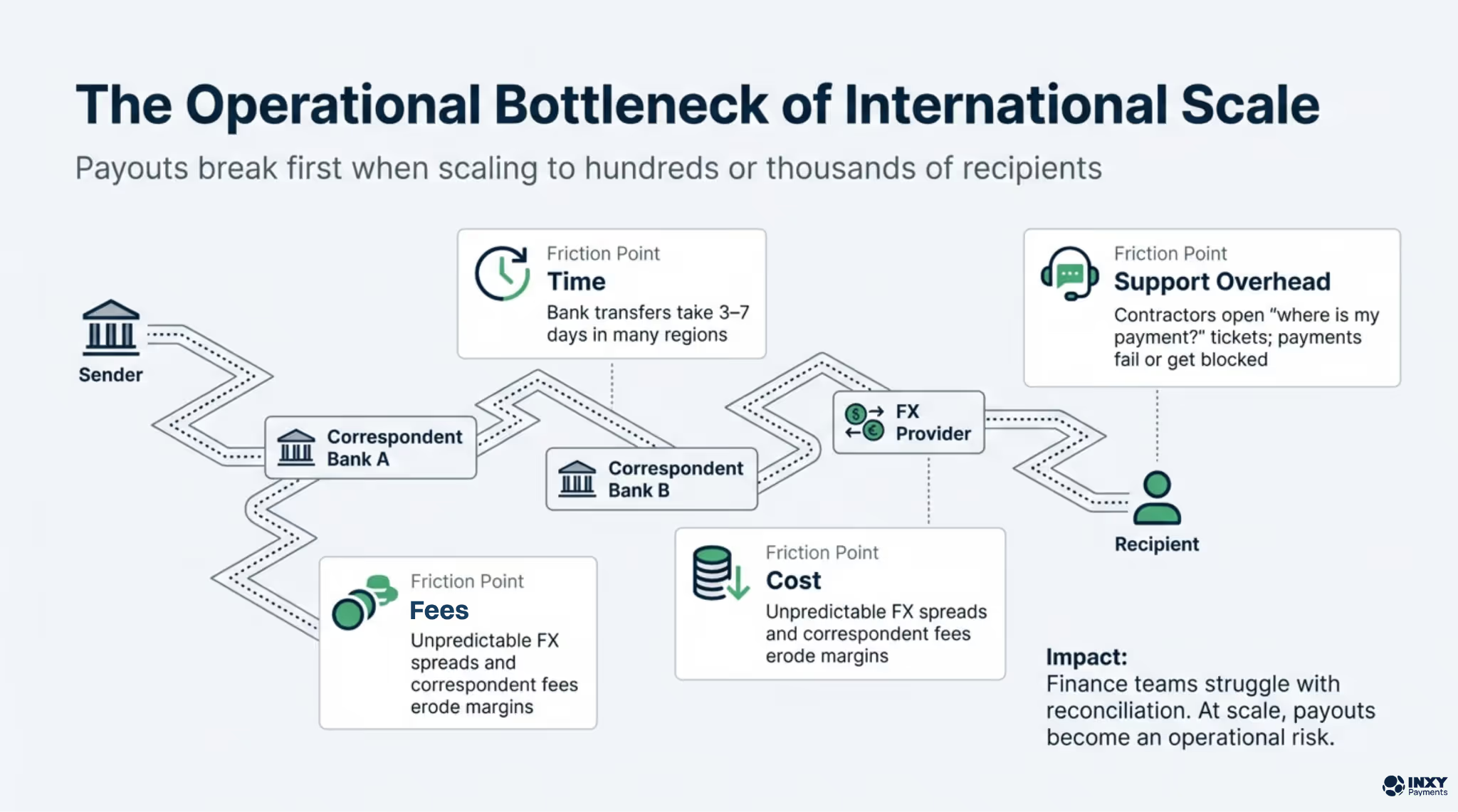
Traditional payments are slow and costly. Bank transfers and card payments can take days to settle, especially across borders. Fees are also high — from card fees to bank transfer fees to currency conversion charges — cutting into margins and slowing business growth.
Security is another concern. Credit card fraud and data breaches are not uncommon. When customers hand over their card details, there's always a risk of that information being misused. This situation not only affects the customers but can also damage the business's reputation. A single security breach might lead to a loss of customer trust, which takes a long time to rebuild.
Limited access is an issue too. Not everyone has access to credit cards or bank accounts. Some customers might prefer alternative payment methods like digital wallets or cryptocurrencies. Businesses that only accept traditional payments could miss out on potential sales from these customers. It's like having a store but keeping the door locked for some shoppers.
Traditional payments also lack transparency. It's often hard for both businesses and customers to track where the money is at any given moment. For example, if a payment is delayed, it can be challenging to pinpoint the reason or the stage at which it's stuck. This lack of visibility can cause frustration and distrust among customers.
Lastly, there's the issue of adaptability. As technology evolves, businesses need payment systems that can keep up with the changes. Traditional payment methods are often slow to adapt to new needs and innovations. For instance, they might struggle to integrate with new e-commerce platforms or to support emerging payment trends.
These challenges make it clear why businesses are exploring other options. Stablecoin payments offer solutions to some of these issues, providing a faster, more secure, and cost-effective alternative. As businesses continue to grow and change, finding flexible payment solutions becomes even more critical.
Case Studies: Companies Making the Switch
Let's dive into some real-world examples of businesses that have embraced stablecoin payments. Each company has its unique reasons, and their experiences offer valuable insights for others considering this path.
One notable case is a well-known online retailer. This company decided to accept USDC, DAI and USDT as part of their payment options. The primary motivation was the global reach of crypto. Customers from different countries found it easier to pay in stablecoins without worrying about currency conversion issues. It also allowed the retailer to reduce transaction fees, which were a burden when using traditional payment gateways.
Another interesting example is a tech startup focused on software development. They started accepting stablecoin payments for their services. The team found that using a crypto payment gateway streamlined their operations. It provided faster transaction times and reduced paperwork. The transparency of blockchain technology also appealed to their tech-savvy customers, who appreciated the added layer of security.
A third case involves a popular restaurant chain. The chain began to accept stablecoin payments during the pandemic. Traditional cash payments were less desirable due to health concerns. By adopting stablecoins, they not only offered a contactless payment solution but also attracted a younger clientele. Many of these customers were already familiar with crypto and eager to use it in everyday transactions.
Then there's a logistics company that made the switch. This company operates internationally, and stablecoins helped them manage cross-border payments more efficiently. The predictability of stablecoin values, unlike volatile cryptocurrencies, made financial planning easier. They could handle transactions with partners and vendors with greater confidence in cost predictability.
Lastly, a freelance platform adopted stablecoin payments to simplify payouts to freelancers around the globe. Freelancers appreciated receiving payments in USDC or USDT for their stability and ease of conversion to local currencies. This shift also solved issues related to delayed payments through traditional banking systems.
These examples illustrate the diverse motivations behind the switch to stablecoin payments. From reducing costs to improving speed and security, businesses find multiple benefits in adopting this modern approach. Each company's journey showcases how stablecoin payments can address specific challenges and open up new opportunities.
These stories reflect a broader trend. In 2024 and 2025, stablecoins became one of the fastest-growing payment methods worldwide, especially for online services and global businesses.
Regulatory Landscape in 2025
Stablecoin payments have been gaining traction, and 2025 is shaping up to be a pivotal year for their regulation. Governments around the world are crafting policies to manage these digital currencies. This is crucial as stablecoins like USDC and USDT become more popular in the business world.
One major development is the introduction of global standards. International bodies are working to create a unified framework for stablecoin regulation. This helps ensure that businesses using stablecoins can operate smoothly across borders. Without such standards, companies might face different rules in each country, making international trade complex.
Local governments are also busy. Each country is trying to balance innovation with security. They want to encourage the use of stablecoins while making sure that financial systems remain safe. For example, some countries are adopting stricter compliance measures. This means businesses need to ensure all transactions are transparent and traceable.
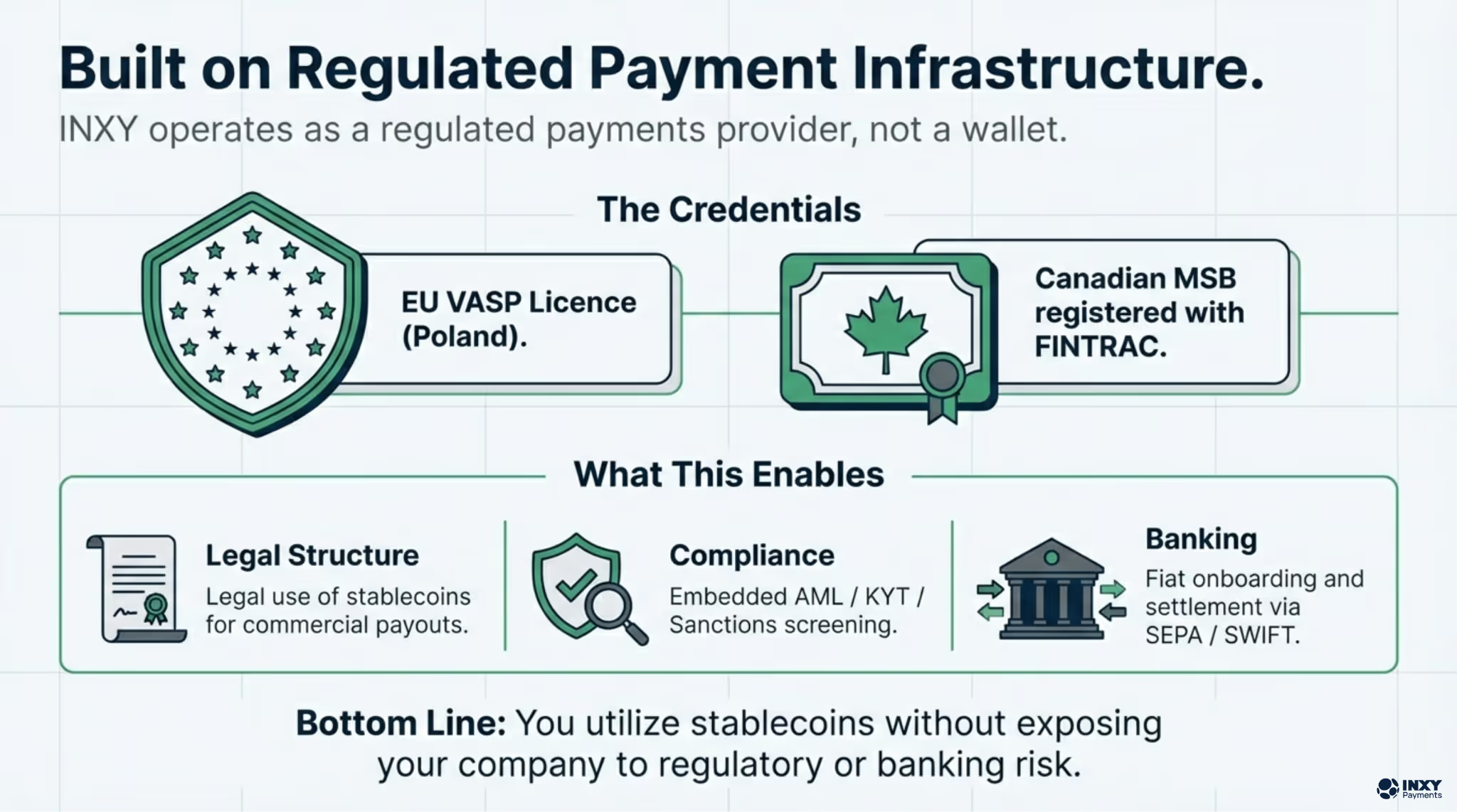
In the European Union, new laws are being drafted. These laws aim to protect consumers and prevent illegal activities. They require that stablecoin providers hold sufficient reserves. This ensures that the value of the stablecoins remains stable and reliable.
Meanwhile, in the United States, regulators are focusing on oversight. They want to ensure that stablecoin issuers are transparent about their operations. This includes regular audits and public disclosures. Such measures help build trust among users and businesses.
Asia is also seeing changes. Countries like Japan and Singapore are leading in creating crypto-friendly regulations. They are developing policies that encourage innovation while ensuring that user rights are protected.
These regulatory changes are significant for businesses. Companies need to stay informed and adapt to these new rules. Understanding the regulatory landscape is key to leveraging stablecoin payments effectively. As 2025 unfolds, businesses will need to navigate this evolving landscape carefully.
The Future of Payments: What’s Next?
Stablecoin payments are gaining popularity, and it's not hard to see why. They bring a fresh wave of possibilities to the table. Businesses are starting to notice how stablecoins can change the payment landscape. Let's explore what the future might hold.
One big reason stablecoins are appealing is their stability. Unlike other cryptocurrencies, stablecoins are tied to real-world assets like the US dollar. This means they don't bounce around in value as much. For businesses, this stability is a huge plus. They can accept payments without worrying about losing money due to market fluctuations.
Stablecoins also make international payments easier. In the past, sending money across borders was slow and costly. With stablecoins, transactions can be completed quickly and with lower fees. This is great news for companies working with international clients or suppliers. It allows them to save both time and money.
Security is another reason businesses are interested in stablecoins. Traditional payment systems can be vulnerable to fraud and hacking. Stablecoins offer a more secure option as transactions are recorded on a blockchain. This technology makes it difficult for unauthorized changes to occur.
Looking ahead, we might see stablecoins being used in more everyday transactions. Imagine buying a coffee or paying rent with stablecoins. As more businesses and consumers become comfortable with the technology, this could become a reality.
Stablecoins may also impact how we save and invest money. People are starting to explore options like earning interest on their stablecoin holdings. This could lead to new financial products and services emerging in the market.
In the coming years, regulations will play a crucial role in shaping the stablecoin landscape. Governments and financial institutions will likely establish rules to ensure safe and fair use. These regulations could boost trust and encourage more businesses to adopt stablecoin payments.
The future of payments is changing, and stablecoins are at the forefront. As technology continues to evolve, we can expect even more innovative uses for stablecoins. They have the potential to simplify and enhance the way we handle money.
Supported Stablecoins & Blockchains (2025)
Many stablecoins run on different blockchains. This makes payments fast and affordable anywhere in the world.
Supported stablecoins:
USDT — ERC20, TRC20, BEP20, Polygon
USDC — ERC20, TRC20, BEP20, Polygon
DAI — ERC20, BEP20, Polygon
Other popular coins: BTC · ETH · BNB · LTC · DOGE · TRX · MATIC
Supported blockchains: Bitcoin · Ethereum · Tron · Polygon · Binance Smart Chain · Litecoin · Ton · and others. The mix of currencies and blockchains makes stablecoin payments work for almost anyone, even in places where card payments fail.
FAQ
What are stablecoin payments and how do they work?
Stablecoin payments involve using digital currencies designed to minimize price volatility by pegging their value to a stable asset, like a fiat currency or commodity. They work like any other digital payment method but offer the added benefit of price stability, making them more reliable for transactions.
Why are stablecoins becoming popular in digital transactions?
Stablecoins are gaining popularity in digital transactions due to their ability to offer the benefits of cryptocurrencies, such as decentralization and transparency, while avoiding the price volatility associated with traditional cryptocurrencies. This makes them an attractive option for businesses looking for secure and stable payment methods.
What benefits do stablecoin payments offer to businesses?
Stablecoin payments provide several benefits, including lower transaction fees compared to traditional payment methods, faster processing times as transactions are often completed in seconds, and enhanced security due to blockchain technology, which reduces fraud and chargebacks.
What challenges do traditional payment methods face that stablecoins address?
Traditional payment methods often suffer from high transaction fees, lengthy processing times, and issues with cross-border payments. Stablecoins address these challenges by offering reduced fees, instantaneous transactions, and seamless international payments, thus providing a more efficient alternative.
Can you provide examples of businesses that have switched to stablecoin payments?
Many companies across various industries have transitioned to stablecoin payments. For instance, a tech company might use stablecoins to streamline international payroll, while an online retailer could adopt them to reduce transaction costs and improve payment processing speed.
How is the regulatory landscape for stablecoins evolving in 2025?
In 2025, the regulatory landscape for stablecoins is evolving to provide clearer guidelines and protections for businesses and consumers. Governments and financial bodies are working on frameworks to ensure stablecoin security and transparency, influencing business decisions towards stablecoin adoption.
In the European Union, the new MiCA framework brings clear rules for stablecoins and crypto service providers. These rules aim to protect users while supporting innovation. Similar frameworks are emerging in Asia, the U.S., and Latin America.
What does the future hold for stablecoin payments and their impact on the economy?
The future of stablecoin payments looks promising, with potential for widespread adoption as more businesses recognize their benefits. This could lead to significant changes in the payment industry, driving innovation and possibly reshaping economic structures by making transactions more efficient and accessible worldwide.