How to Integrate a Crypto Payment API: A Developer’s Guide for 2026
Integrating crypto payments is no longer just about generating a wallet address—it’s about building a robust, scalable financial pipeline. In this 2026 Developer’s Guide, we strip away the complexity of blockchain interactions and provide a clear roadmap for API integration.
How to Integrate a Crypto Payment API: A Developer’s Guide for 2026
In the fast-moving world of fintech, the question is no longer if a business should accept cryptocurrency, but how seamlessly it can be integrated. As we move through 2026, the European market has reached a point of high maturity. With the full enforcement of MiCA (Markets in Crypto-Assets) regulations, crypto payments have transitioned from a niche experiment to a standardized financial tool for EU-based enterprises.
For developers and product managers, integrating a crypto payment API is now as streamlined as traditional fiat gateways, provided you follow the right architectural patterns.
1. Understanding the 2026 Integration Workflow
Modern crypto integration follows a predictable RESTful pattern. Unlike the early days of manual wallet monitoring, today’s gateways handle the blockchain's complexity, allowing your backend to interact with simple JSON payloads.
The standard lifecycle of a crypto payment includes:
Initialization: Your server requests a unique payment address for a specific order.
Monitoring: The gateway monitors the blockchain (Bitcoin, Ethereum, Tron, etc.) for incoming transactions.
Confirmation: The gateway verifies the transaction depth (number of block confirmations).
Webhook Notification: Your system receives an asynchronous callback to update the order status.
2. Step-by-Step API Integration
Phase A: Environment Setup
Before hitting production, high-quality gateways provide a Sandbox environment. This allows you to simulate successful payments, timeouts, and underpayments without risking real capital. You’ll typically need two headers for every request:
X-API-KEY: Your unique identifier.
X-PAY-SIGNATURE: A HMAC-SHA512 hash to ensure data integrity.
Phase B: Creating the Payment
To start a checkout, your backend sends a POST request to the /invoices or /payments endpoint.
The gateway responds with a destination address and a QR code URL. In 2026, the best UX practice is to offer "Invisible Crypto"—where the user sees a familiar interface, and the gateway handles the real-time conversion behind the scenes.
Phase C: Handling the Webhook
This is the most critical part of the integration. Since blockchain transactions are asynchronous, your server must be ready to receive a POST callback.
Pro Tip: Always verify the webhook signature. Never update an order status based solely on the incoming payload without checking that the request actually originated from your provider.
3. Security and Compliance in the EU
In the 2026 fintech landscape, security isn't just about encryption; it's about regulatory alignment. Within the EU, businesses must ensure their payment partner adheres to Transfer of Funds Regulation (TFR) and AML (Anti-Money Laundering) standards.
When choosing a provider, look for features like:
Auto-Conversion: Instantly swapping volatile assets into stablecoins or EUR to protect your margins.
Audit-Ready Reporting: Financial statements that your accounting team can actually use for VAT and tax filings.
This is where specialized gateways like INXY (inxy.io) excel. Built specifically for the EU market, INXY acts as a regulated bridge. It doesn't just provide an API; it provides a compliant infrastructure that allows Web2 companies to scale into Web3 without the headache of managing private keys or worrying about crypto volatility. By integrating a solution like INXY, businesses can reduce processing fees by up to 70% compared to traditional card networks, while benefiting from instant SEPA settlements.
4. Testing and Optimization
Before going live, run "Chaos Tests" on your integration. What happens if a user sends too little? What if they pay after the 20-minute price-lock window? A robust API should provide clear error codes for these scenarios, allowing your frontend to guide the user toward a resolution—such as a partial refund or a top-up payment.
Conclusion
Integrating a crypto payment API in 2026 is a strategic move that opens your business to a global, tech-savvy audience. By utilizing professional gateways that handle the heavy lifting of compliance and conversion, your team can focus on what matters: the product.
Ready to modernize your payment stack? Would you like me to draft a technical checklist for your dev team to use during the INXY sandbox testing phase?
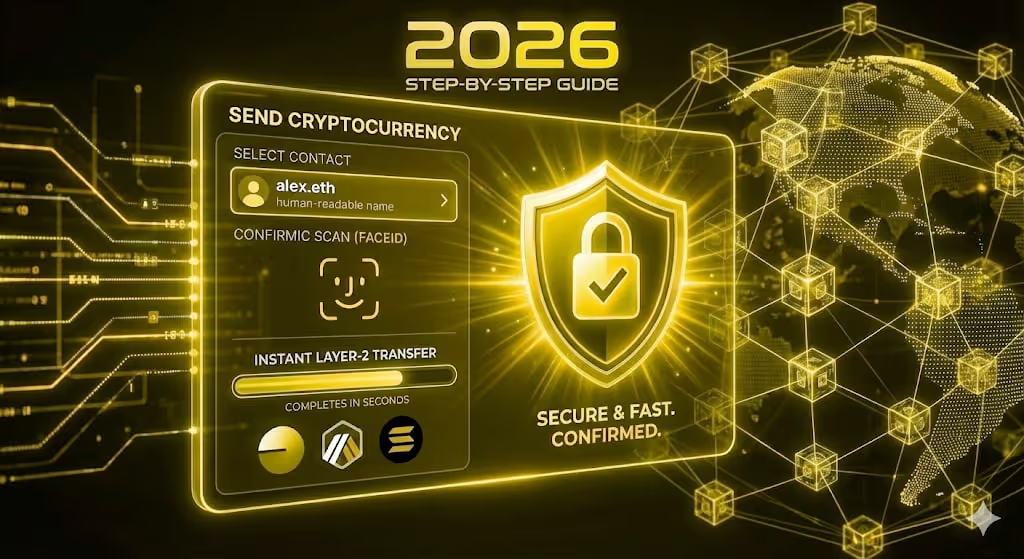
Sending crypto in 2026 is faster and more accessible thanks to improved wallets, lower network fees, and advanced blockchain technologies. This step-by-step guide explains how to send BTC, USDT, USDC, and ETH securely, compare transaction fees, track transfers, and stay ahead of future crypto transaction trends.
Cryptocurrency might sound complicated, but it's quite straightforward once you get the hang of it. At its core, cryptocurrency is a type of digital money. Unlike traditional currencies like the dollar or euro, crypto doesn't rely on banks. Instead, it uses technology called blockchain to keep track of transactions. This technology is like a digital ledger that records every transaction made.
Bitcoin is the most famous cryptocurrency, but there are many others like Ethereum, USDT, and USDC. Each has its own features and uses. For instance, Bitcoin is often used as a store of value, like gold. Ethereum, on the other hand, is known for its smart contracts. These are like self-executing contracts with the terms directly written into code.
Sending crypto involves creating a digital wallet. This wallet is a bit like a bank account but only for digital currencies. To send crypto, you need the recipient's wallet address. It's important to double-check this address because once you send crypto, you can't get it back if the address is wrong. Crypto transactions are generally fast and can be cheaper than traditional money transfers.
Choosing the Right Crypto Payment Platform
When it comes to sending crypto, picking the right payment platform is crucial. The options have expanded greatly by 2026, offering more choices than ever. But with choice comes the challenge of finding the best fit for your needs. Let's break down what to look for in a crypto payment platform.
First, consider the transaction fees. Different platforms charge varying fees for sending crypto. Some offer lower fees for particular cryptocurrencies like BTC, USDT, USDC, or ETH. It's smart to compare these fees as they can affect the overall cost of your transactions. A platform with lower fees can save you money in the long run.
Next, think about ease of use. Not all platforms are user-friendly. If you're new to crypto, look for a platform that offers a straightforward interface. Tutorials and customer support can also be a big help. A good platform should make the process of sending crypto as simple as possible.
Security is another key factor. You need a platform that keeps your funds safe. Look for platforms with strong security measures, such as two-factor authentication and encryption. You want assurance that your crypto won't fall into the wrong hands.
Consider the platform's reputation and reviews. A platform with positive reviews from other users can be a good sign. Check forums and social media for feedback. Sometimes, the experiences of others can guide you toward the right choice.
Finally, look at the supported cryptocurrencies. If you plan to send BTC, USDT, USDC, or ETH, make sure the platform supports these. Some platforms offer a wider range of cryptocurrencies, which can be useful if you plan to diversify your holdings.
In essence, selecting the right crypto payment platform involves balancing fees, usability, security, reputation, and currency support. By focusing on these aspects, you'll be well on your way to finding a platform that suits your needs.
Setting Up Your Crypto Wallet (ссылка на блог)
Setting up a crypto wallet is a crucial step in sending crypto. It's like having a digital bank account where you store your cryptocurrencies. Let's break down the process into simple steps.
First, you'll need to choose the type of wallet. There are several options like hardware wallets, mobile wallets, and desktop wallets. Each has its own benefits. For instance, hardware wallets are secure because they store your crypto offline. Mobile wallets are convenient for everyday use.
Once you've picked a wallet type, it's time to download or purchase it. If you're going for a software wallet, visit the official website or app store to download it. Be cautious of fake sites and apps. For hardware wallets, buy from a trusted source to avoid counterfeit products.
After installing your wallet, you'll need to create an account. During this step, you'll set up a strong password. This is vital for your wallet's security. You might also be required to set up two-factor authentication for an extra layer of protection.
You'll then receive a recovery phrase. This is a set of words you'll need if you ever lose access to your wallet. Write it down and store it somewhere safe. Never share this phrase with anyone.
Finally, add some crypto to your wallet. You can do this by purchasing crypto from an exchange or receiving it from someone else. Make sure to double-check wallet addresses when sending or receiving crypto to avoid mistakes. With these steps, you're ready to manage your crypto securely.
How to Send BTC, USDT, USDC, and ETH
Sending crypto can seem tricky, but it's quite simple once you get the hang of it. Let's break it down. First, you need a wallet. There are many options, like hardware wallets, mobile apps, or online platforms. Choose one that fits your needs and create an account.
When you're ready to send crypto, you'll need the recipient's wallet address. It's a long string of letters and numbers, so double-check it to avoid mistakes. For example, if you're sending Bitcoin (BTC), make sure the address is a BTC address. Sending crypto to the wrong type of address can result in a loss.
Next, enter the amount you want to send. Most platforms let you choose how much you want to pay in fees. Lower fees mean slower transactions, while paying more can speed things up. It's a balance between cost and time.
Once everything looks good, confirm the transaction. Some platforms may ask for additional verification, like a code sent to your phone or email. This step helps keep your crypto safe. After confirmation, the transaction is processed. Depending on the network, it can take a few minutes to complete.
Keeping track of the transaction is easy. You can use a blockchain explorer to see its status. Just enter your transaction ID or wallet address to follow its progress.
Comparing Transaction Fees
When sending crypto, transaction fees can vary greatly depending on the network you choose. Let’s break this down with a few clear examples.
Imagine you’re sending Bitcoin (BTC). The Bitcoin network can have relatively high fees, especially during periods of high demand. This often makes small transactions less cost-effective.
Now consider Ethereum (ETH). Ethereum transaction fees, known as gas fees, fluctuate depending on network congestion. During peak activity—such as popular NFT launches or intense DeFi usage—these fees can increase significantly.
The same principle applies to stablecoins like USDT and USDC. While their value remains stable, transaction fees depend entirely on the blockchain network used. An important detail to keep in mind is that gas fees are always paid in the native token of the blockchain, not in the stablecoin itself.
For example, if you send USDT on the Ethereum network (ERC-20), you must have enough ETH in your wallet to cover the gas fee. Similarly, when sending USDT on the Tron network (TRC-20), you need to hold TRX in addition to USDT. Without the native token on your balance, the transaction cannot be processed.
This is why networks like Tron are often chosen for USDT transfers—fees there are usually much lower. However, it’s essential to monitor your balance of native coins (ETH, TRX, etc.) to avoid failed transactions.
When choosing how to send crypto, always compare current network fees and make sure you have enough of the required native token. This approach helps keep your transactions smooth, predictable, and cost-effective.
Tracking Your Crypto Transactions
Keeping tabs on your crypto transactions can seem like a puzzle at first. Yet, with a few simple steps, it can become second nature. When you send crypto, each transaction gets recorded on a public ledger called a blockchain. This ledger is like a big book that everyone can see but no one can change. It helps ensure transparency and security.
To start tracking, you'll need a wallet. This is like your digital pocket for holding cryptocurrencies. Each wallet has a unique address, much like your house address, but for crypto. When you send crypto, it gets recorded with this address. Many wallets offer features allowing you to see your full transaction history. This is handy for checking past transfers or seeing who you've sent crypto to.
For those who like visuals, some platforms provide charts and graphs that show your transaction activity over time. These can help you spot patterns or unusual activity. If you're using a crypto payment platform, they might offer additional tools for managing and viewing your transactions. Some even offer alerts to notify you of any new activity, ensuring you're always in the loop.
If you're dealing with several types of crypto like BTC, USDT, USDC, or ETH, separate wallets might be needed. This keeps things organized and prevents confusion. For those wanting to dive deeper, blockchain explorers are available. These are online tools that let you search a transaction by entering your wallet address. They offer detailed info, such as transaction status and fees paid.
Tracking your crypto transactions isn't just about staying organized. It's a way to protect your crypto and understand your spending habits. With these tools, you can manage your crypto finances in a smart and secure way.
Future Trends in Crypto Transactions
The world of cryptocurrency is always on the move. As we look to 2026, several exciting trends are shaping how people send crypto. These changes are not just about technology but also about how we use crypto in everyday life.
One major trend is the rise of decentralized finance, or DeFi. DeFi platforms allow users to conduct financial transactions without a central authority, like a bank. This means lower fees and more control over your money when you send crypto. DeFi is growing fast, and more people are using it for everything from loans to savings accounts.
Another trend to watch is the integration of crypto into traditional financial systems. More banks and financial institutions are starting to accept and use cryptocurrencies. This means you might soon be able to send crypto directly from your bank account. It's a big step towards making crypto a part of everyday financial activities.
In addition to these changes, there is also a focus on improving the speed and efficiency of crypto transactions. Technologies like the Lightning Network for Bitcoin and Ethereum 2.0 are being developed to make transactions faster and cheaper. This could make sending crypto as quick and easy as sending a text message.
Security is another important area of development. As more people use crypto, the need for secure transactions becomes even more critical. New security measures, such as multi-signature wallets and advanced encryption techniques, are being introduced. These tools help protect users' funds and personal information.
Moreover, the use of stablecoins like USDT and USDC is growing. These are cryptocurrencies pegged to stable assets like the US dollar. They offer the benefits of digital currencies without the volatility. This makes them an attractive option for people looking to send crypto with minimal risk.
Lastly, there is an increasing focus on regulation. Governments around the world are working on new laws to govern cryptocurrency use. While some fear that regulation could stifle innovation, it could also make crypto more reliable and accessible to everyone.
As we move forward, these trends will shape the future of crypto transactions. Whether you're a seasoned investor or a newcomer, keeping an eye on these developments can help you make informed decisions about how to send crypto. The landscape is evolving, and with it, new opportunities are emerging for everyone.
FAQ
What is cryptocurrency and why are BTC, USDT, USDC, and ETH commonly used for sending?
Cryptocurrency is a digital or virtual form of currency that uses cryptography for security. BTC (Bitcoin), USDT (Tether), USDC (USD Coin), and ETH (Ethereum) are commonly used due to their widespread acceptance, liquidity, and relatively stable values, making them ideal for transactions.
How do I choose the right crypto payment platform for sending crypto with low fees?
When selecting a crypto payment platform, consider factors such as transaction fees, user interface, security features, and supported cryptocurrencies. Platforms like Binance, Coinbase, and Kraken are popular due to their competitive fees and reliability.
What steps are involved in setting up a secure crypto wallet?
To set up a secure crypto wallet, first choose between a hardware wallet (for maximum security) or a software wallet (for convenience). Download the wallet app or set up the hardware device, create a strong password, and ensure you have a backup of your recovery phrase.
Can you provide a step-by-step guide on sending BTC, USDT, USDC, and ETH?
Open your crypto wallet and select the cryptocurrency you wish to send.
Enter the recipient's wallet address.
Specify the amount to send.
Review the transaction details, including network fees.
Confirm and authorize the transaction.
Wait for transaction confirmation on the blockchain.
How can I compare transaction fees across different networks and platforms?
To compare transaction fees, research and compare the fee structures of each platform, focusing on network fees, withdrawal fees, and any additional service charges. Tools like CoinGecko and CoinMarketCap provide up-to-date fee comparisons.
What methods are available for tracking my crypto transactions?
You can track your crypto transactions using blockchain explorers such as Etherscan for ETH and its tokens or Blockchain.com for BTC. These tools allow you to enter the transaction ID to view the status and confirmations.
What future trends can we expect in crypto transactions by 2026?
By 2026, expect increased adoption of Layer 2 solutions for faster and cheaper transactions, greater integration of AI for improved fraud detection, and wider acceptance of crypto payments in mainstream finance, enhancing user experience and security.
Cryptocurrency is a type of digital or virtual currency. It uses cryptography to secure transactions. This makes it hard to counterfeit. Unlike traditional money, cryptocurrencies operate on a technology called blockchain. This is a decentralized system spread across many computers.
Bitcoin was the first and is the most well-known cryptocurrency. But now, there are thousands of different cryptocurrencies. Each has its own unique features. For example, some are used for fast, low-cost transactions. Others focus on privacy.
A popular feature of cryptocurrencies is their ability to be traded or exchanged easily. People can buy, sell, or trade them on different online platforms. These platforms are called exchanges. Some well-known exchanges are Binance and Coinbase.
Stablecoins are another type of cryptocurrency. They are designed to minimize price fluctuations. They achieve this by being pegged to stable assets like the US dollar. USDT and USDC are examples of stablecoins. They provide stability in the volatile crypto market.
Cryptocurrencies are stored in digital wallets. These can be online, offline, or even hardware devices. Each wallet has a unique address. This address is used to send and receive cryptocurrencies.
While cryptocurrencies offer many benefits, they also come with risks. Their prices can be very volatile. This means they can change quickly and unpredictably. Security is another concern. If a wallet is hacked, it can lead to loss of funds.
Understanding how cryptocurrencies work is important. It helps in making informed decisions. Whether you want to invest or accept crypto payments, knowing the basics is the first step.
Setting Up Your Digital Wallet
Setting up a digital wallet for accepting crypto is like opening a new bank account, but much simpler. First, choose a wallet that suits your needs—whether it's a software wallet for easy access on your phone or a hardware wallet for extra security. Software wallets are apps you can download, making them convenient for daily transactions. Hardware wallets, on the other hand, are devices you connect to your computer, keeping your crypto offline and safe from hackers.
Next, install your chosen wallet and follow the instructions to create an account. You'll be given a unique address, like your wallet's phone number, where people can send you cryptocurrency. It’s crucial to secure your wallet with a strong password and, if possible, enable two-factor authentication for added security. Keep your recovery phrase safe; it’s your lifeline if you forget your password.
Finally, explore the wallet's features. Some wallets let you exchange one cryptocurrency for another directly within the app, while others offer detailed transaction history. Getting familiar with these options ensures smooth management of your crypto payments.
Choosing the Right Payment Processor
Picking the best payment processor for accepting crypto can feel like choosing the right car. You want something reliable, fast, and easy to handle.
In 2026, the most important thing to check is stablecoin support, not just Bitcoin. Most companies now prefer USDT, USDC, or DAI, because they offer price stability and dominate real business payments. Stablecoins now power most B2B payment growth worldwide.
Next, look at fees. Some processors charge a flat rate, others a percentage, and some add hidden spreads when converting crypto to fiat. It’s like buying a concert ticket—sometimes the “service fee” costs more than the seat.
A modern processor should integrate smoothly into your existing systems—your checkout page, invoicing software, or backend platform. Ideally, it should support both plugins (Shopify, WooCommerce) and API integration so your business can scale later.
Security matters too. Look for processors that:
screen every transaction (KYT)
support strong encryptio
offer clear, audit-friendly reporting
This is especially important as more countries enforce stricter crypto regulations, especially in the EU under MiCA.
Integrating Crypto Payments into Your Business
Integrating crypto payments into your business is easier today than ever before. Most companies start by choosing a crypto payment gateway that works alongside their existing checkout or invoicing system. These gateways support major cryptocurrencies like Bitcoin, Ethereum, and stablecoins such as USDT and USDC.
Once you choose a provider, you connect it to your website or platform. Many services offer simple plugins for Shopify, WooCommerce, and other tools. If you prefer something custom, you can use their API to build your own flow.
One helpful feature offered by most payment gateways is automatic conversion. This means that when a customer pays in crypto, the gateway can instantly convert it into stablecoins or fiat currency. Your balance stays steady, which makes bookkeeping easier and avoids the need to monitor crypto price changes. You simply receive the amount in the currency you prefer.
It also helps to clearly show on your website that you accept crypto. Customers who use digital assets often look for businesses that support their preferred payment methods.
As with any payment method, security matters. Keep your accounts protected with two-factor authentication and make sure your systems are up to date. A good gateway will also include its own safeguards, such as blockchain monitoring and fraud checks.
Offering crypto payments is a simple way to expand your payment options, make checkout more flexible, and reach customers in more parts of the world.
Tax Implications and Legal Considerations
When you begin accepting crypto payments, it’s important to understand how taxes and regulations apply in your region. Rules vary from country to country, but most treat cryptocurrency as an asset or a form of taxable income. If your business receives crypto as payment, it may need to be reported to your local tax authority. Keeping clean records of all transactions makes this process easier.
Regulation is also evolving around the world.
European Union
MiCA is now active.
Strict AML and Travel Rule checks.
You must work with a licensed VASP/CASP.
United States
Rules differ by state.
A federal stablecoin law is expected soon.
Choose a partner who follows both federal and state-level compliance.
United Kingdom
New crypto rules expected in 2026.
FCA requires AML, Travel Rule, and Financial Promotions compliance from providers.
Singapore
Very clear regulation under the Payment Services Act.
You must work only with licensed Digital Payment Token providers.
Hong Kong
Strong VASP licensing since 2023.
New stablecoin rules start in 2025.
Middle East (UAE, Bahrain)
UAE’s VARA sets strict rules for crypto companies.
Follow AML/CFT and Travel Rule requirements.
Latin America
Rules vary by country.
Brazil and Mexico are building national frameworks.
Work with partners who apply strong AML controls.
Because the landscape changes quickly, many businesses choose crypto payment processors that are already licensed or registered in their operating regions. Working with a regulated partner often simplifies compliance, especially around AML, KYC, and reporting obligations.
It’s also helpful to consult a tax or legal advisor familiar with cryptocurrency. They can guide you on reporting requirements, record-keeping, and any local rules you may need to follow.
Finally, many companies prefer accepting stablecoins like USDT or USDC. These assets are tied to national currencies and are less volatile than traditional cryptocurrencies, which can make accounting and financial planning easier.
Marketing Your Crypto Payment Options
When it comes to accepting crypto, getting the word out is key. Let people know you accept crypto payments. It can attract a new group of customers who prefer using digital currencies. To make this happen, you need a solid marketing plan tailored to this unique payment method.
One way to start is by updating your website and social media profiles. Highlight your new payment option. Create eye-catching banners or badges that say you accept cryptocurrencies like Bitcoin, Ethereum, or stablecoins such as USDT and USDC. This visual cue can grab attention and encourage visitors to explore more.
Consider writing blog posts or articles about the benefits of accepting crypto. These can educate your audience and position you as a forward-thinking business. Explain why crypto payments are secure, fast, and cost-effective. Use simple language to break down complex concepts. This helps even those new to crypto understand its advantages.
Social media is a powerful tool. Use it to announce your new payment methods. Platforms like Twitter, Instagram, and Facebook allow you to reach a wide audience. Create engaging posts with hashtags related to cryptocurrency. These can help your posts appear in searches made by crypto enthusiasts.
Collaborations with crypto influencers can extend your reach. Find influencers who align with your brand. They can showcase your business to their followers, who might be interested in using crypto. A positive mention from a trusted voice can enhance your credibility.
Email marketing can also play a role. Send newsletters to your subscribers informing them about your new payment option. Offer exclusive promotions or discounts for those who choose to pay with crypto. This can motivate them to try out the new payment method.
Hosting events or webinars about cryptocurrency can engage your audience. These can be opportunities to answer questions and demonstrate how paying with crypto works. Educating potential customers can remove doubts and make them more comfortable using digital currencies.
By using these marketing strategies, you can effectively promote your crypto payment options. This can lead to increased customer engagement and potentially boost your sales.
Future Trends in Cryptocurrency Payments
Let's talk about the exciting trends in cryptocurrency payments as we look ahead to 2026. Cryptocurrencies are changing the way we think about money, and it's only going to get more interesting. Businesses and freelancers should keep an eye on these trends to stay ahead of the curve.
One major trend is the rise of stablecoins. These are digital currencies that are tied to real-world assets like the US dollar. Examples include USDT and USDC. They provide the benefits of cryptocurrencies without the wild price swings. This makes them attractive for businesses that want to accept crypto without worrying about losing value overnight. Stablecoins are becoming a popular choice for payments because they offer stability and trust.
Another trend is the growing acceptance of crypto by big companies. More and more large businesses are starting to accept crypto payments. This is because they see the potential of reaching new customers worldwide. When big players jump on board, smaller businesses often follow. This could lead to more widespread use of crypto in everyday transactions.
There's also a push for better technology to support crypto payments. Developers are working on making transactions faster and cheaper. Right now, some cryptocurrencies take too long to process or have high fees. But new technologies, like the Lightning Network, aim to solve these problems. They allow instant transactions with very low fees. This makes crypto more practical for everyday use.
Security is always a concern with cryptocurrencies. As we move forward, we can expect improvements in this area too. Developers are creating more secure wallets and platforms to protect users from scams and hacks. This is crucial for building trust in the system.
Regulations are another important factor. Governments around the world are trying to figure out how to handle cryptocurrencies. In 2026, we might see more clear rules and regulations. This could make it easier for businesses to accept crypto without worrying about legal issues.
Lastly, as more people become familiar with cryptocurrency, we'll likely see an increase in its use. Education is key here. The more people know about how crypto works, the more comfortable they'll feel using it. This could lead to a significant increase in crypto payments.
In summary, the future of cryptocurrency payments looks promising. With stablecoins, big company adoption, better technology, increased security, clear regulations, and greater awareness, businesses and freelancers have much to look forward to in 2026. Keep an eye on these trends to stay ahead in the evolving world of crypto.
FAQ
What is cryptocurrency, and why should I consider accepting it as a payment method?
Cryptocurrency is a digital or virtual form of currency that uses cryptography for security and operates on decentralized networks like blockchain technology. Accepting crypto payments can broaden your customer base, lower transaction fees, and enhance your business's image as forward-thinking and tech-savvy.
How do I choose the right digital wallet for my business?
When selecting a digital wallet, consider factors like security features, compatibility with multiple cryptocurrencies, user interface, and customer support. Look for wallets with strong encryption and backup options to ensure your funds remain secure.
What should I look for in a cryptocurrency payment processor?
Key considerations for choosing a crypto payment processor include transaction fees, supported cryptocurrencies, ease of integration with existing systems, and customer support. Compare different options to find a processor that aligns with your business needs and budget.
How can I integrate cryptocurrency payments into my existing payment systems?
To integrate cryptocurrency payments, you can use plugins or APIs provided by your chosen payment processor. These tools allow you to seamlessly add crypto payment options to your website or point-of-sale systems, offering customers a smooth checkout experience.
What are the tax implications of accepting cryptocurrency payments?
The tax implications can vary based on your location, but generally, cryptocurrencies are treated as property for tax purposes. This means you need to track transactions and report any capital gains or losses. Consult with a tax professional to ensure compliance with local regulations.
How can I effectively market my acceptance of crypto payments?
Promote your crypto payment options through your website, social media, and email marketing. Highlight the benefits, such as lower fees and enhanced security, to attract tech-savvy customers. Collaborating with crypto influencers and participating in blockchain events can also boost visibility.
What future trends should I be aware of in the cryptocurrency payment space?
Stay informed about trends like the rise of decentralized finance (DeFi), the increasing use of stablecoins, and advancements in blockchain technology. These developments could offer new opportunities for reducing costs and enhancing transaction security in the coming years.
Crypto withdrawals in 2026 are faster, safer, and more user-friendly than ever, driven by instant fiat off-ramps, low commission fees, and reliable customer support. This article explores how modern exchanges, stablecoins, and regulatory standards are shaping seamless withdrawal experiences for users worldwide.
Crypto withdrawals have come a long way in a few years. In the early days, you might have waited hours or even days to move your crypto from an exchange to your wallet. The process often felt like watching paint dry, with delays due to network congestion and slow processing times.
Fast forward to today, and things have changed drastically. Exchanges have improved their systems, often offering near-instant withdrawals. This speed boost is thanks to advancements in blockchain technology and increased competition among exchanges. Everyone wants to offer the fastest service.
Let’s not forget the role of stablecoins like USDT and USDC. These digital currencies provide a stable value, making it easier to convert crypto to fiat. Users can quickly exchange cryptocurrency for stablecoins and then withdraw them to traditional bank accounts.
Regulatory licenses play a part, too. A licensed crypto exchange has better systems in place to ensure smooth transactions, giving users peace of mind. Plus, with customer support available 24/7, any hiccup can be resolved quickly, ensuring a seamless withdrawal process.
Finally, low commission fees have made it more attractive to withdraw funds frequently, encouraging more users to engage with the system. Crypto withdrawals today are faster, cheaper, and more reliable than ever before.
What to Look for in an Exchange
When choosing a crypto exchange, there are several key factors to consider. These can make your experience smoother and safer. Let's dive into what's important.
First, look for a regulatory license. This ensures the exchange follows rules and protects your funds. Exchanges with a license are generally more trustworthy and are less likely to face legal issues.
Next, consider customer support. Reliable exchanges offer 24/7 support. This is crucial if you need help at an odd hour or face an urgent issue. Quick assistance can save you time and stress.
Another factor is the variety of cryptocurrencies available. A good exchange offers many options, including popular stablecoins like USDT and USDC. This ensures you can trade or withdraw the currencies you need.
Low commission fees are also important. High fees can eat into your profits, so look for exchanges that offer competitive rates. This is especially vital if you trade frequently or make large withdrawals.
Withdrawal limits can vary widely between exchanges. Ensure the exchange you choose allows for the withdrawal amounts you require. Some exchanges might have low limits, which can be frustrating.
Finally, consider the user interface. A clear and easy-to-navigate platform can make trading and withdrawing much simpler. An intuitive design helps you avoid mistakes and saves you time.
Choosing the right exchange can make your crypto journey more enjoyable. By keeping these factors in mind, you can find an exchange that meets your needs and offers a smooth experience.
Top Exchanges for Fast Withdrawals in 2026
Finding the best exchanges for quick crypto withdrawals can save time and provide peace of mind. In 2026, a few standout platforms offer impressive speed and efficiency. Let's take a look at some of the top contenders.
One such exchange is Binance. Known for its robust features, it offers fast transaction speeds, making it a favorite among traders. With its low commission rates, users can withdraw crypto without breaking the bank. The exchange supports stablecoins like USDT and USDC, which are popular choices for those seeking stability.
Coinbase is another popular platform. It has a strong reputation for security and ease of use. The exchange provides a seamless withdrawal process, which is vital for those needing quick access to their funds. It's especially attractive to users who value customer support available 24/7.
Kraken also makes the list. It's well-regarded for its regulatory licenses and high trust level. The platform's withdrawal limits are flexible, catering to both casual users and high-volume traders. Kraken's user-friendly interface ensures that even beginners can manage their withdrawals with ease.
Each of these exchanges offers unique benefits, but all share a common goal: making crypto withdrawal as fast and straightforward as possible. By choosing the right platform, users can enjoy a smooth experience while managing their crypto assets.
Instant Fiat Off-Ramp Options
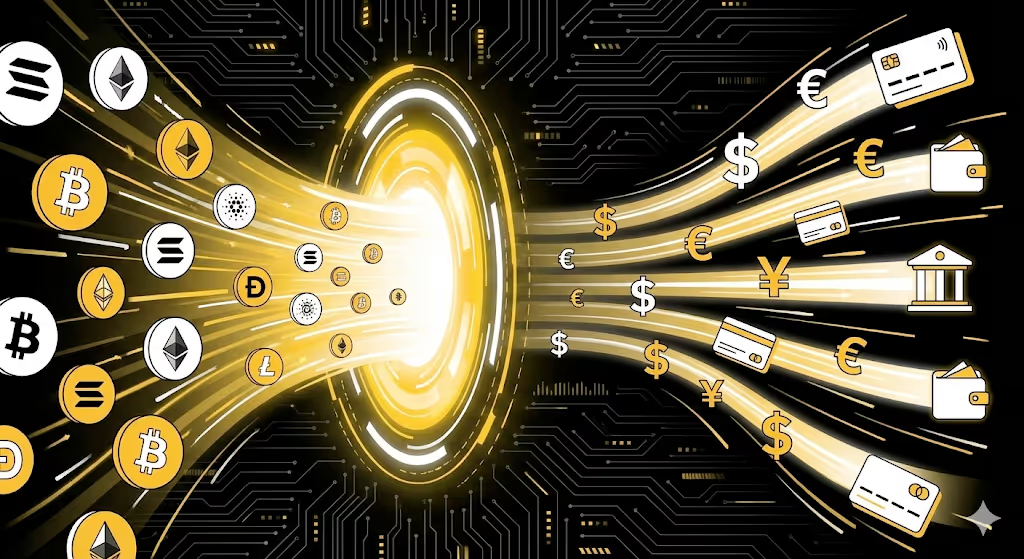
Navigating the crypto world can be tricky, especially when it comes to converting your digital coins into cash. This is where instant fiat off-ramp options come into play. These are services that let you switch your cryptocurrency to regular money like dollars or euros quickly and easily. Let’s break it down.
Imagine you've traded on a crypto exchange and now want your earnings in your bank account. Instant fiat off-ramps make this possible in a snap. They work by linking your crypto wallet to your bank account or card. Once connected, you can transfer funds swiftly and with minimal fuss.
Many exchanges offer this service, providing convenience for users. Some popular ones might include platforms that support stablecoins like USDT or USDC, known for their steady value. By using these stablecoins, you often enjoy lower fees and faster processing.
These off-ramps also come with various features. Some offer 24/7 customer support to help with any issues. Others have low commission rates, ensuring you keep more of your money. Keep an eye out for platforms with regulatory licenses for added security. This means they are approved by financial authorities and are safer to use.
In a nutshell, instant fiat off-ramps are a great option for those looking to access their money quickly. They simplify the process, making crypto withdrawals easier and faster than ever before.
Low Commission Fees Explained
Low commission fees are a key factor when choosing a crypto exchange for withdrawals. These fees are what the exchange charges you for using their service. They can vary widely between different platforms. Some exchanges might offer very low fees, while others could be more expensive.
When you withdraw your cryptocurrency, the commission fee is usually taken as a small percentage of the total amount you're moving. If you're new to this, think of it like a small toll you pay to use a road. The lower the toll, the cheaper your trip.
Let's take an example. Imagine you have 100 USDT and you want to withdraw it. If the exchange charges a 1% commission fee, you'd pay 1 USDT as the fee. This means you'd end up with 99 USDT after the withdrawal. In some cases, exchanges might have a fixed fee instead of a percentage.
It's important to check the fee structure before making a withdrawal. Some exchanges might look like they have low fees, but they could have hidden costs. Always read the fine print to avoid surprises. This way, you get to keep more of your money when withdrawing from your crypto exchange.
Stablecoins: A Safe Bet for Withdrawals
Stablecoins have become popular in recent years, especially for those looking to make crypto withdrawals. They provide stability in a market known for its wild swings. Unlike other cryptocurrencies, stablecoins are tied to a stable asset, like the US dollar. This link helps keep their value steady, making them a reliable option for users who want to avoid volatility.
There are many types of stablecoins, with USDT and USDC being among the most well-known. USDT, or Tether, is one of the first stablecoins and is widely used in exchanges. It's popular for its large market cap and liquidity. On the other hand, USDC is backed by actual US dollars held in reserve. This backing gives users confidence in its value, as it is regularly audited for transparency.
Using stablecoins for withdrawals can be a smart choice. Since they hold a stable value, you can withdraw your funds without worrying about losing money due to sudden price drops. Exchanges often support stablecoins, allowing easy conversion to fiat currency. This process is usually fast and can help users access their funds quickly.
Let me illustrate this with a simple example. If you have one Bitcoin and its value drops by $1,000 overnight, you lose $1,000 if you hold it. However, if you convert that Bitcoin to USDC before the drop, your value stays the same, protecting your investment. This security is why many users prefer stablecoins for withdrawals.
Stablecoins also often come with low transaction fees compared to other cryptocurrencies. This feature makes them appealing not just for withdrawals but for everyday transactions as well. They offer a cost-effective way to move money across borders, making them suitable for international users.
In the growing world of crypto exchanges, stablecoins provide an attractive solution for those looking to withdraw funds. Their stability, reliability, and low fees make them a go-to choice for many. As the crypto market evolves, stablecoins are likely to remain a key player in ensuring secure and efficient withdrawals.
Customer Support 24/7: Why It Matters
When you think about crypto exchanges, you might focus on fees or the variety of coins available. But there's another important aspect: customer support. Imagine trading in the middle of the night and facing a sudden problem. You don't want to wait for hours or even days to get help. That's where 24/7 customer support comes in.
Having access to assistance around the clock can make a big difference. Let's say you're trying to process a crypto withdrawal, but something goes wrong. Maybe the transaction is stuck, or you can't find your funds. With 24/7 support, you can get help immediately, no matter what time it is. This quick response can ease your stress and resolve issues faster.
Crypto trading doesn't follow a nine-to-five schedule. Markets are open 24 hours a day, seven days a week. So, it's only fair that support services match this availability. Whether you're in New York or Tokyo, or anywhere in between, having someone to turn to is crucial.
Now, you might wonder what makes good customer support. It's not just about being available. It's about having knowledgeable staff who understand crypto exchanges inside out. They should be able to guide you through complex processes, like how to exchange cryptocurrency or deal with withdrawal limits.
Good support teams also know how to help with regulatory license questions. This is important because crypto laws can vary widely between countries. You want someone who can explain these rules and help ensure you're compliant.
Then there's the matter of stablecoins like USDT and USDC. Sometimes, you might want to convert your crypto into these to avoid market volatility. If you're unsure how to do this, a good support team can walk you through it.
Lastly, let's talk about communication. A good support team will offer multiple contact methods. Whether you prefer email, chat, or phone, you should have options. This flexibility can make it easier to get the help you need.
In summary, 24/7 customer support is more than a convenience. It's a key part of a good crypto exchange experience. With it, you're not alone, no matter when you trade or where you are in the world. So, when choosing an exchange, consider how well they support their users. It might save you time and trouble later on.
FAQ
What are the key trends in crypto withdrawals in 2026?
In 2026, crypto withdrawals have evolved significantly with a focus on speed and convenience. Instant fiat off-ramps and low commission fees are prominent trends, driven by technological advancements and growing user demand for efficient transactions.
What factors should I consider when choosing a crypto exchange for withdrawals?
When selecting a crypto exchange, consider factors like withdrawal speed, limits, commission fees, security measures, and customer support availability. These elements can greatly impact your overall experience and costs.
Which exchanges are known for the fastest crypto withdrawals in 2026?
The top exchanges for fast withdrawals in 2026 include platforms that offer instant fiat off-ramps, low fees, and robust customer support. Specific names may vary, but look for exchanges with a reputation for speed and reliability.
Why are instant fiat off-ramps important for crypto withdrawals?
Instant fiat off-ramps allow users to quickly convert their crypto into fiat currency, enhancing the user experience by providing immediate access to funds. This feature is crucial for those who need fast liquidity.
How do low commission fees impact my crypto withdrawals?
Low commission fees reduce the overall cost of withdrawing crypto, making transactions more affordable. This is especially important for frequent traders or those dealing in large volumes, as it can lead to significant savings.
What role do stablecoins play in crypto withdrawals?
Stablecoins like USDT and USDC offer a stable value, making them a reliable option for quick and secure crypto withdrawals. They help mitigate volatility risks and facilitate smoother transactions.
Why is 24/7 customer support crucial for crypto exchanges?
24/7 customer support is vital as it ensures that users can resolve issues or get assistance at any time, enhancing trust and satisfaction. This can be particularly important during urgent transactions or when facing technical difficulties.