Crypto Mass Payouts 2026: Pay 10,000 Freelancers
Crypto mass payouts in 2026 enable businesses to pay thousands of freelancers quickly and globally using stablecoins and automated blockchain infrastructure. This article explains how modern payout platforms abstract network complexity, handle compliance and accounting, and turn large-scale crypto payouts into a reliable, repeatable payment process.

Understanding Crypto Mass Payouts
Crypto mass payouts sound like a big, fancy term, but the basic idea is simple. Imagine you have a large list of freelancers, say 10,000, and you need to pay them. Doing this one by one would take a huge amount of time. That’s where crypto mass payouts come in. They allow businesses to send payments to a large group at once, instead of processing thousands of individual transfers.
At a high level, the process relies on blockchain technology. Blockchains like Bitcoin, Ethereum, TRON, and others act as shared public ledgers. Every transaction is recorded and can be verified, which makes the system transparent and hard to manipulate. This is one of the reasons crypto payments are trusted for global payouts.
However, while the concept of mass payouts is straightforward, execution becomes much more complex as volume grows. Paying 10 freelancers is one thing. Paying 10,000 introduces operational challenges that are easy to underestimate at first.
For businesses, crypto mass payouts can save time and reduce fees compared to traditional bank transfers, especially for international payments. A freelancer in another country might receive funds in minutes instead of waiting days for a wire transfer. Stablecoins like USDT and USDC are commonly used because they are tied to the US dollar, which helps avoid sharp price swings.
At the same time, real-world payout operations involve much more than just “sending crypto.” Network fees, compliance checks, reconciliation, and reporting all become part of the picture.

The Rise of Freelancing in 2026
Freelancing has taken the world by storm in 2026. What used to be a niche career path is now a mainstream way of working. More professionals are choosing flexible, remote work, and companies are increasingly comfortable hiring freelancers across borders.
Technology has played a major role in this shift. Platforms that connect freelancers with clients have matured, and global collaboration tools are now standard. Payment systems have also evolved, making it easier to send money across countries.
As freelancer volumes increase, payments turn into a scaling challenge. A system that works well for a few dozen payouts often breaks down when a company needs to pay hundreds or thousands of people on a regular basis. Delays, errors, or failed payments quickly impact trust and retention.
This is one reason why crypto and stablecoin payouts have gained traction. They offer speed and global reach, but only when supported by the right infrastructure.
Choosing the Right Crypto for Payouts
When deciding which cryptocurrency to use for mass payouts, several factors matter. Speed and transaction fees are important, which is why stablecoins such as USDT and USDC are popular choices. Their value remains relatively stable, making them suitable for salary-like payments.
Security and reliability are also critical. Businesses typically prefer assets and networks with a strong track record and wide adoption.
An often-overlooked factor is the blockchain network itself. USDT on TRON, USDT on Ethereum, and USDT on other networks may share the same name, but operationally they behave very differently. Each network has its own fee structure, speed, and technical requirements. Choosing the wrong network or mixing them up can lead to failed or lost payments.
As payout volumes grow, these differences become more important, not less.
Tech Solutions for Fast Payouts
In the fast-paced world of freelancing, getting paid quickly is a top priority. Blockchain technology makes this possible by allowing transactions to be processed directly between parties, without traditional banking intermediaries. This often results in faster settlement and lower fees.
Smart contracts can add another layer of automation by executing payments when predefined conditions are met. Crypto wallets store assets like USDT and USDC and allow recipients to receive funds from anywhere in the world.
That said, these tools alone are not enough for large-scale payouts. Wallets and smart contracts do not automatically handle gas fees, currency conversion, compliance checks, or accounting. Without additional systems, finance teams still end up doing a lot of manual work.
This is why modern payout platforms focus on orchestration rather than just transactions.

Step-by-Step Process for Mass Payouts
When companies first explore crypto mass payouts, they often follow a simple process. They collect wallet addresses from freelancers, prepare a payout list, and upload it as a CSV file to a payout tool. After reviewing the data, they initiate the transfer and notify recipients.
While this approach may work for small batches, it becomes risky and inefficient at scale. Each payout requires the correct wallet address, the correct blockchain network, and sufficient funds to cover transaction fees. With hundreds or thousands of rows, manual verification takes significant time and mistakes are hard to avoid.
Another major challenge is gas fees. Every blockchain requires transaction fees to be paid in its native token. For example, sending USDT on the TRON network requires TRX, while sending USDT on Ethereum requires ETH. This means businesses must constantly monitor and replenish balances of multiple native tokens just to keep payouts running.
Modern payout infrastructure solves this by abstracting gas management entirely. The platform ensures that all required native tokens are available behind the scenes, so businesses can execute payouts without worrying about blockchain-specific fee mechanics. From the user’s perspective, the process feels much closer to sending fiat payments.
At scale, this level of automation dramatically reduces both time spent and the risk of human error.
Automatic Conversion and Simplified Operations
Another important improvement in modern payout systems is automatic currency conversion. Freelancers and partners often prefer different payout assets. Some want USDT, others USDC, and some may request different networks.
Manually handling these preferences requires holding multiple crypto balances, performing frequent swaps, and tracking exchange rates. This adds complexity and exposes businesses to accounting challenges.
With modern platforms, companies can fund payouts in EUR or USD. Conversions happen automatically at the time of payout, using optimized rates, and recipients receive their preferred asset. The business does not need external exchange accounts or manual balance management.
As a result, crypto becomes almost invisible to internal teams.
Ensuring Security and Compliance
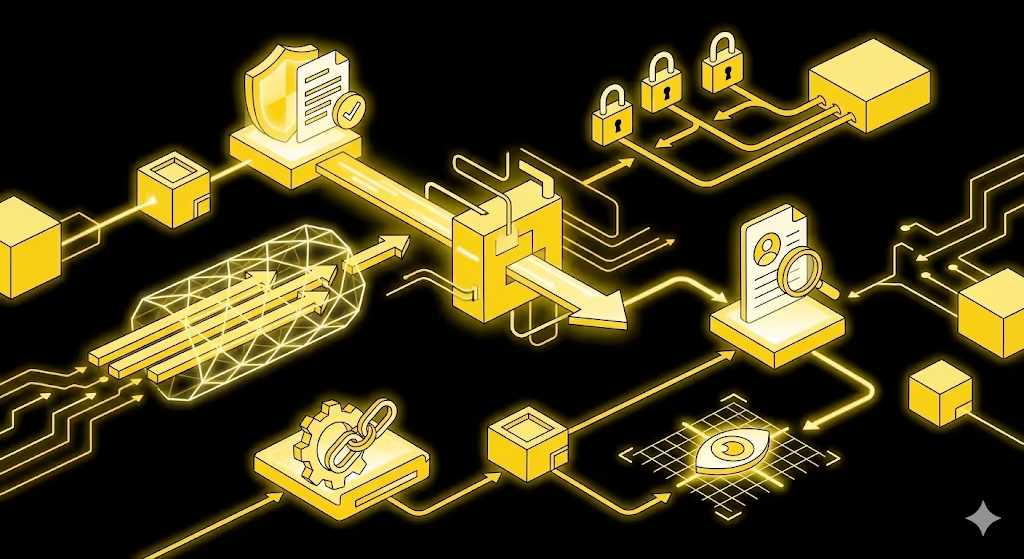
Handling large volumes of payouts requires strong security and compliance practices. Regulations vary by country, but AML and KYT requirements are now standard expectations, not optional extras.
Without automated screening, businesses risk sending funds to sanctioned or high-risk wallets. In real-world cases, this has led to frozen balances, blocked withdrawals, and strained banking relationships.
Modern payout platforms integrate compliance checks directly into the payout flow, ensuring that every transaction is screened before it is executed. This protects both the business and its partners.
Accounting and Reporting Without Disruption
One of the biggest concerns for finance teams is accounting. Tracking crypto movements manually can create reporting and tax complications, especially when exchange rates fluctuate.
Modern systems address this by providing fiat-denominated reporting, even when payouts are made in crypto. Finance teams can continue to work in EUR or USD, with clean, audit-ready reports that fit into existing accounting processes.
This allows companies to introduce crypto payouts without redesigning their entire financial workflow.
Support and Operational Reality
Crypto payouts often run outside standard business hours. Many providers offer support only during weekdays, which can be problematic when large payout batches are scheduled over weekends or holidays.
Live, responsive support during payout windows becomes a critical operational factor. When something goes wrong, delays of several hours can have a significant impact on trust and operations.
Future Trends in Crypto Payouts
Looking ahead, crypto mass payouts are becoming faster, more stable, and more automated. Stablecoins continue to gain popularity, and clearer regulations are helping businesses feel more confident adopting crypto-based payment rails.
One of the most important trends is abstraction. Businesses increasingly expect crypto payouts to behave like traditional payments: funded in fiat, delivered in the recipient’s chosen asset, and reported in fiat terms.
Platforms focused on infrastructure, such as INXY, reflect this shift by hiding blockchain complexity and allowing companies to scale payouts without increasing operational overhead.
Final Thoughts
Crypto mass payouts in 2026 are no longer about experimenting with blockchain. They are about running reliable, global payment operations.
When supported by proper automation, compliance, and reporting, paying 10,000 freelancers becomes a routine process rather than a source of stress. For businesses operating at scale, this is the real value of modern crypto payout infrastructure.
FAQ
What are crypto mass payouts and why are they important for businesses with large freelance workforces?
Crypto mass payouts are a method of disbursing payments to a large number of recipients simultaneously using cryptocurrencies. They are crucial for businesses with extensive freelance workforces because they offer speed, cost-efficiency, and global reach, which traditional banking systems may lack.
How has the rise of freelancing in 2026 affected payment systems?
The growth of the freelancing economy in 2026 has led to increased demand for flexible and efficient payment systems. This shift necessitates faster, more reliable ways to pay freelancers worldwide, driving the adoption of crypto mass payouts as a viable solution.
What cryptocurrencies are popular for mass payouts and what are their benefits?
Popular cryptocurrencies for mass payouts include USDT and USDC. These stablecoins are favored due to their price stability, which minimizes the risk of value fluctuations during transactions, making them an ideal choice for businesses and freelancers alike.
What technologies facilitate rapid crypto payouts to freelancers?
Innovative platforms and technologies, such as blockchain-based payment systems and smart contract automation, enable businesses to conduct rapid crypto payouts. These solutions streamline the payment process, reduce transaction times, and ensure transparency and accuracy in disbursements.
How can businesses execute mass payouts effectively within a tight timeframe?
To execute mass payouts efficiently, businesses should follow a step-by-step process: select a reliable crypto payment platform, integrate necessary APIs, prepare and verify recipient wallet addresses, choose the appropriate cryptocurrency, and initiate the payout using automated systems for accuracy and speed.
Why are security measures and compliance important in crypto payrolls?
Security measures and compliance are vital in crypto payrolls to protect sensitive financial data, prevent fraud, and adhere to legal regulations. Ensuring robust encryption, multi-factor authentication, and compliance with international financial laws helps maintain trust and reliability in crypto transactions.
What future trends in crypto payouts should businesses be aware of beyond 2026?
Beyond 2026, businesses should be prepared for trends such as the integration of AI in payment processes, increased regulatory scrutiny, and the rise of decentralized finance (DeFi) solutions. Staying informed and adaptable will allow businesses to leverage these trends for more efficient and secure payment systems.






.avif)